

Long-tail keywords are specific, lower-volume search queries that usually reveal a clearer user job than broad head terms. They are not automatically easy, and they are not automatically worth a new page. Their value comes from how precisely they help you choose what to create, update, merge, or leave alone.
The practical workflow is simple: identify the specific search task, check whether an existing URL already owns it, choose the right page type, score the opportunity, and turn only the best long-tail ideas into briefs. That keeps long-tail SEO from becoming a pile of thin articles that split authority across the same topic.
What Long-tail Keywords Should Decide
The mistake is treating every long-tail keyword as a tiny article idea. A long-tail query can point to a new article, but it can also point to a missing section, a better title, a product-page FAQ, a comparison table, a support page, or no work at all.
Use the query to decide the job first:
| Query pattern | Likely reader job | First planning question |
|---|---|---|
| "how to find long-tail keywords" | Complete a research task | Does this need steps, examples, and validation checks? |
| "long-tail keywords for ecommerce" | Apply the concept to one site type | Is this a child article, a section inside ecommerce SEO, or a Shopify content workflow? |
| "long-tail vs short-tail keywords" | Compare two choices | Should this be a comparison section or a standalone decision guide? |
| "best long-tail keyword tool" | Compare products | Can you produce a real roundup with current public evidence? |
| "long-tail keyword examples" | See patterns | Would examples improve the parent page more than a new URL? |
This is where long-tail work connects to the broader keyword research workflow. Keyword research finds possible demand. Long-tail planning decides which specific opportunities deserve production time.
Separate Specific Queries From Small Queries
Long-tail does not simply mean "long phrase." A short query can be long-tail if demand is small and the job is narrow. A long query can still be competitive if many sites answer the same task.
The useful distinction is intent confidence:
| Signal | What it means | Planning action |
|---|---|---|
| Specific modifier | The query names a use case, audience, platform, or problem | Check whether the page should be a child article or a section |
| Clear verb | The reader wants to find, fix, compare, audit, or choose something | Build a task-led outline with steps and validation |
| Product or platform context | The reader has a narrower operating environment | Add examples from that environment only if you can support them |
| Same job as an existing page | The phrase is new, but the task is already covered | Refresh or expand the existing URL |
| Weak or mixed intent | The query can mean several unrelated tasks | Defer until page type evidence improves |
This keeps the queue from rewarding specificity for its own sake. A specific query is valuable when it helps you make a better page decision.
Route Long-tail Keywords To The Right Page Type
Long-tail keywords are useful because they expose page-type differences early. If the query asks for a definition, an explainer may fit. If it asks for a workflow, a how-to article needs steps. If it asks for tools, a real roundup is required. If it asks for a repeated output, a template or tool may beat a blog post.
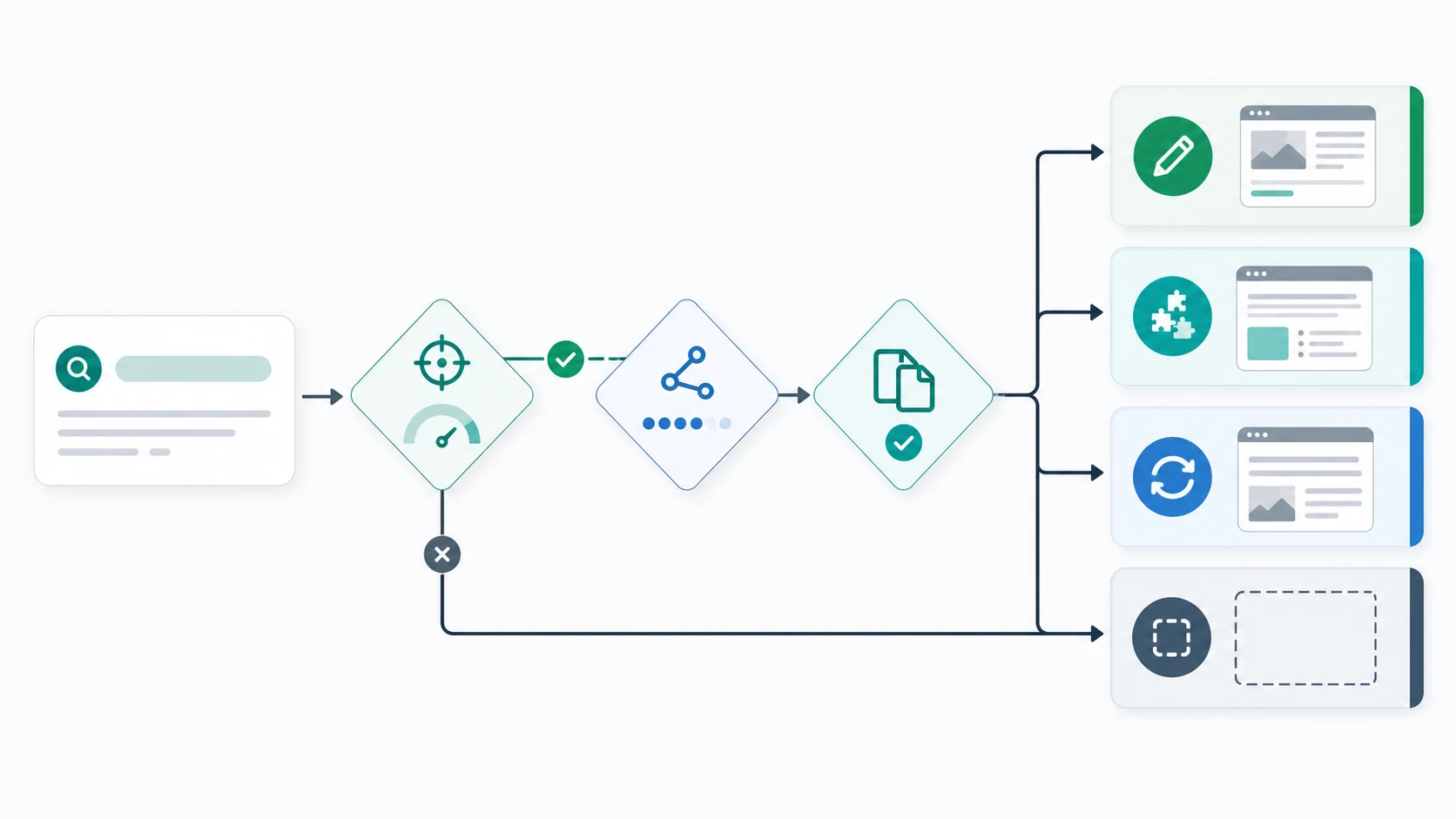
Use this routing model before drafting:
| Evidence | Better action | Why |
|---|---|---|
| Query has a unique task and no existing same-job URL | Create a new article | The page can own a focused child topic |
| Query supports an existing parent page | Add or improve a section | The parent becomes more complete without splitting authority |
| Query reveals a title or intro mismatch | Refresh the existing page | The current URL already has the role but needs clearer promise |
| Query asks for a comparison | Add a comparison table or create a decision guide | The reader needs tradeoffs, not only a definition |
| Query asks for a reusable output | Build a tool, template, or downloadable asset | Advice alone will underserve the job |
Use search intent in SEO as the companion check. Long-tail phrases often look easy until the page type is wrong.
Score Opportunities Before Writing
A long-tail opportunity deserves a brief when it has demand evidence, clear intent, business fit, information gain, and production readiness. Missing one of those does not always kill the idea, but it should lower priority.
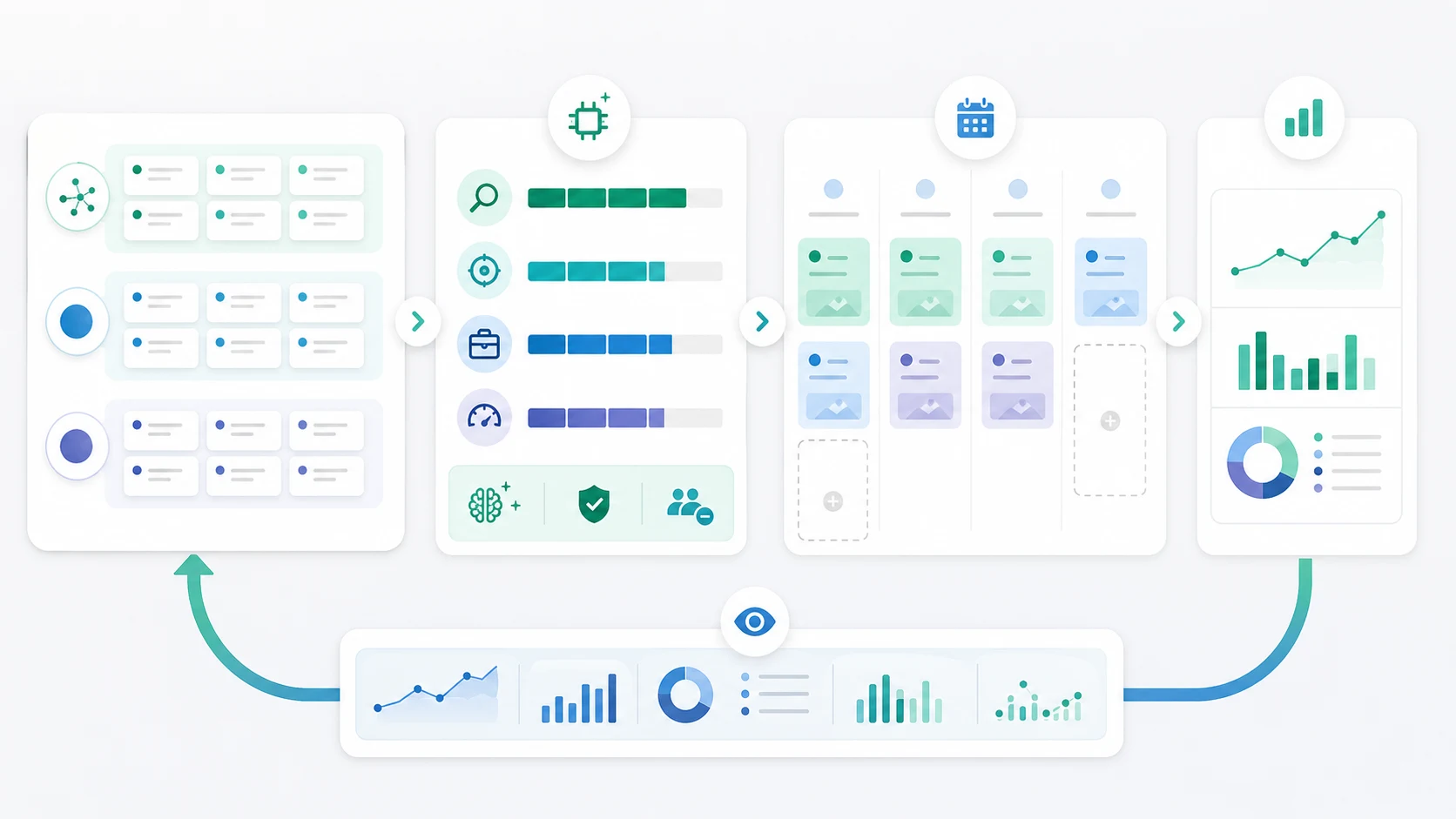
Score each candidate with a simple model:
| Dimension | High score looks like | Low score looks like |
|---|---|---|
| Demand proof | Competitor URL traffic, Search Console impressions, support questions, or repeated query variants | One interesting phrase with no surrounding pattern |
| Intent confidence | The query, competitor page, and existing SERP shape point to one task | Mixed article, tool, local, brand, and shopping intent |
| Business fit | The topic helps SEO, GEO, content operations, crawling, reporting, or Shopify publishing | Traffic would not help Searvora's audience |
| Information gain | You can add a workflow, decision table, examples, validation steps, or AI-search clarity | You would only rewrite a definition |
| Cannibalization safety | The new page has a distinct job from existing URLs | It targets the same keyword, page type, and reader task |
| Shipping readiness | Internal links, visuals, CTA, and validation plan are clear | The brief still depends on unresolved research |
Google's helpful content guidance is a useful quality guard here. Long-tail pages still need original value, clear sourcing, and a real reader benefit. They should not exist only because a keyword tool found a phrase.
Avoid Cannibalizing Your Own Pages
Long-tail SEO can quietly create cannibalization when every phrase becomes a separate article. The stricter test is better: a new page is risky only when it targets the same core keyword, same page type, and same user job as an existing URL.
Use this overlap check:
| Question | Safe to create when | Better to refresh when |
|---|---|---|
| Is the core keyword distinct? | The new page targets a child task or applied use case | The phrase is just a variation of the existing target |
| Is the page type distinct? | One page is a hub and the other is a how-to, comparison, or tool | Both pages are the same article shape |
| Is the user job distinct? | The reader would need both pages for different decisions | The reader would get the same answer twice |
| Is the information gain distinct? | The new page adds a sharper framework, examples, or validation | The new page repeats the parent outline |
A parent article can safely link to child pages. A child article can safely link back to the parent. Problems start when two URLs promise the same job. For harder calls, use the keyword cannibalization workflow before approving the brief.
Build AI-search-ready Long-tail Briefs
Long-tail queries often work well in AI answer systems because they are specific. That does not mean adding vague AI sections. It means the brief should make the entity, task, answer, evidence, and next step easy to extract.
Every long-tail brief should include:
- Primary long-tail keyword and close variants.
- The reader job in one sentence.
- Recommended page type and why other page types are weaker.
- Existing Searvora URLs to link, update, avoid, or monitor.
- The information-gain angle.
- Required examples, screenshots, tables, or public sources.
- First-section answer that satisfies the query quickly.
- Internal link plan and primary CTA.
- Validation plan after publish.
The Search Console performance report can help after publishing by showing whether the page attracts the intended query family or drifts into a different job. If the query mix changes, update the page type, title, internal links, or supporting sections instead of writing another overlapping page.
Where Searvora Fits
Searvora fits when long-tail ideas need to become a ranked action queue. The AI SEO consultant is the natural product layer because it is built around pattern diagnosis, priority scoring, fix-ready guidance, and execution alignment.
Use it to turn long-tail research into assigned work:
- Group query variants by user job, not just matching words.
- Flag which ideas need a new article, a parent-page expansion, a product-page update, or no action.
- Connect crawl and dashboard evidence before assigning production effort.
- Turn approved opportunities into briefs with information gain, internal links, visuals, and validation checks.
For Shopify teams, the output can later flow into Blogify as a publishing workflow. For technical child topics, the same long-tail logic can route work toward crawler validation before a draft is written.
A Practical Long-tail Keywords Checklist
Use this checklist before approving a long-tail keyword for production:
- Write the target query and two to five close variants.
- Define the reader job in one sentence.
- Confirm the likely page type from the query, competitor page, and existing inventory.
- Check whether an existing URL already serves the same keyword, page type, and job.
- Decide whether the best action is create, expand, refresh, merge, tool, template, or no page.
- Score demand proof, intent confidence, business fit, information gain, and effort.
- Choose one primary internal product CTA.
- Add one to three supporting internal links only where they help the reader.
- Plan local visuals, tables, or screenshots before drafting.
- Make the opening section answer the query directly.
- Include a table, checklist, or framework that makes the decision extractable.
- Validate the page after publishing with crawl checks and query data.
Long-tail keywords work when they improve decisions. The goal is not to publish more small pages. The goal is to find specific search tasks, choose the right asset, and ship the few pages that make your site clearer, more useful, and easier to operate.