

Marketing campaigns are coordinated efforts built around one audience, objective, offer, distribution plan, and measurement window. The main types of marketing campaigns include brand awareness, product launch, content and SEO, digital PR, email nurture, community, paid search, seasonal promotion, and customer advocacy.
Choosing a type is only the start. A search-led growth team also decides which durable page should support the campaign, whether that page can be crawled and indexed, who owns the follow-up work, and what happens when the campaign ends.
The Ahrefs article that surfaced this opportunity organizes marketing campaigns around common types and examples. Searvora's information gain is the operating layer: connect every campaign to a canonical web asset, a technical eligibility check, an AI-search evidence plan, an owner, and a post-campaign decision.
Compare Nine Marketing Campaign Types
These campaign types can overlap. A product launch may use email, paid search, PR, and content at the same time. The useful planning decision is which type owns the objective and which supporting channels help it.
| Campaign type | Primary job | Durable search asset | Leading signal |
|---|---|---|---|
| Brand awareness | Make a category or brand easier to recognize | Category explainer, brand page, or parent hub | Branded query growth and qualified mentions |
| Product launch | Introduce a new product, feature, or market | Product landing page, release page, and support content | Qualified product-page discovery |
| Content and SEO | Answer durable search tasks | Article, hub, comparison, tool, or resource page | Impressions, query fit, and useful next-page movement |
| Digital PR | Earn attention and editorial citations | Data study, expert resource, or newsworthy owned page | Relevant coverage and source-page impact |
| Email nurture | Move a known audience toward the next decision | Guide, comparison, webinar page, or product proof | Qualified return visits and downstream action |
| Community | Build repeated participation around a problem or category | Community hub, event archive, or evergreen resource | Returning participants and reusable questions |
| Paid search | Capture active demand for an offer | Focused landing page with message match | Qualified search terms and conversion behavior |
| Seasonal promotion | Serve time-bound demand | Campaign landing page with an expiry plan | In-window action without stale URL debt |
| Customer advocacy | Turn customer success into trustworthy evidence | Case page, testimonial hub, or implementation story | Evidence reuse across search and sales paths |
This table is a starting point, not a channel checklist. One campaign should not claim nine primary objectives. Pick the central job, then choose only the channels and assets that help that job.
Choose The Type With Four Evidence Gates
Do not choose a campaign because the format is fashionable or because another brand used it. Pass the idea through four gates first.
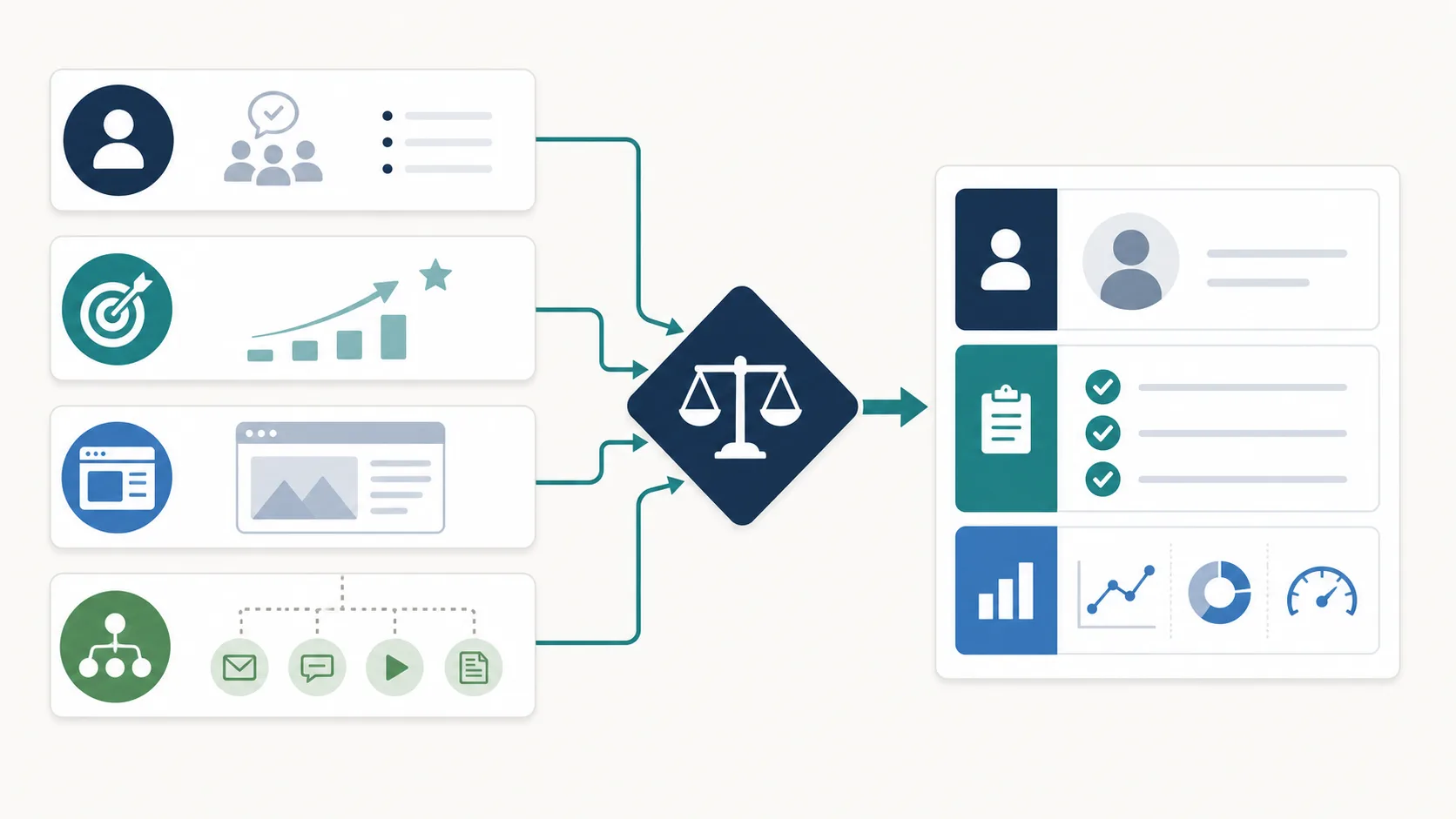
1. Audience job
Name the decision the audience is trying to make. Are they learning a category, comparing options, preparing to buy, implementing a workflow, or trying to stay successful after purchase?
2. Campaign objective
Choose one primary objective that can change team behavior. "Get awareness" is too vague. "Increase qualified discovery of our new category page among technical SEO teams" is specific enough to guide assets and measurement.
3. Canonical asset
Decide which owned URL should remain useful after the campaign. The right asset may be a product page, article, comparison, downloadable resource, event page, or support path. If no page can own the task, the campaign may create attention without building a durable search surface.
4. Distribution plan
Choose channels after the audience job and asset are clear. Email, paid search, social, partners, communities, and PR can distribute the same asset, but each channel needs its own message and evidence.
Use The Right Type For The Growth Job
Brand awareness campaigns build category memory
Use a brand awareness campaign when the audience does not yet recognize the category, problem, or brand. Search work should make the category and entity relationship easy to understand across the homepage, product pages, public profiles, and supporting explainers.
The risk is measuring awareness with raw reach alone. Add branded query trends, relevant mentions, referral quality, direct-return behavior, and AI-answer framing so the team can distinguish recognition from empty exposure.
Product launch campaigns need one source of truth
A product launch should have one canonical page that explains what changed, who it helps, and what the next action is. Supporting articles can answer education and use-case questions, but they should not compete with the product page for the same conversion task.
Plan the page before the announcement. Check its title, H1, canonical, indexability, internal links, structured data where relevant, and support path before distribution begins.
Content and SEO campaigns create compounding assets
Use this type when the objective depends on durable search demand. Start from user jobs, competitor evidence, existing-query data, and site coverage. Then route each opportunity to the right page type instead of treating every keyword as a blog brief.
The content marketing workflow is the deeper operating path for briefs, production, quality gates, publication, and refresh. A campaign can set the theme and window; the content system determines which assets deserve to exist.
Digital PR campaigns need a source worth citing
Digital PR works best when the owned source adds evidence a journalist, expert, or industry page can use. A useful data study, benchmark, method, or expert resource is stronger than a press release that only repeats a brand claim.
Set safety boundaries before outreach. The team should be able to explain why the source is useful without offering payment, exchanging links, controlling anchor text, or sending high-volume irrelevant pitches.
Email nurture campaigns should route to a decision
Email is a distribution system, not the final asset. Each message should send the reader to the page that answers the next question: a guide for learning, a comparison for evaluation, a product page for action, or support content for implementation.
Measure the page job as well as opens and clicks. A high click rate does not help if the destination cannot answer the promise in the email.
Community campaigns turn repeated questions into evidence
Use a community campaign when participation and repeated learning matter more than one launch spike. Capture recurring questions, objections, terminology, and examples, then decide which insights belong in public articles, product pages, support content, or event archives.
Keep private conversations private. Publish patterns and useful answers without exposing customer data or inventing consensus.
Paid search campaigns test offers and landing-page fit
Paid search is useful when the audience is actively looking for a product, service, or solution and the team can control message match. Keep paid and organic plans separate: ad groups, bids, negatives, and conversion rules are campaign controls, while organic opportunities become durable page decisions.
Use paid search terms as evidence, not as automatic SEO briefs. A query that converts for an ad may still need a landing page rather than an article.
Seasonal campaigns need an expiry decision
Seasonal campaigns can serve genuine time-bound demand, but they often leave stale URLs behind. Before launch, choose whether the page will refresh for the next season, consolidate into an evergreen page, redirect after the window, or remain available as an archive.
This lifecycle rule protects crawl paths and prevents expired offers from becoming the page search engines or AI systems continue to surface.
Customer advocacy campaigns turn outcomes into proof
Use customer advocacy when buyers need evidence that a workflow can succeed. The durable asset may be a case page, implementation story, testimonial hub, or expert contribution.
Never manufacture results, ratings, or quotations. Keep claims tied to evidence the customer approved, explain the context, and avoid turning one outcome into a universal promise.
Give Every Campaign A Search Asset
Campaign planning often separates channel execution from site architecture. Search-led planning reconnects them.
| Campaign question | Search-led answer |
|---|---|
| Where should people land? | The canonical page that owns the campaign's primary job |
| What should remain after launch? | A useful product, article, hub, resource, case, or support page |
| What should supporting content do? | Answer adjacent questions and link toward the canonical asset |
| What happens to temporary URLs? | Refresh, consolidate, redirect, archive, or remove by a written rule |
| How will AI systems understand the campaign? | Clear entities, direct answers, extractable evidence, and consistent public descriptions |
| Who owns the next action? | A named content, SEO, product, engineering, PR, lifecycle, or community owner |
The marketing funnel framework is the companion when the main question is where an audience sits in awareness, consideration, conversion, or retention. Campaign type is a different decision: it defines the coordinated effort used to move that audience and the asset that should carry the work.
Add Crawl And AI-Search Checks Before Launch
Google's SEO Starter Guide emphasizes useful, well-organized content and pages that search engines can crawl, index, and understand. Those basics still apply when a page is part of a short campaign.
Run these checks before the campaign sends attention to the site:
- Confirm the destination returns a clean success response and is not blocked, redirected unexpectedly, or noindexed.
- Verify the canonical points to the URL that should remain the source of truth.
- Add a natural internal-link path from an existing relevant page.
- Make the title, H1, opening answer, and CTA match the campaign promise.
- Keep important facts in visible text, tables, or steps rather than image-only creative.
- Name products, organizations, dates, methods, and evidence consistently.
- Add the URL to the correct sitemap and reporting segment.
- Set an expiry, refresh, or review date before launch.
AI-search readiness does not require a separate campaign full of vague "AI optimization." It requires a source page that states the task clearly, contains useful evidence, and remains technically eligible to be discovered and summarized.
Measure The Campaign Without Stealing Credit
Campaign measurement should separate launch effects, durable page performance, and outside noise. Record a baseline before launch, annotate what changed, and recheck after enough time for the channel and search system to respond.
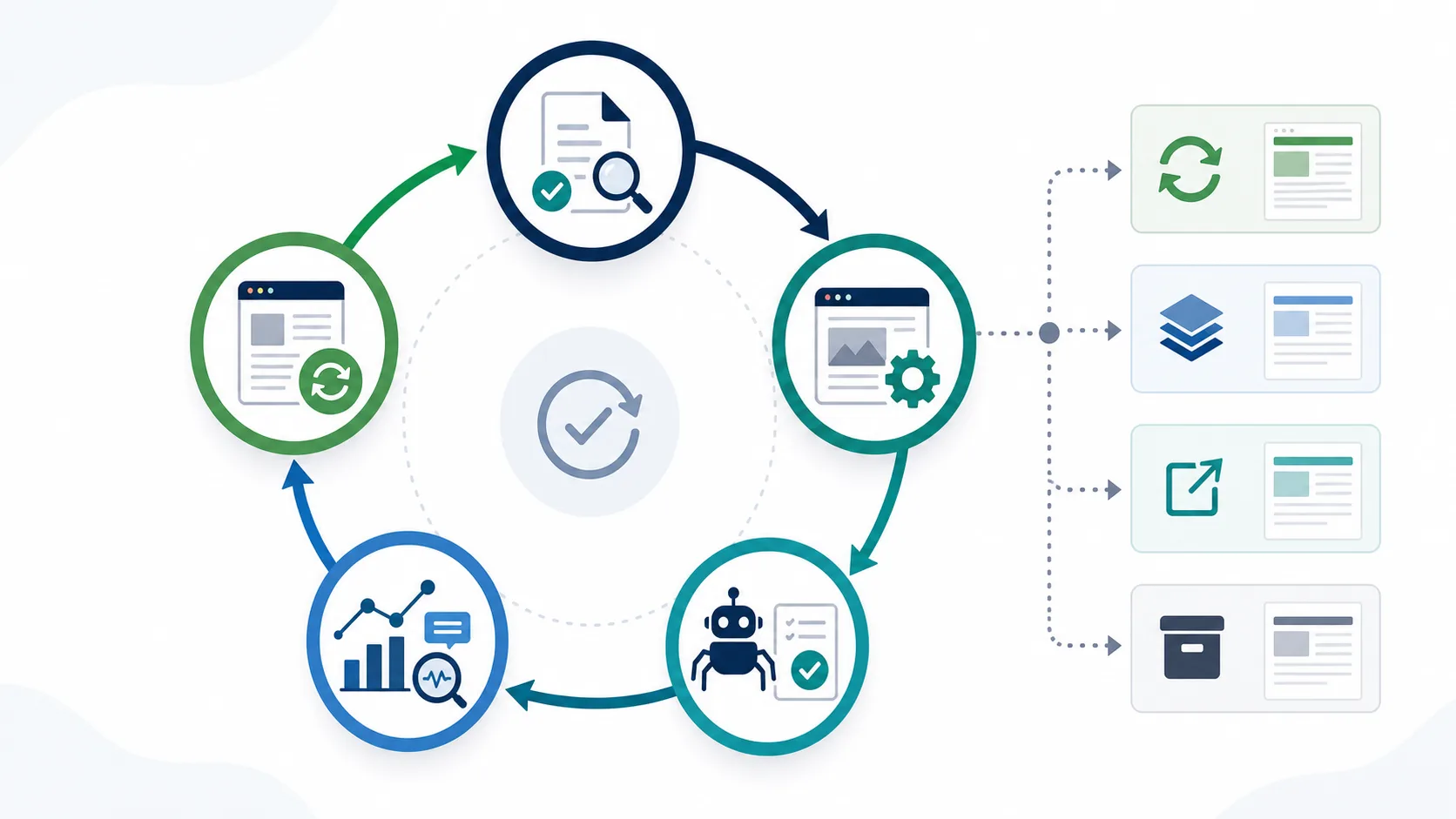
| Measurement layer | What to review | Decision it should support |
|---|---|---|
| Campaign delivery | Qualified reach, clicks, replies, attendance, or participation | Continue, narrow, or stop distribution |
| Destination quality | Message match, useful engagement, errors, and next-page movement | Improve the page or choose a better destination |
| Organic search | Impressions, clicks, query mix, landing-page fit, and internal links | Refresh, consolidate, expand, or protect the URL |
| AI search | Mentions, cited sources, entity framing, and answer consistency | Clarify public evidence or improve the source page |
| Technical state | Crawl response, canonical, indexability, sitemap, and redirects | Fix eligibility before judging the message |
| Business outcome | Qualified leads, adoption, revenue assistance, retention, or support reduction | Decide whether the campaign job was worth repeating |
Search results can take time to reflect changes, and not every movement comes from the campaign. Compare page and query cohorts, seasonality, other launches, paid activity, and technical changes before assigning credit.
Where Searvora Fits
Searvora AI SEO Consultant fits the planning and handoff layer. The local product surface is organized around pattern-based diagnosis, impact-and-effort prioritization, fix-ready guidance, and execution alignment.
Use the AI SEO consultant when a campaign idea produces too many possible assets and owners. Turn the evidence into a ranked queue that states:
- the audience job and campaign type;
- the canonical page to create, refresh, or protect;
- the supporting content or technical work;
- the owner, rationale, and next action;
- the validation window and stop rule.
Marketing Campaign Prelaunch Checklist
Before launching the next campaign:
- Name one primary audience job and objective.
- Choose the campaign type that best owns that objective.
- Select the canonical web asset before choosing channels.
- Check existing URLs for same-keyword, same-type, same-job overlap.
- Define the information gain or proof the campaign adds.
- Verify crawl access, canonical, indexability, sitemap, and internal links.
- Assign the campaign owner and every downstream asset owner.
- Record the baseline, leading signal, business outcome, and validation window.
- Write the refresh, consolidation, redirect, archive, or stop rule.
- Recheck the page and campaign evidence before repeating the play.
The right campaign type is the one that changes a clear audience decision and leaves the site stronger after distribution slows down. Choose the job first, build the durable asset, then measure whether the campaign created reusable organic value.