

If you are asking how content strategy agencies help tech startups increase organic traffic, the answer is that they turn scattered market knowledge into a repeatable search workflow. A strong agency should establish a baseline, map buyer questions to the right page types, build a prioritized content queue, coordinate subject-matter input, and validate whether shipped pages earn qualified discovery.
The agency is not valuable because it can fill a calendar. It is valuable when it reduces the startup's uncertainty about what to publish, what to fix first, who owns each decision, and how the team will know that the work helped.
What An Agency Should Change In The First 30 Days
The first month should produce a shared decision model, not a pile of draft titles. Before the agency scales production, it needs enough evidence to distinguish a missing page from a weak page, a content problem from a crawl problem, and useful demand from broad traffic that will never reach the product.
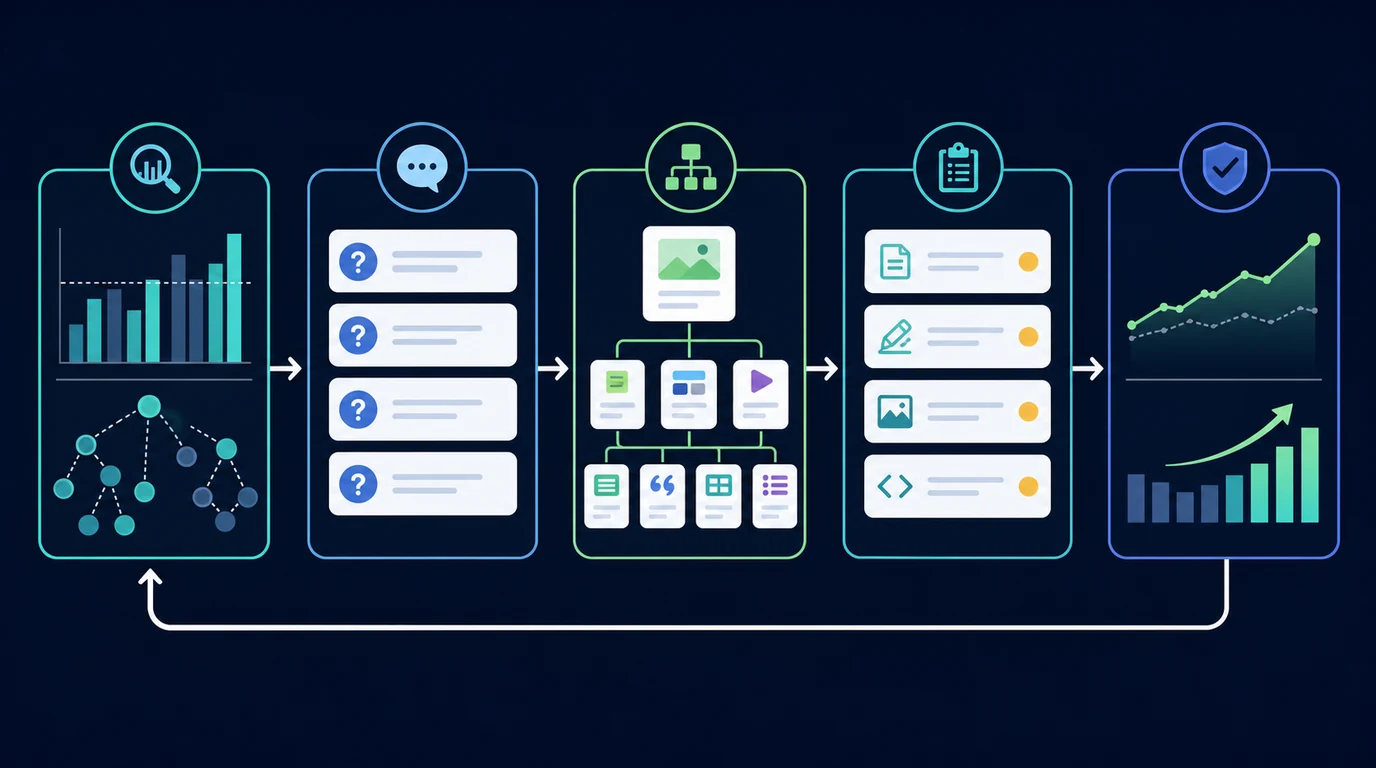
A useful first-month handoff looks like this:
| Startup question | Agency output | Evidence the startup keeps |
|---|---|---|
| Which buyers are we trying to reach? | Buyer-problem and query map | Interview notes, sales language, Search Console queries, category terms |
| Which pages should answer those questions? | Page-type map | Product, use-case, comparison, integration, docs, hub, and article assignments |
| What blocks existing pages? | Technical and content baseline | Crawl findings, indexability, internal-link, canonical, and snippet checks |
| What should ship first? | Ranked content queue | Impact, effort, confidence, owner, dependency, and acceptance criteria |
| Did the work help? | Validation cadence | Indexing, query coverage, qualified visits, assisted actions, and AI-search evidence |
If the engagement cannot answer those five questions, more output will usually create a larger review backlog rather than reliable organic growth.
Start With A Baseline Everyone Can Recheck
Startups often hire an agency because traffic is flat, the internal team is overloaded, or leadership wants a faster content cadence. Those are real pressures, but none is a usable baseline.
The agency should capture four evidence layers before recommending a large publishing plan:
- Search demand: queries, impressions, rankings, branded versus non-branded discovery, and the language buyers use before they know the product.
- Page performance: qualified sessions, meaningful next steps, assisted conversions, and movement from educational pages into product context.
- Technical eligibility: crawl access, indexability, canonicals, redirects, sitemap coverage, rendered content, and internal-link depth.
- Content coverage: which buyer questions already have a strong page, which pages compete for the same job, and which gaps need a new format.
This baseline keeps the agency from treating every weak metric as a writing problem. A high-intent page with poor crawl access needs a technical owner. A ranking article that sends no qualified visitors may need a sharper promise or a better route to the product. A keyword with commercial intent may need a landing page instead of another blog post.
Translate Buyer Questions Into Page Jobs
Tech startup content plans break when one keyword list is sent directly to writers. The agency should first decide what job a page must perform.
| Buyer question | Better page job | Typical proof |
|---|---|---|
| What category solves this problem? | Explainer or category page | Clear definition, use cases, product route |
| Can this product handle our workflow? | Use-case or feature page | Capabilities, constraints, examples, implementation detail |
| Which approach should we choose? | Comparison or decision guide | Fair criteria, tradeoffs, best-fit scenarios |
| How do we implement it? | Docs, checklist, or technical guide | Ordered steps, owner handoff, validation checks |
| Is the vendor credible? | Proof, case study, or evidence page | Method, outcomes, source quality, transparent limitations |
This page-job step is where an agency can protect the startup from cannibalization. A product page and an article can share a topic when they answer different tasks. Two articles that promise the same answer in the same format usually need consolidation.
For the broader growth model, use the B2B organic traffic workflow to separate product, use-case, comparison, docs, and educational cohorts before expanding the calendar.
Build An Owner-Ready Content Queue
A content brief is not ready because it has a keyword, title, and word count. It is ready when the startup knows why the page should exist and who must contribute to it.
Each queued item should include:
- the exact searcher job and approved page type
- the existing URL to refresh, or the reason a new URL is justified
- the information-gain claim the page must deliver
- the product, sales, engineering, or customer evidence required
- one accountable owner and review deadline
- internal links and the intended next step for the reader
- acceptance checks for metadata, crawlability, visuals, claims, and measurement
The agency should also label dependencies. A comparison page may need verified public product facts. A technical guide may need engineering review. A customer proof page may be blocked on approval. A new hub may require redirects or internal-link changes before it can work.
That makes the queue useful to a lean startup. The team can see which work is ready, which work is blocked, and which request should be rejected before it consumes writing time.
Review The Agency With A 90-Day Scorecard
Organic traffic rarely follows a clean weekly line, so a startup should not judge an agency only by total sessions or articles published. Use leading evidence first, then qualified growth signals.
| Window | What to review | Healthy evidence |
|---|---|---|
| Days 1-30 | Baseline and decisions | Page jobs are clear, duplicates are mapped, technical blockers are assigned, queue priorities have rationale |
| Days 31-60 | Shipping quality | Approved pages launch, required evidence survives review, internal routes work, crawl and index checks pass |
| Days 61-90 | Search response | Target queries gain impressions, qualified page cohorts improve, useful pages enter buyer journeys, weak bets are revised or stopped |
Add quality checks that total output cannot hide:
- How many recommendations became assigned work?
- How many drafts were consolidated or rejected because a stronger page already existed?
- How often did the agency identify a technical or page-type problem before prescribing more copy?
- Can the startup trace each shipped change back to evidence and an expected outcome?
- Does the next sprint change when validation disproves an assumption?
An agency that reports only publishing volume is measuring its own activity. A good scorecard measures whether the startup learned where organic growth can come from and shipped the right response.
Know When Agency Help Is The Right Model
An agency is a strong fit when the startup has useful product knowledge but lacks the capacity or process to turn it into consistent search work. It is less useful when nobody can provide subject-matter evidence, approve positioning, fix technical blockers, or review results.
Use a simple decision rule:
- Choose an agency-led model when strategy, research, production, and coordination all need external ownership.
- Choose a hybrid model when the startup owns product expertise and final decisions but needs research, briefs, editing, or production capacity.
- Keep work in-house when the main constraint is product positioning, technical implementation, or access to customer evidence rather than content execution.
- Pause expansion when existing pages are not measurable, indexable, or clearly assigned to search tasks.
If the bottleneck is the delivery stack rather than the people model, compare the SEO agency software workflow against the evidence, reporting, and handoff jobs the team actually needs.
Turn The Plan Into Assigned SEO Work
The practical challenge is keeping recommendations from dissolving into chat threads and spreadsheets. Strategy needs to become a ranked queue with an owner, rationale, dependency, and acceptance check.
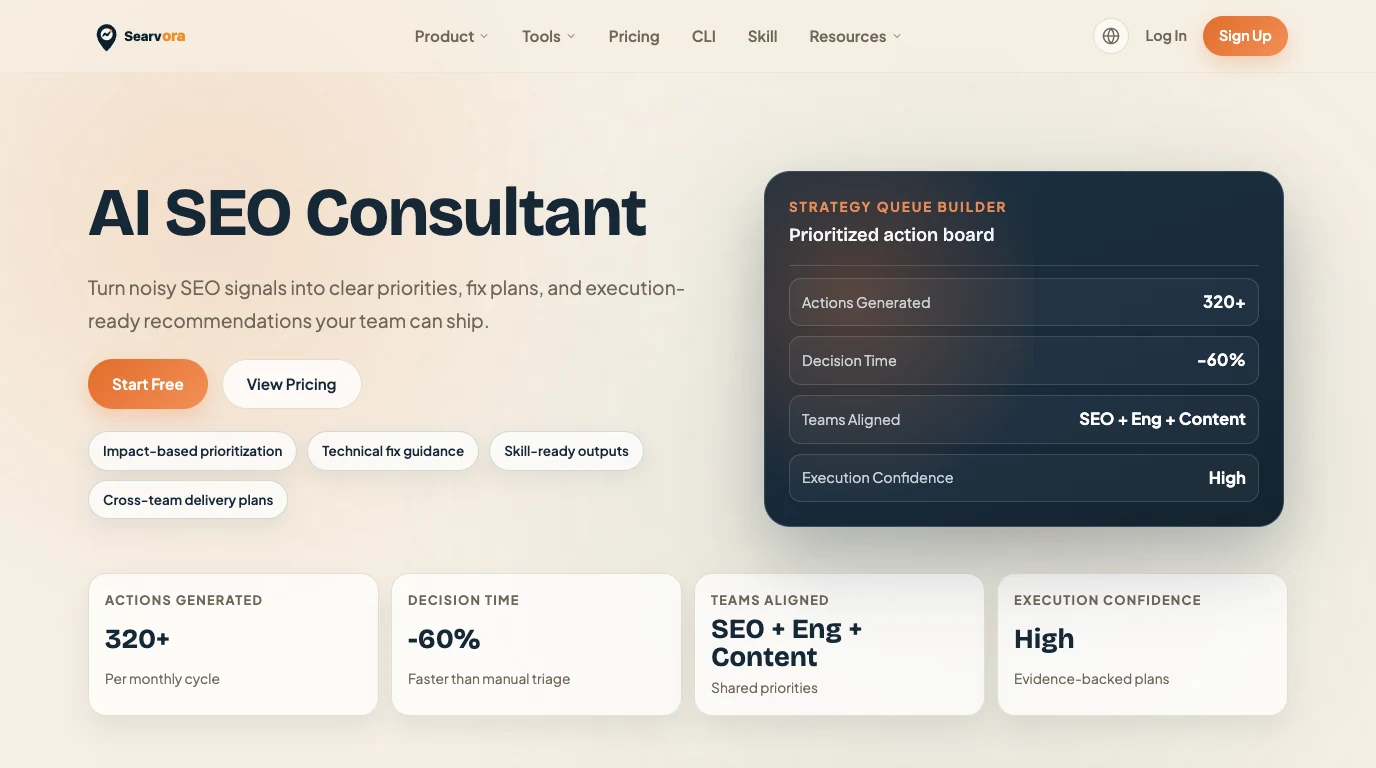
Searvora's AI SEO Consultant is designed for that decision layer. It can help a startup or agency classify mixed SEO signals, rank work by impact, effort, and confidence, and turn recommendations into assignable action plans. It should support judgment, not replace the product evidence and stakeholder decisions that make a startup's content credible.
Keep The Growth Evidence Inside The Startup
The startup should own the query map, page inventory, decision log, briefs, source evidence, measurements, and validation history even when an agency runs the process. That prevents the strategy from disappearing when a contract ends and lets the next operator understand why a page exists.
Content strategy agencies help tech startups increase organic traffic when they make the work more measurable and more selective. Start with a baseline, map buyer questions to page jobs, approve an owner-ready queue, ship with evidence, and recheck the same assumptions. The result is not merely more content. It is a startup that can explain which search work deserves the next week of effort.