

SERPs are the search engine results pages shown after someone submits a query. A modern SERP can contain organic text results, ads, maps, images, videos, rich results, related questions, shopping modules, and AI-generated answers. The page is no longer a simple list of ten blue links, so rank position alone cannot explain visibility or clicks.
The useful SEO job is to record which result surfaces appear, identify the page type each surface rewards, confirm that your URL is eligible to compete, and connect changes in rankings, impressions, click-through rate, and AI visibility to a specific next action.
The current Ahrefs SERPs explainer covers the definition, why result pages matter, AI-era changes, monitoring, and practical uses. Searvora's information gain is the operating loop: turn SERP observations into page-type decisions, crawl checks, owner-ready actions, and a repeatable validation window.
What A Modern SERP Contains
Every SERP begins with a query, but the result mix depends on the task. A local service query may lead with a map. A product query may show shopping results and commercial pages. A definition query may show an AI answer, featured snippet, related questions, and text results. A visual task may favor images or videos.
Google's Search visual elements gallery groups the common surfaces into text, rich, image, video, and exploration elements. It also notes that appearance can change by device, country, language, and query. That variability is why a single undated screenshot is weak evidence.
| SERP surface | What it usually signals | What an SEO team should inspect |
|---|---|---|
| Text result | A crawlable page can answer the query | Title link, snippet promise, page type, canonical, internal support |
| Rich result | Structured information may improve presentation | Visible content, valid markup, feature eligibility, policy fit |
| Local or map result | The task has location or visit intent | Business information, local landing pages, relevance, reviews process |
| Image or video result | The task is easier to understand visually | Media quality, surrounding text, landing-page value, indexability |
| Related questions | Searchers need supporting answers or clarification | Child questions, concise answers, parent-child page boundaries |
| Paid or shopping block | Commercial competition changes the click path | Organic placement, margin of attention, landing-page intent |
| AI answer surface | The engine may synthesize an answer and supporting links | Source eligibility, answer clarity, cited URLs, click behavior |
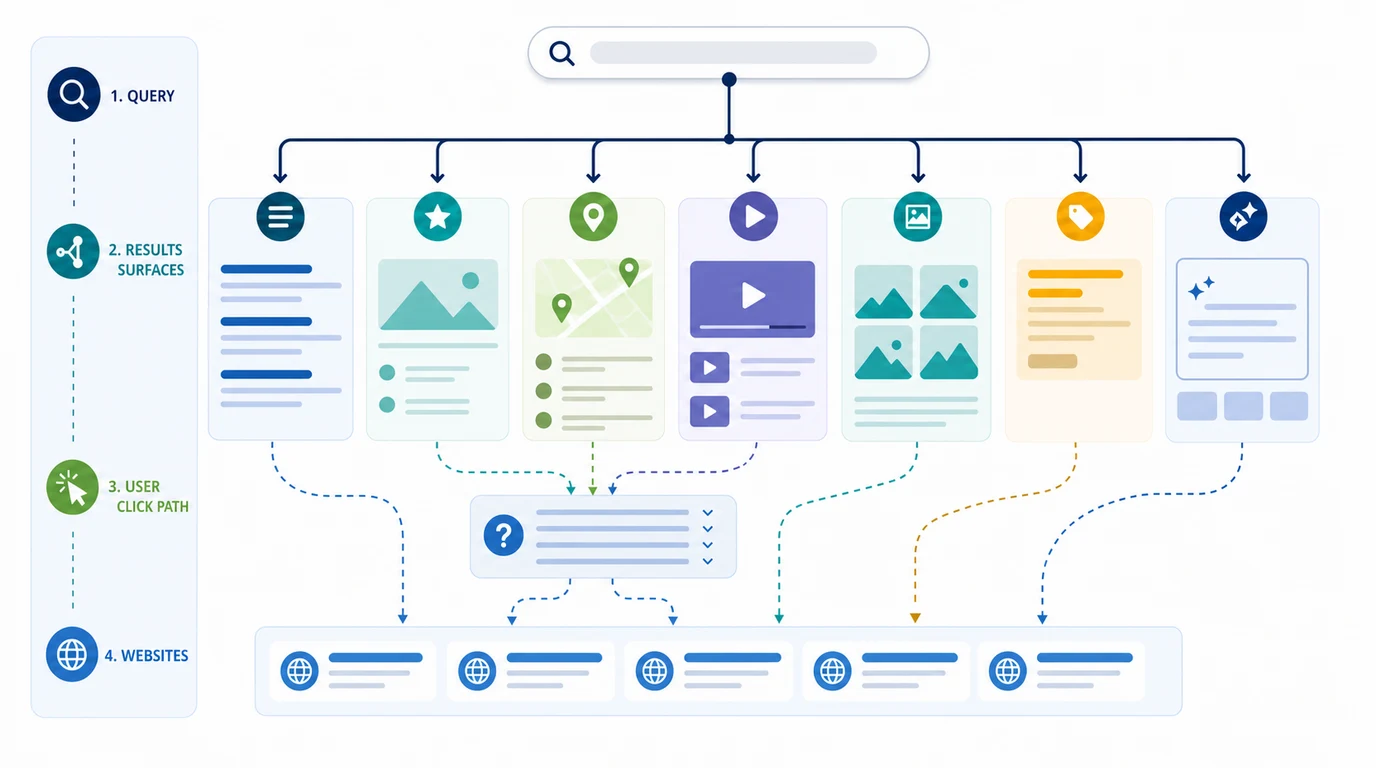
The table matters more than memorizing feature names. Each surface changes what the searcher sees before reaching a website and therefore changes what a ranking can realistically deliver.
Why Position Alone Does Not Explain Traffic
Average position compresses a complicated page into one number. Two queries with the same reported position can produce different outcomes when one shows a large map, several ads, a video block, or an AI answer above the first organic result.
Use four evidence layers together:
- Ranking evidence. Which URL appears, at what approximate position, and for which query group?
- Presentation evidence. Which surfaces appear before or around the URL, and what promise does the title and snippet make?
- Eligibility evidence. Is the intended page crawlable, indexable, canonical, internally linked, and technically able to appear?
- Outcome evidence. Did impressions, clicks, CTR, conversions, or qualified visits change after the result layout changed?
This prevents two expensive mistakes. The first is rewriting a page when a new result surface reduced clicks without changing the page's relevance. The second is blaming the SERP when the URL actually lost eligibility because of a canonical, indexability, rendering, or internal-link problem.
For volatile query groups, use the SERP volatility diagnosis to separate normal movement from a real content or technical issue.
AI Features Extend The SERP Rather Than Replace SEO
AI Overviews and AI Mode add synthesized answers and supporting links to the result experience. They can change how much of the task is satisfied before a click and can surface sources differently from a classic text-result stack.
Google's official AI features guidance says there are no extra technical requirements or special schema needed for inclusion. A supporting page still needs to be indexed and eligible to appear in Google Search with a snippet. Crawl access, internal links, useful text, page experience, accurate structured data, and high-quality media remain the practical foundation.
That creates a useful boundary for GEO work:
- Do not invent an AI-only optimization layer while basic eligibility is broken.
- Do make important answers explicit, self-contained, and supported by evidence.
- Do track whether the brand or URL appears as a supporting source for a stable query set.
- Do separate visibility from traffic because an AI answer can change the click path.
- Do keep the source page current so a cited passage does not become stale.
Google reports traffic from AI features within the Search Console Performance report under the Web search type. That means the standard report is useful, but it does not give every team a clean, separate AI-surface segment. Pair Search Console movement with dated query observations and a source-page log. The AI Overview tracking workflow shows how to maintain that evidence without double counting certainty.
Match The Query To The Page Type
A SERP is a live page-type vote. It does not dictate your strategy, but it shows what kinds of assets currently satisfy the query.
| Dominant result pattern | Safer first page-type hypothesis | When to challenge it |
|---|---|---|
| Definitions, guides, and related questions | Explainer or parent article | The user clearly needs a tool or maintained dataset |
| Product and category pages | Product or commercial landing page | The query includes a strong research or comparison modifier |
| Calculators, checkers, and generators | Tool page | Setup, interpretation, or validation still needs a how-to |
| Lists and comparison pages | Roundup or comparison | You cannot verify enough real options to support the format |
| Brand docs and support pages | Branded support or fair intercept article | The task is purely navigational or account-specific |
| Maps and local profiles | Local landing or profile workflow | The query has a separate informational job worth explaining |
Start with the query and current result mix, then compare that hypothesis with the competitor page, existing site coverage, and product routes. Use the stricter duplicate test before creating a URL: the core keyword, page type, and user task all need to overlap before two pages are true cannibalization.
This parent article can therefore coexist with child pages about volatility, featured snippets, or AI Overview tracking. Each child solves a narrower job. The featured snippets workflow focuses on eligibility and answer structure rather than explaining the whole SERP.
Run A SERP Evidence Loop
SERP monitoring becomes useful when every observation can move through the same five-stage loop.
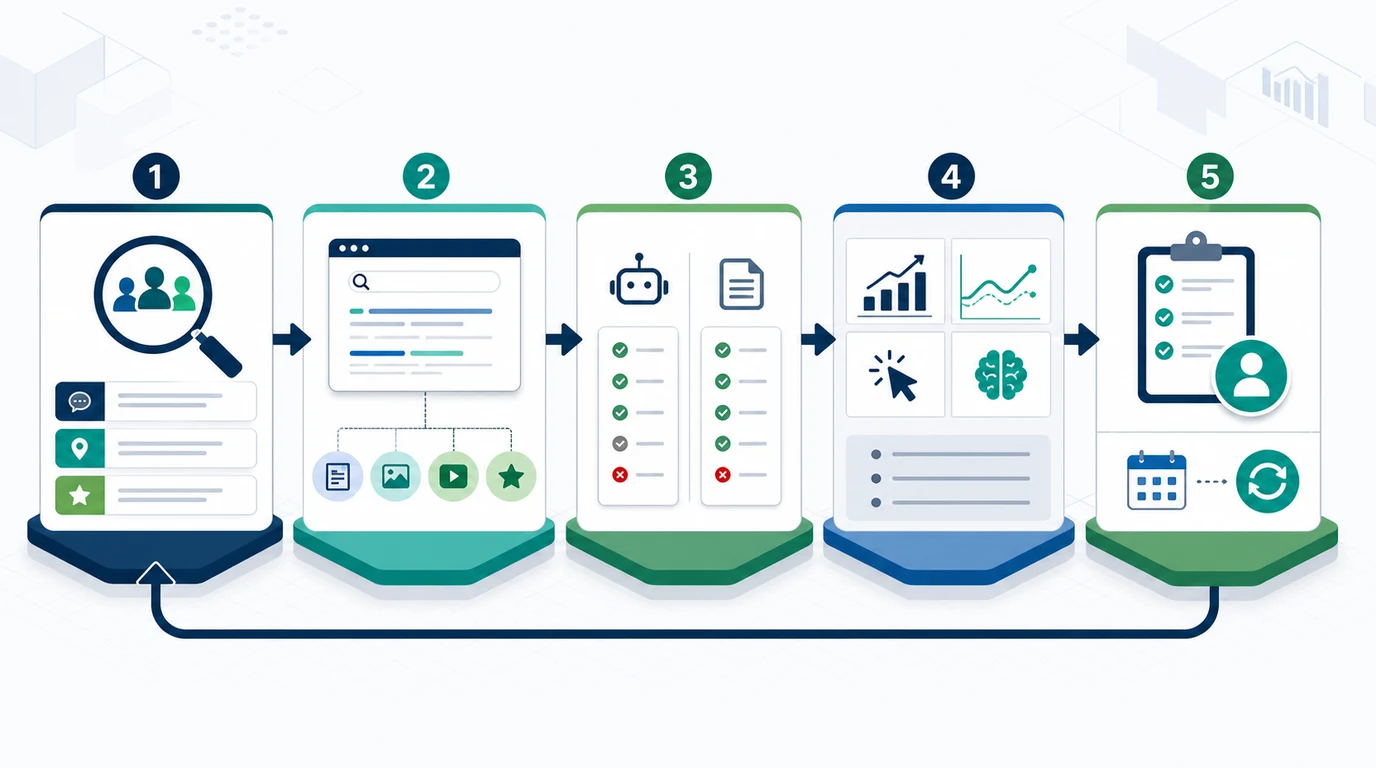
1. Define the query cohort
Group queries by page type, intent, market, device, locale, or business owner. A stable cohort makes the observation comparable over time. Avoid mixing a branded navigation query with a non-brand how-to query and calling the average a trend.
2. Capture the result surfaces
Record the query, location, language, device, date, and visible result types. Note which owned URL appears and whether an AI answer, map, ad block, rich result, video, image, or related-question module changes the click path.
3. Verify page eligibility
Check the intended URL's response, indexability, canonical, robots access, rendered main content, sitemap presence, internal links, and relevant structured data. A SERP opportunity is not actionable if the canonical target cannot reliably compete.
4. Diagnose the movement
Compare the observation with impressions, clicks, CTR, position, conversions, content releases, technical releases, and competitor changes. Name the most likely cause and the evidence that would disprove it.
5. Assign and recheck
Choose one action, owner, success signal, and validation window. The action might be a title rewrite, stronger answer section, new child page, internal-link update, structured-data correction, crawl fix, landing-page build, or simple monitoring. Recheck after the page can reasonably be recrawled and measured.
Turn SERP Signals Into Specific Actions
| Evidence pattern | Likely interpretation | Safer action |
|---|---|---|
| Position stable, impressions stable, CTR down | Result layout or snippet promise changed | Compare surfaces, then improve title and snippet only if the promise is weak |
| Impressions down across one template | Demand, eligibility, or template change | Segment queries and crawl the affected page group |
| AI answer appears and clicks fall | More of the task may be satisfied before the click | Strengthen answer depth, source clarity, and reasons to visit the page |
| A tool or product page replaces articles | Page-type preference may have shifted | Build or improve the functional destination instead of lengthening the article |
| Competitor wins a rich result | Their page may be clearer or technically eligible | Compare visible content, markup, and policy fit without copying the page |
| Rankings fluctuate but outcomes hold | Normal movement may not require action | Monitor the cohort and avoid reactive rewrites |
| Owned page disappears entirely | Eligibility or relevance may have changed | Check indexation, canonical, robots, rendering, links, and content fit |
The action should be smaller than the diagnosis. If only CTR changed, do not launch a sitewide content rewrite. If one template lost indexability, do not ask writers to add more paragraphs. If the SERP now rewards a tool, do not force a blog post to behave like software.
Where Searvora Fits
Searvora's AI SEO Dashboard is the monitoring and handoff layer for this workflow. The current product surface is built around page-type and locale cohorts, anomaly and trend detection, opportunity scoring, and shared action queues. Those controls help a team review SERP evidence by the same segments used to assign work.

Use the AI SEO dashboard to keep four things connected:
- the page or query cohort that changed
- the crawl, content, and result-surface evidence behind the diagnosis
- the prioritized action and responsible owner
- the validation window and measured outcome
SERP Review Checklist
Before assigning work from a result-page change, confirm:
- The query cohort, market, language, device, and date are recorded.
- The visible result surfaces and owned URL are documented.
- The intended page type still matches the search task.
- Crawl access, indexability, canonical, rendering, sitemap, and internal links pass.
- Rankings, impressions, clicks, CTR, and business outcomes are compared together.
- AI-answer visibility is recorded separately from assumptions about traffic.
- Existing site coverage was checked before proposing a new URL.
- The next action has one owner, one success signal, and one recheck window.
SERPs are not merely where rankings are displayed. They are the interface that connects a query to result types, answers, sources, and click paths. Teams that record that interface, verify eligibility, and route each signal into the right page or fix can make calmer decisions as classic search and AI features continue to evolve.