

If the question is how to compare brand visibility with competitors in AI search, use the same query set, record which brands appear, capture cited sources, note how each brand is framed, and map every gap to an owned page or action. The useful output is not a visibility score by itself. It is a decision about which source page, product page, or proof asset needs work next.
This is different from simply improving your own brand visibility. The brand visibility improvement workflow asks how to make your source layer stronger. This workflow asks which competitors are already trusted, why they are trusted, and what your team should fix.
Build A Stable Comparison Set
A fair competitor comparison starts with stable prompts or query groups. If the test changes every week, the result cannot explain whether visibility changed or the sampling changed.
Use four query groups:
| Query group | What to compare | Example team decision |
|---|---|---|
| Category queries | Which brands appear for the market or workflow | Strengthen category source pages or product positioning |
| Problem queries | Which source URLs answer the user's task | Improve the source page that should be cited |
| Comparison queries | Which vendors are named side by side | Create or refresh a fair comparison asset |
| Branded queries | How each brand is described | Align product pages, profiles, and public proof |
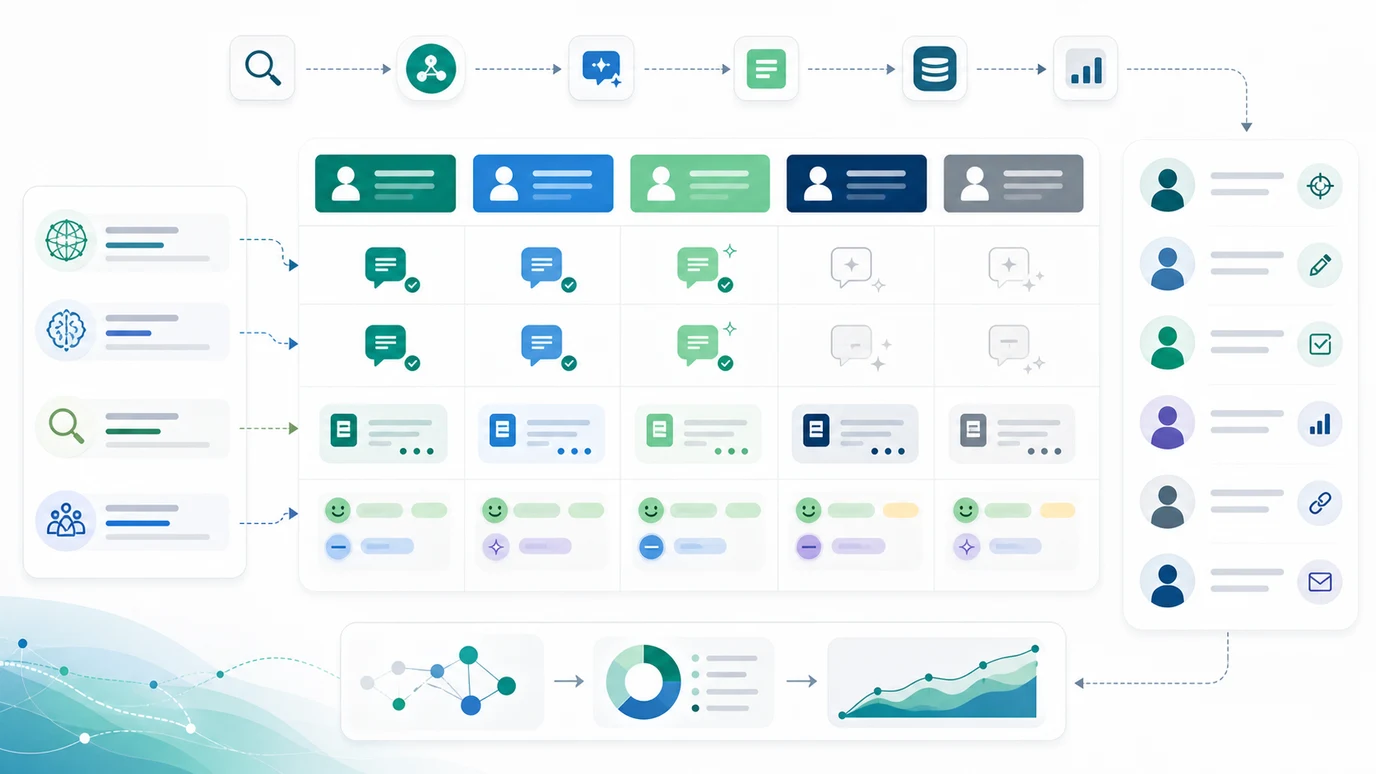
Record Mentions, Citations, And Framing Separately
Do not collapse every observation into a single AI visibility score. A brand mention, a cited source, and a positive framing gap are different signals.
Use this scorecard:
| Signal | What to record | What it usually changes |
|---|---|---|
| Mention | Which brands appear, which are absent, and whether the answer is stable | Entity clarity, category coverage, and comparison pages |
| Citation | Which URLs support the answer, owned or third party | Source-page depth, crawl eligibility, and internal links |
| Framing | How the answer describes each brand's strengths, limits, audience, or use case | Product positioning, proof sections, and messaging |
| Page role | Which owned URL should support the query | Refresh, consolidate, create, or no action |
| Confidence | Whether the pattern repeats across checks | Prioritization and recheck window |
This separation prevents overreaction. If a competitor is mentioned but no source is cited, your next action may be entity clarity. If a competitor source is cited repeatedly, your next action may be a better owned source page. If your brand is cited but framed weakly, the fix may be product messaging rather than a new article.
Diagnose The Source Gap
After recording the comparison, ask why the competitor won the answer. Do not assume the solution is more content.
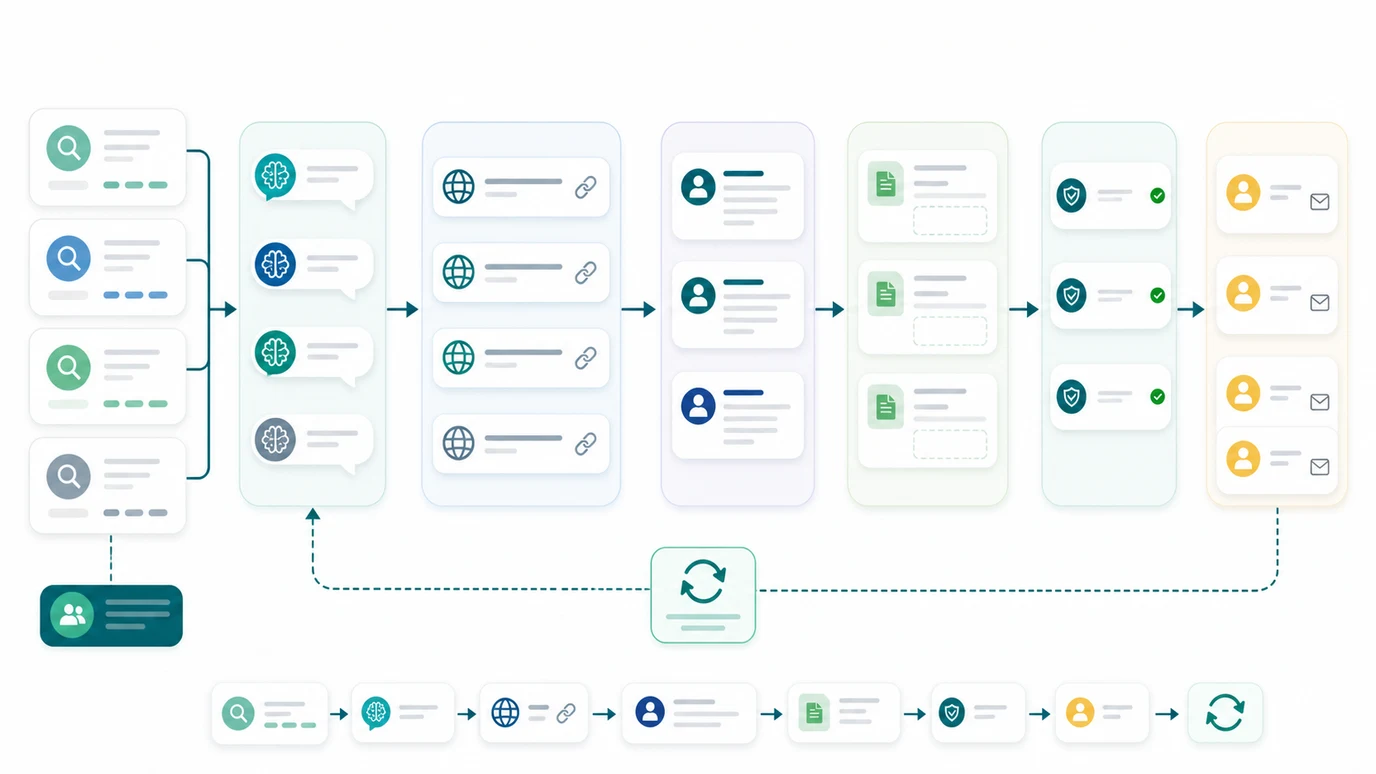
Use this diagnostic table:
| Competitor pattern | Likely source gap | Better Searvora action |
|---|---|---|
| Competitor appears for category queries and you do not | Your category page or explainer may be too thin or hard to identify | Strengthen the source page with clearer category language and evidence |
| Competitor URL is cited for a problem query | Their page gives a more direct answer or stronger proof | Add examples, constraints, tables, and supporting internal links |
| Competitor is framed as the safer option | Your public proof or use-case language may be weaker | Improve product proof, examples, and comparison context |
| Your page exists but is not cited | Technical or structural eligibility may be weak | Check crawl access, canonicals, sitemap, internal links, and rendered evidence |
| Results vary heavily across checks | The query set may be too broad or unstable | Move it to watchlist and focus on repeatable query groups |
The AI search competitor analysis workflow is the parent process for broader competitor research. This article is narrower: it gives the exact benchmark structure for brand visibility comparisons.
Turn The Benchmark Into A Work Queue
The comparison only matters if it changes what your team ships. Every finding should end with an action type and owner.
| Finding | Action type | Owner |
|---|---|---|
| Brand absent for a valuable category query | Improve or create the category source page | SEO lead and product marketing |
| Competitor source cited instead of yours | Refresh the owned source page and add supporting links | Content owner |
| Your brand appears with vague framing | Normalize product descriptions and proof language | Product marketing |
| Right page exists but eligibility is weak | Fix crawl, canonical, sitemap, or internal-link issues | Technical SEO or engineering |
| Several competitors appear with stronger proof | Build a fair comparison or evidence page | SEO and product marketing |
| Signal is unstable | Watch and recheck before assigning work | SEO operations |
This is also the cannibalization checkpoint. If the fix belongs inside an existing article, update that page. If it needs a product page, do not force a blog post. If the gap is technical, a content brief is the wrong handoff.
Where Searvora Fits
Searvora AI SEO Dashboard is the primary fit for this workflow. The current product page positions it around segment-first monitoring, anomaly and trend detection, opportunity scoring, and cross-team reporting. Those are the views teams need when AI-search brand visibility changes by topic cluster, locale, page cohort, or owner.
Use the AI SEO dashboard to keep the comparison tied to page groups and action queues rather than one-off prompt screenshots.
| Dashboard question | What it helps decide | Next action |
|---|---|---|
| Which query group changed? | Whether the gap is category, problem, comparison, or branded | Pick the right source page |
| Which page cohort is affected? | Whether the issue belongs to a template, locale, or topic cluster | Assign the right owner |
| Which competitor source is strongest? | Whether the gap is proof, structure, or crawl eligibility | Refresh, create, or technically fix |
| Which opportunity has confidence? | Whether the team should act now or watch | Prioritize the queue |
The SEO reporting dashboard article is a useful companion when this benchmark needs to appear in weekly reports. Keep the report short: query group, observed competitor pattern, source-page decision, owner, and recheck date.
Weekly Competitor Visibility Checklist
Run this once a week for one topic cluster:
- Choose the competitor set and query groups before checking results.
- Record brand mentions, cited URLs, framing notes, and answer stability.
- Map each query to the owned page that should support the answer.
- Separate mention gaps, citation gaps, framing gaps, source-page gaps, and technical eligibility gaps.
- Decide whether the fix is a refresh, new page, comparison asset, product copy update, technical fix, or watchlist item.
- Assign one owner and one recheck date.
- Reuse the same query set after the fix ships.
- Compare the result with Search Console and page-cohort movement before calling it a win.
Brand visibility comparison in AI search is useful when it explains why a competitor is trusted and what your team can improve. The goal is not to copy the competitor. The goal is to make your own source pages clearer, more credible, easier to crawl, and easier to recheck.