

AI search competitor analysis is the process of comparing how your brand and competitors appear in AI-assisted search answers, which sources are cited, how each brand is framed, and what your team should fix next. The useful output is not a screenshot folder. It is a repeatable evidence loop with prompts, source URLs, page checks, owners, and recheck dates.
The Ahrefs article that surfaced this opportunity frames the problem around comparing AI visibility against competitors. Searvora's information gain is the operating layer: turn every competitor mention, citation, and missing source into a fix queue your team can validate.
Start With The Competitor Query Set
Do not begin by asking every AI system a random version of "who is best?" Start with a small query set that represents real market decisions. The query set should be stable enough to compare week over week, but varied enough to reveal different kinds of competitor advantage.
Use four prompt groups:
| Prompt group | What it tests | Example decision |
|---|---|---|
| Category prompts | Whether AI answers name your brand for the market you serve | Should we strengthen a category page or comparison asset? |
| Problem prompts | Whether the answer cites a source that solves the user's task | Is our source page clear enough to earn the citation? |
| Comparison prompts | Which competitors appear when users compare vendors or workflows | Do we need a fair comparison page, use-case article, or product proof? |
| Branded prompts | Whether each brand is described accurately | Do public profiles and product pages need alignment? |
The AI visibility workflow is the parent process here. Competitor analysis is the narrower version that asks who appears beside you, who is cited instead of you, and which page gap explains the difference.
Capture The Answer Before Scoring
For each prompt, record the answer before assigning a score. A competitor can appear for several reasons: a stronger source page, clearer entity descriptions, more third-party mentions, better product-category coverage, or simply a volatile answer.
Capture these fields:
| Field | What to record | Why it matters |
|---|---|---|
| Prompt and market | Exact prompt, language, country, device, and platform | Keeps future rechecks comparable |
| Brands mentioned | Your brand, direct competitors, adjacent tools, or no vendor names | Shows the answer's competitive set |
| Framing | Leader, alternative, niche option, outdated description, missing detail | Reveals perception risk, not just visibility |
| Cited sources | Owned URLs, competitor URLs, third-party articles, directories, or no sources | Separates mention visibility from source ownership |
| Page that should win | The owned URL that should support the answer | Turns observation into a fix target |
| Next action | Improve, create, consolidate, request correction, or watch | Prevents dashboards from becoming a holding pen |
Google's AI features guidance keeps this practical: pages still need useful content, crawl access, and eligibility to support search experiences. OpenAI's ChatGPT Search help also points users toward cited sources when search is available. Treat AI visibility as source-page evidence before treating it as a mystical brand score.
Split Mentions, Citations, And Source Pages
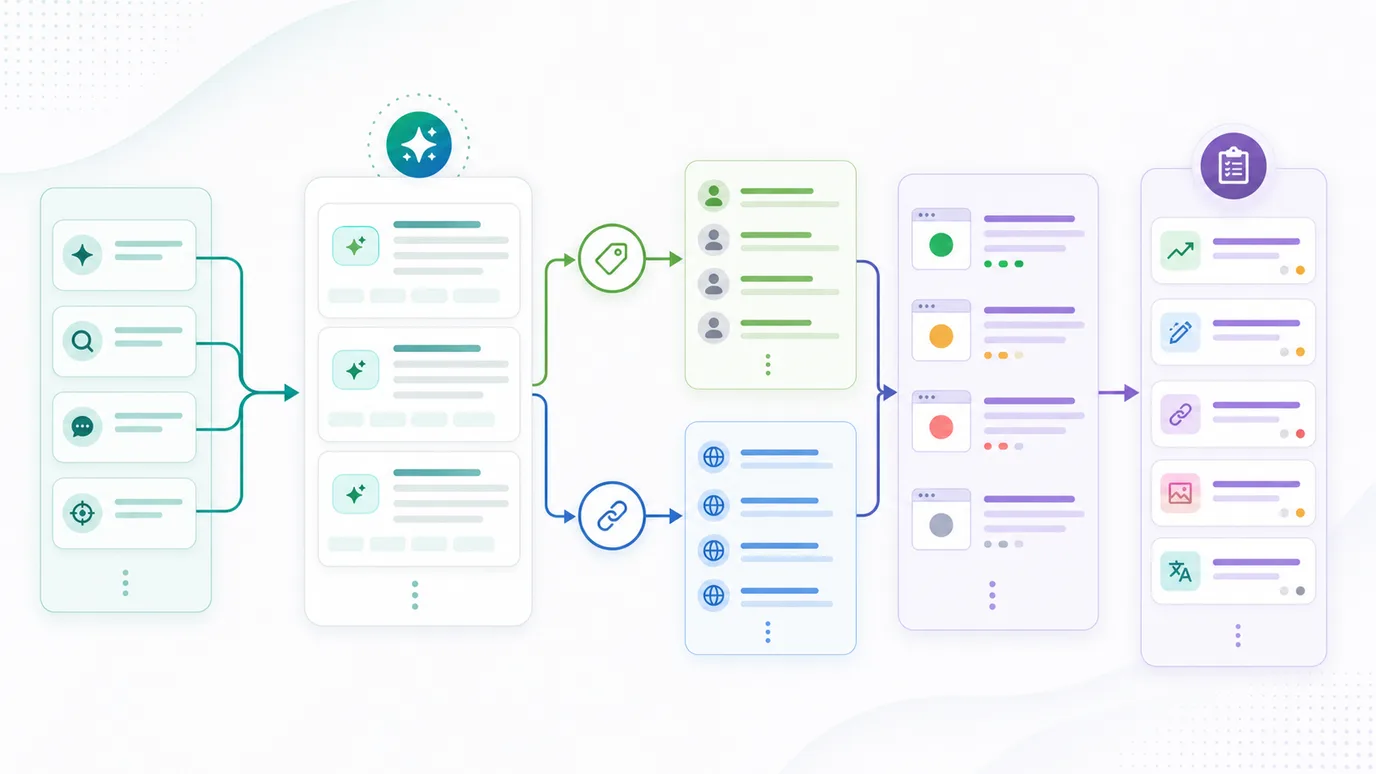
The fastest way to misread AI search competitors is to blend three signals into one number. A mention means the answer names a brand. A citation means a source URL supported the answer. A source-page gap means your site lacks the page, structure, or crawl eligibility needed to compete.
Use this split:
| Signal | Strong competitor pattern | Better Searvora action |
|---|---|---|
| Mention | Competitor appears in the answer, but no source is cited | Improve entity clarity, public descriptions, and category coverage |
| Citation | Competitor URL or third-party source is cited repeatedly | Audit the cited page and build or improve the owned source that should answer |
| Framing | Competitor is described as safer, easier, cheaper, or more complete | Add proof, use-case clarity, comparison context, or product-page specificity |
| Missing source | Your brand is relevant but no owned page fits the prompt | Create a focused article, comparison page, tool page, or support asset |
| Technical block | The right page exists but is hard to crawl, canonicalize, or summarize | Fix indexability, rendered text, internal links, schema, or stale metadata |
This is where AI competitor analysis connects to classic SEO competitor analysis. The competitor's presence proves demand, but it does not decide the asset type. A missing citation might need an article. It might also need a product page, a resource hub, a clearer comparison page, or a technical fix.
Score Competitors By Fixability
Competitor visibility is only useful when it leads to work your team can ship. Score each finding by fixability before adding it to the roadmap.
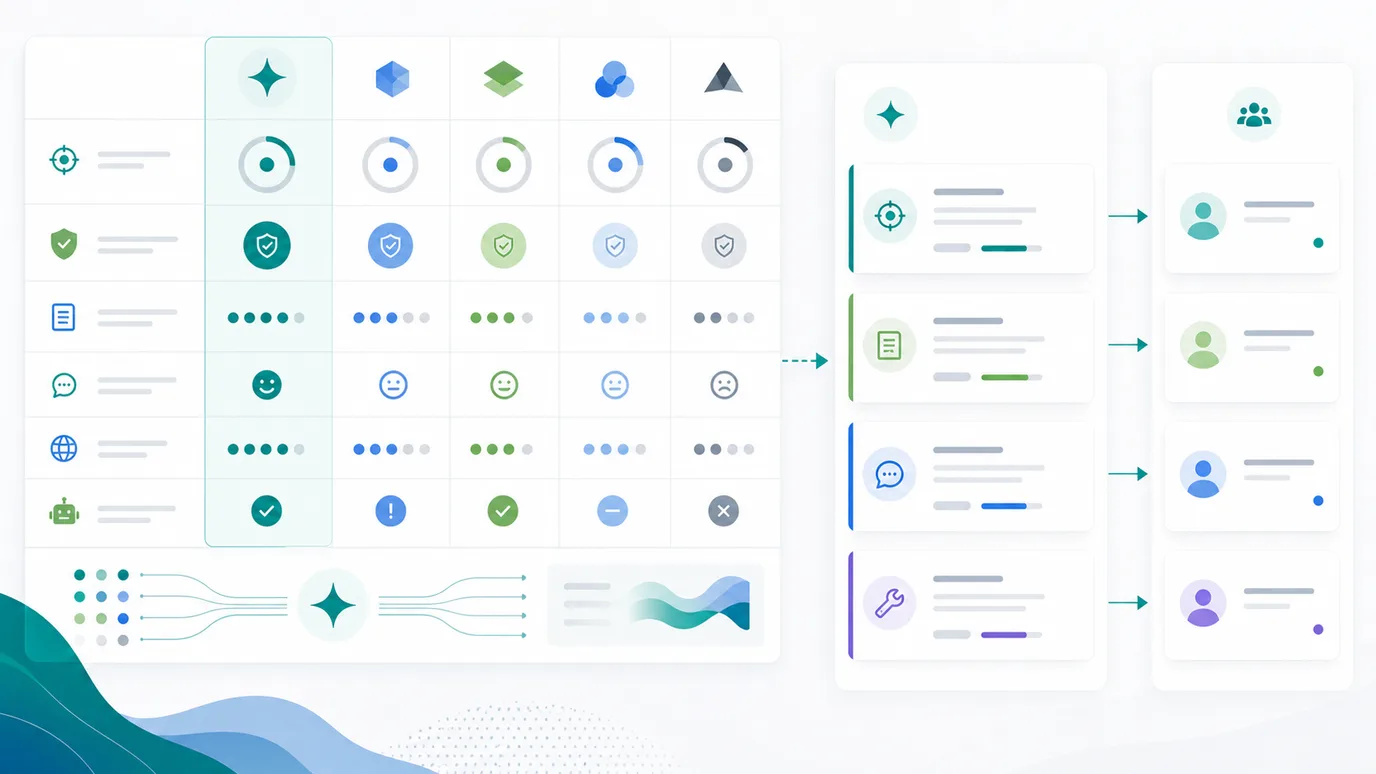
Use this scorecard:
| Dimension | High priority | Lower priority |
|---|---|---|
| Query value | The prompt maps to a product category, buying decision, or high-value support task | The prompt is vague, informational, or far from Searvora's audience |
| Answer stability | The same competitor appears across repeated checks | The answer changes heavily across runs |
| Citation gap | Competitors or third parties are cited where an owned URL should be cited | Mentions appear without stable source URLs |
| Source quality | The cited source has a structure Searvora can beat with clearer evidence | The cited source is a data study, directory, or brand-only page Searvora cannot credibly replace |
| Fix path | The next action is clear: improve, create, consolidate, or technically fix a URL | The team would only produce a generic article |
| Validation window | The team can recheck the same prompt group after changes ship | There is no practical measurement loop |
Do not approve a new article just because a competitor appears. Approve it when the keyword, page type, user job, source-page gap, and information gain are all clear.
Diagnose The Source Page Gap
When a competitor wins an AI answer, compare source pages before drafting. The question is not "How do we mention the keyword more?" The question is "Which public page gives the answer enough evidence to cite us?"
Check the likely Searvora source page:
| Source-page check | Pass condition | Fix when weak |
|---|---|---|
| Direct answer | The opening section answers the task in plain language | Add a concise definition, workflow, or decision rule near the top |
| Extractable structure | Tables, steps, examples, and headings are visible in HTML text | Move key information out of vague prose or image-only sections |
| Entity clarity | Brand, product area, page type, and use case are named consistently | Align homepage, product page, article, and public profile wording |
| Citation usefulness | The page supports one prompt group well | Split overloaded pages or create a child page |
| Crawl eligibility | The page is indexable, canonical, internally linked, and in the sitemap | Fix noindex, robots, redirects, canonical drift, or orphan-page issues |
| Freshness | Time-sensitive claims explain what changed | Update the section that creates trust or accuracy risk |
The brand mentions in AI answers workflow is useful when the main issue is entity awareness. This page is more competitive: it decides which rival source is winning, why it is winning, and which owned page should challenge it.
Where Searvora Fits
Searvora AI SEO Dashboard fits the monitoring layer of AI search competitor analysis. The product page positions it around segment-first monitoring, anomaly and trend detection, opportunity scoring, and cross-team reporting. Those are the views a team needs when AI-answer visibility changes by page type, locale, topic cluster, or owner.
Use the AI SEO dashboard to keep query groups, answer observations, cited URLs, source-page checks, and action status in one cadence. Then route each finding into the right operating path:
| Finding | Dashboard view | Action owner |
|---|---|---|
| Competitor gains mentions for a category prompt | Segment and topic-cluster visibility | SEO lead or product marketing |
| Competitor source is cited for a problem prompt | Citation and source-page ledger | Content owner |
| Your page exists but is technically weak | Crawl and page-health evidence | Technical SEO or engineering |
| Several fixes compete for the same team | Prioritized opportunity queue | SEO lead and channel owner |
| The answer changes after a release | Recheck log and status history | SEO operations |
Use This Weekly Review Checklist
Run this review weekly for important markets, or after a major product, content, or technical release.
- Choose one market, language, topic cluster, and competitor set.
- Reuse stable category, problem, comparison, and branded prompts.
- Record brands mentioned, source URLs cited, answer framing, and the owned page that should support the answer.
- Separate findings into mention gaps, citation gaps, source-page gaps, technical gaps, and watchlist noise.
- Compare the finding against existing pages before approving a new asset.
- Assign one action: improve the source page, create a focused page, add internal links, fix crawl eligibility, clarify product positioning, or watch.
- Record the owner, shipped change, and next recheck date.
- Recheck the same prompt set after enough time for crawling and answer changes.
AI search competitor analysis works when it changes what your team ships. The goal is not to copy the competitor answer. The goal is to understand why that answer trusted a competitor source, then make your own source page clearer, more useful, easier to crawl, and easier to validate next week.