

Low content pages are URLs whose main content looks short enough to deserve inspection. They are not automatically bad pages, and adding filler is not a reliable fix. The useful job is to identify the page's purpose, see whether the pattern repeats across a template, choose the smallest safe action, and confirm that the changed URL still sends clear signals to users and search systems.
Use word count to find candidates, not to decide their fate. A concise product, category, login, or utility page can be appropriate. A thin guide, nearly empty category, or repeated product template may need a more substantial repair—but only after the evidence says the page should own that search task.
Low content is a signal, not a verdict
Screaming Frog's public issue reference labels pages below its default 200-word threshold as low content, while also warning that there is no universal minimum and that page purpose matters. Its filter is useful for creating a review list, not a command to make every URL longer. See the official Low Content Pages reference for the threshold, configuration context, and export workflow.
This distinction prevents two expensive mistakes: expanding a page that should be consolidated or retired, and removing a concise page that already communicates a useful task efficiently. A word count is a flag. Search intent, unique information, template scope, internal links, and the page's business role are the decision evidence.
Start with page purpose and template scope
Review the URL in its page-type cluster before changing it. One short support page might be a deliberate design choice. The same short block repeated across hundreds of indexable category pages is a template-level quality problem with a much larger reach.
| Page type | When a low count can be reasonable | What to verify first | Likely next action |
|---|---|---|---|
| Product or service page | The page has clear specifications, price context, strong media, and a focused conversion task | Main content is rendered, unique, indexable, and useful before a visitor needs more detail | Keep or enrich a specific missing answer |
| Category or collection page | Product selection and filters do most of the work | The category has a distinct query, useful introduction, and no duplicate template copy | Add category context or consolidate overlapping categories |
| Editorial article | The query is narrow and the answer is genuinely concise | The introduction answers the query, examples are accurate, and no larger page owns the same job | Enrich, merge, or redirect based on overlap |
| Help or support page | The task is a short procedural answer | Steps, screenshots, and related help routes make the task completable | Keep concise or clarify the procedure |
| Repeated template page | The same thin pattern appears across a large URL group | Template footprint, indexability, organic demand, inlinks, and unique content | Fix the template, change indexing, or remove the duplicate path |
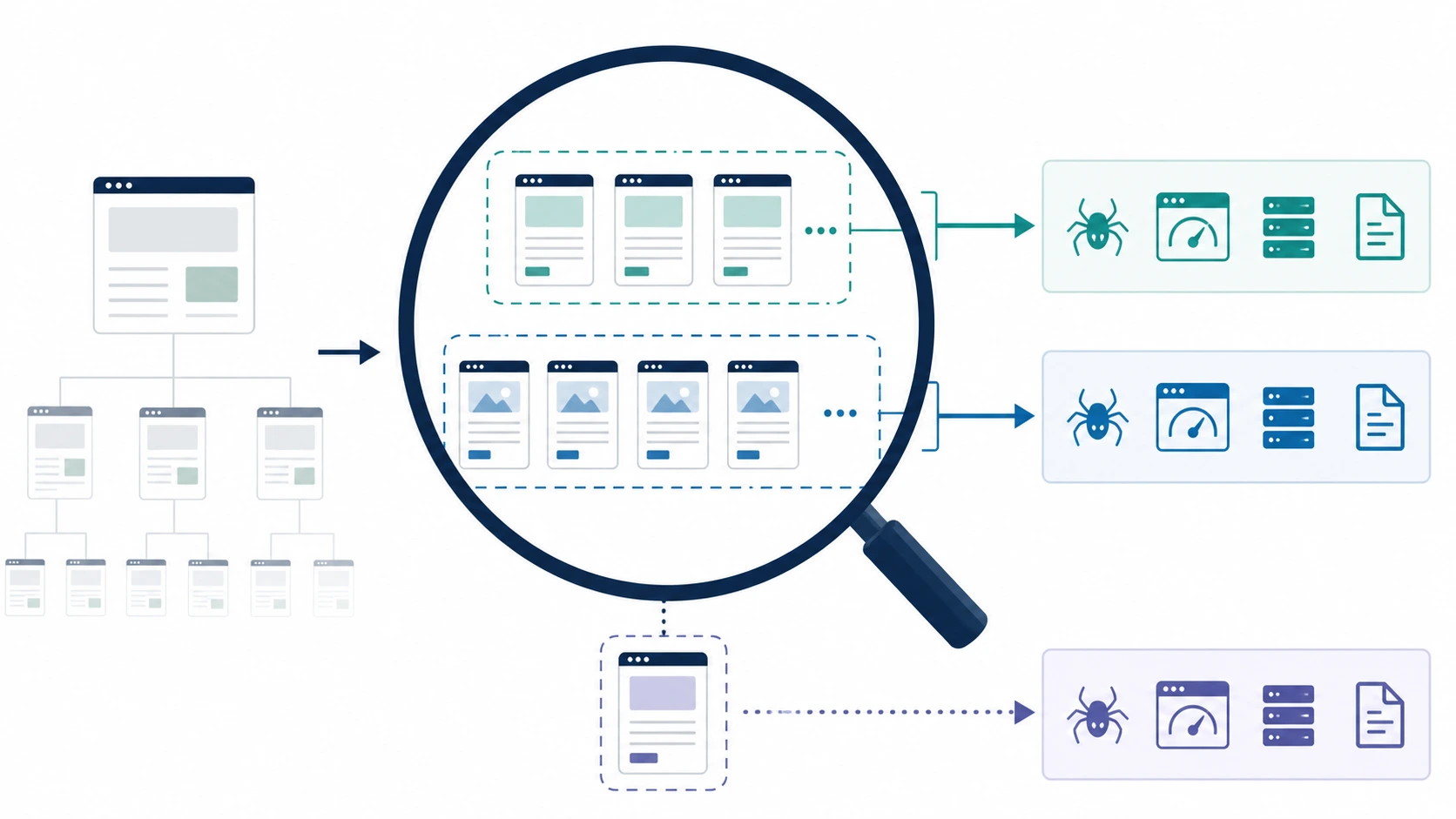
The technical SEO issues workflow helps when the signal is one item in a much larger crawl queue. Use it to separate a local content decision from a pattern that needs design, CMS, or engineering work.
Build a low-content evidence record
Put every candidate URL in a compact evidence record before assigning a writer or developer. The point is to make a page-level decision reviewable, not to create a longer spreadsheet.
| Evidence field | Question it answers | Useful decision consequence |
|---|---|---|
| Page purpose and target query | Does this URL still own a distinct user task? | Keep a distinct page, merge it, or change its role |
| Rendered main content | Is the visitor actually receiving the useful information? | Fix hidden, repeated, blocked, boilerplate, or empty content before expanding copy |
| Template and directory scope | Is this one weak page or a repeated implementation pattern? | Route a template-level problem to the owner who can fix it once |
| Internal links and crawl path | Can important pages be discovered and reached through useful navigation? | Add purposeful links, repair paths, or prevent a thin orphan from being misdiagnosed |
| Indexability and canonical state | Is this the version search systems should evaluate? | Resolve noindex, canonical, redirect, or duplicate-URL conflicts first |
| Search and business evidence | Is there a reason to invest in this page rather than a stronger replacement? | Sequence work by demand, conversion role, and confidence |
| Unique information | Does this page add a better answer than its nearest sibling? | Enrich with specific help or consolidate genuinely duplicate jobs |
Google's helpful, reliable, people-first content guidance is a useful quality check here: the goal is a page that serves a real audience, not a document optimized around a count. If the evidence record shows two URLs serving the same core keyword, page type, and user job, use the content pruning workflow to choose the safer surviving URL and release plan.
Choose one safe fix path
Low content pages need a clear disposition. Do not use all five actions as synonyms, and do not force an editorial rewrite when a structural change is the real fix.
| Fix path | Choose it when | First implementation check |
|---|---|---|
| Enrich | The URL has a valid task but misses the explanation, comparison, examples, or proof a visitor needs | Add specific content that matches the query; do not pad repeated template copy |
| Consolidate | Multiple URLs serve the same task and can become one stronger destination | Pick the canonical survivor, combine useful material, update internal links, and map redirects precisely |
| Redirect | A page has a direct, task-matched replacement | Test the final destination and avoid routing visitors to a generic category or homepage |
| Noindex or limit discovery | Users still need the page but it should not compete for broad organic visibility | Keep the user path accessible, make the directive crawlable, and confirm it matches the product or support need |
| Keep | The page is concise by design and evidence says it is useful, unique, and technically healthy | Record why the page is intentionally short so the next audit does not reopen the same false positive |
For consolidation decisions, Google's canonical consolidation guidance is a practical reference: send each old URL to a meaningful surviving destination rather than treating redirects as a generic cleanup tool.
Ship a small cohort and validate the result
Start with one page type or directory, then compare the before-and-after crawl evidence. A cohort lets the team detect an unintended template side effect before changing every short page on the site.
- Save the baseline URL list, rendered content evidence, page purpose, template, links, canonical, and expected action.
- Assign one owner and one acceptance check for each decision.
- Ship the content, template, redirect, or indexability change as a small release.
- Re-crawl the same URL set and check the final response, canonical, links, sitemap behavior, and rendered content.
- Review the post-change search and business signals after a meaningful window; record whether the original hypothesis held.
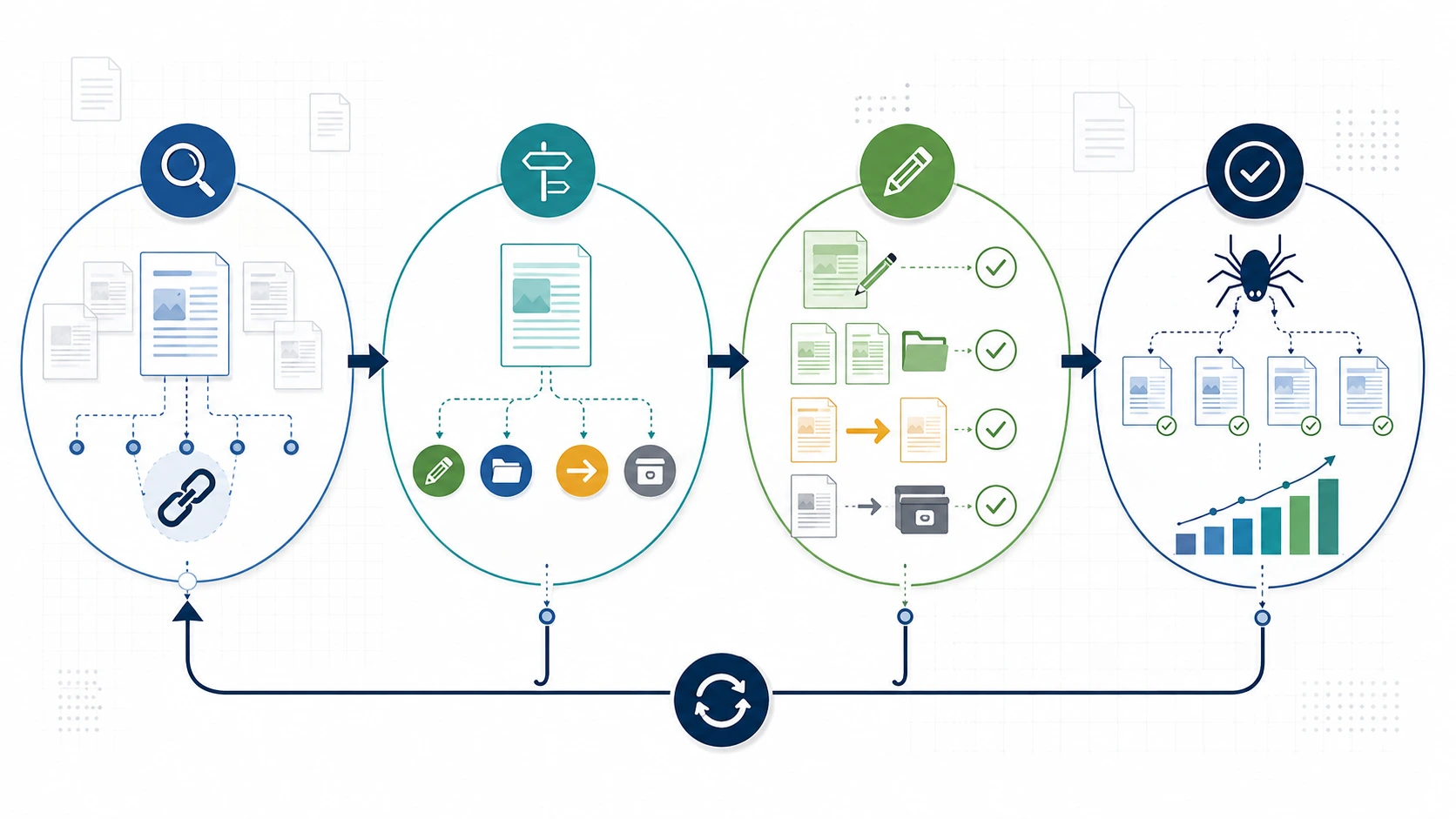
The validation step matters as much as the content edit. A richer page that becomes non-indexable, loses internal links, or conflicts with a canonical target has not solved the SEO task. The content audit workflow is the right supporting process when this review must be repeated across a whole site inventory.
Where Searvora fits
Searvora's SEO Spider Crawler fits the evidence and handoff layer of this process. Its product page describes online crawling, rendering, sitemap and robots checks, indexability and architecture diagnostics, on-page content QA, issue grouping, and owner-ready fix queues. Use those inputs to distinguish a thin page that needs a better answer from a short page that needs no editorial expansion at all.

Low content pages checklist
- Confirm the page's user task before reading the word count as a verdict.
- Compare the URL with its template and directory peers.
- Check rendered main content, indexability, canonical selection, inlinks, and sitemap behavior.
- Separate pages that need richer unique help from pages that need consolidation, a redirect, or a different indexability decision.
- Change a small cohort first and preserve a before-and-after evidence record.
- Re-crawl the same URL set before deciding the work is complete.