

The best SEO books are useful when they change what you do after you close the chapter. A strong reading list should help you diagnose crawl problems, choose page types, brief content, evaluate authority, and explain search work to other teams.
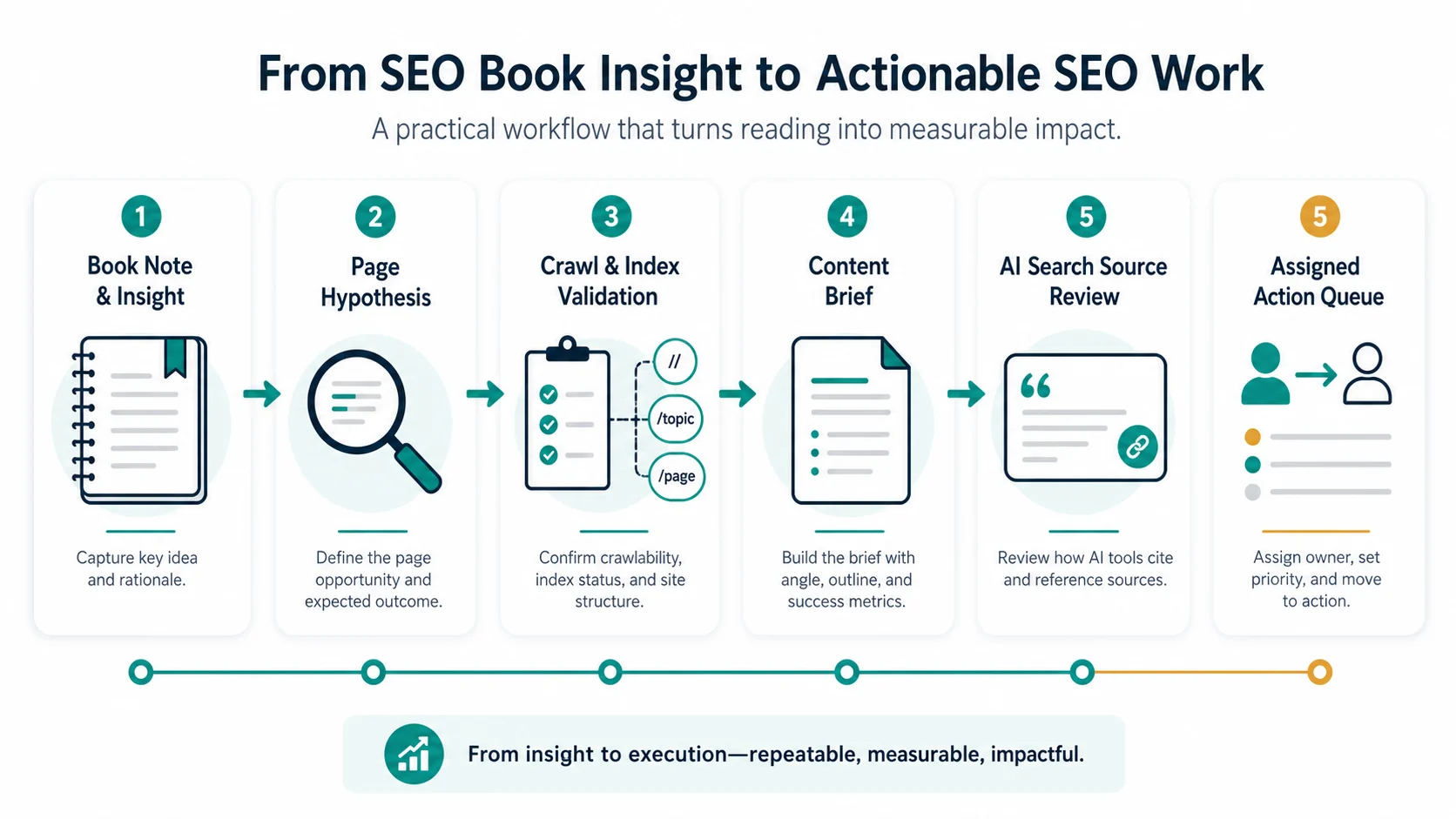
The Ahrefs page that surfaced this competitor opportunity proves the search intent is a real book roundup. Searvora's information gain is the execution layer: choose SEO books by the workflow skill they build, then turn the lesson into a crawl check, content brief, AI-search source review, or assigned action.
Choose SEO Books By The Work You Need To Improve
Start with the job, not the bookshelf. A beginner reference helps when a teammate needs shared language. A product-led strategy book helps when SEO has to earn revenue, not just traffic. A writing book helps when the next bottleneck is unclear copy. A technical reference helps when crawl, structure, and site architecture decisions keep repeating.
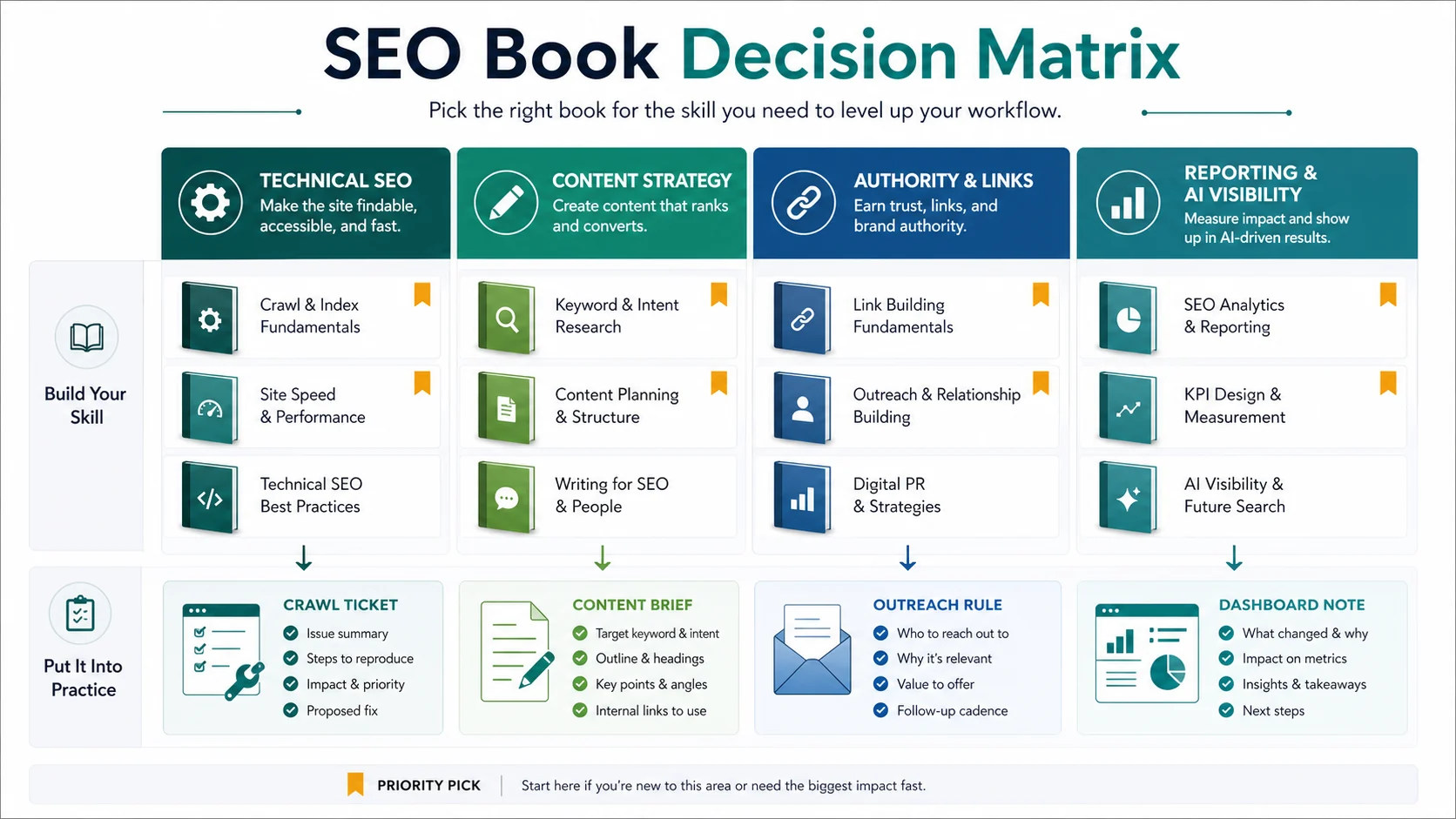
| SEO book | Best fit | Turn the reading into |
|---|---|---|
| The Art of SEO | Broad SEO foundation and technical vocabulary | A crawl, content, and measurement checklist for the next audit |
| Search Engine Optimization All-in-One For Dummies | Beginner-to-intermediate SEO reference | A simple training path for new marketers or founders |
| Product-Led SEO | Product strategy and demand-led page decisions | A page-type decision rule tied to business value |
| Entity SEO | Entity clarity, semantic search, and AI-search source quality | An entity evidence checklist for important pages |
| Information Architecture | Site structure, navigation, and findability | A taxonomy, hub, and internal-link review |
| Everybody Writes | Clearer marketing and SEO copy | A page intro, heading, and evidence-editing checklist |
| Content Chemistry | Content marketing systems and analytics | A content calendar and measurement loop |
| They Ask, You Answer | Buyer questions and trust-building content | A question-led content backlog and answer priority map |
Best SEO Books Shortlist
This is not a universal ranking. It is a practical shortlist for SEO teams that need a mix of fundamentals, product strategy, technical structure, writing quality, content operations, and buyer-question discipline.
1. The Art of SEO
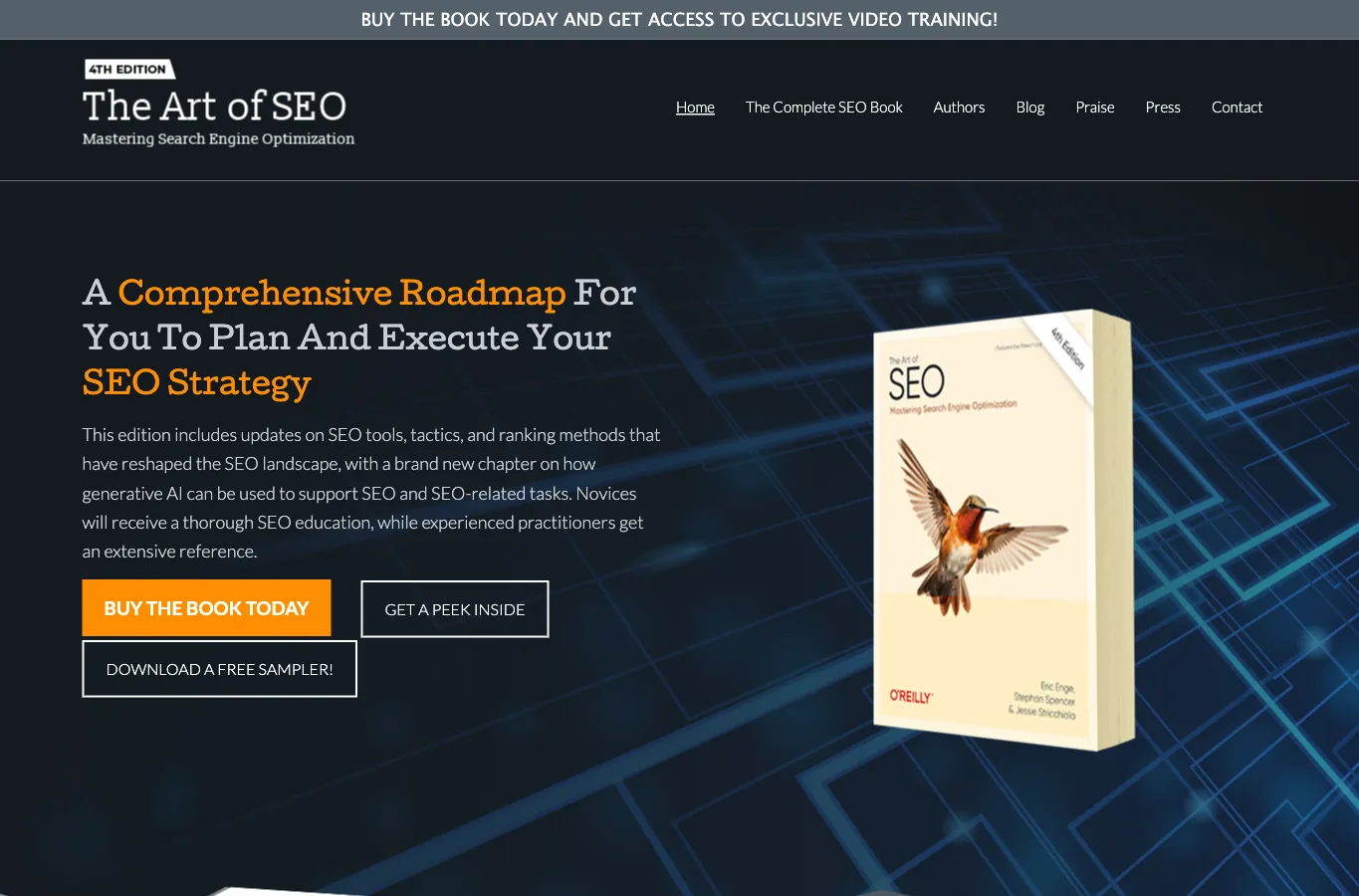
The official The Art of SEO website positions the fourth edition as a broad roadmap for planning and executing an SEO strategy, including updates around SEO tools, tactics, ranking methods, and generative AI. That makes it strongest as a shared reference for teams that need common SEO vocabulary before they debate priorities.
Use it when the team keeps mixing up strategy, technical implementation, content quality, and measurement. The practice artifact should be a one-page audit map:
| Reading note | Convert it into |
|---|---|
| Crawling and indexability | URL sample, crawl status, indexability rule, and owner |
| Keyword and content strategy | Query, intent, page type, angle, and internal-link target |
| Technical implementation | Template issue, impact estimate, fix owner, and validation check |
| Measurement | Baseline metric, expected signal, and recheck date |
The book is broad by design. Use it for foundation and alignment, then turn each chapter into one small decision your team can test.
2. Search Engine Optimization All-in-One For Dummies
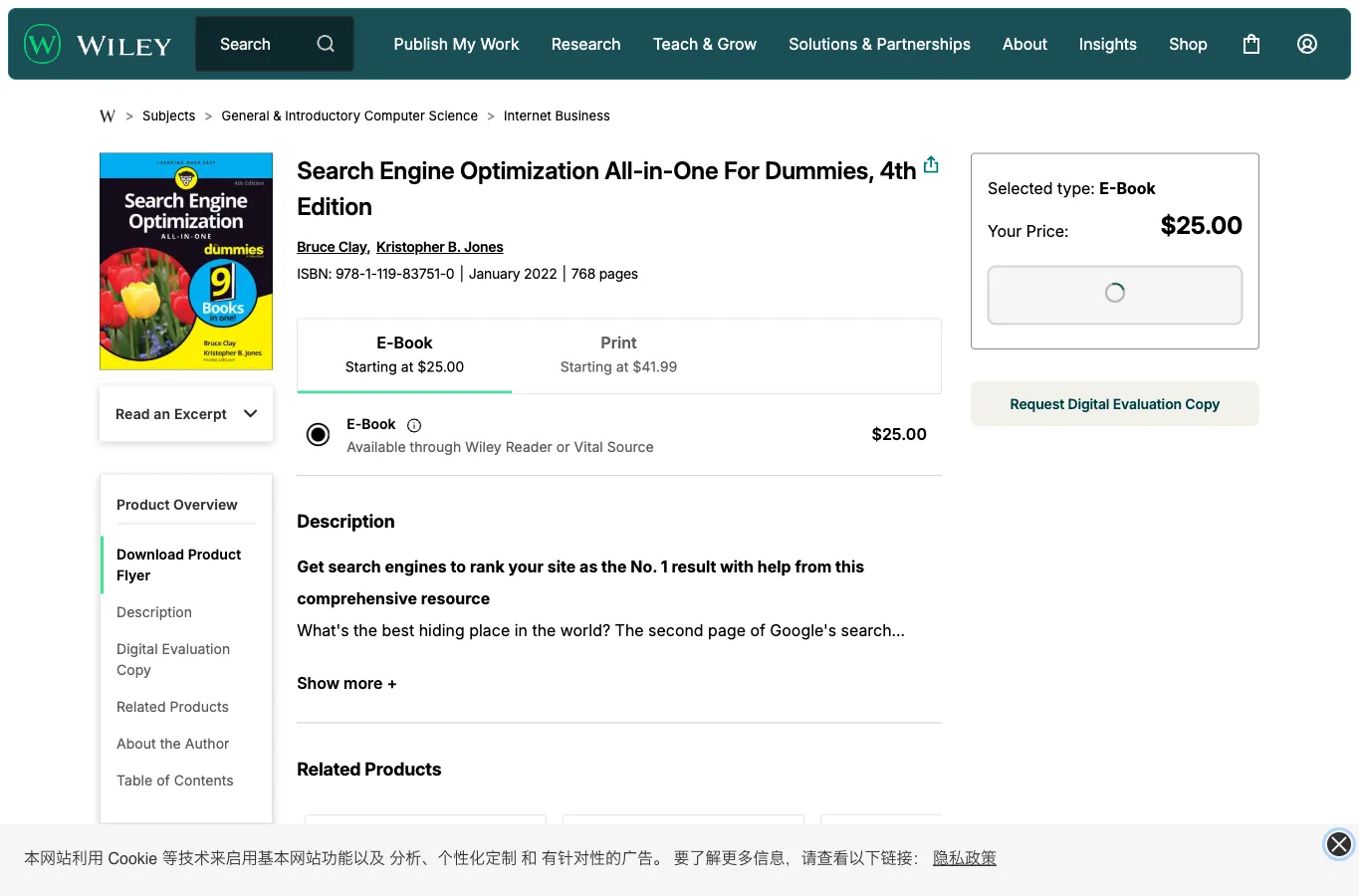
The official Wiley product page lists Bruce Clay and Kristopher B. Jones as authors of the fourth edition. This is a better fit for beginners, founders, and generalist marketers than for an advanced technical SEO team.
Use it when someone needs a structured introduction before they touch a live site. The output should not be "I read a beginner book." It should be:
- Pick one important page.
- Identify the target search task and page type.
- Check the title, intro, headings, internal links, crawl access, and measurement path.
- Write one action that improves the page.
- Recheck whether the change produced a visible signal.
This is also a good training companion for free SEO courses. Courses create cadence; a reference book helps the learner look up the concept again when the task gets real.
3. Product-Led SEO

The official Product-Led SEO page frames SEO as a business growth discipline, not a bag of traffic tactics. That makes it useful when a team is creating pages because keywords exist, but cannot explain why those pages should matter to the product or revenue model.
Use it when your backlog has too many "maybe we should write this" ideas. The practice artifact is a page-type rule:
| If the search task is | Prefer |
|---|---|
| A definition or concept | Article or glossary page |
| A comparison or buying decision | Comparison article, landing page, or product page |
| A repeatable calculation or check | Tool page |
| A cluster of related subtopics | Hub with child articles |
| A workflow inside your product | Product-led landing page or tutorial |
This is where Searvora's competitor URL lane needs discipline. A competitor article can reveal demand, but it does not prove the same page type is right for Searvora. Product-led thinking keeps the team from publishing a blog post when a tool, hub, or product page should own the job.
4. Entity SEO
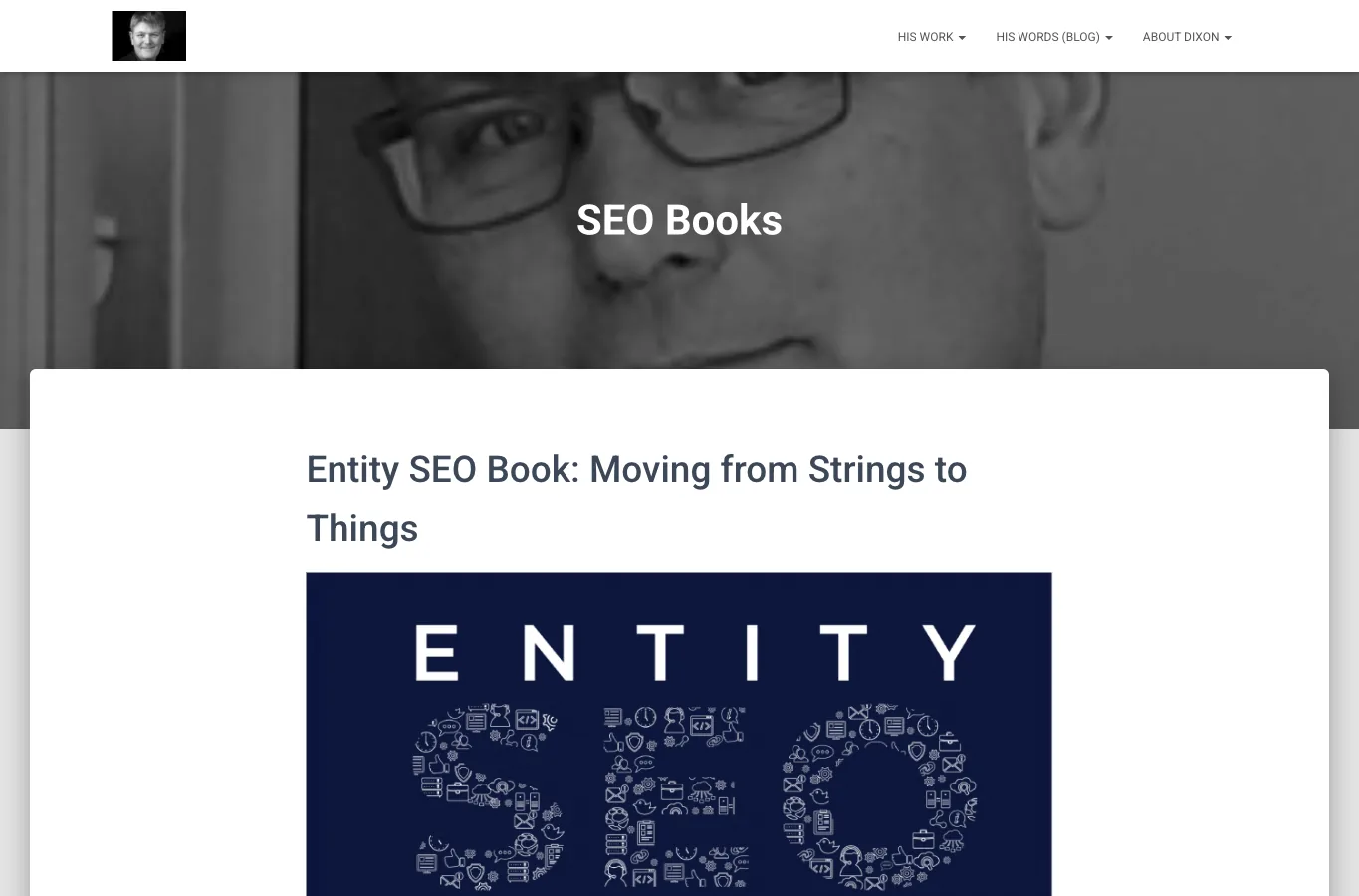
Dixon Jones' official SEO Books page includes Entity SEO, which is useful for teams thinking beyond keyword strings. The strongest reader job is not memorizing another acronym. It is making important pages easier for search engines and AI answer systems to understand as sources.
Use it when your pages mention people, brands, products, places, categories, and concepts, but the relationships are unclear. The practice artifact is an entity evidence checklist:
| Page element | Evidence to check |
|---|---|
| Entity name | Is the primary entity named consistently? |
| Attributes | Are facts, categories, and descriptors visible in the copy? |
| Relationships | Does the page explain how the entity connects to products, topics, people, or locations? |
| Source support | Are important claims linked to official or durable sources? |
| Technical clarity | Do titles, headings, schema, canonicals, and internal links reinforce the same meaning? |
That is why entity work connects naturally to AI-search visibility. A page that cannot explain its own subject clearly is a weak candidate for citation, summary, or answer inclusion.
5. Information Architecture
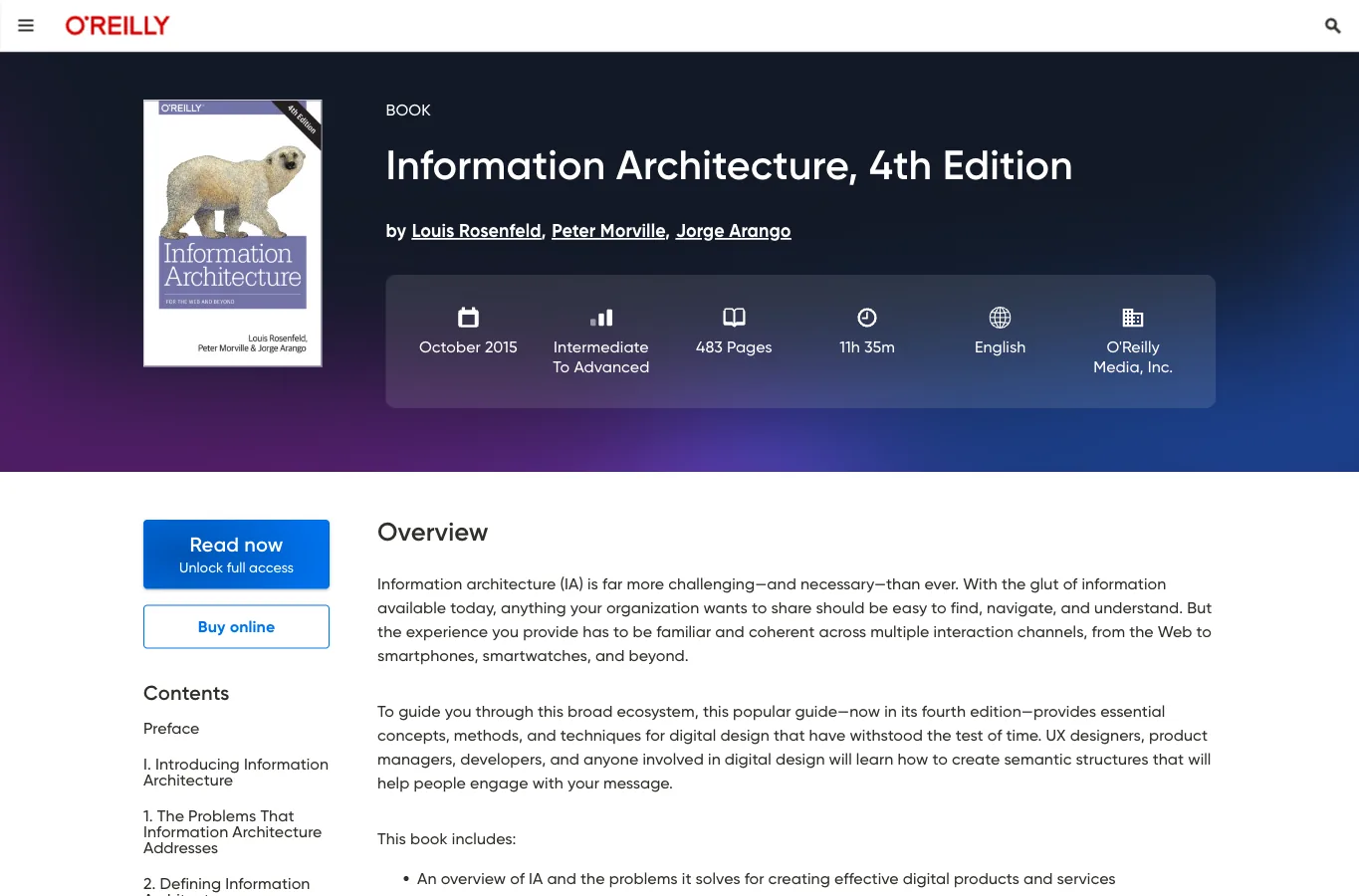
The official O'Reilly page for Information Architecture is not an SEO-only book, but it belongs on an SEO operator's shelf because many search problems are structure problems. If pages are hard to find, grouped poorly, named inconsistently, or disconnected from the user's task, SEO fixes become fragile.
Use it when the site has too many orphan pages, thin category paths, confusing hubs, or repeated topics. The practice artifact is a structure review:
- List the important page groups.
- Name the user task for each group.
- Check whether navigation, breadcrumbs, internal links, and headings reinforce that task.
- Identify parent hubs and child pages.
- Decide whether to create, merge, prune, redirect, or link.
Pair this book with content hubs for SEO when the team needs to turn structure theory into topic-cluster decisions.
6. Everybody Writes
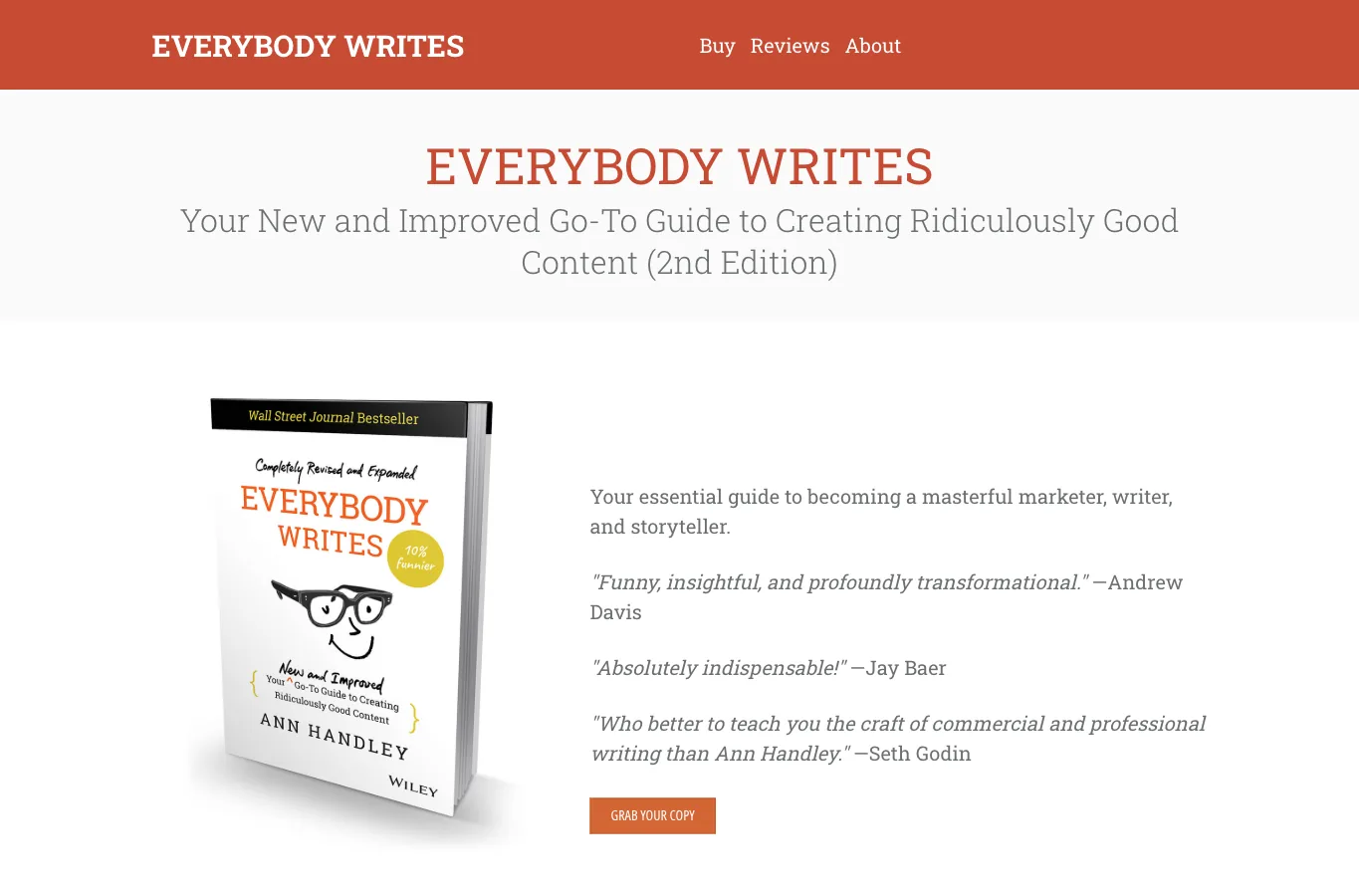
Ann Handley's official Everybody Writes page makes the book a strong fit for content teams that already know what to write but struggle to make the page clear, useful, and credible.
Use it when pages are technically eligible but weak to read. The practice artifact is a writing QA pass:
| Page part | Editorial check |
|---|---|
| Intro | Does it answer the search task immediately? |
| H2s | Can a reader scan the workflow without reading every paragraph? |
| Evidence | Are claims supported by sources, examples, or product context? |
| Specificity | Did the writer name the page type, owner, signal, or next action? |
| CTA | Does the recommendation fit the reader's actual job? |
Good writing is not decoration for SEO. It is how a page earns trust, makes the next action obvious, and avoids sounding like a generic keyword rewrite.
7. Content Chemistry
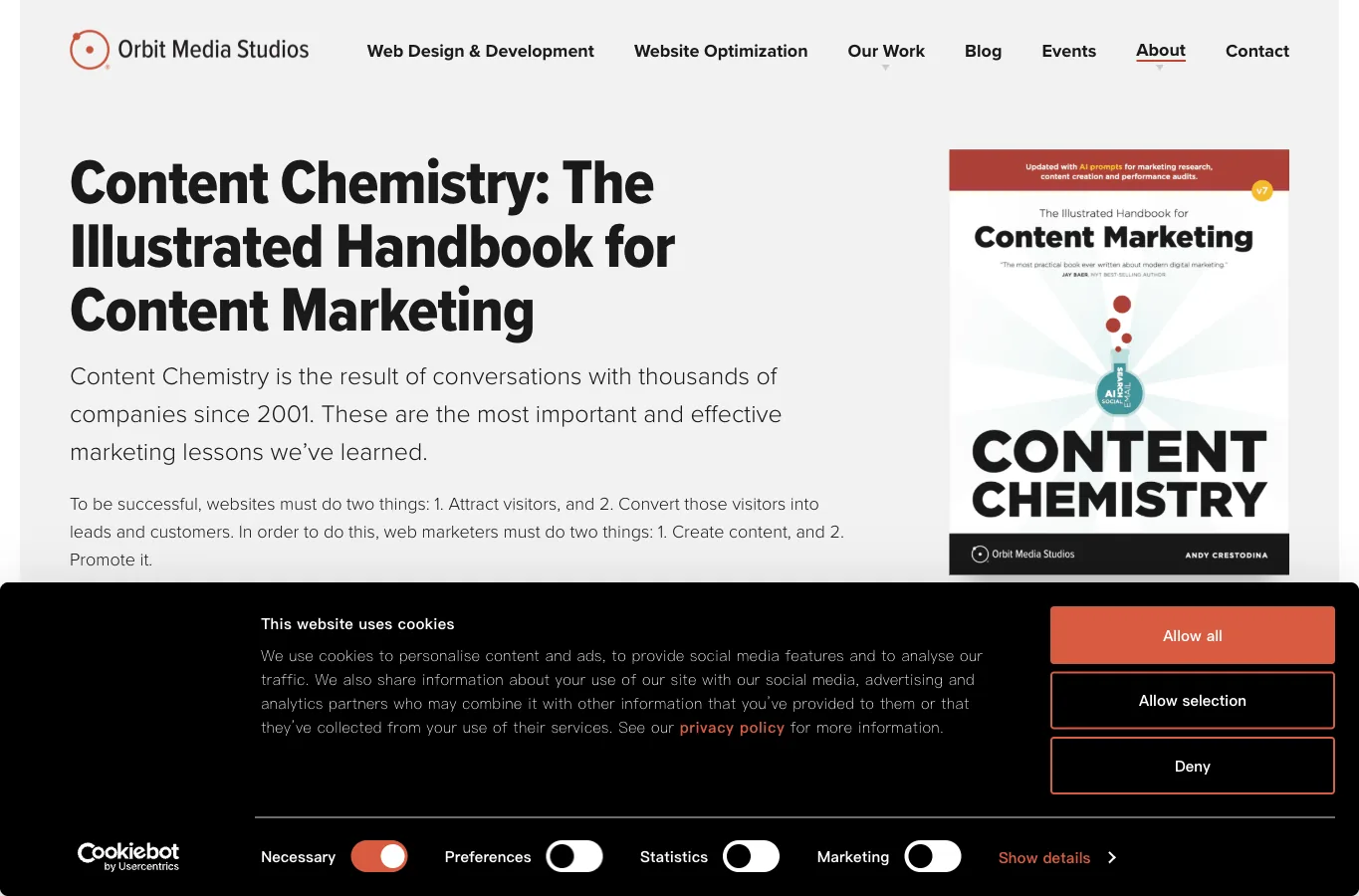
Orbit Media's official Content Chemistry page describes a content marketing handbook by Andy Crestodina. For SEO teams, its best use is not another theoretical content plan. It is a way to connect publishing cadence, promotion, analytics, and refresh decisions.
Use it when the team publishes but does not learn from what happens after launch. The practice artifact is a content measurement loop:
- Capture the publish date, target query, internal links, and source evidence.
- Set a review window.
- Compare impressions, clicks, rankings, conversions, assisted leads, or AI-search mentions.
- Decide whether the page needs refresh, consolidation, promotion, internal links, or no action.
- Document the next owner and recheck date.
This is where content audit habits matter. A content system is only useful if old pages keep teaching the next brief.
8. They Ask, You Answer
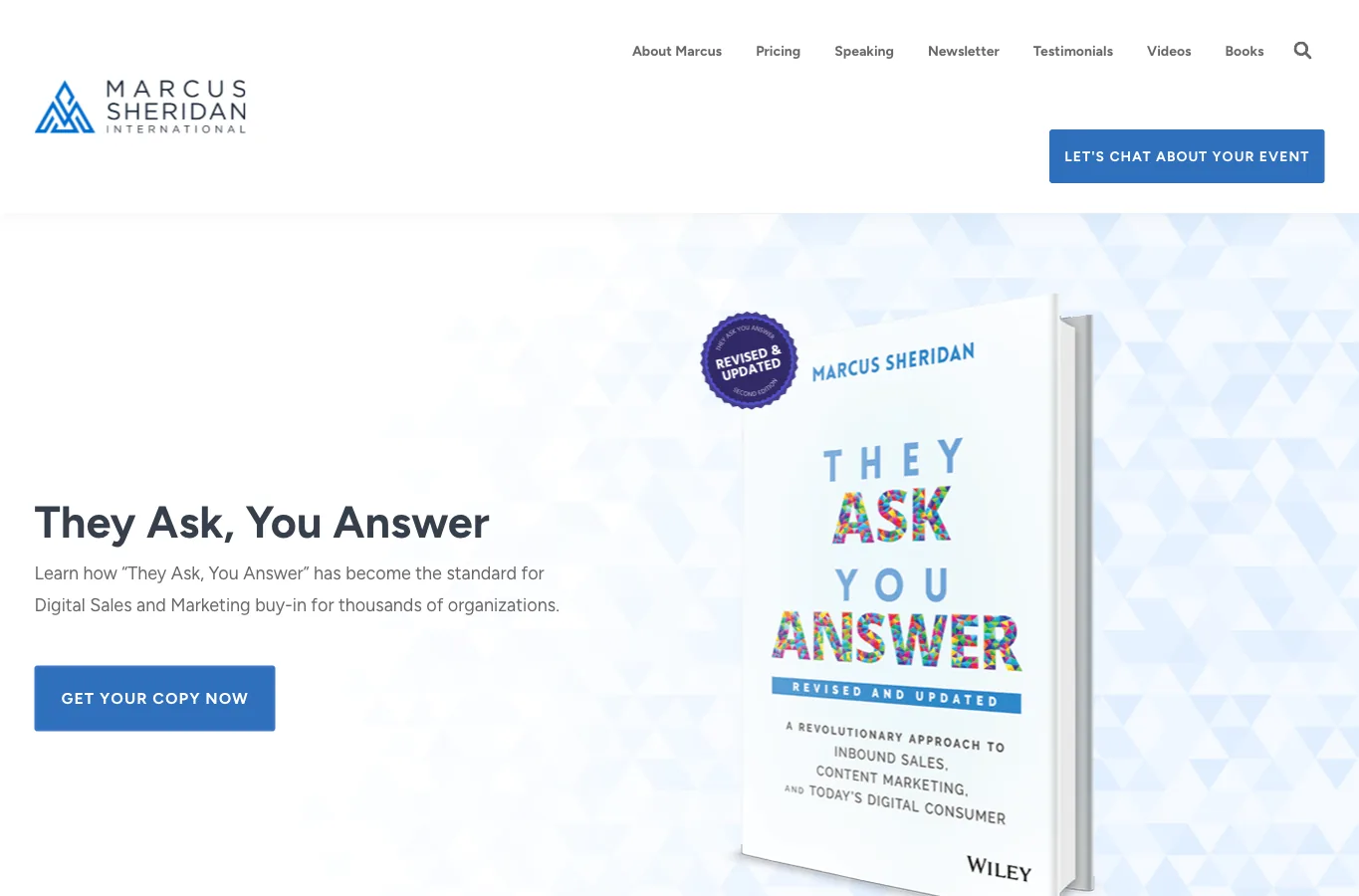
Marcus Sheridan's official They Ask, You Answer page is useful for teams that need to turn buyer questions into trustworthy content. The SEO value is the discipline of answering real questions clearly instead of hiding pricing, comparisons, risks, or objections behind sales calls.
Use it when your content backlog is full of brand-safe topics but light on buyer intent. The practice artifact is a question backlog:
| Question type | Page action |
|---|---|
| Cost and pricing | Publish a transparent explainer, calculator, or pricing page when possible |
| Problems and risks | Create a fair article that helps readers avoid mistakes |
| Comparisons | Build a comparison page with scenarios, not a fake universal winner |
| Reviews and alternatives | Use official sources and explain fit honestly |
| Best options | Write a true roundup with criteria and evidence |
This book is especially useful when content and sales teams disagree about what should be public. SEO often performs better when the page answers the uncomfortable question better than the SERP.
Turn Book Notes Into SEO Work
Reading becomes useful when it creates a small proof-of-work artifact. Do this after every chapter, not after the entire book.
| Book note | Proof-of-work artifact |
|---|---|
| "Crawling matters" | Crawl sample grouped by issue, template, severity, and owner |
| "Search intent matters" | Brief with query, page type, SERP evidence, and overlap check |
| "Structure matters" | Hub map, child page list, and internal-link plan |
| "Writing matters" | Intro rewrite, H2 pass, evidence review, and CTA check |
| "Entities matter" | Source-page checklist for names, facts, relationships, and schema |
| "Measurement matters" | Dashboard note with baseline, changed page, expected signal, and recheck date |
The same habit keeps a reading list from creating duplicate content. If a book suggests a topic you already cover, decide whether the right action is update, merge, internal link, or monitor. Do not publish a second page just because the idea sounds useful.
Where Searvora Fits
Use the AI SEO consultant when book notes, competitor ideas, crawl findings, content opportunities, and AI-search signals need to become prioritized work. The consultant layer is strongest after reading creates too many possible next steps and the team needs to decide what should ship first.
The best SEO books are not magic shortcuts. They are inputs for judgment. Choose one by the workflow it improves, take one note, turn it into one artifact, and validate whether the work changed a real page or decision.