

Ahrefs free tools are useful when you treat them as checks, not as a complete SEO operating system. They can help you inspect a verified site, estimate competitor signals, find keyword ideas, look at backlinks, and sanity-check parts of a SERP. The hard part is deciding what should happen after the result appears.
The Ahrefs article that surfaced this opportunity frames the topic around things marketers can do in Ahrefs for free. Searvora's information gain is the next layer: map each free check to a decision, an owner, and a validation step so the team does not collect tool outputs without shipping work.
Start With The Job Behind The Free Tool
Do not choose an Ahrefs free tool because it is available. Choose it because it answers one operational question.
| Reader job | Ahrefs free surface to inspect | Better next question |
|---|---|---|
| Audit a site you can verify | Ahrefs Webmaster Tools | Which technical, link, or analytics signal deserves owner review? |
| Expand a seed keyword | Free Keyword Generator | Does this keyword need a new page, a section, or an existing-page update? |
| Check backlink context | Backlink Checker | Is the link evidence useful, noisy, or risky enough to investigate? |
| Estimate competitor traffic | Website Traffic Checker | Which page is worth reviewing, and what user job does it satisfy? |
| Browse single-purpose tools | Ahrefs Free SEO Tools | Is this a quick lookup or the start of a repeatable workflow? |
That rule keeps free tools from becoming tool debt. A free report is cheap to create, but it still costs attention. If nobody knows what action the report should trigger, the team has only moved uncertainty into another tab.
Turn Free Checks Into An Action Queue
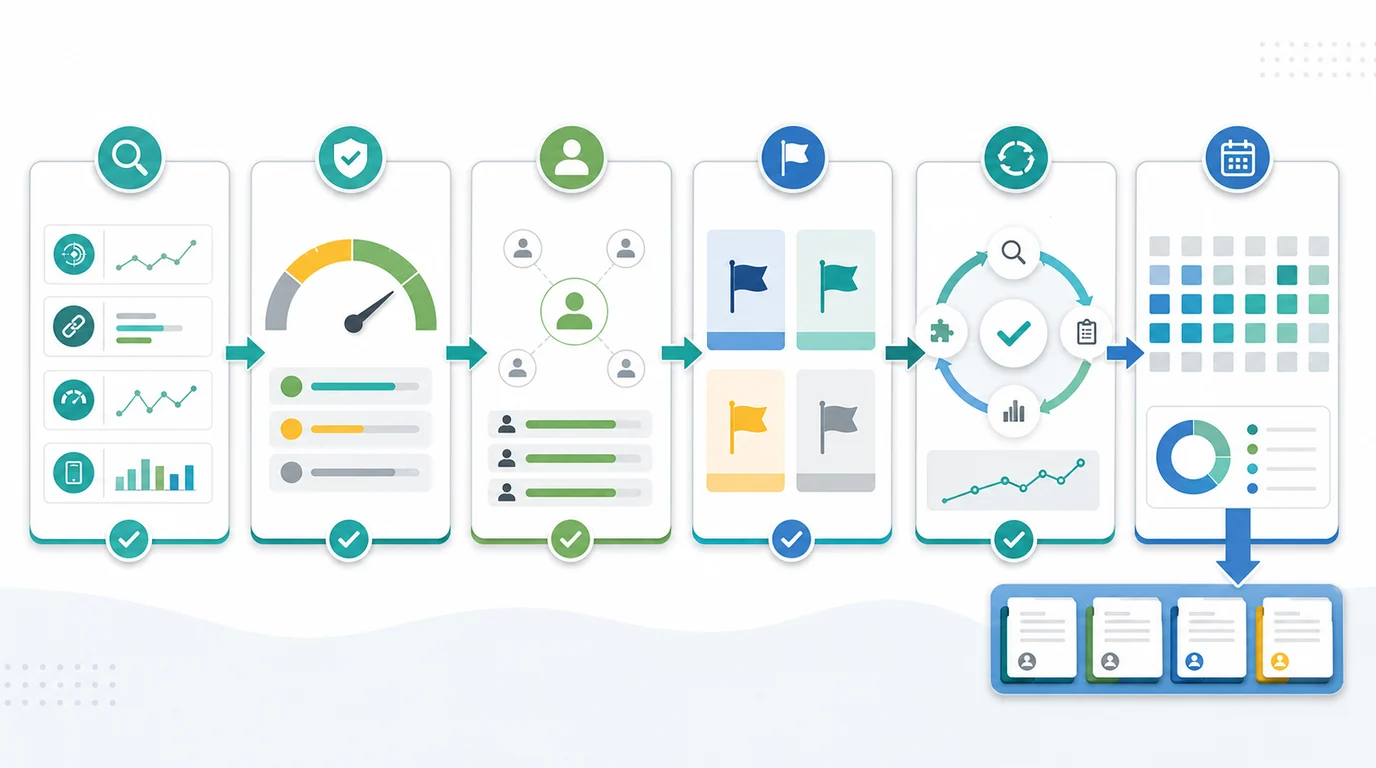
Use this translation layer after the first free check:
| Free-tool finding | Do this before assigning work | Likely owner |
|---|---|---|
| Site audit issue appears | Confirm affected URL group, severity, indexability risk, and recurrence | SEO plus engineering |
| Keyword idea looks promising | Check intent, page type, existing coverage, and internal-link fit | SEO plus content |
| Competitor page earns traffic | Identify the user job and whether your site can add information gain | SEO strategist |
| Backlink sample looks strong | Review source relevance, anchor context, and target-page quality | SEO or digital PR |
| Traffic estimate suggests a gap | Validate with your own analytics and search-console context before forecasting | Growth lead |
The free tool is the intake step. The operating work is deciding whether the finding becomes a fix, a brief, a refresh, an internal link, a monitor, or a no-op.
This is where the existing Searvora free SEO tools overview is the broader companion piece. It compares free tools by job. This article is narrower: how to read Ahrefs free tools without mistaking free access for a workflow.
Use Ahrefs Webmaster Tools For Verified-Site Questions
Ahrefs Webmaster Tools is the strongest fit when you can verify the site and need owned-site evidence. Ahrefs positions the page around free SEO tools to grow your site, which makes it useful for site owners who need technical and visibility checks before deciding what to fix.
Use it for questions like:
- Are there technical issues that affect important pages?
- Is the site earning visibility from the pages the team actually cares about?
- Are there backlink or internal-link signals worth reviewing?
- Does a finding affect one URL, a template, or an entire section?
The mistake is treating every discovered issue as equal. A low-priority issue on a weak page should not beat a canonical, crawl, or internal-link problem on a revenue page. Before assigning work, group findings by page type, business value, and validation path.
For a more general walkthrough of turning Ahrefs reports into execution, use the Ahrefs tutorial workflow. The principle is the same: reports become useful when they produce owners and proof, not when they create longer exports.
Read Keyword And SERP Tools As Planning Inputs
Free keyword tools are good at opening the conversation. They are weaker at ending it.
If a free keyword generator returns a promising phrase, do not approve a new URL yet. Ask:
| Planning check | Why it matters |
|---|---|
| Intent | The same phrase can require a guide, tool page, comparison, hub, or product page. |
| Existing coverage | Adjacent articles may already satisfy the same user job. |
| Page type | A keyword can look informational while the winning results are tools or templates. |
| Internal links | A new article should support a cluster, not split it. |
| Validation | The team needs a way to know whether the page helped after publishing. |
This is especially important for branded Ahrefs queries. Someone searching for Ahrefs free tools may want to know what Ahrefs itself offers, not a generic list of free SEO software. Answer that intent fairly first, then introduce Searvora only where the reader's next job is execution: prioritization, action planning, monitoring, or crawl validation.
Decide When Free Tools Are Enough
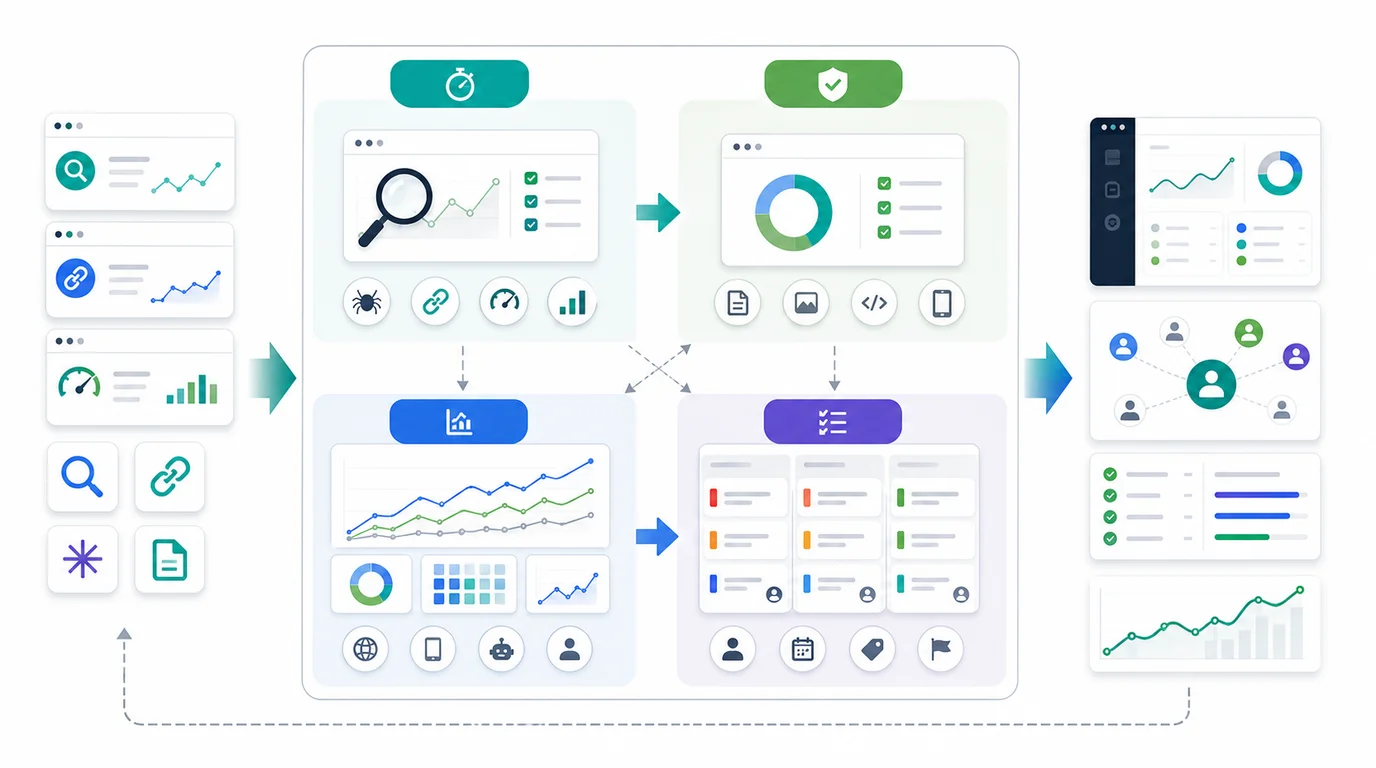
Free tools are enough when the decision is small, bounded, and easy to validate. They are not enough when the work repeats, crosses teams, or affects high-value pages.
| Situation | Free tool is enough when | Move into workflow when |
|---|---|---|
| One-page check | You only need a quick signal before editing one page | The same issue appears across templates or sections |
| Keyword idea | You need seed ideas for a brief | You must choose page type, owner, internal links, and publish priority |
| Backlink check | You are sampling source context | You are planning outreach, risk review, or link reclamation |
| Competitor traffic estimate | You are deciding whether to inspect a page | You are forecasting impact or building a content roadmap |
| Technical issue | The fix is obvious and isolated | The issue touches crawl access, canonicals, redirects, hreflang, or release QA |
That line protects lean teams. Free tools can reveal enough to act, but they rarely create the operating cadence that keeps fixes moving.
Where Searvora Fits After The Free Check
Searvora should not replace the Ahrefs free-tool question. If the reader wants to know what Ahrefs offers for free, the official Ahrefs pages are the source of truth.
Searvora fits after the free check, when the team needs to turn evidence into work:
| After the Ahrefs check | Searvora layer |
|---|---|
| A technical issue appears | Use the SEO Spider Crawler workflow to validate crawl, indexability, canonical, link, sitemap, and metadata impact. |
| A keyword idea looks viable | Use AI SEO Consultant to decide page type, priority, and brief shape. |
| A competitor page deserves review | Compare the page job against existing coverage before creating another article. |
| A metric or backlink signal moves | Read it with context instead of chasing the score. |
| A pattern repeats weekly | Move the signal into monitoring and owner-ready queues. |
If the question is still about the metric itself, the Ahrefs SEO metrics guide is the cleaner next read. If the question is which free tools belong in the broader stack, use free SEO tools. If the question is execution, use the consultant workflow above.
The Practical Checklist
Before keeping any Ahrefs free-tool finding in the queue, answer these six questions:
- Which URL, keyword, source, or competitor page triggered the check?
- What user job does the finding affect?
- Is this a new page, existing-page update, technical fix, internal link, or monitor?
- Which owner can act on it?
- What evidence would prove the work shipped correctly?
- What should be ignored because it is noise, duplicate coverage, or the wrong page type?
Ahrefs free tools are useful at the signal stage. The advantage comes from what happens next: fewer orphan reports, fewer duplicate briefs, cleaner priorities, and a workflow that turns free evidence into shipped SEO work.