

If the question is how does ai search visibility impact pipeline metrics, the practical answer is that AI search changes the signals buyers see before they become trackable traffic, leads, or opportunities. The work is not to declare every brand mention as pipeline. The work is to connect AI-answer evidence, cited source pages, assisted search demand, and conversion paths to a weekly review that revenue teams can trust.
AI search visibility sits upstream from many pipeline metrics. A buyer may discover the category through an AI answer, compare vendors through cited pages, return through branded search, and convert days later through a normal form. That makes the measurement job stricter, not looser.
Separate Visibility From Pipeline
Start by separating the signal from the business outcome. AI visibility tells you whether the brand, product, source page, or competitor appears in answer-led discovery. Pipeline metrics tell you whether the right accounts move toward qualified demand, opportunities, and revenue.
Use this split before reporting impact:
| Layer | What it measures | Why it matters |
|---|---|---|
| Mention visibility | Whether the brand or product is named in AI answers | Shows category awareness but not source ownership |
| Citation visibility | Whether owned URLs are used as sources | Shows which pages deserve improvement or protection |
| Source-page demand | Search Console, branded search, and page cohort movement | Shows whether answer exposure may be changing discovery |
| Assisted conversion | Form fills, demos, trials, or sales touches after visibility changes | Starts connecting visibility to real buyer behavior |
| Pipeline quality | Accepted opportunities, account fit, sales stage, and win context | Confirms whether visibility attracts useful demand |
Build A Signal Chain
AI-search visibility affects pipeline when a signal chain can explain how discovery turned into demand. The chain does not need to be perfect, but it needs enough evidence to avoid storytelling.
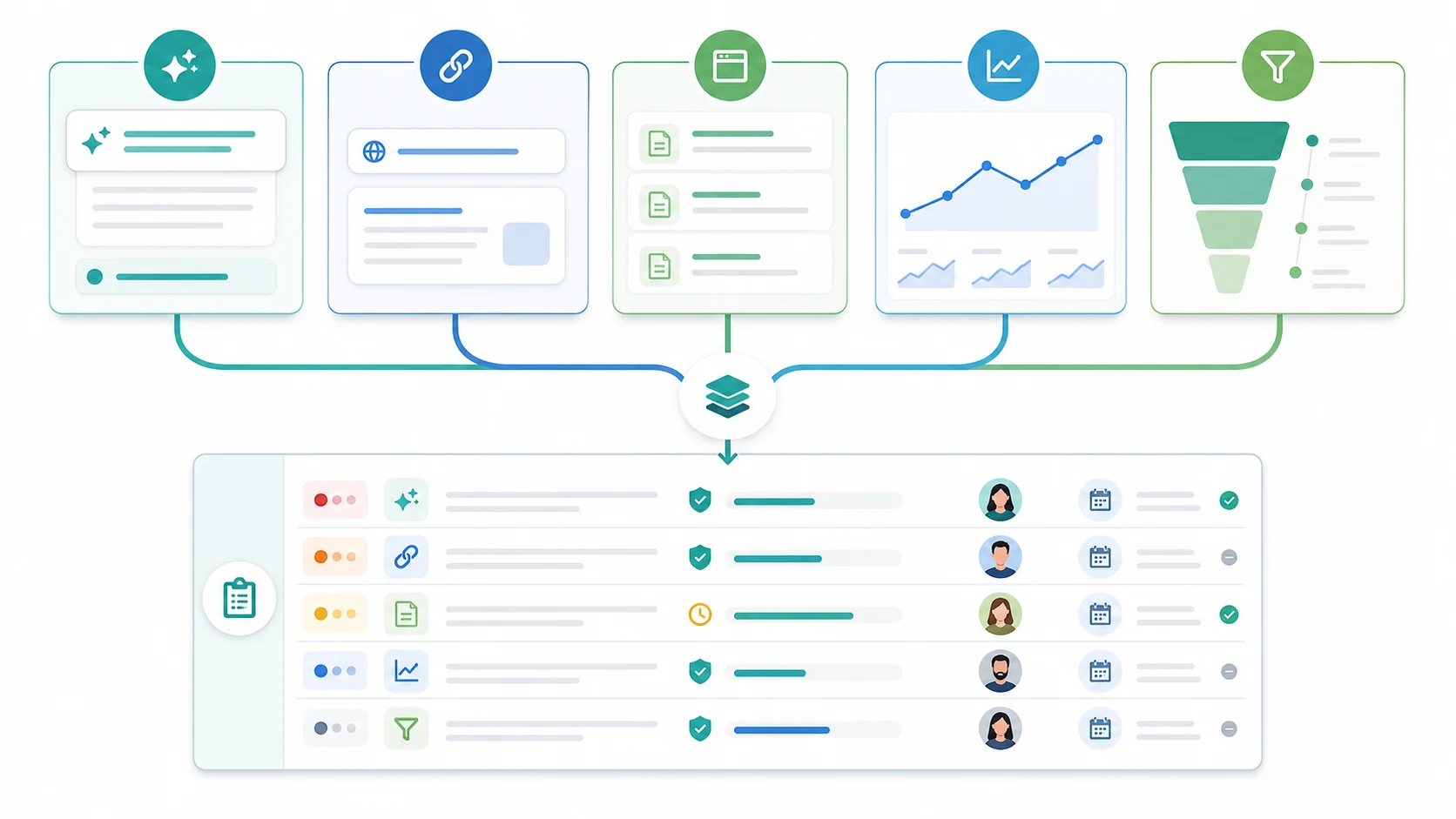
Track the chain this way:
| Signal | Question to ask | Better next action |
|---|---|---|
| Query group | Which buyer problem or category did the answer address? | Map it to a funnel stage and page cohort |
| Brand role | Was the brand named, compared, cited, or absent? | Decide whether the gap is entity, content, or source ownership |
| Cited source | Which URL supported the answer? | Improve the page that should earn or defend the citation |
| Page cohort movement | Did related pages gain impressions, clicks, or branded follow-up? | Compare against normal SEO and campaign movement |
| Conversion path | Did the affected cohort influence demos, trials, forms, or sales touches? | Tag the cohort for weekly revenue review |
| Opportunity quality | Did the resulting demand match ICP, intent, and sales readiness? | Keep, expand, or stop the visibility work |
This is why the AI visibility evidence loop matters. It keeps mention, citation, and performance evidence separate until the pattern is strong enough to assign work.
Use Leading And Lagging Metrics
Pipeline impact usually appears after leading indicators move. If the team waits only for closed revenue, it will miss the work that made revenue possible. If it reports only leading indicators, it will overclaim.
Use both:
| Metric type | Examples | Use it for |
|---|---|---|
| Leading visibility | AI mentions, cited URLs, competitor presence, share of answers | Finding source-page opportunities |
| Leading demand | Branded search, category impressions, high-intent page visits, return visits | Checking whether discovery is becoming demand |
| Middle funnel | Demo page visits, product comparison views, newsletter or tool signups | Seeing whether the right buyers continue |
| Sales readiness | MQL to SQL rate, accepted accounts, meeting quality, objection patterns | Testing whether visibility attracts qualified interest |
| Pipeline outcome | Opportunity value, stage progression, win rate, influenced revenue | Validating impact after enough time has passed |
The useful report says, "This query group gained cited-source visibility, this page cohort moved, this buyer segment showed more qualified demand, and this is the next page we will improve." It does not say, "AI search caused revenue" from one screenshot.
Map Each Query Group To A Revenue Question
Not every AI visibility query deserves pipeline reporting. Some queries are awareness checks. Others are buyer-intent checks. The difference matters.
Use this mapping:
| Query group | Revenue question | Pipeline metric to watch |
|---|---|---|
| Category queries | Are buyers discovering our category and seeing us as relevant? | Branded search, product page visits, assisted demos |
| Problem queries | Are we part of the solution path before vendor selection? | Guide-to-product paths, tool signups, return visits |
| Comparison queries | Are we present when buyers compare options? | Comparison page engagement, demo quality, sales objections |
| Implementation queries | Are buyers looking for execution help? | Trial readiness, support content use, sales stage fit |
| Branded queries | Are answers describing us accurately? | Branded conversion rate, support friction, direct demand |
The AI search analytics content planning workflow is useful when these query groups need to become briefs, message updates, and owner-ready content work.
Protect Against Vanity Metrics
AI visibility can create attractive but weak dashboards. A rising mention count looks good until the team asks whether the answers were relevant, cited the right page, reached the right buyers, or changed qualified demand.
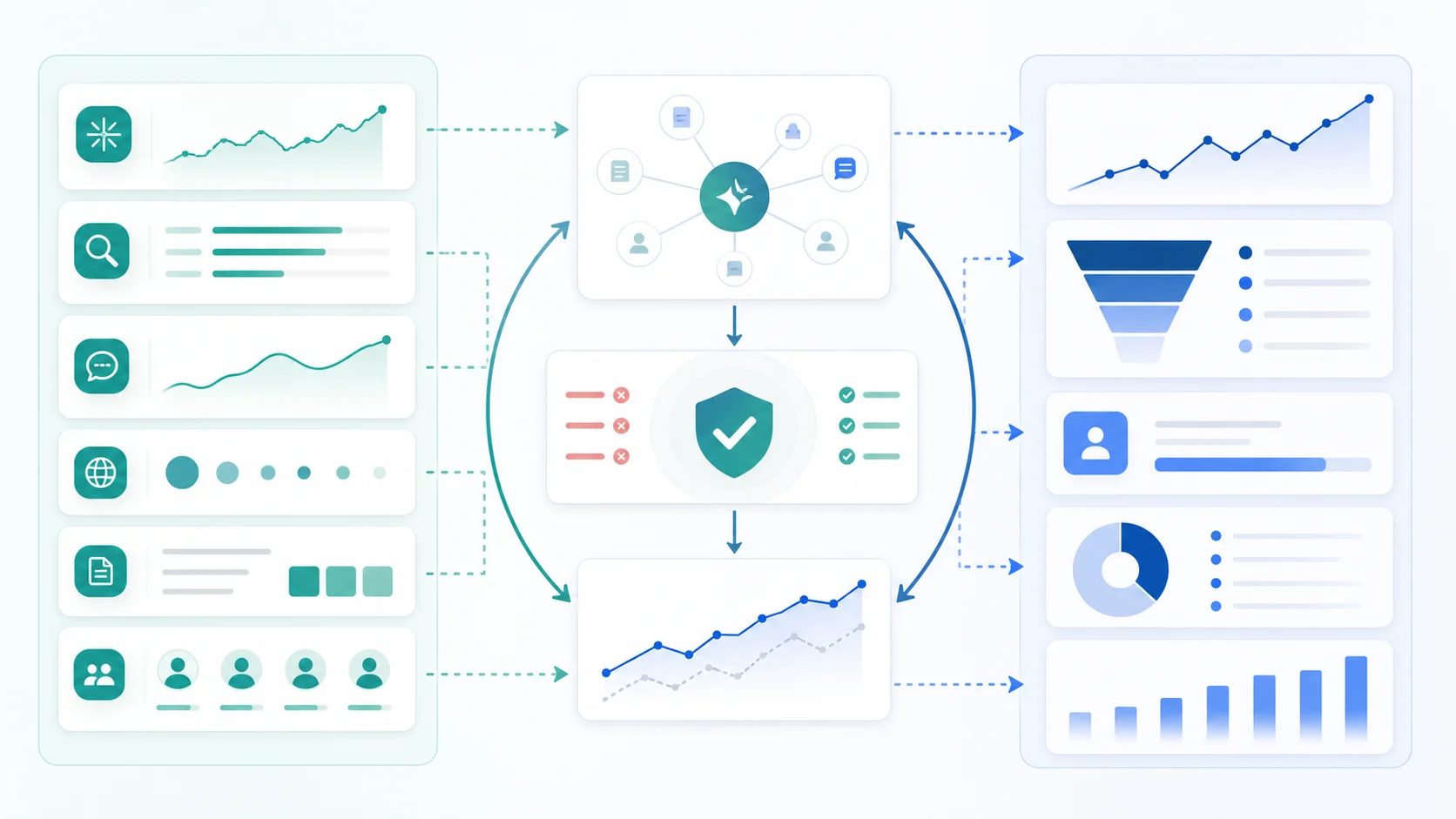
Use a validation loop before calling something pipeline impact:
- Save the query group, market, device context, and source URL target.
- Record whether the brand is mentioned, cited, compared, or missing.
- Map the finding to a page cohort and buyer segment.
- Check Search Console, analytics, and conversion movement for that cohort.
- Compare against campaign, seasonality, and normal SEO changes.
- Review sales quality signals before claiming pipeline influence.
- Assign one next action: improve source page, add comparison proof, fix crawl access, refresh messaging, or keep watching.
That loop keeps AI search reporting useful for SEO and revenue teams at the same time.
Where Searvora Fits
Searvora AI SEO Dashboard fits the monitoring and handoff layer of this work. The product page positions it around page-type cohorts, locale drill-down, anomaly detection, opportunity scoring, cross-team reporting, and action queues. Those are the views needed when AI-search visibility needs to become a pipeline-aware review instead of a prompt archive.
Use the AI SEO dashboard to keep query groups, source pages, page cohorts, and next actions together:
| Workflow layer | Dashboard role | Revenue-facing output |
|---|---|---|
| Visibility watch | Track mention and citation changes by topic or page group | A reviewed signal, not an anecdote |
| Cohort diagnosis | Compare affected pages, markets, and directories | A source-page or technical hypothesis |
| Opportunity scoring | Rank fixes by upside, confidence, and effort | A shorter revenue-relevant queue |
| Reporting cadence | Document owner, decision, and recheck window | A weekly handoff sales and SEO can inspect |
Run The Weekly Review
Use this cadence when AI search visibility has to connect with pipeline metrics:
| Step | What to review | Done when |
|---|---|---|
| 1 | Pick one query group and one buyer segment | The team knows which demand path is being measured |
| 2 | Record mentions, citations, competitors, and missing owned pages | Visibility evidence is separated from business impact |
| 3 | Map the query group to source pages and page cohorts | Each signal has a URL owner |
| 4 | Check Search Console and analytics movement | Discovery signals are grounded in page behavior |
| 5 | Compare form, demo, trial, or sales-touch quality | Pipeline influence is tied to qualified demand |
| 6 | Assign one source-page, messaging, or technical fix | The review creates shippable work |
| 7 | Recheck after the validation window | The team can say improved, flat, worse, or inconclusive |
AI search visibility impacts pipeline metrics only when the team can explain the path from answer evidence to buyer behavior. Treat visibility as an upstream signal, connect it to source pages and cohorts, and let pipeline claims wait for qualified evidence.