

Anchor text is the clickable text inside a link. It tells a reader what to expect after the click, gives search systems context about the destination, and can expose weak site structure when the wording is vague, repetitive, or attached to the wrong URL.
A useful anchor text audit does not chase an ideal exact-match percentage. It checks whether links are crawlable, destinations are healthy, wording is descriptive, and patterns make sense for the page job. Internal anchors are under your control; earned backlink anchors usually are not. Audit those two groups separately, fix what you own, and validate the result with a fresh crawl.
What Good Anchor Text Needs to Do
Google's official link best practices describe good anchor text as descriptive, reasonably concise, and relevant to both the source and destination pages. That is a better operating rule than trying to force one keyword into every link.
Each anchor should help answer four questions:
| Audit question | Healthy signal | Problem signal |
|---|---|---|
| Can the link be crawled? | A normal anchor element points to a reachable URL | The destination is hidden behind a script-only interaction or the link has no usable destination |
| Can a reader predict the destination? | The words describe the next page's actual job | The anchor says “click here,” “read more,” or something unrelated |
| Is the destination the preferred page? | The URL is indexable, canonical, and returns the intended status | The link points through a redirect, to a duplicate, or to a non-indexable page |
| Does the wording fit the context? | The phrase reads naturally in the sentence | The keyword is inserted mechanically or repeated across unrelated pages |
Anchor text is therefore not a standalone copywriting detail. It is part of crawl discovery, information architecture, accessibility, and editorial quality control.
Separate Internal Anchors From Backlink Anchors
Internal links and backlinks can use the same visible words, but the operational decisions are different.
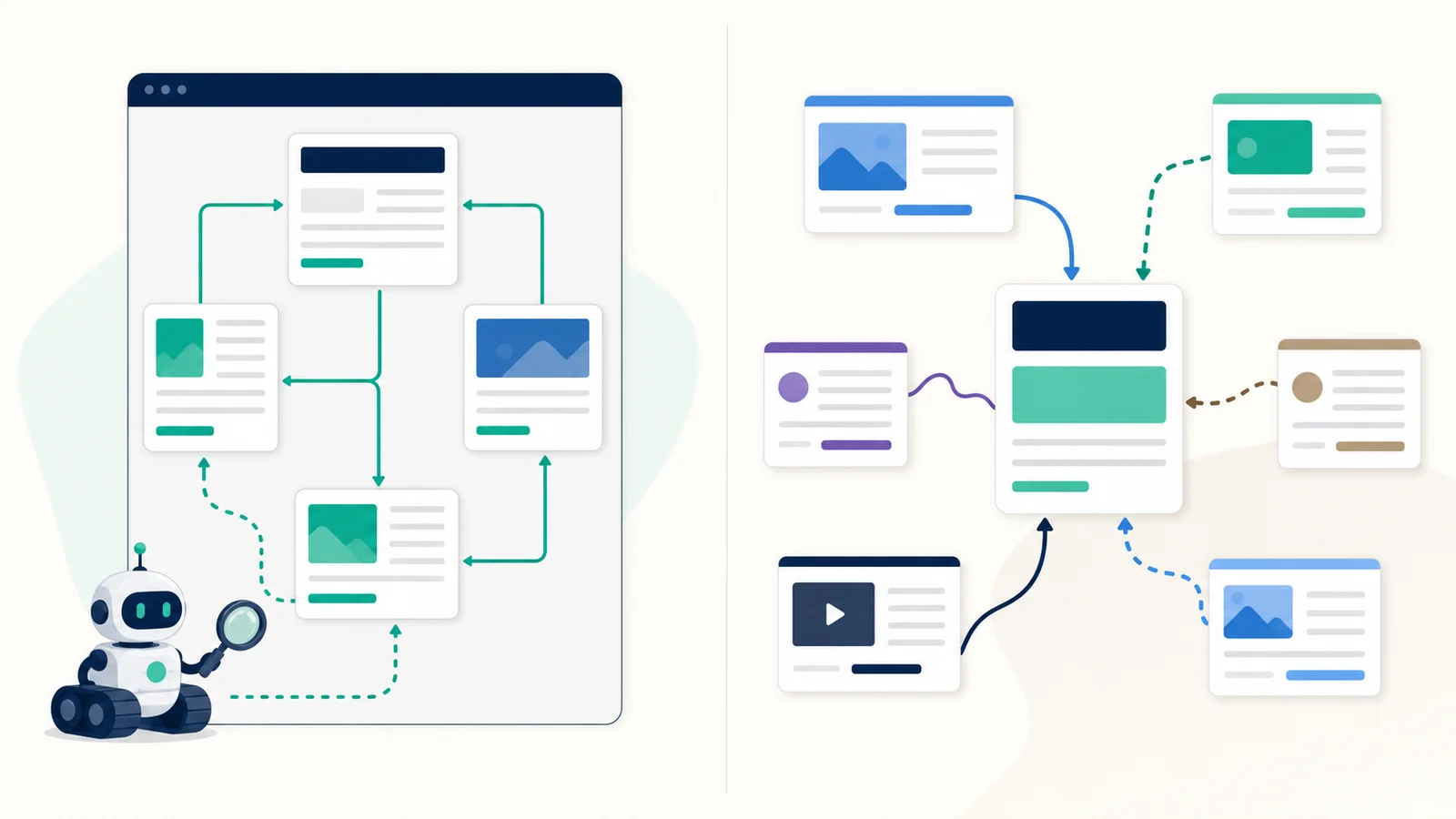
| Link group | What you control | What to audit | Sensible response |
|---|---|---|---|
| Internal links | Source page, destination, placement, and anchor wording | Crawlability, destination health, context, repetition, and page hierarchy | Edit weak links directly and re-crawl |
| Earned backlinks | Usually none of the publisher's wording or placement | Destination status, relevance, suspicious acquisition patterns, and whether valuable links land on the right canonical URL | Fix your destination first; contact publishers only when a correction is genuinely useful |
| Paid, sponsored, or user-generated links | Your own implementation when you publish them | Disclosure and the appropriate link relationship | Apply the correct relationship and avoid ranking manipulation |
Do not treat natural backlink variation as a defect. A brand name, page title, partial phrase, URL, or descriptive sentence can all be reasonable depending on why another site cites the page. The risk begins when links are created primarily to manipulate rankings. Google's current spam policies specifically identify manipulative linking patterns, including paid or distributed links with optimized anchors.
For internal links, you can be more deliberate. The goal is not uniformity. It is a coherent relationship between the source sentence, the anchor, and the destination page.
Build the Anchor Text Inventory From Crawl Evidence
Start with a crawl instead of opening articles one by one. A crawl-backed inventory lets you find site-wide patterns, trace each link to its source, and avoid fixing wording while leaving a broken destination untouched.
Export or retain these fields:
| Field | Why it belongs in the audit |
|---|---|
| Source URL | Shows where the link appears and which template or content type created it |
| Destination URL | Identifies the page receiving context and internal support |
| Anchor text | Reveals generic, empty, repeated, or misleading wording |
| Link placement | Separates contextual body links from navigation, footer, or component links |
| Status code | Finds links to errors and unnecessary redirects |
| Indexability and canonical | Prevents you from strengthening blocked or duplicate URLs |
| Source and destination titles | Makes promise mismatches easier to spot |
| Crawl depth and inlinks | Helps prioritize important pages with weak internal discovery |
The existing internal links SEO audit is the broader workflow for orphan pages, crawl depth, and link graphs. An anchor text audit is the narrower child task: once the graph is visible, inspect whether the words on each important edge explain the destination accurately.
Group the inventory before making edits. Useful segments include:
- Empty anchors and linked images with missing or weak alternative text.
- Generic anchors such as “here,” “more,” or “this article.”
- Anchors that point to redirects, errors, non-indexable pages, or non-canonical variants.
- Repeated exact phrases across many unrelated source pages.
- Multiple anchors that use different wording but point to the same destination from one page.
- Important product, hub, and article pages with very few descriptive contextual links.
- Locale or regional pages linked with wording that promises the wrong language or market.
This segmentation turns a large link export into specific, reviewable queues.
Prioritize by Destination Health and Reader Impact
Not every unusual anchor needs a rewrite. A branded anchor can be ideal. A naked URL can be appropriate in a citation. A generic “learn more” button may make sense when its accessible name contains enough context. Prioritize cases where the link can mislead a reader or send crawl signals to the wrong place.
Use this order:
Fix broken and redirected destinations first
Changing “click here” to a descriptive phrase does not solve a 404, redirect chain, or wrong canonical. Update the destination to the final preferred URL, then improve the wording.
Fix anchors that promise the wrong page
If the anchor says “technical SEO checklist” but lands on a pricing page, the link breaks the reader's expectation. Either change the destination or rewrite the anchor around the real next step.
Improve vague anchors on important paths
Generic wording matters most when it is the main contextual route into a high-value product page, parent hub, or essential guide. Start there instead of mechanically replacing every “read more” in reusable cards.
Review repetitive exact-match patterns in context
Repetition across a navigation component is different from forced keyword anchors inserted into dozens of body paragraphs. Look at placement, source relevance, and whether the wording reads naturally. Do not invent a universal percentage threshold.
Leave natural variation alone
If several accurate phrases point to the same page, that variation can clarify different reader contexts. Consistency in destination and page job matters more than identical wording.
Rewrite Anchors Around the Destination Job
The most reliable rewrite method is to name the useful next action, not merely copy the destination's target keyword.
| Weak wording | Better direction | Why it is better |
|---|---|---|
| Click here | Audit internal links with crawl evidence | Predicts the destination task |
| Learn more | Compare canonical and indexability signals | Names the decision the next page supports |
| SEO tool | Technical SEO crawler | Narrows the product job without stuffing |
| Our guide to anchor text for SEO optimization | Anchor text audit | Removes unnecessary length and repetition |
| Exact keyword repeated on every source page | Natural variants tied to each source context | Preserves clarity without manufacturing a pattern |
Keep the linked phrase short enough to scan, but long enough to stand on its own. Read only the anchor without the surrounding sentence. If the destination is still reasonably predictable, the wording is probably doing its job.
Also check the destination title and H1. Sometimes an anchor appears vague because the destination itself has an unclear page promise. Fixing the source copy without fixing the landing page only hides the deeper information-architecture problem.
Validate Every Anchor Text Change
Anchor text work is complete only when the new link appears in rendered HTML and points to a healthy destination.
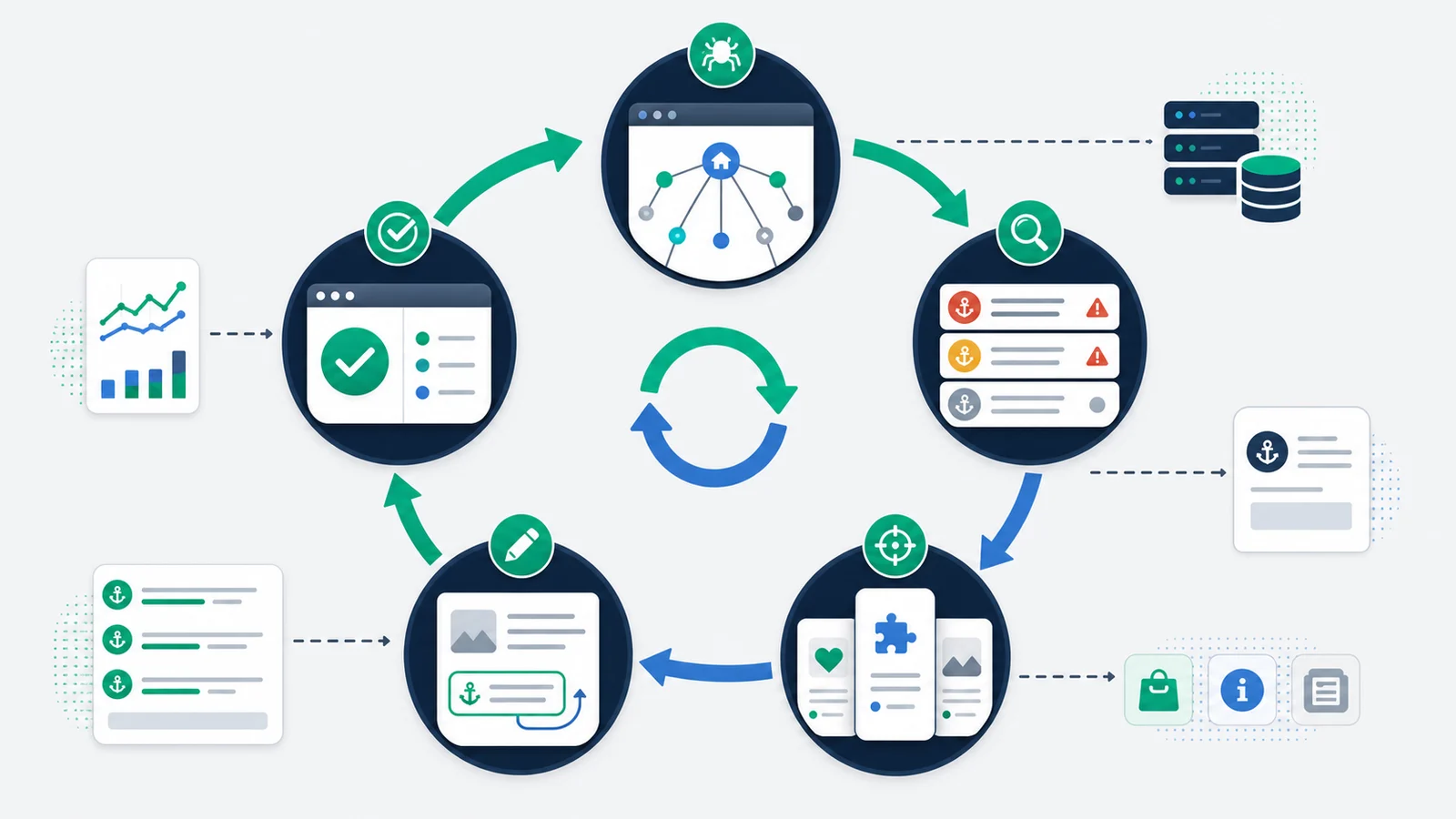
Run this validation loop after the edit batch:
- Re-crawl the changed source pages.
- Confirm the links are present as crawlable anchors with the intended destination.
- Verify the destination returns the expected status and remains indexable and canonical.
- Compare the before-and-after anchor inventory by template, directory, destination, and placement.
- Check that the rewrite did not create duplicate links, broken locale paths, or awkward repeated wording.
- Review high-value destination pages after recrawl to confirm inlink counts and crawl paths changed as intended.
- Record the reason for each large batch so future editors do not reverse a deliberate decision.
This is also where anchor text becomes useful for AI-search readiness. Clear links reinforce which page contains the detailed evidence, which page is a parent hub, and which page represents a product or workflow. That does not guarantee a citation, but it makes the site's relationships easier to interpret for both people and automated systems.
Use a Small Decision Rule for Edge Cases
When an anchor looks unusual, do not rewrite it on sight. Use four checks:
- If the destination is unhealthy, fix the URL first.
- If the anchor misrepresents the destination, change the words or destination.
- If the anchor is accurate but naturally different from other links, keep it.
- If the pattern exists because links were built to manipulate rankings, stop the tactic and review the broader link source, disclosure, and policy risk.
The same rule prevents cannibalization mistakes. Two articles can use related anchor language without competing if they serve different page jobs. Use the same-keyword, same-page-type, same-user-job test from the keyword cannibalization workflow before consolidating content just because anchor phrases overlap.
Anchor text optimization should make navigation clearer, not make every link look engineered. Separate internal links from earned backlinks, prioritize destination health, write anchors around the reader's next task, and re-crawl after every meaningful batch. That produces a link system that is easier to use, easier to audit, and less likely to drift into SEO theater.