

Answer engine optimization is the work of making the right page easy for AI answer systems and search features to understand, trust, cite, and hand back to a user. The useful version is not a prompt trick. It is source-page strategy, crawl access, answer structure, authority evidence, and repeatable validation.
The Ahrefs article on answer engine optimization that surfaced this competitor opportunity explains the concept well. Searvora's information gain is the operating layer: decide which page should be the source, prove it can be crawled and understood, then track whether mentions, citations, and traffic signals actually moved.
What Answer Engine Optimization Should Mean
Answer engine optimization, or AEO, should answer one practical question: which owned page deserves to support this answer, and what needs to change before an answer system can use it?
That makes AEO narrower than "do AI SEO." AEO sits where classic SEO, entity clarity, content structure, and AI-search evidence meet. A page still needs a real search job, useful information, crawl eligibility, and enough trust signals to be worth surfacing. Google's AI features documentation keeps the work grounded in normal search eligibility, while Google's guidance on succeeding in AI search points teams back to helpful, accessible content rather than shortcuts.
Use this split before changing a page:
| Layer | AEO question | Better next action |
|---|---|---|
| User job | What answer is the searcher trying to get? | Group queries by task, not by buzzword |
| Source page | Which canonical URL should support the answer? | Improve, consolidate, or create the right page |
| Crawl eligibility | Can search and AI systems access the useful content? | Fix robots, noindex, canonical, rendering, and internal links |
| Answer extraction | Is the answer clear enough to quote or summarize? | Add definitions, steps, tables, examples, and evidence |
| Validation | Did mention, citation, referral, or organic data change? | Recheck the same query group after the update window |
Start With The Source Page
Most weak AEO work starts from prompts. Strong AEO starts from pages.
For each query group, pick one page that should be the canonical source. The page may be an article, product page, comparison page, help page, tool page, or maintained resource. The asset type matters because AI answer systems may summarize the quick answer while the user clicks for proof, constraints, screenshots, examples, or a workflow.
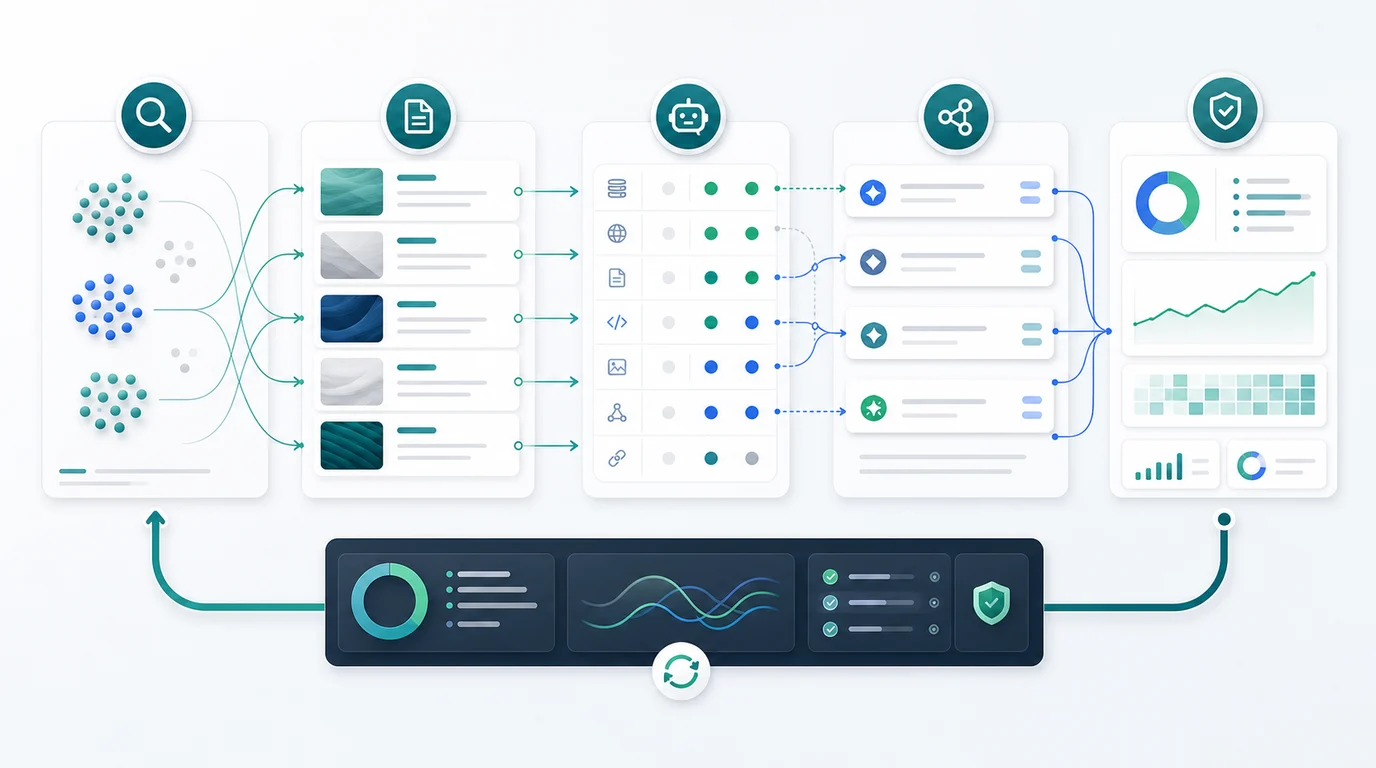
Run this source-page check before rewriting:
| Check | Pass condition | Fix when weak |
|---|---|---|
| Canonical ownership | One URL clearly owns the answer job | Consolidate overlapping pages or define parent and child roles |
| Crawl access | The page is reachable, indexable, internally linked, and rendered in HTML | Repair blocked paths, noindex errors, canonical drift, or hidden content |
| Extractable answer | The page gives a direct answer, then supports it with details | Add a short answer block, steps, comparison table, or decision checklist |
| Evidence depth | The page gives examples, process detail, data, screenshots, or source links | Add proof that makes a click worth it after the AI summary |
| Entity clarity | The brand, product, category, audience, and use case are named consistently | Normalize language across product pages, articles, profiles, and schema |
This is where AEO connects to the AI visibility evidence loop. Visibility is not useful until it points to a page the team can improve.
Build The AEO Workflow
The AEO workflow should be small enough to run every week and strict enough to prevent random content changes.
Use this sequence:
- Build a stable query set for one user job.
- Identify the owned page that should answer or support that job.
- Check crawl access, indexability, canonical state, rendered content, sitemap inclusion, and internal links.
- Improve the answer block, structure, examples, and evidence on that page.
- Add supporting internal links from relevant parent and child pages.
- Record mention, citation, referral, and organic-performance signals separately.
- Recheck the same query group after the validation window.
OpenAI's ChatGPT Search help explains that searched answers can include source panels and citations. OpenAI also documents crawler access through OpenAI crawlers. For operators, the takeaway is practical: if a page is blocked, thin, hard to extract, or not clearly connected to the entity, the brand has an eligibility problem before it has an "AI optimization" problem.
The same crawl-first logic applies to Google AI features, classic search snippets, and assistants that use web sources. Your page does not need to be written for one answer surface. It needs to be a reliable source for the task.
Separate Citations From Traffic
AEO gets messy when teams mix every signal into one score. A brand mention, cited URL, referral session, Search Console movement, and ranking change are related, but they do not prove the same thing.
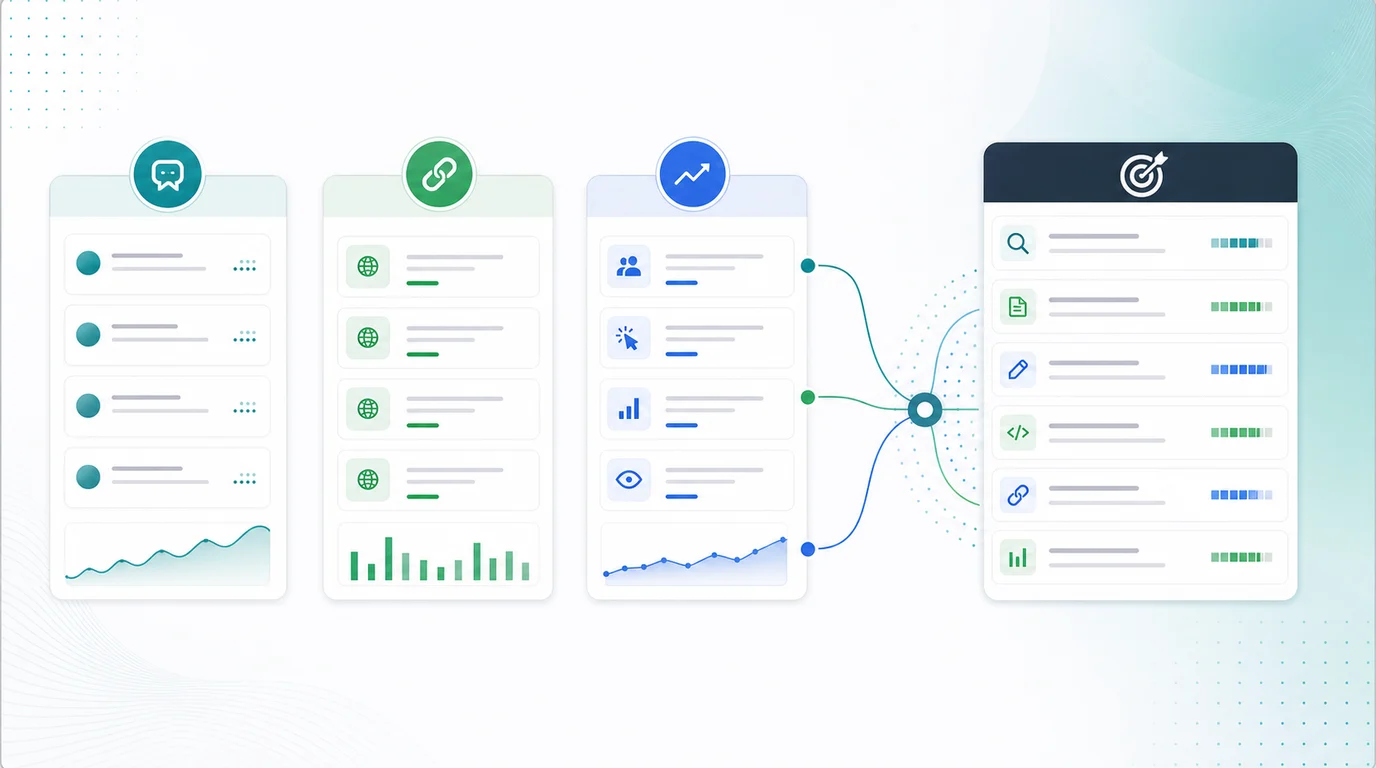
Keep four ledgers:
| Ledger | What to record | What it can prove |
|---|---|---|
| Mention ledger | Whether the brand, product, expert, or page is named in an answer | Entity recognition and topical association |
| Citation ledger | Which owned, competitor, or third-party URLs are used as sources | Source-page selection and content usefulness |
| Referral ledger | Recognizable visits from AI or assistant surfaces | Traffic behavior, not always the cited source |
| Organic ledger | Query, page, CTR, rank, and click changes around the same topic | Whether the broader search opportunity improved |
This split keeps the team honest. A citation without clicks may still be useful for trust. A referral without a citation may still be worth measuring. A Search Console gain may come from normal search, not the AI answer itself. The job is to compare the ledgers instead of pretending one metric explains everything.
Pair this article with the AI search traffic workflow when the main question is how to turn source visibility into visits.
Decide What To Change
After the evidence is separated, decide the page change. Do not rewrite the whole site because one prompt mentioned a competitor.
| Symptom | Likely issue | Better change |
|---|---|---|
| Competitor cited, your page absent | Your source page is weaker, blocked, or less direct | Improve the owned page that should answer the job |
| Brand mentioned without citation | Entity is known but source page is unclear | Add a stronger canonical source and link it from relevant pages |
| Citation appears but no click reason | AI answer satisfied the quick task | Add deeper examples, tools, screenshots, templates, or decision criteria |
| Organic traffic drops around the topic | SERP layout, intent, or page quality changed | Compare Search Console, AI answer evidence, and page freshness |
| Multiple owned pages compete | Same job is split across pages | Consolidate, choose parent and child roles, or redirect weak overlap |
Technical eligibility comes first. If the source page is blocked by robots rules, marked noindex, hidden behind client-side rendering, or missing from the internal-link path, editorial polish will not solve the AEO problem. Use the robots.txt rules workflow when access controls may be part of the issue.
Where Searvora Fits
Searvora is useful when AEO needs to become assigned work instead of a research memo.
Use the AI SEO Dashboard to watch the same query groups, page segments, and validation windows. Use the SEO Spider Crawler when the source page needs crawl, indexability, metadata, canonical, or internal-link checks. Use AI SEO Consultant when the evidence needs to become a prioritized fix queue for content, SEO, and engineering.
The goal is not to chase every AI answer. The goal is to know which source pages matter, why they are eligible or weak, what changed, and what the team should ship next.
AEO Checklist
Use this checklist before approving an answer engine optimization task:
- The query group represents a real user job.
- One canonical source page owns the job.
- The page is crawlable, indexable, internally linked, and rendered in useful HTML.
- The page gives a direct answer near the top.
- The answer is supported with examples, tables, process detail, data, or screenshots.
- Entity language is consistent across product pages, articles, profiles, and schema.
- Mentions, citations, referrals, and organic movement are tracked separately.
- The next change has an owner and a recheck date.
That is the practical version of AEO: pick the source page, make it useful and accessible, then validate whether answer systems and search users treat it as a better source.