
The best AI visibility tools help you see whether your brand, products, and source pages appear inside AI answers. The useful ones do more than report a visibility score. They help you track prompts, citations, competitors, page evidence, and the next SEO action.
This roundup compares tools from public product and help pages, including Searvora AI SEO Dashboard, Ahrefs Brand Radar, Semrush AI Visibility, Profound, Peec AI, OtterlyAI, Scrunch, and Writesonic. The Ahrefs roundup that surfaced this opportunity proves the search intent is a real tool comparison. Searvora's information gain is the operator layer: how to choose a stack that can move from AI answer evidence to crawl checks, content fixes, and weekly action queues.
Compare The Tools By Job First
AI visibility software is still a young category, so labels blur quickly. Some tools are built for enterprise brand intelligence. Some are lightweight monitors for prompts and competitors. Some are content platforms adding generative engine optimization features. Some SEO suites are extending rank tracking into AI answer surfaces.
Use this comparison model before looking at demos:
| Tool job | What to verify | Why it matters |
|---|---|---|
| Brand mention tracking | Which AI systems, prompts, countries, and competitors are monitored | A blended score is not useful if you cannot explain what was measured |
| Citation and source tracking | Whether the tool records cited URLs, source domains, and owned-page gaps | AI visibility work should improve source pages, not only brand sentiment |
| SEO context | Whether search performance, crawl health, rankings, or page groups can join the review | Teams need to know whether the fix is technical, editorial, or positioning |
| Content action support | Whether findings become briefs, optimizations, or owner-ready tasks | Monitoring without a fix queue becomes another reporting ritual |
| Governance | Whether snapshots, exports, history, and methodology are clear enough for stakeholders | AI answer evidence changes, so the team needs repeatable records |
Best AI Visibility Tools Shortlist
This shortlist is not a single winner ranking. It separates tools by the job they appear best suited for from their public positioning, then highlights what an SEO team should verify before buying.
| Tool | Best fit | What to verify before choosing |
|---|---|---|
| Searvora AI SEO Dashboard | Teams that need AI search visibility tied to SEO segments and action queues | How query sets, page groups, crawl evidence, and owners will map into your cadence |
| Ahrefs Brand Radar | Existing Ahrefs teams that want brand visibility across AI answers and wider web surfaces | How Brand Radar connects with your keyword, backlink, and content workflows |
| Semrush AI Visibility | Semrush users who want AI visibility baselines inside a broader SEO suite | Which AI visibility views are available in your plan and how exports work |
| Profound | Teams that want answer-engine intelligence and brand conversation tracking | Methodology, coverage, workspace fit, and stakeholder reporting depth |
| Peec AI | Marketing teams that want AI search analytics with competitor monitoring | Prompt setup, regional coverage, competitor grouping, and data history |
| OtterlyAI | Teams that want focused brand monitoring across AI search systems | Query management, alerting cadence, and whether source-page evidence is deep enough |
| Scrunch | Brands that want AI-era website readiness and AI search monitoring | How site-readiness findings connect to SEO implementation work |
| Writesonic | Content teams that want GEO visibility plus creation and optimization workflows | Whether monitoring, recommendations, and content production stay evidence-led |
Searvora AI SEO Dashboard
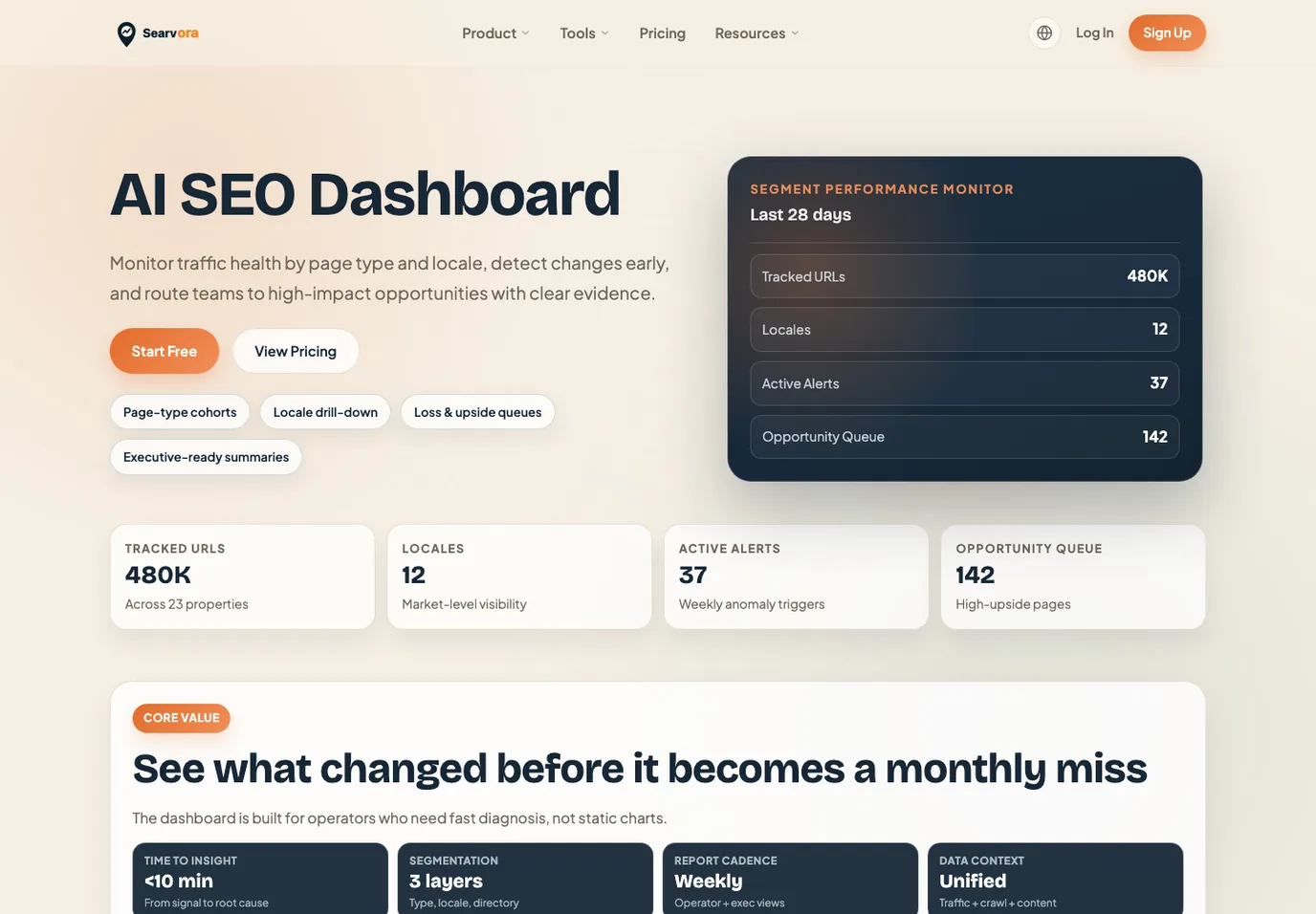
Searvora AI SEO Dashboard is the right fit when AI visibility has to sit inside a weekly SEO operating rhythm. The local product page positions the dashboard around page-type and locale performance, anomaly detection, opportunity queues, and cross-team reporting. That makes it useful when the question is not only "did the brand show up?" but "which page group needs work next?"
Use Searvora when the team needs to connect AI search evidence with:
- Stable query groups for brand, category, comparison, and problem searches.
- Page cohorts by directory, locale, page type, or owner.
- Crawl, indexability, metadata, internal-link, and sitemap checks.
- Opportunity queues that can move into content, SEO, or engineering work.
If you are still defining the measurement layer, start with the broader AI visibility evidence loop, then use this roundup to decide which tool category fits your team.
Ahrefs Brand Radar
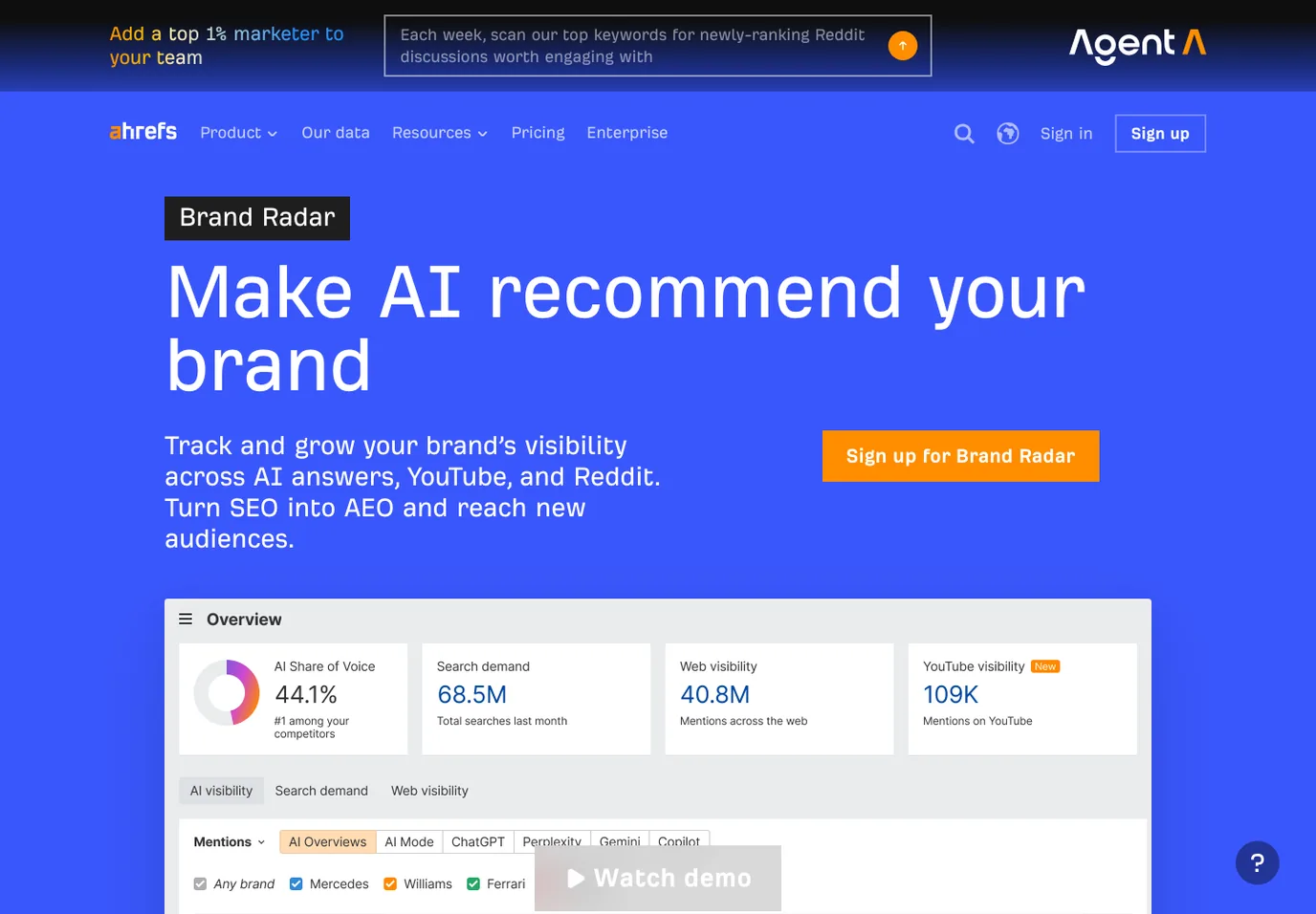
Ahrefs Brand Radar is a natural candidate for teams already using Ahrefs. The public Brand Radar page positions the product around tracking and growing brand visibility across AI answers, YouTube, and Reddit, with the promise of turning SEO into answer engine optimization.
That makes Ahrefs strongest when the team wants AI visibility signals next to familiar Ahrefs workflows such as competitor research, content gaps, keyword research, and link context. The main verification step is workflow depth: can the team move from a Brand Radar finding to the exact owned page, source gap, or content action that should be fixed?
Choose Ahrefs Brand Radar when your SEO team already works inside Ahrefs and wants AI visibility to extend that existing stack. Be careful if the team needs a neutral cross-tool action queue or detailed owner handoffs outside the Ahrefs ecosystem.
Semrush AI Visibility
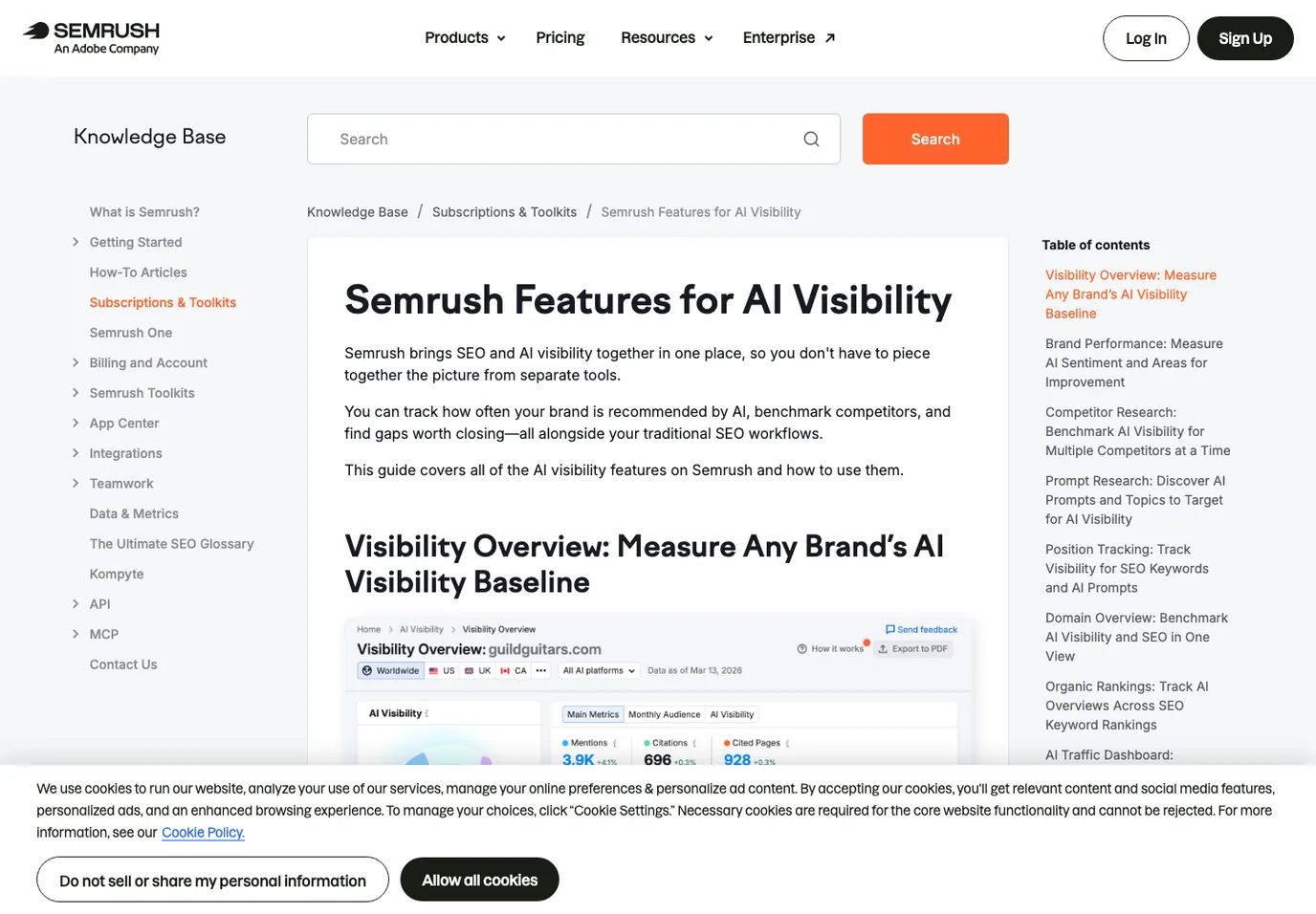
Semrush is useful to evaluate if your team already runs SEO, competitive, and reporting work there. The official Semrush AI Visibility knowledge base describes AI visibility features around measuring a brand's AI visibility baseline and monitoring how AI systems mention the brand.
The practical advantage is suite context. If your team already uses Semrush projects, domains, competitors, and reports, an AI visibility layer inside the same ecosystem can reduce tool sprawl. The question to verify is whether the AI visibility output is granular enough for your operating model: prompts, topics, competitors, cited sources, time windows, and exports.
Choose Semrush when your team wants AI visibility as part of a broad SEO platform. Avoid treating it as a complete action system until you have checked how findings become assigned content, crawl, or product-page work.
Profound
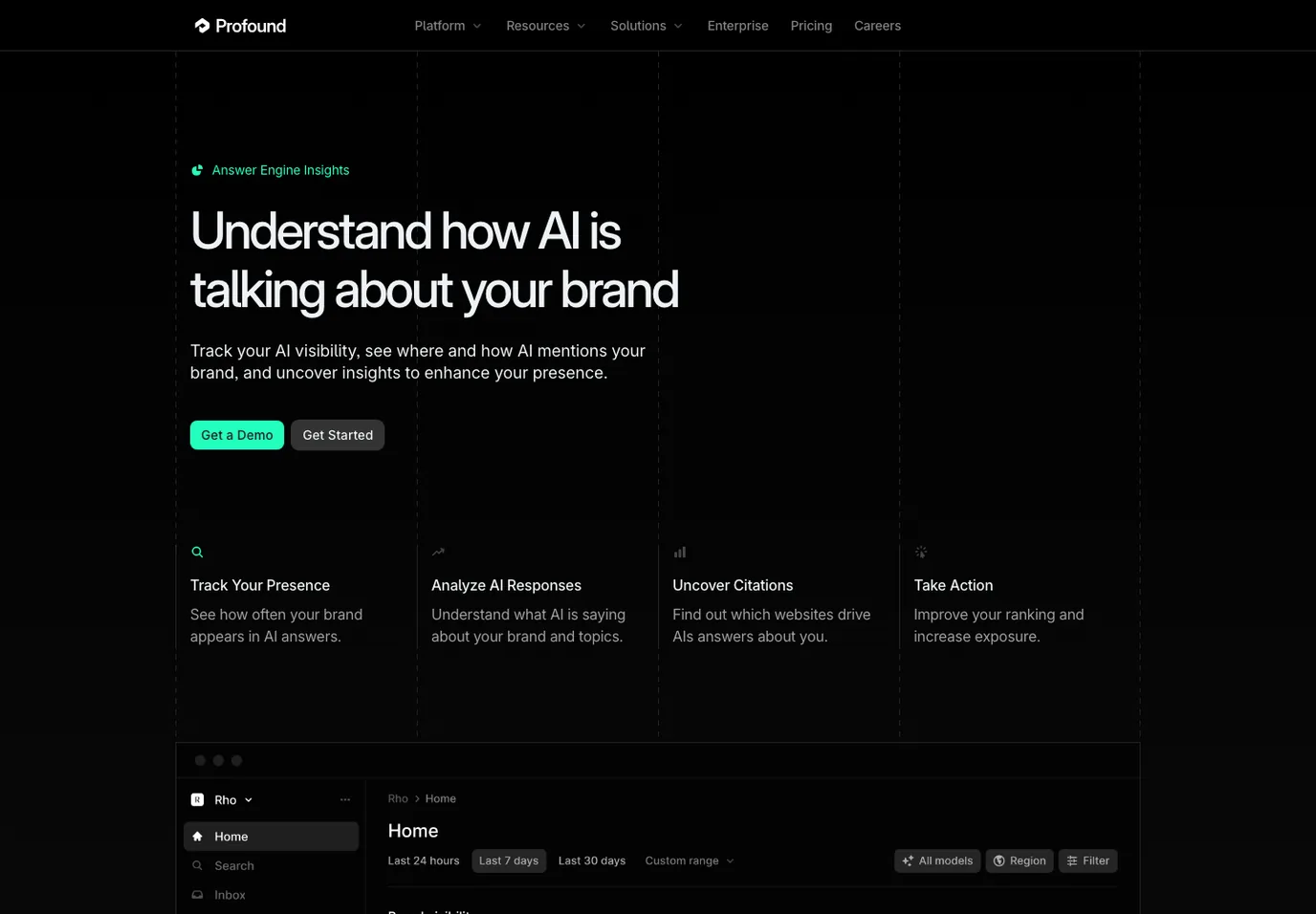
Profound is positioned for brands that need deeper answer-engine intelligence. The public Profound answer engine insights page frames the product around understanding how AI systems talk about a brand, where the brand appears, and how competitors show up across AI answers.
That is a strong fit for larger teams where AI visibility is already a board-level or executive reporting concern. The value is not just checking prompts. It is explaining brand presence, competitor share, themes, and recommendations in a way stakeholders can review.
Choose Profound when the team needs a dedicated AI search intelligence layer with reporting depth. Verify coverage, methodology, exports, and how easily findings can be routed into SEO implementation systems.
Peec AI
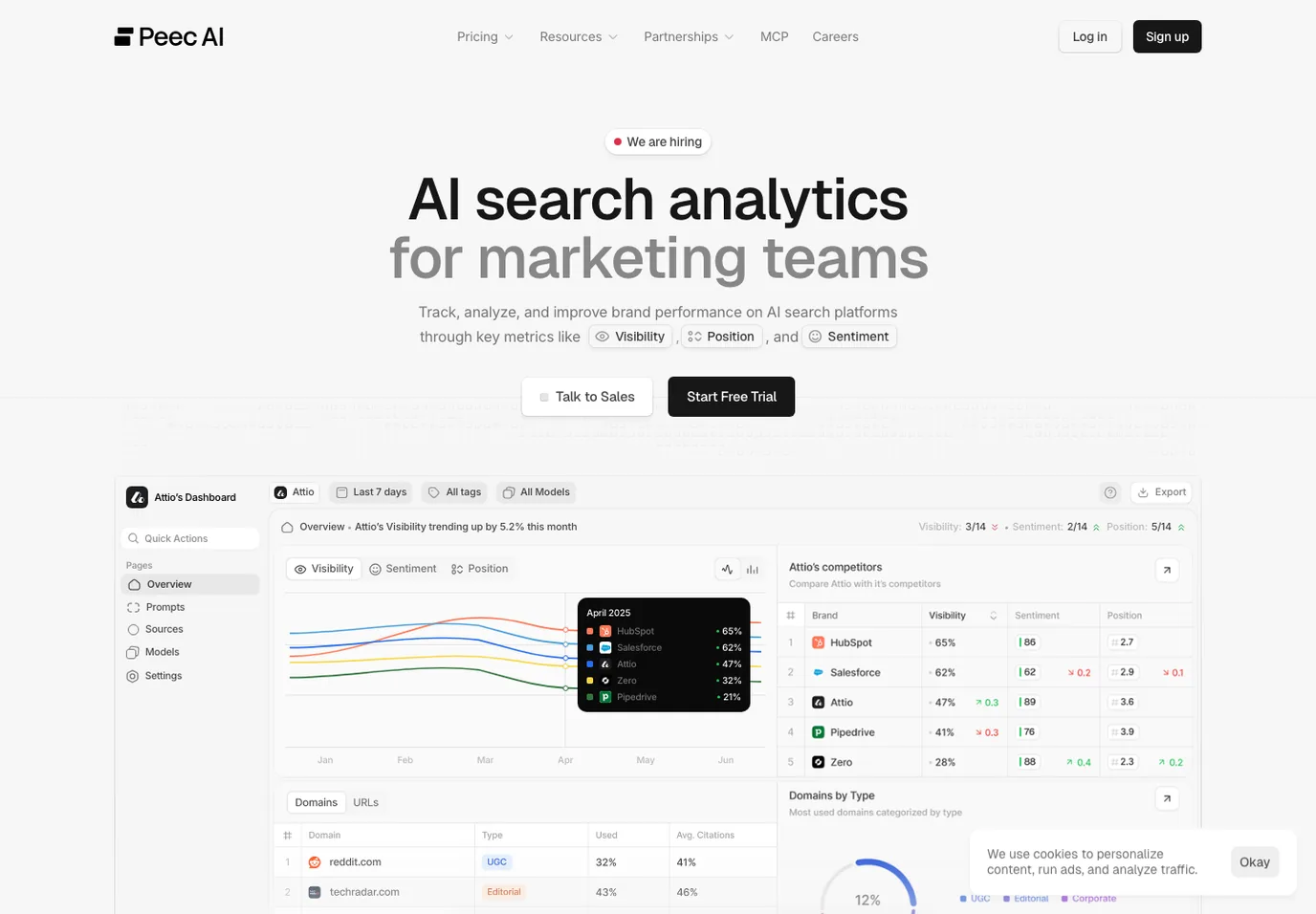
Peec AI presents itself as AI search analytics for marketing teams. Its public homepage emphasizes tracking, analyzing, and optimizing AI search visibility, with dashboard-style evidence for brands and competitors.
Peec is a good candidate for teams that want a focused AI search analytics tool without starting from a larger traditional SEO suite. The screenshot-backed public page suggests a workflow around visibility trends, competitor comparisons, and query-level monitoring.
Choose Peec when you want a dedicated monitor for AI search visibility and competitive movement. Verify how it handles prompt selection, countries, languages, source citations, and alerts before making it the primary reporting layer.
OtterlyAI
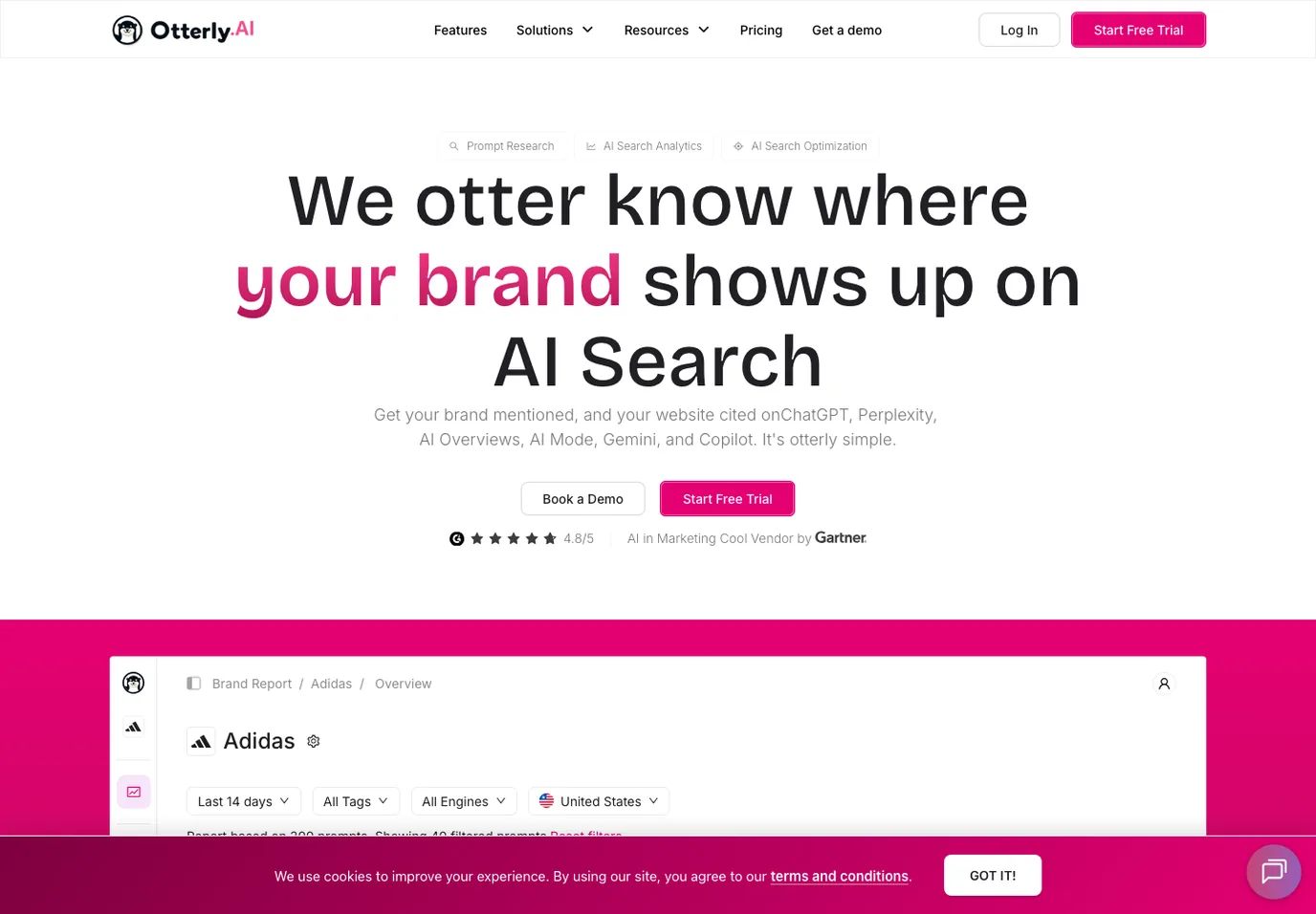
OtterlyAI is positioned as a focused brand monitoring tool for AI search. The public OtterlyAI homepage emphasizes knowing where your brand shows up across AI search systems such as ChatGPT, Google AI Overviews, Perplexity, Gemini, and others.
That focus is useful for lean teams that need visibility checks without a heavy enterprise platform. The first question is evidence depth. A monitor is valuable when it records prompts, answer states, mentions, citations, competitors, and history in a way the team can recheck.
Choose OtterlyAI when your first need is brand and competitor monitoring across AI search surfaces. Pair it with a separate SEO execution workflow if you also need crawl checks, page refreshes, and owner assignment.
Scrunch
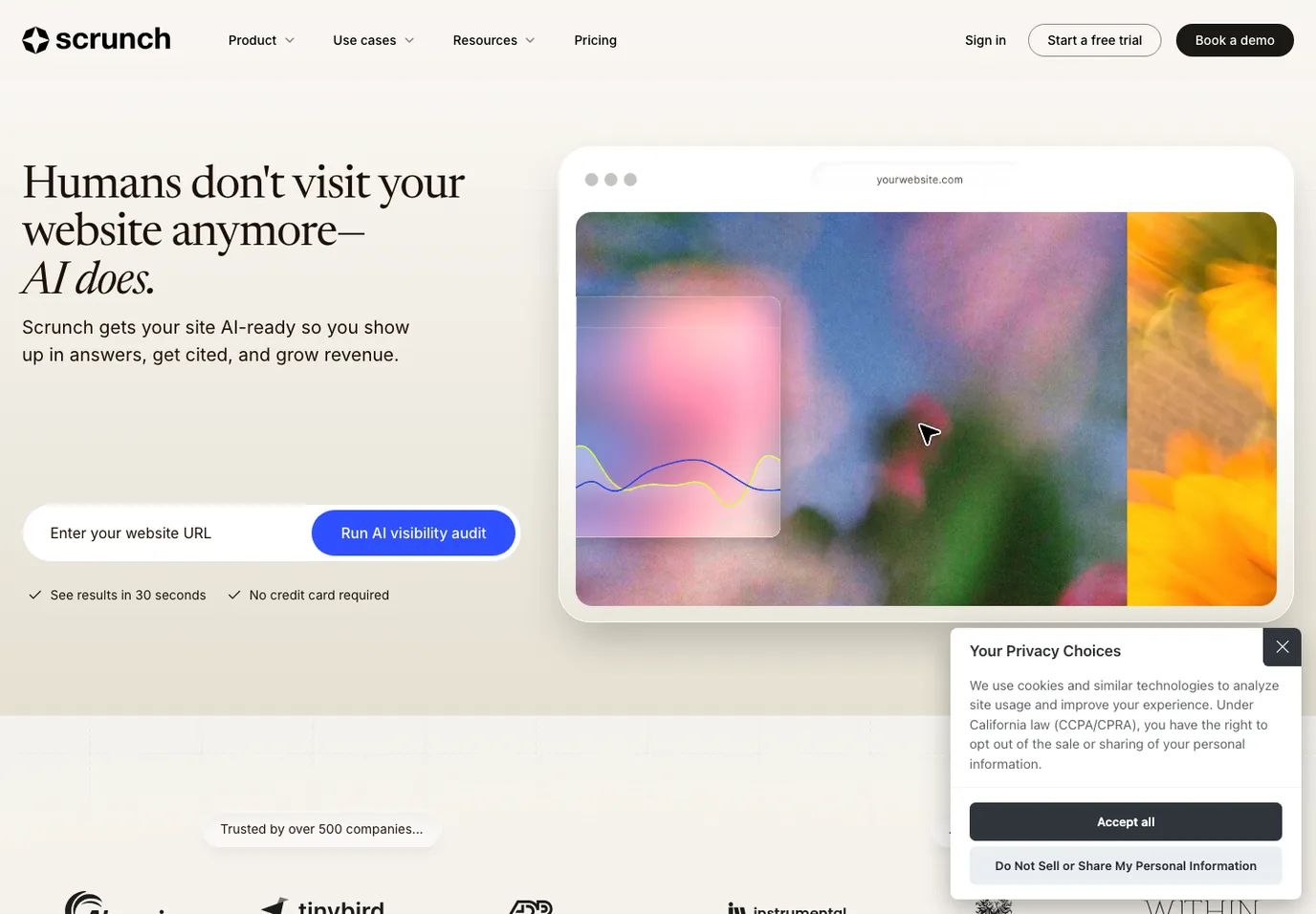
Scrunch positions itself around making websites ready for AI discovery. The public Scrunch homepage uses an AI-first message around how answer systems encounter a website and whether the brand can be understood by AI agents.
That makes Scrunch interesting when the team is not only watching mentions but also diagnosing whether the site itself is ready to be interpreted. For SEO operators, the important test is whether readiness advice becomes concrete page work: entity clarity, source pages, structured content, comparison pages, crawl access, and internal links.
Choose Scrunch when the problem is website readiness for AI discovery. Verify whether recommendations map to your CMS, technical SEO workflow, and content ownership model.
Writesonic
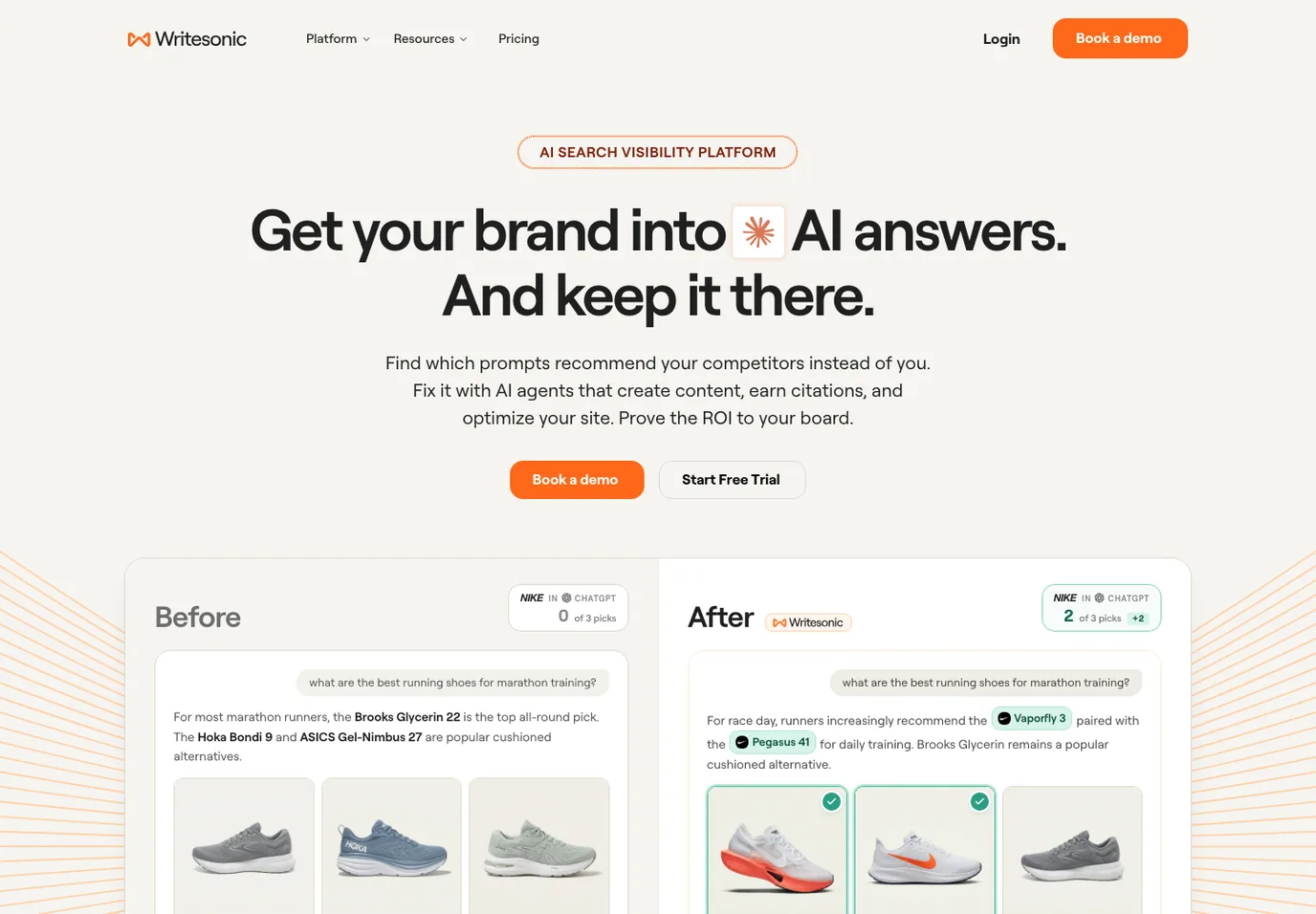
Writesonic is better known as a content and marketing platform, but its public homepage now positions the product around getting a brand into AI answers and keeping it there. That makes it relevant when the team wants GEO monitoring close to content creation and optimization.
The opportunity is workflow speed. A content team can move from visibility gap to draft, refresh, or optimization faster when creation tools are close to the monitoring layer. The risk is the same as any content-first stack: output volume can run ahead of source quality if the team does not require evidence, screenshots, citations, and page-level validation.
Choose Writesonic when content production and GEO optimization need to live close together. Keep a separate quality gate for technical eligibility, source-page usefulness, and AI answer evidence.
Match The Tool To Your Operating Model
The right tool depends on the weekly decision you need to improve.
| If your team mainly needs | Start with | Add this guardrail |
|---|---|---|
| AI visibility inside SEO execution | Searvora AI SEO Dashboard | Keep query groups tied to crawl, content, and owner queues |
| Brand intelligence across AI and wider web surfaces | Ahrefs Brand Radar or Profound | Require source-page and competitor evidence before changing pages |
| Suite-based AI visibility reporting | Semrush AI Visibility | Confirm exports and page-level action paths |
| Focused AI search monitoring | Peec AI or OtterlyAI | Define prompts, regions, competitors, and recheck cadence upfront |
| AI-readiness diagnosis | Scrunch | Translate readiness findings into CMS and technical SEO tasks |
| GEO content production | Writesonic | Keep claims grounded in official sources and measurable page changes |
For source-page work, pair the tool with an AI search citation audit. For entity coverage, use the brand mentions in AI answers workflow. Those two checks keep AI visibility work from becoming a score-chasing exercise.
Where Searvora Fits
Searvora is strongest when AI visibility has to become assigned SEO work. Use the AI SEO dashboard to track page groups, query sets, visibility movement, and source-page evidence. Then route findings into crawl validation, content refreshes, comparison pages, or strategy work.
That operating model matters because AI answer evidence changes. A team needs enough structure to avoid rewriting pages after one noisy prompt, but enough speed to act when a competitor repeatedly owns a citation or answer.
Run This Buying Checklist
Before choosing from the best AI visibility tools, ask these questions:
- Which AI systems and search surfaces are monitored?
- Can the team define stable query sets by brand, category, comparison, and problem intent?
- Does the tool record citations and source URLs, not only brand mentions?
- Can you segment by market, language, competitor, product line, or page group?
- Does the output explain why visibility changed?
- Can findings become assigned SEO, content, or technical tasks?
- Are screenshots, exports, and historical records available for stakeholder review?
- Does the workflow connect to existing Search Console, crawl, content, or reporting systems?
The best AI visibility tool is the one that improves the next decision. If the team needs brand intelligence, choose a deep monitoring layer. If the team needs content production, choose a content-connected GEO workflow. If the team needs weekly SEO execution, choose a dashboard that turns AI visibility into a fix queue the team can actually ship.