

Broken link building is the process of finding a dead external reference on another site, creating or choosing a replacement resource, and suggesting that replacement only when it improves the source page for its readers.
The useful version is not "find 404s and email everyone." It is an evidence workflow: prove the link is broken, prove your asset matches the missing reference, qualify the source page, keep outreach inside spam-policy guardrails, and measure whether the campaign helped the page that earned the citation.
The safest broken link building workflow has seven steps:
- Find candidate source pages with dead outbound references.
- Verify the dead URL, redirect path, and original context.
- Match the missing reference to a replacement asset that genuinely helps.
- Qualify the source page for topical fit, quality, and editorial reason.
- Write a short outreach note around the source page's reader.
- Record risk signals before sending or following up.
- Measure earned links, page impact, and the next action.
What Broken Link Building Should Decide
A broken link building campaign should decide whether an outreach opportunity deserves to exist. The backlink is the result, not the starting point.
Use this first-pass decision table:
| Question | Good sign | Stop or review |
|---|---|---|
| Is the target reference actually broken? | The destination returns a persistent 404, 410, timeout, or irrelevant redirect | The page loads, redirects to a relevant replacement, or fails only once |
| What did the old link support? | A claim, tool, data point, guide, example, template, or reference list | A vague mention with no clear reader job |
| Does your asset replace that job? | It answers the same task with current, crawlable, useful evidence | It is only loosely related or mostly promotional |
| Is the source page worth contacting? | It is maintained, indexed, relevant, and editorially useful | It is a thin directory, abandoned page, or link farm |
| Would the reader benefit? | The replacement makes the source page clearer or more current | The only benefit is your desire for a backlink |
The Ahrefs page that surfaced this opportunity explains the basic tactic and why it can still work. Searvora's information gain is the operating layer around that tactic: turn dead-link findings into a qualified campaign queue instead of a mass email spreadsheet.
Verify The Dead Reference First
The campaign starts with verification, not outreach. A link can look broken in one export because of a temporary crawl issue, bot block, redirect timeout, geo behavior, or a tool's stale cache. Confirm the evidence before asking another site to change a page.
Capture these fields for each candidate:
| Field | Why it matters |
|---|---|
| Source URL | Shows where the dead reference appears |
| Broken destination | Shows the exact URL being replaced |
| Status code and final URL | Separates true dead links from redirects or temporary errors |
| Anchor text and surrounding sentence | Reveals the job the old link performed |
| Source page topic | Confirms topical fit before outreach |
| Replacement asset | Shows what you would recommend instead |
| Validation date | Prevents stale exports from driving outreach |
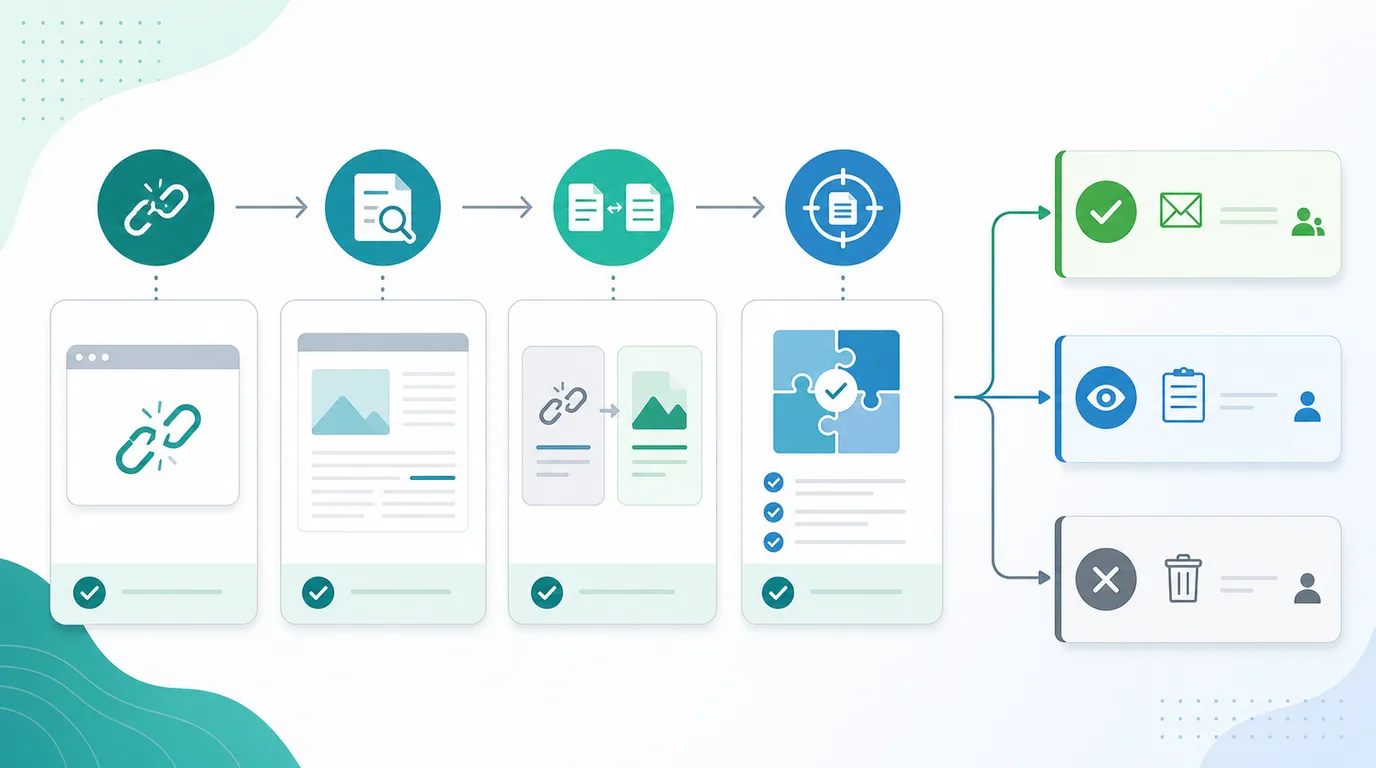
If the dead reference points to an old report, the replacement should be a report or an equivalent evidence page. If it points to a practical tool, the replacement should help with that same task. If it points to a beginner definition, the replacement should answer that definition clearly before introducing your product or angle.
This is where a broken link checker workflow helps on your own site too. Before asking another publisher to cite your page, make sure your replacement asset is crawlable, internally linked, and not hiding behind a redirect chain or missing image.
Match The Asset To The Missing Job
Broken link building fails when the replacement asset is chosen because it is the page you want links to, not because it replaces the missing reference.
Use this asset-fit score before outreach:
| Fit layer | Pass condition | Fix before outreach |
|---|---|---|
| Topic match | The asset answers the same concept, method, tool, data need, or example | Rewrite the asset or choose a better target |
| Page type | The old reference and new asset serve compatible jobs | Do not replace a data source with a sales page |
| Evidence strength | The asset includes current explanation, examples, methods, or public sources | Add evidence before pitching |
| Crawl readiness | The page returns 200, has a canonical URL, and is internally discoverable | Fix technical access first |
| Citation reason | The source page becomes more useful with the replacement | Remove weak prospects from the queue |
This keeps the tactic distinct from generic link building outreach. Outreach asks whether a page deserves contact. Broken link building adds a stricter test: does the replacement really preserve or improve the source page's missing reference?
Build A Campaign Queue With Risk Controls
Every approved prospect should become a row in a reviewed queue. That queue should explain why the opportunity was approved, who owns it, what risk was found, and what outcome will be measured.
Use these fields:
| Queue field | What to record |
|---|---|
| Prospect source URL | The page that currently contains the broken reference |
| Broken URL and status | The exact dead destination and validation result |
| Missing reference job | What the old link helped the reader do |
| Replacement asset | The owned page you may suggest |
| Fit reason | One sentence explaining why the replacement helps |
| Risk flags | Paid placement request, irrelevant page, weak asset, exact-match anchor pressure, or stale source |
| Outreach status | Not started, sent, follow-up, earned, rejected, skipped, or monitor |
| Measurement owner | The person reviewing link quality, page impact, and next action |
Google's spam policies are the safety boundary. Broken link building becomes risky when the campaign turns into link manipulation, paid placement pressure, excessive exchange behavior, automated outreach, or unnatural anchor control.
The safer default is simple: suggest a useful replacement, let the editor choose the wording, and stop when the fit is weak.
Write The Outreach Around The Source Page
The outreach note should be short because the evidence is specific. It should not flatter the publisher, demand an anchor, or imply a relationship that does not exist.
Use this structure:
Subject: Broken reference on your page about [topic]

Hi [name],

I was reading your page on [specific source-page topic] and noticed the reference to [old resource or section] no longer resolves.

We have a current resource on [replacement asset job] that may help readers who need [reader task]. It covers [specific proof, method, or example], so it could fit near the section about [specific point].

Here is the page: [URL]

No pressure if it is not useful. I only wanted to send it because the broken reference leaves that section without a working source.

Best,
[name]
The bracketed parts must be real. If the team cannot fill them in without stretching, the prospect should move back to review.
Follow-ups need the same restraint. One follow-up can be reasonable for a high-fit page. Repeated messages, exact-match anchor suggestions, or pressure around rankings should stop the campaign.
Measure More Than Earned Links
Broken link building is successful when it creates useful editorial citations and better campaign evidence. A raw backlink count is too thin.
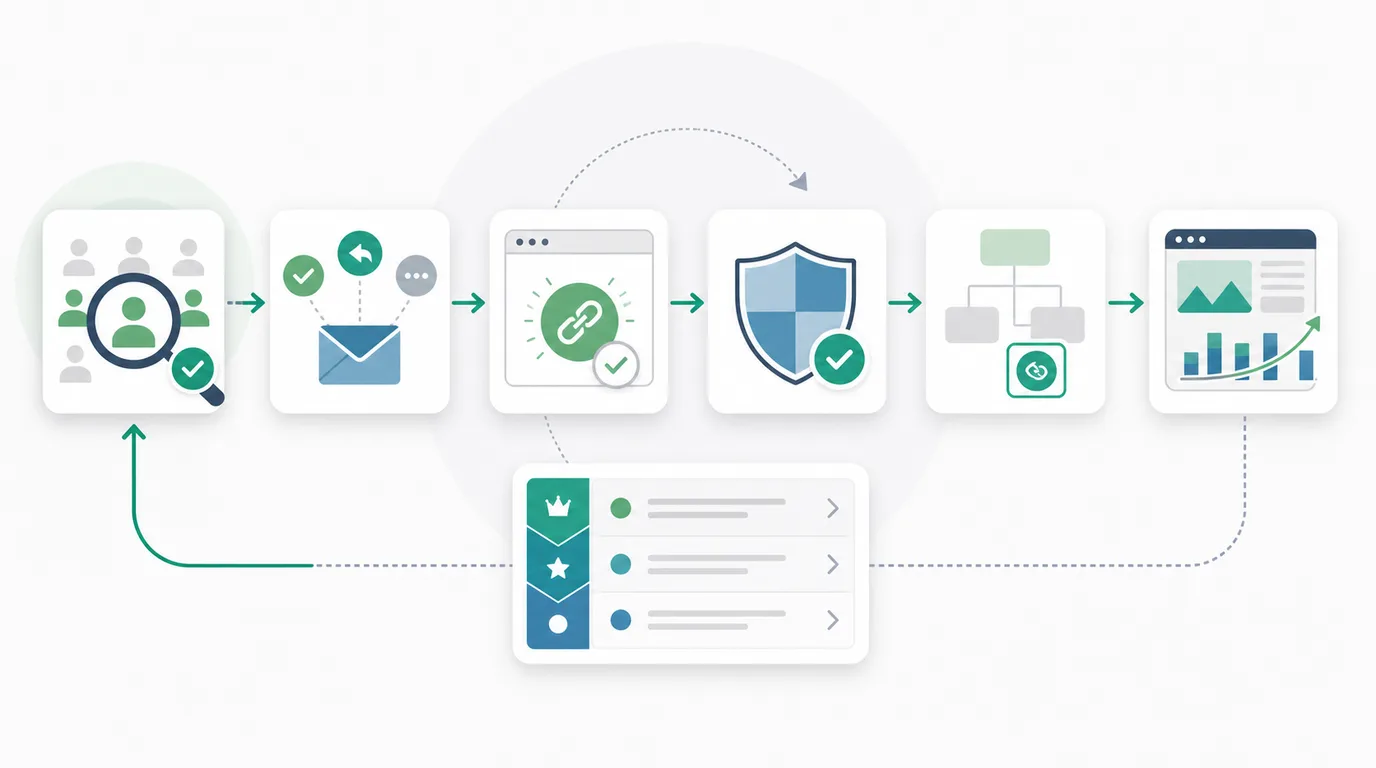
Track these outcomes:
| Measurement layer | What to review | Next action |
|---|---|---|
| Link quality | Source relevance, page usefulness, anchor naturalness, and placement context | Keep, monitor, or disqualify similar sources |
| Asset performance | Search impressions, assisted conversions, AI-search citation readiness, and engagement | Refresh the asset or expand the supporting section |
| Internal routing | Whether the linked page supports hubs, product pages, and related articles | Add internal links where they help the reader |
| Risk pattern | Paid requests, exchanges, irrelevant pages, or exact-match anchor pressure | Tighten prospect rules or pause the campaign |
| Content gaps | Questions or objections that appeared during outreach | Improve the asset before the next batch |
If a campaign discovers old mentions, lost citations, or changed source URLs on your own site, route those findings through the link reclamation workflow. Reclamation and broken link building are adjacent, but the decision differs: reclamation repairs existing relationships, while broken link building earns new citations by replacing a missing resource.
Where Searvora Fits
Searvora AI SEO Consultant fits when broken link building needs to become a reviewed action queue. It does not replace backlink indexes, buy links, scrape contacts, or automate pressure. Its role is the decision layer after the evidence exists.
Use the AI SEO consultant when the team needs to:
| Campaign decision | How Searvora helps structure it |
|---|---|
| Which replacement asset deserves outreach | Connect asset quality, search demand, page type, and internal support |
| Which prospects should be skipped | Turn risk flags and weak-fit evidence into queue rules |
| Which technical checks matter | Keep crawlability, canonicals, redirects, and internal links close to the campaign |
| Which outcome changed priority | Convert earned-link evidence, objections, and page impact into next actions |
The value is not sending more messages. The value is knowing which opportunities deserve contact, which should be skipped, and what the team should improve after the campaign.
Broken Link Building Checklist
Use this checklist before starting the next campaign:
- Export candidate source pages with broken outbound references.
- Verify the status code, final URL, and validation date for each broken destination.
- Record the anchor text and surrounding sentence so the missing job is clear.
- Match each prospect to a replacement asset that serves the same reader task.
- Confirm the replacement asset is crawlable, canonical, internally linked, and useful.
- Remove thin directories, irrelevant pages, abandoned resources, and paid-placement requests.
- Write outreach around the source page's reader, not your backlink target.
- Avoid exact-match anchor demands and repeated follow-ups.
- Track earned-link quality, asset impact, internal routing, and risk patterns.
- Turn campaign evidence into the next action: improve the asset, narrow prospects, add internal links, pause, or expand.
Broken link building works best when it behaves like editorial repair. Find the missing source, verify the replacement, respect the publisher's page, and keep the measurement honest enough that the next campaign starts smarter than the last one.