

Link reclamation is the process of finding valuable backlinks that disappeared, understanding why they were lost, and choosing the safest way to recover value. The useful version is not a panic list of every missing link. It is a workflow that separates real SEO value from noise, routes each loss to the right fix, and measures whether the recovery effort was worth the time.
Start with four questions:
- Did the link actually disappear, or did the source page change in a way that only changes how a tool reports it?
- Does the source page still matter for topical relevance, referral value, authority, or audience fit?
- Is the best recovery path technical, content-led, or outreach-led?
- What will prove that the recovered link created durable value?
The Ahrefs link reclamation article that surfaced this opportunity focuses on finding and reclaiming lost backlinks. Searvora's information gain is the operating layer around that task: turn lost-link evidence into a qualified recovery queue, not another backlink export.
Triage Lost Links Before Taking Action
Not every lost link deserves recovery. Some source pages were deleted for good reasons, some links moved during a normal rewrite, and some historical links were never relevant enough to chase.
Use this triage table before assigning outreach or fixes:
| Lost-link signal | What it means | Better first action |
|---|---|---|
| Source page is now 404 | The linking page disappeared | Check whether the page has a replacement, archive, or redirect path |
| Source page redirected | The link may be gone or consolidated | Inspect the final URL and confirm whether the citation still exists |
| Your target URL redirected | The backlink may still pass users through a different path | Validate the redirect chain and final destination |
| Link was removed from live HTML | The editor changed the source page | Decide whether the resource still improves that page |
| Source page is noindexed | The link may exist but carry less discovery value | Check whether the page still has referral or relationship value |
| Link changed to nofollow or sponsored | The editorial signal changed | Keep only if referral or audience value remains |
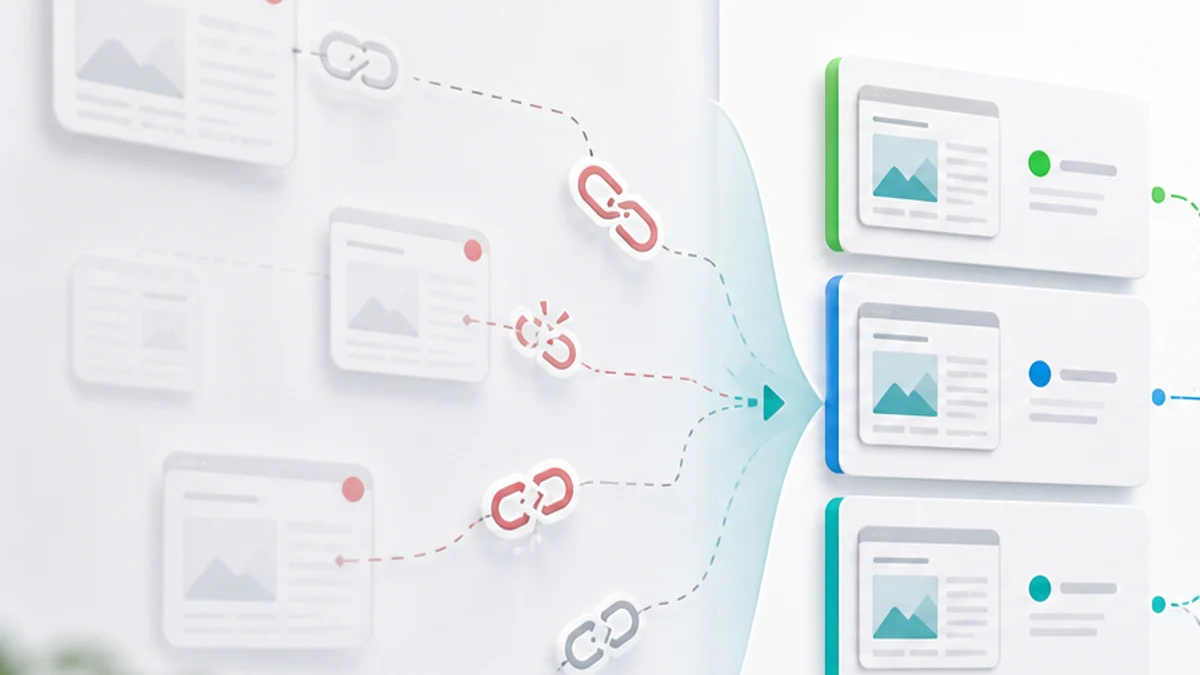
The priority is cause before contact. A missing backlink from a high-fit source page may require outreach. A lost link caused by your own redirect chain may require a technical fix. A low-quality link from an unrelated page may require no action at all.
If the missing link points to a page that is hard to crawl, internally isolated, or redirected through too many hops, pair reclamation with the internal links for SEO workflow. Recovered authority is more useful when the target page is easy for users and crawlers to reach.
Choose The Recovery Path By Cause
Link reclamation usually fails when every lost link gets the same email template. The cause should decide the recovery path.
| Cause | Recovery path | When to skip |
|---|---|---|
| Your page moved | Fix redirects, update canonicals, and ask high-value sources to update the citation | Source page is irrelevant or low quality |
| Your asset became outdated | Refresh the asset, add evidence, then contact the editor with the improved resource | Asset still does not deserve the citation |
| Source page removed the link | Review the changed paragraph and suggest a specific helpful placement | The current source page no longer covers the topic |
| Source page deleted | Look for replacement pages or resource lists from the same site | Site is gone, expired, or no longer relevant |
| Brand mention remains unlinked | Treat it as a mention-to-link opportunity only if a link helps the reader | Mention is promotional, passing, or not citation-worthy |
| Lost link was risky | Record it, but do not recover it | Paid, exchange-heavy, unrelated, or manipulative pattern |
Google's spam policies are the safety guardrail. Link reclamation should recover editorially useful references, not pressure publishers into paid placements, excessive exchanges, or unnatural anchors.
Google's link best practices also matter on your own site. If the target URL is blocked, buried, canonicalized away, or redirected poorly, outreach is solving the wrong problem first.
Write Recovery Outreach Around The Source Page
When outreach is the right path, the message should be specific to the source page. A recovery email works because it helps the editor maintain a useful page, not because your team wants authority back.
Use this structure:
| Email part | Include | Avoid |
|---|---|---|
| Context | The exact page and section where the link used to help | Generic praise or vague nostalgia |
| Change | What changed, such as a missing citation, moved URL, or outdated reference | Accusing the editor of removing a link |
| Reader value | Why the current resource still helps that page's audience | "It would help our rankings" |
| Updated resource | The best URL, replacement page, or refreshed asset | A thin commercial page |
| Exit path | A polite note that it may not fit anymore | Pressure, repeated follow-ups, or anchor demands |
Here is a safe template:
Subject: Updated resource for your page on [topic]

Hi [name],

I was reviewing your page on [specific topic] and noticed that the old reference to [resource] no longer points readers to the best page.

We updated the resource here: [URL]. It may still help the section about [reader task] because it includes [specific evidence, checklist, tool, or example].

No pressure if the page has moved in another direction. I only wanted to send the updated source in case it helps keep the section useful.

Best,
[name]
The link building outreach workflow goes deeper on prospect qualification, follow-up rules, and email risk controls. For reclamation, keep the message even narrower: one page, one reason, one useful replacement.
Measure Recovered Value, Not Raw Wins
A recovered backlink is not automatically a business win. The team needs to know whether the source was relevant, whether the target page became stronger, and whether the next action should be more recovery, a content refresh, or a technical cleanup.
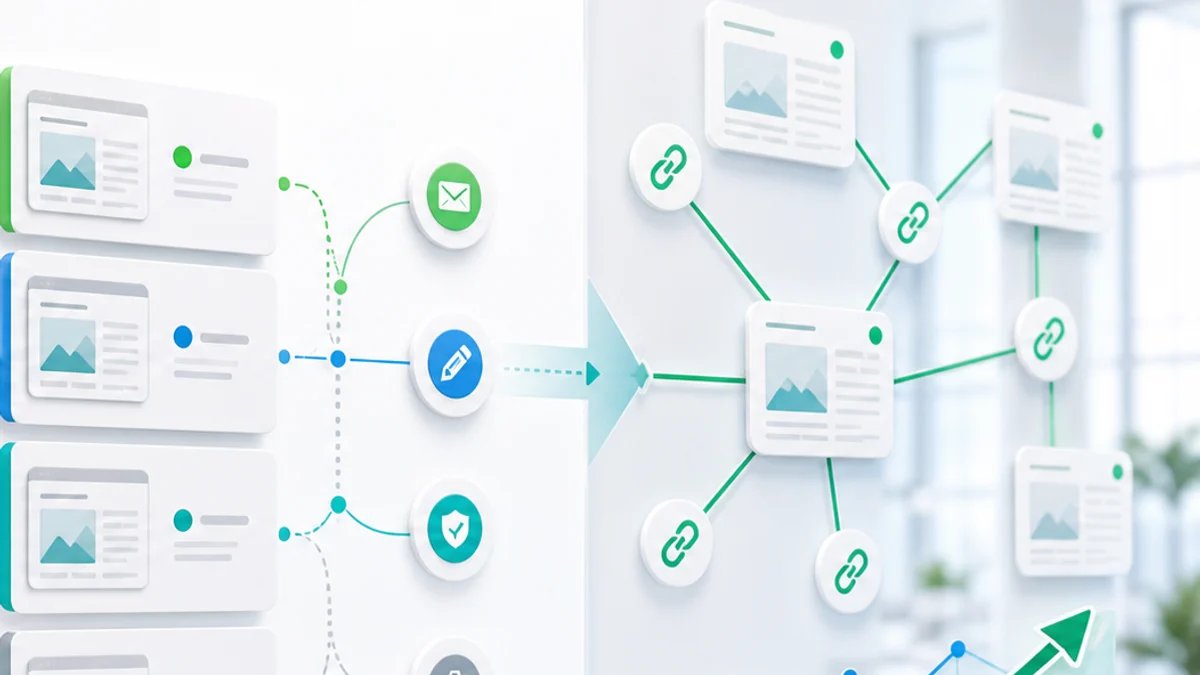
Track these fields in the recovery report:
| Measurement layer | What to record | Why it matters |
|---|---|---|
| Recovered source | Source URL, domain, topic, and page type | Separates relevant citations from noisy wins |
| Target URL | The page that regained the link | Shows which asset or product area benefited |
| Recovery path | Redirect fix, content refresh, editor outreach, replacement URL, or no action | Helps improve future triage rules |
| Link context | Anchor, surrounding sentence, follow status, and placement quality | Keeps the team focused on editorial value |
| Page impact | Search Console movement, referral clicks, assisted conversions, or ranking changes | Prevents raw link count from becoming the goal |
| Next action | Refresh, add internal links, expand asset, watchlist, or stop | Turns the campaign into work the team can ship |
The broader link building for SEO workflow is the better parent guide when the team is still deciding whether a campaign should exist. Link reclamation is narrower: protect value that was already earned, then improve the asset and routing that made the citation possible.
Where Searvora Fits
Searvora does not replace backlink indexes, buy links, or automate publisher pressure. It fits the prioritization and execution layer around link reclamation.
Use AI SEO Consultant when lost-link evidence needs to become an action queue:
| Reclamation decision | What Searvora helps structure |
|---|---|
| Which lost links matter | Score recovery by source relevance, page value, and likely effort |
| Which path to choose | Separate redirect fixes, content updates, internal-link work, and outreach |
| Which risks to avoid | Flag manipulative, irrelevant, paid, or exchange-heavy patterns |
| What to assign next | Turn each approved recovery into owner-ready SEO, content, or technical work |
For technical recovery paths, Searvora SEO Spider Crawler can support the crawl side of the investigation: redirects, broken URLs, canonicals, internal links, and indexability. The consultant layer helps decide which of those findings should be fixed before anyone sends an email.
Link Reclamation Checklist
Use this checklist before launching a recovery batch:
- Export lost links from the backlink source you trust.
- Remove irrelevant, manipulative, paid, exchange-heavy, and low-quality sources.
- Confirm whether the source page still exists, redirects, or changed content.
- Confirm whether your target URL moved, redirects, canonicalizes away, or lost relevance.
- Score each opportunity by source relevance, target-page value, recovery effort, and risk.
- Fix your own redirects, internal links, canonical conflicts, or outdated content before outreach.
- Write outreach only when the recovered citation helps the source page's reader.
- Keep anchors natural and avoid exact-match requests.
- Record response, recovered URL, placement context, follow status, and next action.
- Measure the target page after recovery instead of reporting raw recovered-link count.
The best link reclamation campaigns are calm. They protect value that still deserves to exist, skip noisy losses, and turn every recovered link into better evidence for the next SEO decision.