

Event link building is the process of earning relevant links by hosting, speaking at, partnering with, or sponsoring an event. The link is not the campaign by itself. A defensible campaign gives attendees and partners a useful page to reference, records whether a placement is editorial or paid, verifies the final link, and maintains the destination after the event ends.
That distinction matters. An organizer may cite a speaker resource because it helps attendees. A sponsor page may link because money changed hands. Both can create business value, but they need different expectations and link treatment.
Decide Which Event Link You Are Building
Start by naming the relationship. Teams create risk when they call every placement an earned backlink even though the commercial terms say otherwise.
| Event relationship | Why the page might link | How to treat it |
|---|---|---|
| Host | The event site is the canonical source for the program, speakers, venue, and updates | Build a maintained event hub that other pages can cite |
| Speaker or contributor | The organizer needs a bio, session summary, slides, research, or supporting resource | Earn the citation by making the contribution useful |
| Community partner | Both organizations help the same audience complete a task | Document the shared audience and resource fit |
| Media or association partner | The partner provides coverage, distribution, or professional context | Keep editorial decisions with the publisher |
| Sponsor | Payment funds the event or buys visibility | Disclose the relationship and qualify paid links |
| Attendee | A recap, review, or resource list may mention the event naturally | Do not demand a link as a condition of participation |
Google's spam policies list buying or selling links for ranking purposes as link spam. Its outbound-link guidance says paid placements should use rel="sponsored"; nofollow is still acceptable when needed.
The safer operating model is simple: earned citations stand on editorial value, while commercial placements stand on audience and partnership value. Do not blur them to make the campaign report look stronger.
Choose Events by Audience Fit
A high-authority domain does not make an event relevant. Start with the people, the program, and the reason your contribution would improve the experience.
Score each event before committing budget or staff time:
| Evidence | Strong signal | Weak signal |
|---|---|---|
| Audience overlap | Attendees have the problem your product, research, or expertise can help solve | The audience is broad and the only attraction is a domain metric |
| Program fit | Your session or resource fills a visible topic gap | The pitch exists only to place a brand mention |
| Organizer credibility | Current program, named organizers, clear policies, and maintained event pages | Thin pages, copied speaker lists, or unclear ownership |
| Contribution quality | Original research, a useful template, practical examples, or real expertise | Generic thought leadership with no attendee takeaway |
| Partnership terms | Deliverables, disclosure, link treatment, dates, and owners are written down | A verbal promise of a dofollow backlink |
| Measurement path | Registration, referral, assisted leads, mentions, and page performance can be reviewed | Success is defined only as acquiring a link |
Local meetups, trade associations, webinars, conferences, workshops, and community projects can all work. The format matters less than the match between the event audience and the contribution.
For locally focused events, the local SEO workflow can help connect community participation with accurate business details, useful location pages, and measurable market visibility. Do not sponsor an unrelated local event merely to collect a geographic link.
Build the Event Page Before Outreach
An organizer cannot cite a page that does not yet explain the event, contribution, or resource. Publish the destination early enough for partners to review it and keep it useful after the date passes.
For a hosted event, the page should include:
- the event name, purpose, date, time, location or access method;
- a clear agenda and named speakers or organizers;
- registration or attendance details;
- accessibility, refund, recording, and contact information where relevant;
- original session summaries, templates, data, slides, or follow-up resources;
- a stable canonical URL that will remain live after the event;
- internal links to the most relevant product, service, or resource pages.
Google's event structured data documentation explains the properties and eligibility rules for event experiences in Search. Structured data can clarify event facts, but it does not replace visible details or a useful page.
For a sponsorship or speaking engagement, create a supporting resource only when it helps attendees. A session checklist, benchmark, calculator, template, or concise reference page gives the organizer a legitimate citation reason. A thin page that repeats the speaker bio does not.
Before outreach, validate the destination:
- It returns a
200status and is indexable. - Its canonical points to the intended URL.
- The title and H1 name the event task clearly.
- Important facts are visible in the page, not only in markup.
- Registration and resource links work.
- The page has a post-event maintenance owner.
Set Sponsorship Terms Without Buying Ranking Credit
Event sponsorship is media and partnership spend. Treat it that way in the agreement.
Record these fields before payment:
| Agreement field | What to specify |
|---|---|
| Placement | Exact event, sponsor, agenda, speaker, or resource page |
| Destination | The final URL and the attendee job it supports |
| Relationship | Host, speaker, partner, advertiser, or sponsor |
| Disclosure | The visible wording that explains the commercial relationship |
| Link qualification | rel="sponsored" or nofollow for paid placements |
| Anchor control | Natural brand or descriptive wording, not forced exact-match anchors |
| Term | Start date, event date, archive policy, and removal conditions |
| Owner | Who confirms the page before launch and after the event |
The U.S. Federal Trade Commission's disclosure guidance emphasizes that material relationships should be made clear in the communication itself. The exact legal obligations depend on the campaign and jurisdiction, so involve the appropriate legal owner rather than treating a search checklist as legal advice.
Do not ask an organizer to hide sponsorship, remove qualification, guarantee rankings, or repeat exact-match anchors across partner pages. The same risk-first test used when deciding whether to buy backlinks applies here: would the placement still be worth the cost if it passed no ranking credit?
Run a Six-Stage Event Link Building Workflow
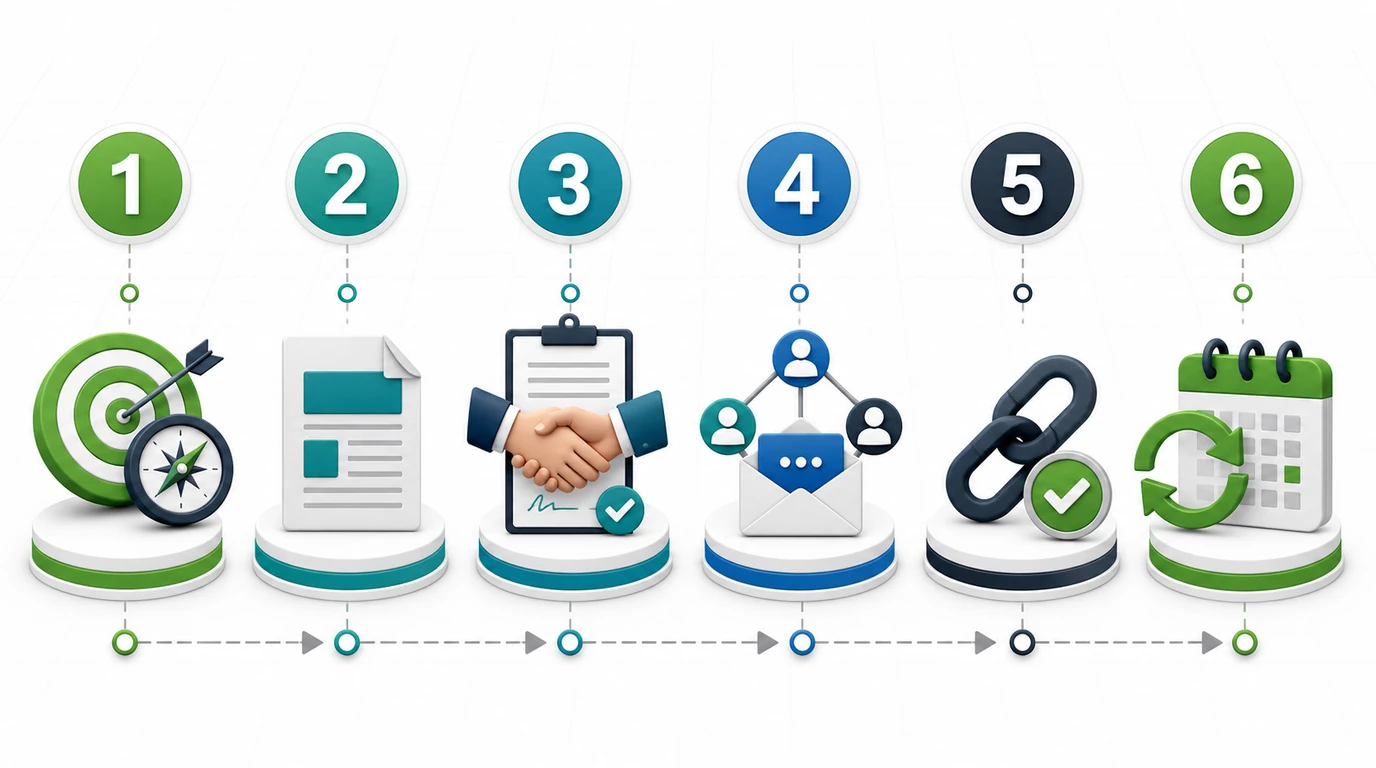
Run the campaign as six connected stages rather than a one-time request for a backlink.
1. Qualify the event
Write down the audience, program fit, organizer evidence, contribution, relationship type, expected business value, and stop conditions. Reject the event if the only credible outcome is an unqualified paid link.
2. Prepare the destination
Publish the event hub or supporting resource. Save a baseline for status code, canonical, indexability, internal links, impressions, clicks, and conversions before campaign traffic arrives.
3. Confirm the terms
Agree on the placement, destination, disclosure, link qualification, anchor wording, dates, and owner. Separate editorial citations from sponsored placements in the campaign ledger.
4. Give partners a citation reason
Send the exact resource, session summary, speaker details, image assets, and attendee benefit the partner needs. Keep outreach specific to the event page. The link building outreach workflow is useful when several associations, speakers, venues, or media partners need coordinated follow-up.
5. Verify the published result
Check the source URL, destination, anchor, link attribute, disclosure, status code, canonical, and whether the link is present in rendered HTML. Save the date and owner instead of relying on a screenshot in a message thread.
6. Maintain the relationship and page
After the event, replace expired registration instructions with recordings, slides, recaps, templates, results, or the next relevant action. Keep the URL alive when it still serves a real task. Redirect it only when a stronger permanent destination genuinely replaces it.
Verify Links as Evidence, Not Trophies
A link count hides the details that determine whether the campaign created useful work. Keep one evidence ledger for earned and sponsored placements.
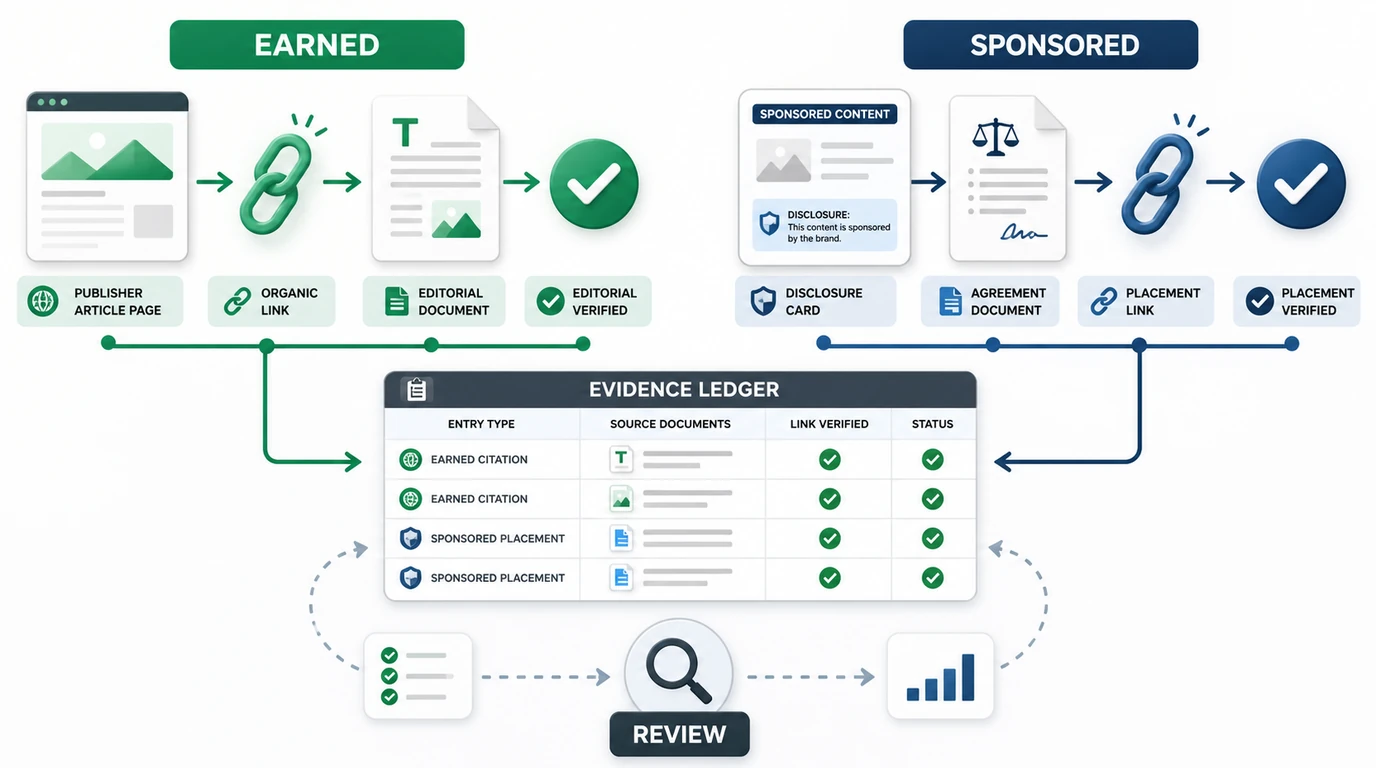
Record at least:
- source URL and page type;
- target URL and canonical destination;
- relationship type and disclosure;
- link attribute and anchor text;
- first-seen and last-checked dates;
- event, market, audience, and campaign owner;
- referral sessions, qualified actions, mentions, and assisted outcomes;
- maintenance, correction, or removal status.
Then run two validation passes.
Technical validation confirms that the source and destination still resolve, the destination remains canonical and indexable, and no redirect or page-template change has broken the path.
Editorial validation confirms that the link still helps the source page's reader, the relationship remains transparent, the anchor is natural, and the destination still contains the promised resource.
Do not claim that one link caused a ranking movement because the dates happen to align. Compare link activity with content changes, technical releases, seasonality, internal-link changes, and broader search movement before assigning causality.
Measure More Than Link Acquisition
Event link building should create a better next decision, even when the campaign earns fewer links than expected.
| Measurement layer | What to review | Decision it supports |
|---|---|---|
| Partnership | Organizer quality, delivery against terms, and future collaboration potential | Renew, renegotiate, or stop |
| Audience | Relevant registrations, attendance, referral visits, and qualified actions | Improve event and channel fit |
| Content | Engagement with slides, templates, recordings, research, or recaps | Maintain, expand, or consolidate the resource |
| Links and mentions | Relevance, context, disclosure, attributes, destination, and persistence | Keep, correct, or document the placement |
| Search | Impressions, clicks, query mix, crawl eligibility, and cited brand evidence | Refresh the page or adjust internal routing |
| Operations | Staff time, sponsorship spend, owner handoffs, and unresolved maintenance | Change scope and budget for the next campaign |
An event can be valuable without producing an editorial backlink. A qualified sponsorship link can still send the right audience. A speaking session can create reusable expert content. A community partnership can generate mentions and relationships that outlast the event page.
The campaign fails when the team buys visibility, records only a raw link count, and leaves expired pages or unclear relationships behind.
Where Searvora Fits
Searvora AI SEO Consultant fits the planning and prioritization layer. It does not turn sponsorship into editorial authority or replace partner outreach. Its role is to help an SEO team convert mixed campaign evidence into a ranked, assignable queue.
Use the AI SEO consultant to structure work such as:
| Event evidence | Action to prioritize |
|---|---|
| Strong audience fit, weak event page | Assign the page brief and technical checks before promotion |
| Valuable contribution, unclear partner list | Define outreach criteria and owners |
| Sponsored placement without complete terms | Route disclosure and link-qualification review |
| Live links pointing to an expired page | Refresh, consolidate, or redirect with evidence |
| Referral interest without a clear next step | Improve the destination and conversion path |
| Repeatable event results | Turn the campaign into a maintained playbook |
Event Link Building Checklist
Use this checklist before approving the next event campaign:
- Name the relationship: host, speaker, contributor, partner, advertiser, sponsor, or attendee.
- Confirm the event serves an audience that overlaps with the page, product, research, or expertise you can contribute.
- Define business value beyond ranking credit.
- Publish a stable, useful, indexable destination before outreach.
- Save a technical and performance baseline.
- Put placement, disclosure, link qualification, anchor policy, dates, and owners in writing.
- Give each partner a specific attendee-centered citation reason.
- Verify the live source URL, destination, attribute, disclosure, anchor, and rendered link.
- Separate earned citations from paid placements in reporting.
- Measure audience, content, partnership, search, and operational outcomes together.
- Refresh the event page after the date passes.
- Turn the evidence into a clear next action: repeat, improve, maintain, correct, or stop.
Event link building works when the event creates something worth referencing and the team preserves the evidence. Choose the relationship honestly, make the destination useful, qualify commercial links, verify the result, and maintain the page after the applause ends.