

If you need to know how to fix ai search engine visibility issues, start by naming the issue before rewriting pages. A visibility problem can come from weak source pages, missing entity evidence, crawl blockers, outdated content, unstable answer surfaces, or competitor sources that explain the query better.
The fix is not "add more AI content." The fix is a sequence: confirm the symptom, isolate the cause, assign the right owner, ship one change, and recheck the same query group.
Separate The Symptom From The Cause
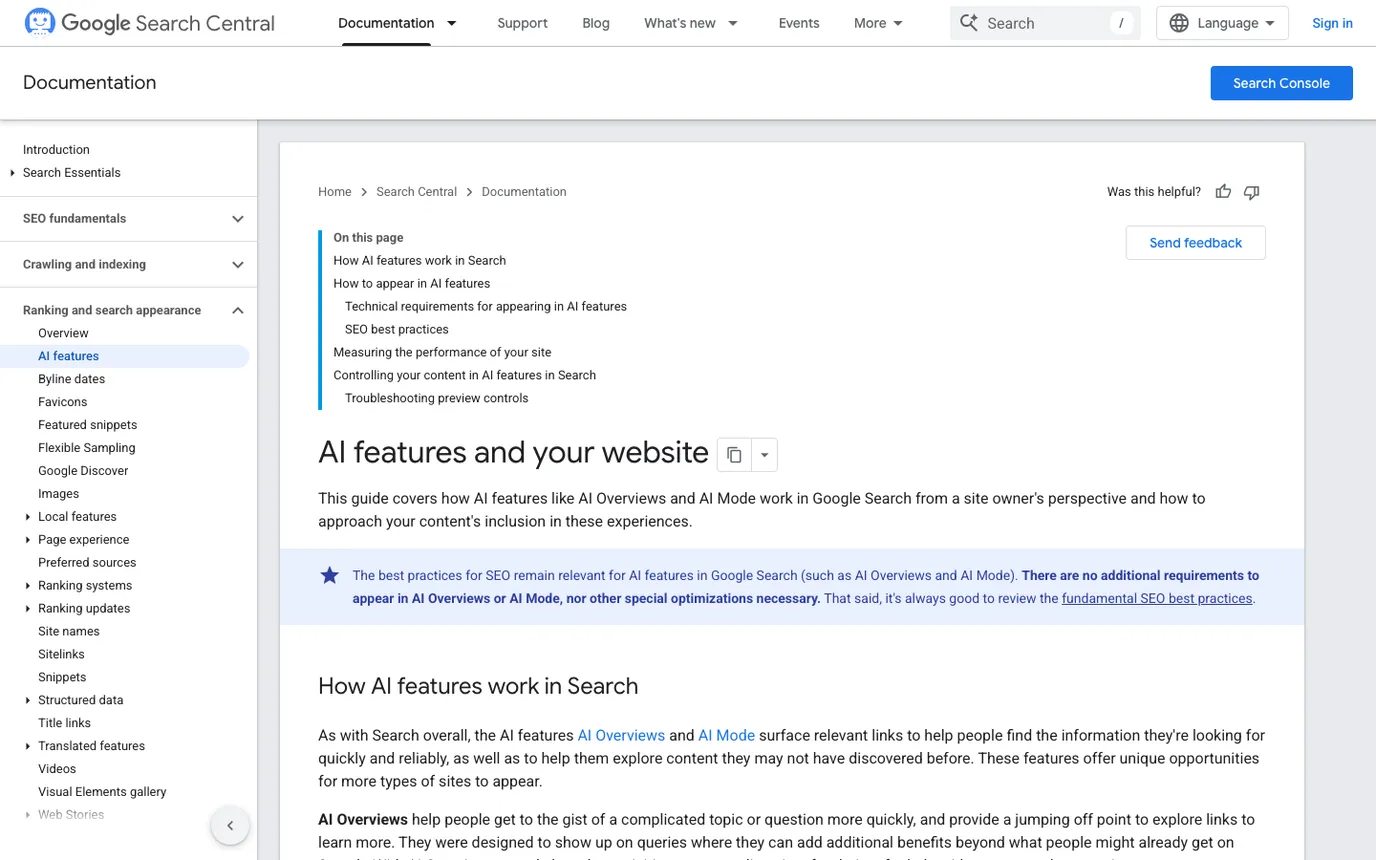
AI search visibility issues usually look similar from the outside. The brand is missing, the wrong page is cited, competitors appear more often, or an answer changes every time someone checks it. Those symptoms need different fixes. Google's AI features guidance keeps the baseline simple: useful, accessible pages still matter, so the first triage step is to separate source quality from eligibility problems.
Use this first-pass triage:
| Symptom | Likely cause | First fix |
|---|---|---|
| Brand is not mentioned | Weak entity evidence or category association | Strengthen source pages, citations, and third-party proof |
| Brand is mentioned but no owned URL is cited | Owned page is not source-ready | Improve the canonical page and internal links |
| Competitor URL is cited instead | Competitor explains the task better | Add clearer steps, examples, comparison proof, or data |
| AI answer cites an old page | Content drift or unclear canonical path | Refresh the page and validate canonical, sitemap, and internal links |
| Answer changes across checks | Low-confidence or unstable query group | Keep a watchlist before shipping major work |
| Classic rankings are fine but AI visibility is weak | Source extraction or entity evidence gap | Improve answer-ready sections and public proof |
| Both classic rankings and AI visibility fell | Broader SEO, crawl, or demand problem | Combine content diagnosis with technical crawl checks |
The content losing visibility workflow is useful when you already know which pages are slipping. This fix guide starts one step earlier: identify the cause before assigning work.
Run The Evidence Triage
Build a small evidence row for each issue. Do not let the row stay as "AI visibility down" because nobody can ship that.
Record these fields:
| Field | What to capture | Why it matters |
|---|---|---|
| Query group | Category, comparison, support, problem, or branded query | Keeps the fix tied to a real search task |
| Expected page | The URL that should support the answer | Prevents scattered rewrites |
| Current answer state | Missing, mentioned, cited, competitor cited, or unstable | Names the visible symptom |
| Cited source | Owned URL, competitor URL, publisher, forum, marketplace, or no source | Shows whether the problem is source ownership |
| Page evidence | Title, intro, H2s, tables, examples, schema, internal links | Shows whether the page is answer-ready |
| Crawl evidence | Status, canonical, noindex, robots, sitemap, rendered text, link depth | Prevents technical blockers from hiding as content problems |
| Validation date | When the same query will be checked again | Keeps the fix measurable |
Google's AI features guidance keeps the fundamentals intact: useful and accessible pages still matter. OpenAI's ChatGPT Search help also frames search answers around web results and source links, which makes cited-source logging a practical workflow.
Fix Source Gaps Before Publishing More
Many AI visibility issues are source-page issues. The brand may have content, but the right page does not clearly answer the exact job. Before publishing another article, check whether the existing source page can be repaired.
Use this repair sequence:
- Rewrite the opening section so the page answers the query directly.
- Add a table, checklist, example, or decision rule that is easy to extract.
- Make the entity relationship explicit: brand, product, category, audience, location, or use case.
- Link the page from relevant hubs, product pages, and supporting articles.
- Remove contradictions between product pages, blog posts, review pages, and support pages.
- Add or refresh external source evidence only when the owned page already makes the claim clearly.
This is why the AI search citation audit matters. It shows whether the answer system is using your source, a competitor source, or a third-party page that you need to out-explain.
Check Technical Eligibility
If the page cannot be crawled, rendered, indexed, or understood, editorial fixes may not reach the answer layer. Technical eligibility is especially important when AI visibility issues affect a whole template, locale, or directory.
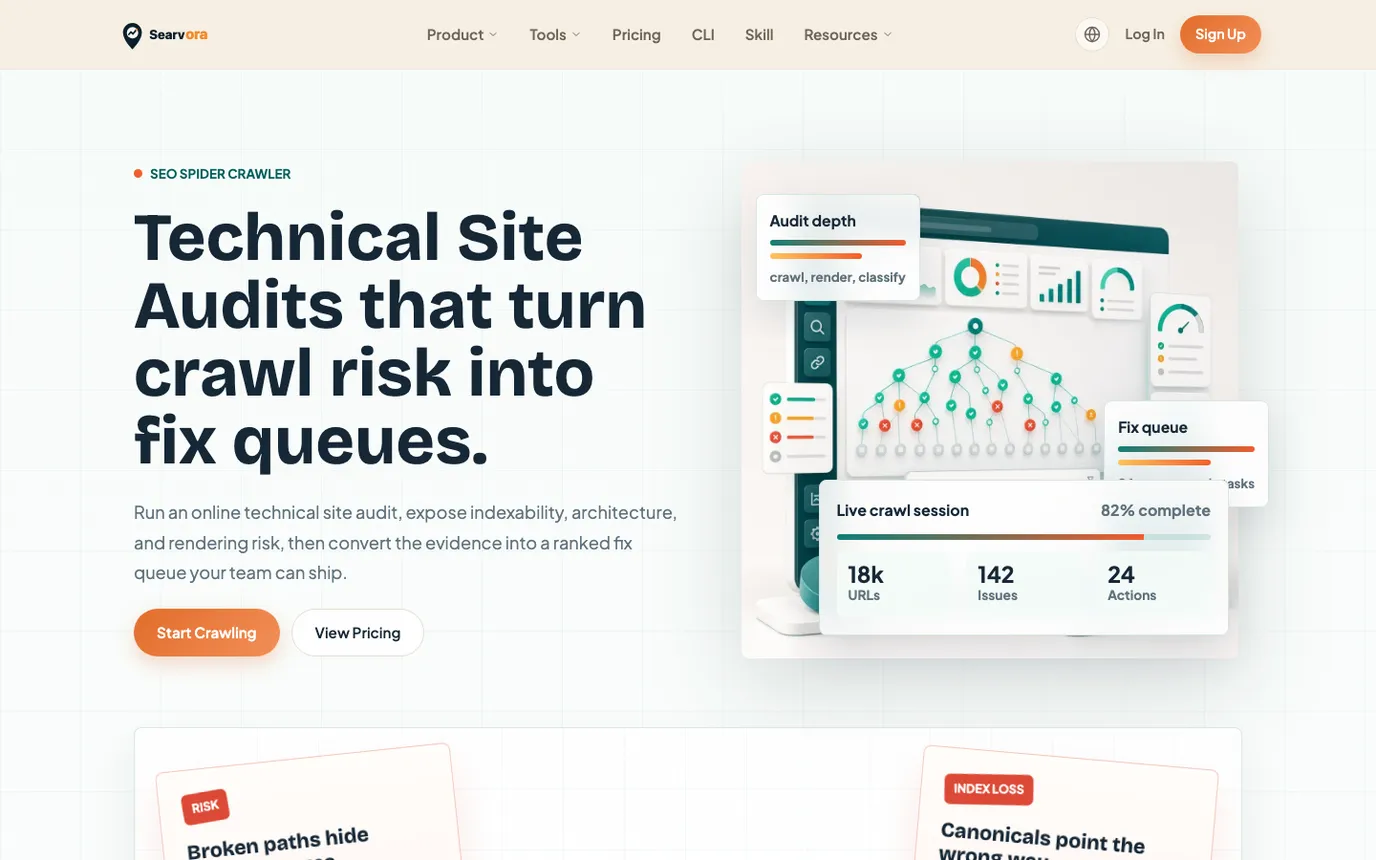
Run this technical checklist. Searvora's SEO Spider Crawler product page is the local product surface for this part of the workflow: crawl, diagnose, prioritize, and turn technical risk into a fix queue.
| Check | Failure pattern | Fix owner |
|---|---|---|
| Status and redirects | 3xx chains, 4xx pages, blocked assets, or stale redirects | Technical SEO or engineering |
| Canonical | Canonical points away from the page that should be cited | SEO plus engineering |
| Robots and noindex | Important pages are blocked, noindexed, or hidden from rendered HTML | Technical SEO |
| Sitemap | Key pages are missing or outdated in sitemap coverage | SEO operations |
| Internal links | Source pages sit too deep or lack descriptive anchors | Content plus SEO |
| Rendered content | The useful answer is behind client-only UI or collapsed fragments | Engineering |
| Structured context | Schema, headings, and page sections do not reinforce the page job | SEO plus content |
Use the AI crawlability and GEO workflow when the issue spans crawl access, rendered content, canonicals, links, and source evidence.
Choose The Right Fix Type
Once the cause is clear, pick one fix type. A good fix row has URL, evidence, owner, action, and recheck date.
| Fix type | Use when | Done when |
|---|---|---|
| Refresh | The page still matches intent but needs stronger examples, current evidence, or clearer structure | The page answers the query faster and has a recheck window |
| Expand | The page is good but missing a source-ready section or comparison | The missing answer is visible in the body |
| Consolidate | Two pages satisfy the same task and split source signals | One canonical page owns the job |
| Create child page | The query has a distinct job the parent cannot answer cleanly | The new page has unique intent and internal links |
| Fix crawl access | Technical checks block eligibility | Crawl and render checks pass |
| Add external proof | Owned pages are ready but answer systems lack public evidence | Source evidence supports the same claim |
| Monitor | The signal is unstable or low-value | The row has a next check date, not a rewrite task |
Do not rewrite the whole site because one answer changed. The strongest AI visibility fixes are narrow enough to ship and clear enough to recheck.
Where Searvora Fits
Searvora AI SEO Dashboard fits the monitoring and action-queue layer. Use the AI SEO dashboard to track query groups, page cohorts, source URLs, visibility changes, and owner-ready next actions. When the issue looks technical, pair it with the SEO spider crawler to inspect status, canonical, metadata, indexability, internal links, and sitemap behavior before asking writers to rewrite.
The dashboard should not turn every AI mention into a priority. It should separate repeatable, high-value issues from noisy answer changes so the team can choose the next fix with evidence.
Recheck The Same Query Group
A fix is not done when the page is edited. It is done when the same query group, expected source page, and validation window have been reviewed again.
Use this recheck sequence:
- Re-crawl the affected URL and template peers.
- Confirm status, canonical, robots, sitemap inclusion, internal links, and rendered text.
- Recheck the same AI-answer query group in the same market and language.
- Compare the cited source, brand mention, competitor presence, and answer framing.
- Review Search Console, analytics, and conversion movement for the affected page cohort.
- Mark the result improved, flat, worse, or inconclusive.
- Decide the next action: keep monitoring, refresh another section, create a child page, consolidate, add external proof, or stop.
AI search engine visibility issues are fixable when they become evidence rows. Name the symptom, isolate the cause, ship one targeted change, and recheck the same query group before expanding the work.