
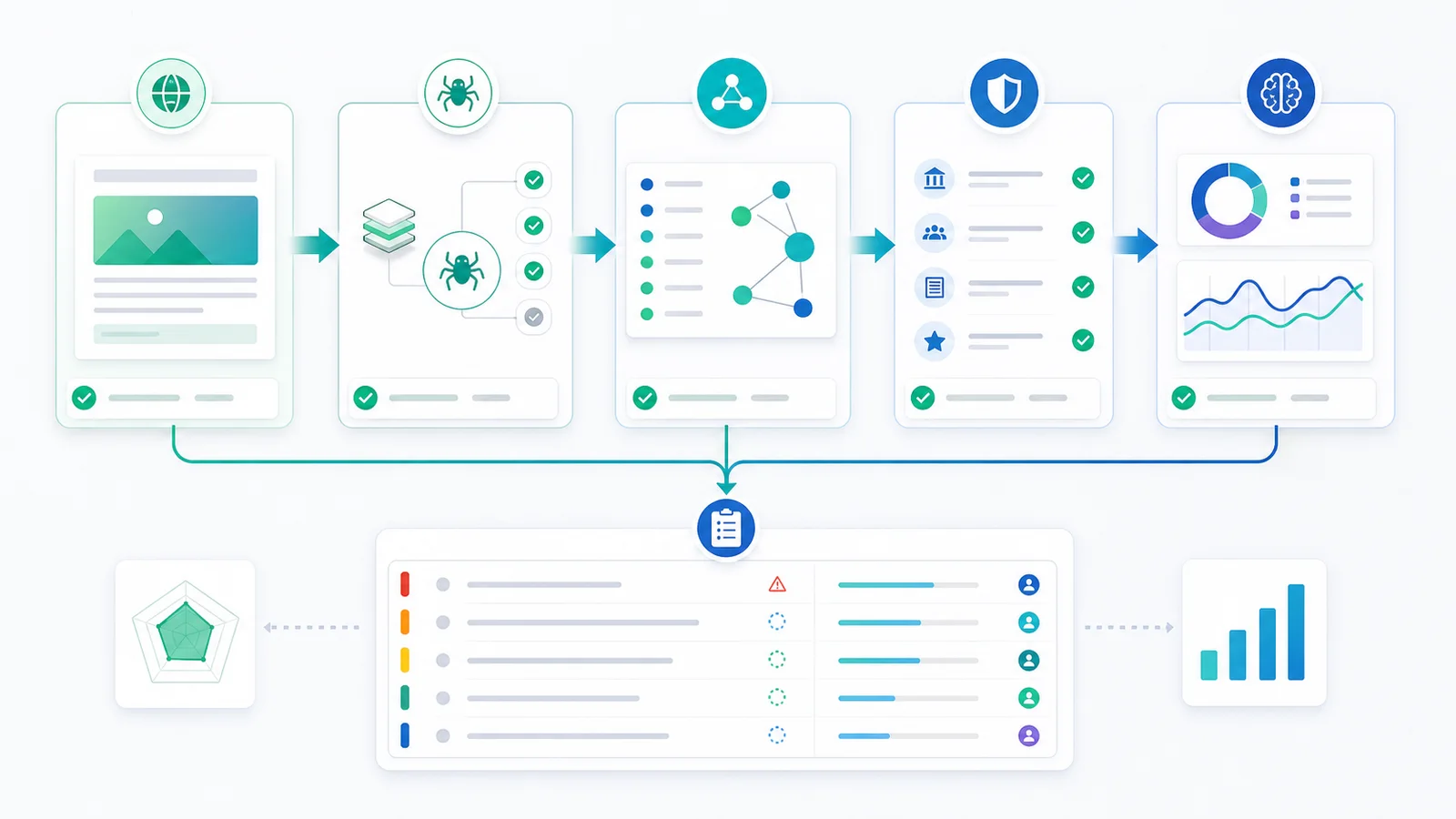
Google Knowledge Graph SEO is the work of making an entity easier for Google and AI search systems to identify, disambiguate, verify, and connect to useful source pages. It is not a trick for forcing a knowledge panel. It is an evidence workflow: make the entity clear on your own site, keep structured data consistent, earn credible references, and monitor whether search surfaces describe the entity correctly.
The practical question is simple: if a search or AI answer system tries to understand your brand, product, person, place, or topic, can it find a stable source of truth and enough supporting evidence to avoid guessing?
Treat The Knowledge Graph As An Evidence System
Google describes knowledge panels as information boxes for entities such as people, places, organizations, and things, with information drawn from Google's understanding of content across the web. Google also says Search organizes information from crawling, partnerships, data feeds, and the Knowledge Graph.
That means the SEO job is not "add schema and wait." Schema can help describe the entity, but Google still needs crawlable pages, consistent facts, recognizable relationships, and public evidence that supports the same story.
Use this model before changing pages:
| Evidence layer | What it should prove | What to audit |
|---|---|---|
| Entity source page | This is the official page for the entity | About page, product page, author page, organization page, canonical URL |
| Structured data | The entity's name, type, URL, logo, sameAs links, and relationships are machine-readable | JSON-LD, Organization or Person markup, canonical consistency |
| Crawl access | Google can reach the pages that explain the entity | Status code, robots rules, noindex, canonical, internal links, sitemap inclusion |
| Public corroboration | Other trusted sources describe the entity in the same way | Profiles, mentions, citations, partner pages, industry references |
| Monitoring evidence | Search and AI surfaces reflect the entity accurately over time | Knowledge panel checks, branded SERP checks, AI answer citations, dashboard notes |
Google's knowledge panel documentation is useful because it separates automatic generation from entity feedback. The operator takeaway is this: you can suggest and clarify, but you cannot replace evidence quality with markup alone.
Build A Source-Of-Truth Entity Page
The first page to fix is the page you want search systems to trust when they ask, "What is this entity?"
For an organization, that may be the home page or an about page. For a product, it may be the product landing page. For an expert author, it may be the author profile. For a content hub, it may be a parent page that explains the topic and links to child workflows.
The source page should make these facts easy to verify:
- The entity name used consistently in the title, H1, body copy, logo alt text, and structured data.
- The entity type, such as Organization, Product, Person, LocalBusiness, SoftwareApplication, or Article publisher.
- The official URL and canonical URL.
- The relationship to products, services, authors, social profiles, documentation, and important pages.
- The claims you want repeated, written in plain language and supported by visible page content.
Google's organization structured data guidance says organization markup can help Google better understand administrative details and disambiguate organizations in search results. It also recommends putting that information on the home page or a single page that describes the organization, rather than repeating it everywhere.
That source page should be internally linked from pages where the entity is important. If your AI visibility page, product pages, author pages, and blog posts all describe the brand slightly differently, the problem is not just schema. The problem is that your own site is sending mixed entity evidence.
Make Structured Data Match The Visible Page
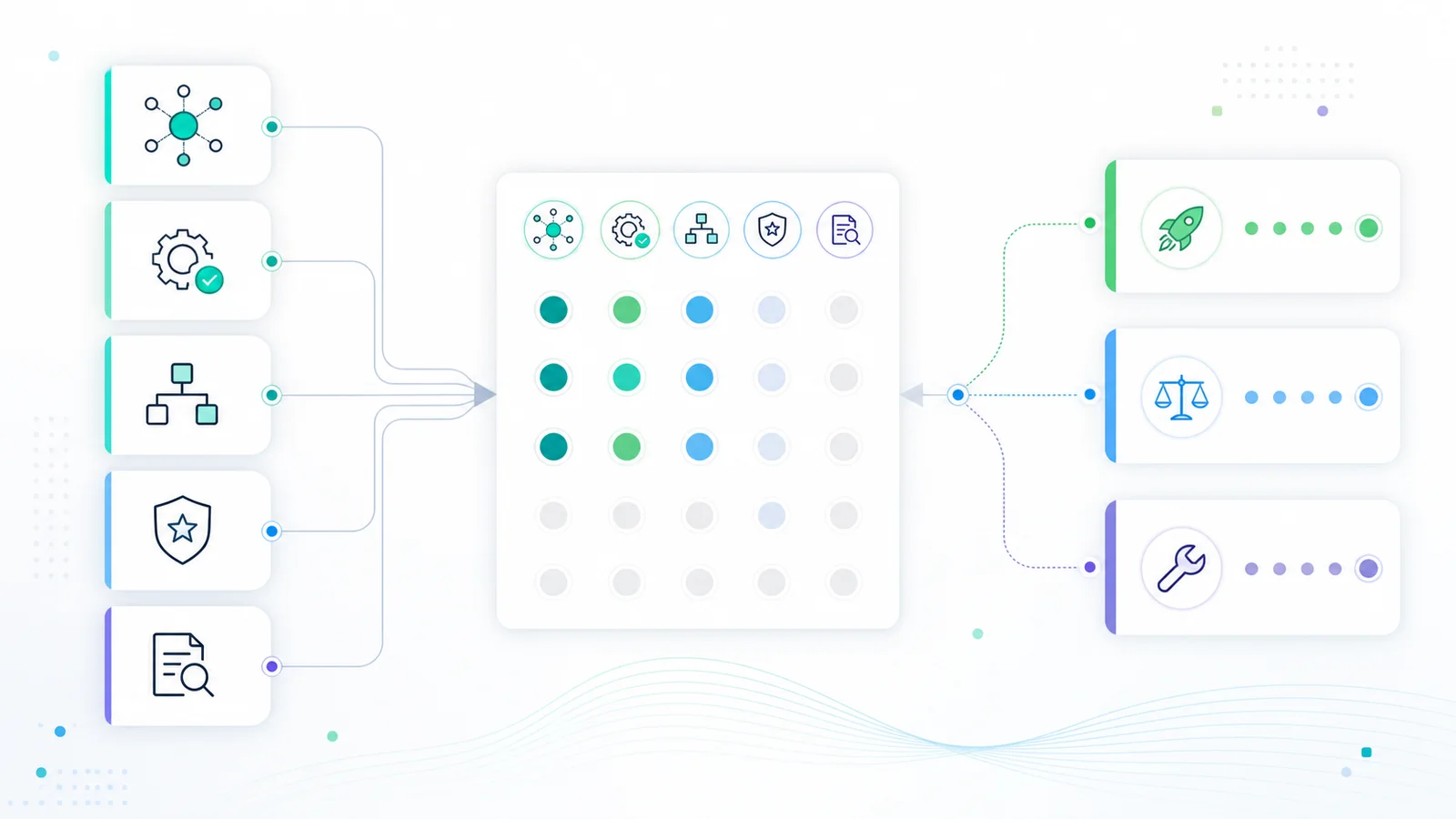
Structured data is most useful when it confirms what the page already says. It should not introduce a different company name, a different logo, a different URL, or social profiles that are not visible or maintained.
Use this quick audit:
| Field | Strong implementation | Risky implementation |
|---|---|---|
@type | Uses the most specific relevant type | Uses a broad type to hide an unclear entity |
name | Matches the visible brand or entity name | Uses legal, DBA, and product names inconsistently |
url | Points to the canonical official page | Points to a redirected, localized, or duplicate URL |
logo | Uses an accessible, current logo asset | Uses a stale or blocked image URL |
sameAs | Links to official, maintained profiles | Links to weak, abandoned, or unrelated profiles |
description | Aligns with visible page copy | Makes claims the page does not support |
Google's Organization structured data documentation is the safest reference for this step. It explicitly connects organization markup with disambiguation and visual elements such as logos in Search and knowledge panels.
If you already have a schema markup workflow, extend it with entity consistency checks. The question is not only whether JSON-LD validates. The better question is whether the JSON-LD, visible page, canonical URL, internal links, and public profiles all describe the same entity.
Audit The Crawl Layer Before Chasing Citations
Entity work fails quietly when the evidence page cannot be crawled, rendered, indexed, or selected as canonical. Before asking for more mentions, confirm that your own source pages are technically clean.
Check these items:
- The entity source page returns a 200 status.
- It is not blocked by robots.txt or meta robots.
- The canonical points to itself or the intended representative URL.
- The page is linked from relevant navigation, footer, author, product, or hub pages.
- The XML sitemap includes the canonical URL when it should be discoverable.
- The rendered HTML includes the core entity facts and JSON-LD.
- The page does not rely on client-only content for the entity definition.
This is where a technical crawler earns its place in a Knowledge Graph workflow. A crawler cannot tell you whether Google will create or update a knowledge panel. It can tell you whether your source-of-truth page is reachable, internally linked, canonical, and structurally consistent enough to be trusted.
For broader brand visibility, pair this with the Brand SEO workflow. Brand SEO decides what the entity should stand for; Knowledge Graph SEO verifies whether the supporting pages and signals can actually carry that identity.
Connect Entity Evidence To AI Search Visibility
AI search visibility makes Knowledge Graph work more urgent because answer systems need to identify entities, cite sources, and summarize relationships. Google has also published guidance for succeeding in AI experiences on Search, including the same foundation that matters for classic SEO: make sure Googlebot can access pages, pages return successful status codes, and content is indexable.
Use a monitoring loop instead of a one-time entity cleanup:
| Monitoring question | Evidence to collect | Action if the signal is weak |
|---|---|---|
| Does branded search show the right entity? | Branded SERP screenshots, knowledge panel notes, sitelinks, profiles | Clean source page facts and strengthen official profile links |
| Do AI answers cite your pages for entity topics? | AI answer samples, cited URLs, missing citation notes | Add concise definitions, evidence blocks, and clearer internal links |
| Are third-party descriptions consistent? | Profile pages, partner pages, review sites, public directories | Request corrections or update official references |
| Does schema match the current page? | JSON-LD extract, rendered HTML, Rich Results Test notes | Fix mismatched names, URLs, logos, and sameAs values |
| Did the release change entity evidence? | Crawl diff, template diff, sitemap diff, structured data diff | Add the fix to the release validation queue |
The AI visibility workflow is the closest companion page. It covers the evidence loop for monitoring where the brand appears, where it is cited, and which pages need improvement. This article is narrower: it focuses on the entity layer behind those mentions.
Prioritize Fixes By Entity Confidence
Not every Knowledge Graph task deserves the same urgency. A missing logo property is annoying. A canonical conflict on the official organization page is dangerous. A stale social profile may be low priority. A wrong entity association in a knowledge panel may need immediate review.
Use this fix queue:
| Priority | Fix when | Example action |
|---|---|---|
| P0 | Search systems may be reading the wrong entity or wrong official page | Fix canonical, noindex, redirects, name mismatch, and source page access |
| P1 | The entity is clear on the page but weak in structured data | Add or clean Organization, Person, Product, or WebSite markup |
| P2 | The entity is correct on your site but inconsistent on official profiles | Update maintained profiles and important sameAs references |
| P3 | The entity is visible but not well connected to topical authority | Add internal links from hubs, product pages, author pages, and related articles |
| P4 | Monitoring is manual and inconsistent | Create a recurring branded SERP and AI-answer evidence review |
The last step matters because entity visibility changes slowly. One cleanup pass can fix contradictions, but it will not prove that AI search, branded SERPs, and knowledge panels keep representing the entity accurately. Treat the work like monitoring, not like a campaign launch.
What To Do Next
Start with one entity, not the whole brand universe. Choose the entity that matters most to revenue, trust, or AI-search visibility this quarter.
Then run this sequence:
- Pick the source-of-truth page.
- Confirm the page is crawlable, indexable, canonical, and internally linked.
- Make the visible entity facts consistent.
- Add or clean structured data that matches the visible page.
- Check official profiles and high-value public references.
- Review branded SERPs, knowledge panel behavior, and AI answer citations.
- Turn gaps into a fix queue with owners and validation dates.
Google Knowledge Graph SEO is not separate from technical SEO, schema, brand SEO, or AI visibility. It is the layer that keeps those workflows describing the same entity. When that layer is clean, your pages give search systems a better chance to understand who you are, what you own, and why your sources deserve to be cited.