
Keyword tracking tools are useful when ranking movement changes what the team does next. A rank drop, new top-10 keyword, or local position shift should become a decision about a page, owner, crawl issue, content update, or reporting note. If the tool only adds another chart, it is not enough.
The Ahrefs roundup that surfaced this opportunity confirms the search intent is a true tool comparison. Searvora's information gain is the operating layer: compare rank trackers by evidence quality, AI-search context, alerting, budget fit, and whether the output can become prioritized SEO work.
Compare Keyword Tracking Tools By The Decision
Start with the weekly decision before choosing a platform. Rank tracking is only one signal beside Search Console data, crawl health, content changes, SERP features, competitors, and now AI-search visibility.
| Decision you need to make | Tracking evidence that helps | Where many tools stop short |
|---|---|---|
| Did a page really lose visibility? | Keyword group movement, URL movement, Search Console clicks and impressions | Showing rank drops without traffic or page context |
| Which keyword group deserves work? | Tags, folders, page-type cohorts, country, device, and SERP feature data | Treating every keyword as equally important |
| Did a competitor take the result? | Competitor URLs, ranking distribution, SERP feature ownership, landing page changes | Reporting competitor movement without a response path |
| Is this an AI-search issue too? | AI answer visibility, cited URLs, brand mentions, and source-page gaps | Separating AI visibility from normal SEO operations |
| Who owns the fix? | Alerts, notes, exports, issue queues, owner fields, and validation criteria | Leaving the team with screenshots and no task |
The Keyword Tracking Tools Shortlist
This is not a universal ranking. It separates tools by public positioning, practical fit, and the follow-up checks an SEO operator should run before choosing.
| Tool | Best fit | What to verify before choosing |
|---|---|---|
| Searvora AI SEO Dashboard | Teams that need ranking, traffic, AI visibility, and action queues in one operating cadence | How page cohorts, owners, alerts, and validation checks map into your weekly review |
| Google Search Console | Free baseline evidence from Google for verified properties | Query sampling limits, reporting latency, and how you will connect data to pages and tasks |
| Ahrefs Rank Tracker | SEO teams already using Ahrefs for competitor, keyword, and backlink context | Location/device coverage, tracked keyword limits, competitor views, and workflow handoff |
| Semrush Position Tracking | Semrush users who want keyword position tracking inside a broad SEO suite | Local pack, paid/organic, device, and export needs for your markets |
| SE Ranking Position Tracking | Teams that want rank tracking across search engines and budget tiers | Keyword refresh cadence, AI visibility coverage, alerts, and client reporting depth |
| AccuRanker | Agencies and larger SEO teams that need fast, specialized rank tracking | Segment setup, SERP features, share-of-voice reporting, and integration needs |
| Nightwatch | Teams that want local rank tracking plus AI visibility context | Location granularity, AI answer coverage, and how alerts become SEO work |
| Wincher | Lean teams that want approachable search visibility and keyword monitoring | Reporting limits, team workflows, competitor tracking, and when to graduate to deeper diagnostics |
Searvora AI SEO Dashboard
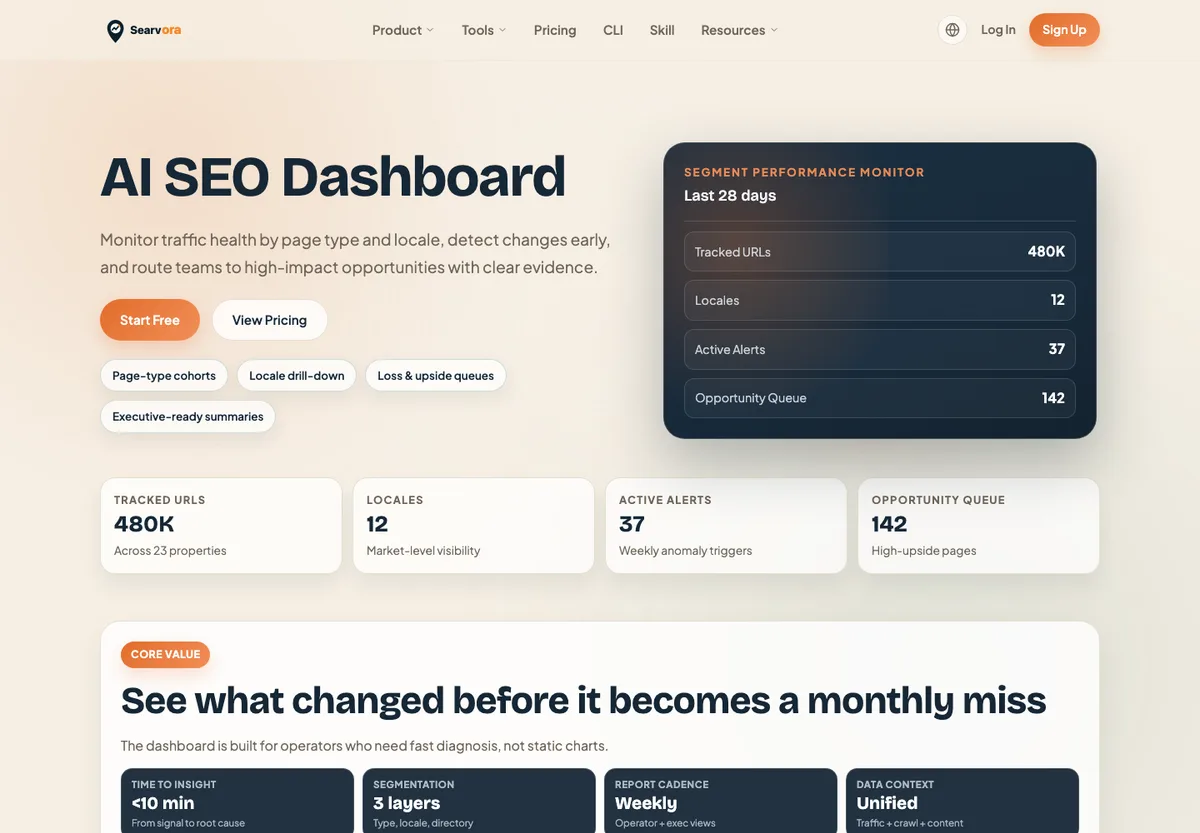
Searvora's AI SEO Dashboard is the best fit when keyword tracking needs to become weekly operating work. The product page positions it around page-type cohorts, locale drill-down, anomaly detection, opportunity queues, and executive-ready summaries. That is the missing layer when a rank tracker finds movement but the team still has to decide what changed, why it changed, and who should act.
Use Searvora when the tracking review needs to combine:
- Keyword or query groups with page-type cohorts.
- Search Console movement with crawl and content context.
- AI-search visibility, brand mentions, or citation gaps beside classic ranking signals.
- Alerts that become prioritized actions instead of a static report.
- Owner-ready handoff for content, SEO, and engineering.
Best next action: group ranking changes by page type and business impact, then turn the high-confidence issues into a weekly queue with validation criteria.
Google Search Console
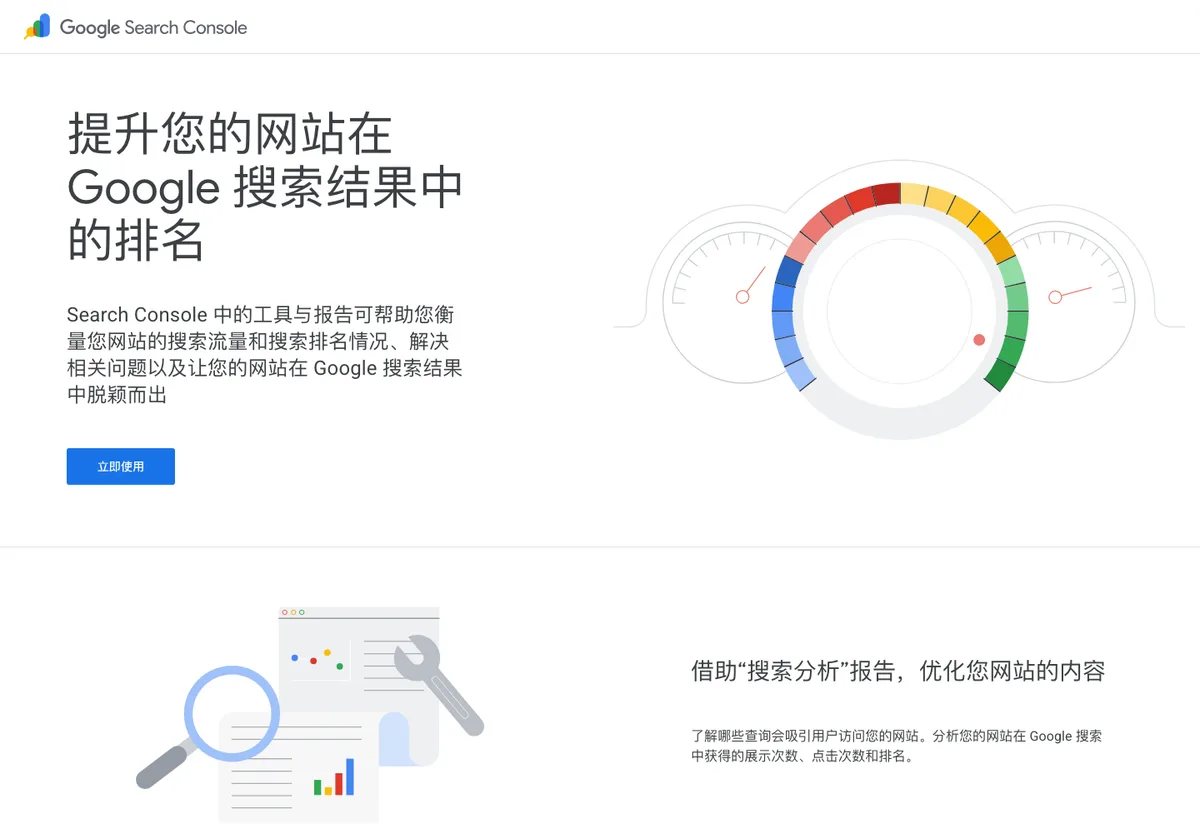
Google Search Console is the free baseline every keyword tracking workflow should respect. The official Search Console page frames it around understanding Search performance and fixing issues for Google visibility.
It is not a traditional rank tracker. It shows queries, pages, clicks, impressions, CTR, average position, countries, devices, and dates for verified properties. That makes it stronger for owned-site evidence than for competitor rank monitoring.
Use it when the question is whether ranking movement is visible in real Google performance data. If a rank tracker says a keyword dropped but Search Console shows stable impressions and clicks for the page group, the next action may be monitoring rather than rewriting.
Best next action: pair Search Console with a rank tracker when you need competitor visibility, local pack detail, or tighter keyword lists; use it with automated SEO reporting when the review has to repeat every week.
Ahrefs Rank Tracker
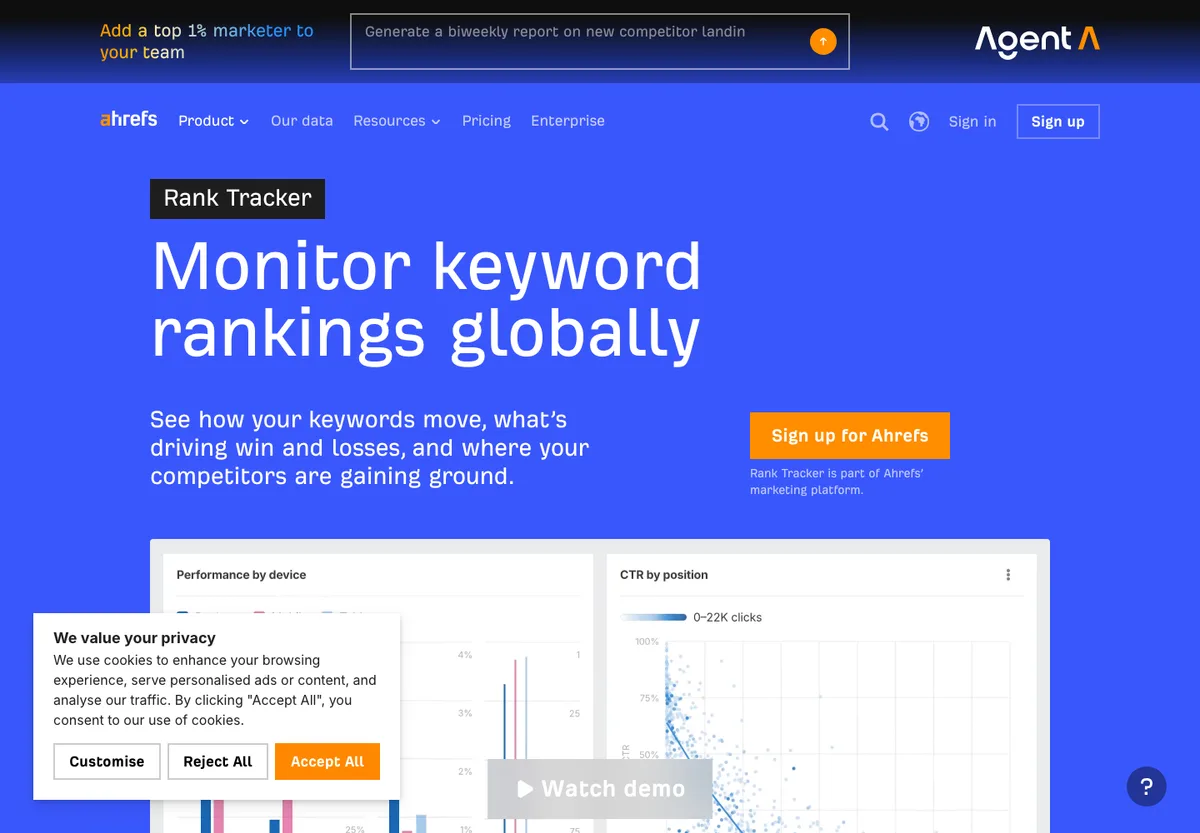
Ahrefs Rank Tracker is a natural option for teams already working inside Ahrefs. The official Rank Tracker page positions it around tracking desktop and mobile keyword rankings, comparing visibility with competitors, and monitoring ranking locations.
The strongest fit is suite context. If the same team uses Ahrefs for keyword research, backlink analysis, competitor pages, and content gaps, rank tracking can sit close to the rest of the research workflow. The risk is that movement still needs an operational layer: which page should change, what evidence supports the fix, and what outcome will prove it worked?
Choose Ahrefs when keyword and competitor research already lives there. Add a separate decision process for owner handoff, crawl validation, and page refresh prioritization.
Semrush Position Tracking
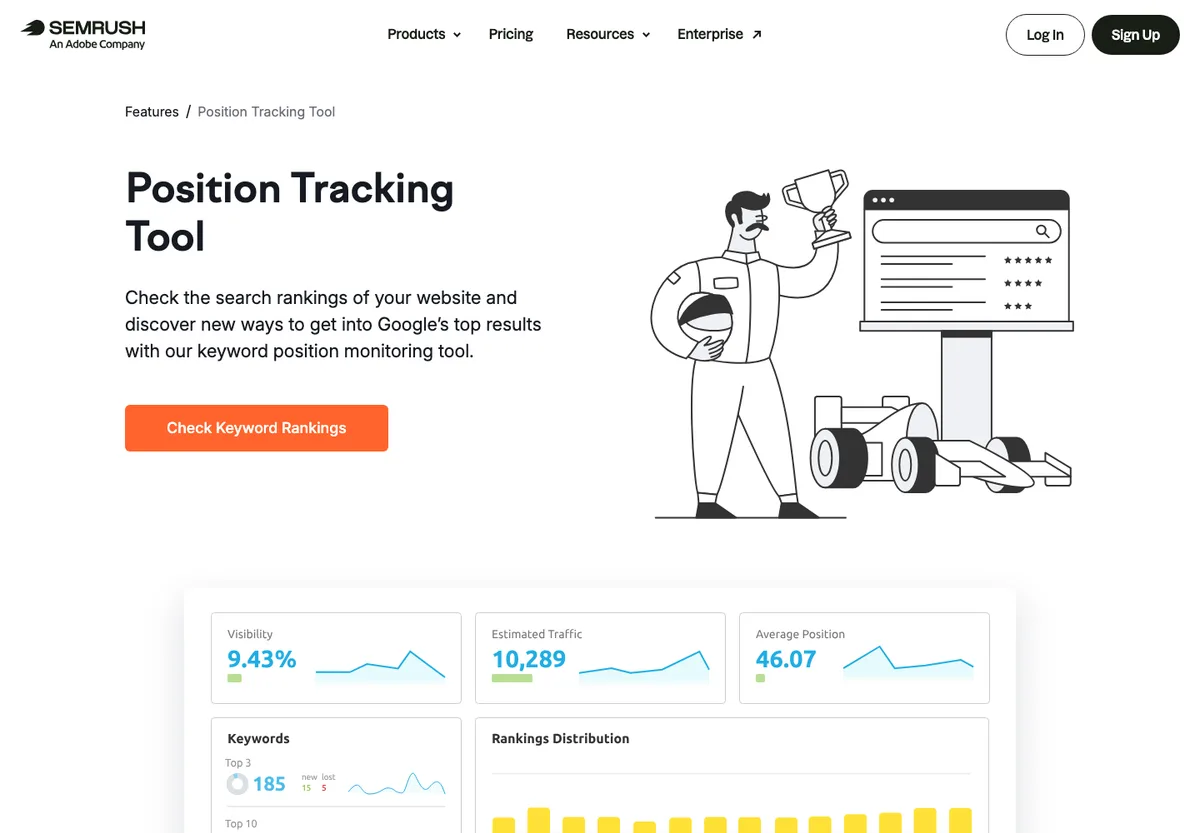
Semrush Position Tracking is strongest for teams already using Semrush projects, competitor reports, and campaign dashboards. The official Position Tracking page presents it as a way to monitor target keyword rankings across organic and paid results with national, regional, and local visibility.
That makes Semrush useful when rank tracking needs to connect with broader competitive research, PPC context, and reporting. It is especially relevant for teams that care about local positions, devices, and recurring client or stakeholder views.
Choose Semrush when the rank review belongs inside a broader SEO suite. Verify how alerts, exports, local pack data, and paid/organic views will turn into assigned work before making it the only monitoring layer.
SE Ranking Position Tracking
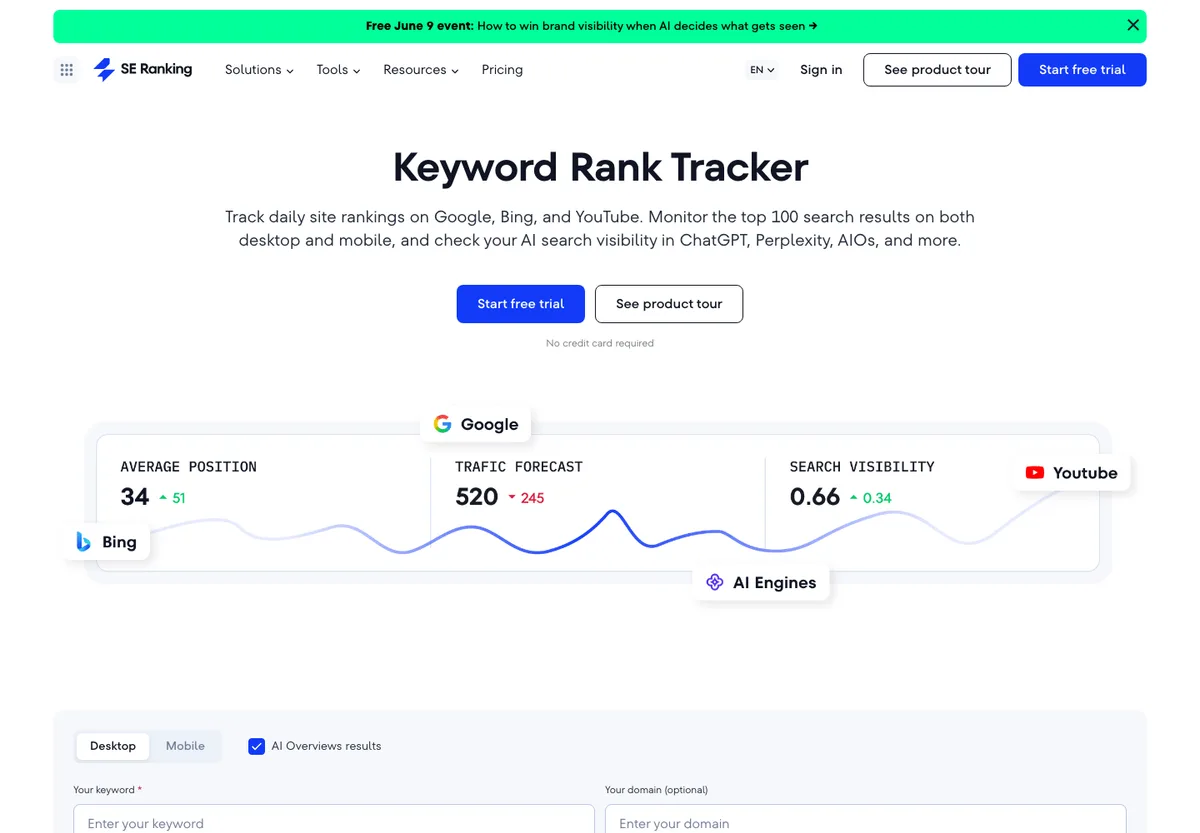
SE Ranking's official Position Tracking page presents keyword position monitoring across major search surfaces, devices, and visibility contexts. It is a practical fit for teams that want rank tracking, reports, and budget control without starting from an enterprise platform.
The useful question is cadence. Daily or frequent tracking can be valuable, but only when the team knows which changes deserve action. If every movement becomes a fire drill, the tracker creates noise. If alerts are grouped by tags, pages, markets, and importance, they can support a disciplined review.
Choose SE Ranking when you need approachable rank tracking with reporting flexibility. Verify refresh frequency, keyword limits, AI visibility features, and whether alerts can be grouped in a way your team will actually use.
AccuRanker
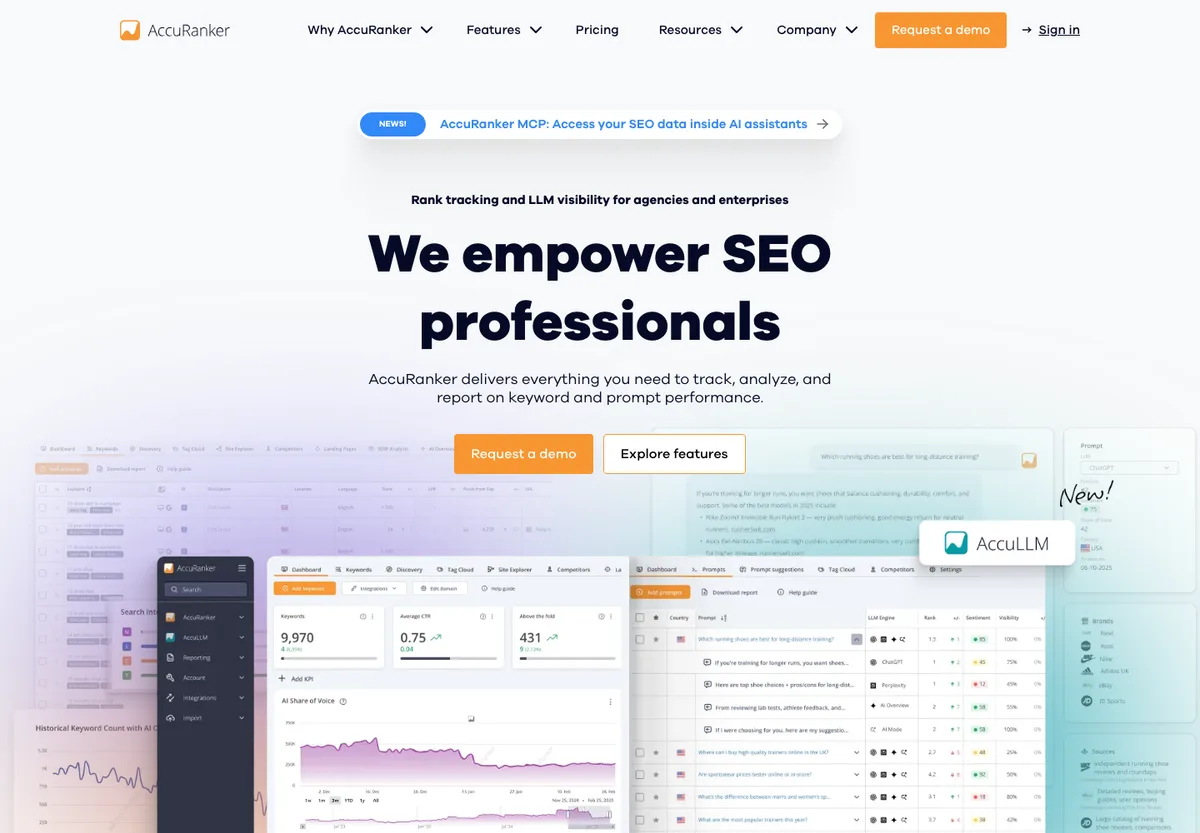
AccuRanker is positioned as a specialized rank tracker for agencies, enterprises, and consultants. The official AccuRanker site emphasizes speed, real-time rank data, and scalable SEO performance tracking.
That focus is useful when rank tracking itself is the core workflow. Agencies may need fast refreshes, client segments, share-of-voice views, SERP feature detail, and clean reporting across many projects. The tradeoff is that specialized tracking still has to connect with content, crawl, and analytics decisions somewhere else.
Choose AccuRanker when ranking precision, scale, and reporting speed are more important than having every SEO function in one suite. Pair it with a clear action model so rank movement becomes a content, technical, or strategic task.
Nightwatch
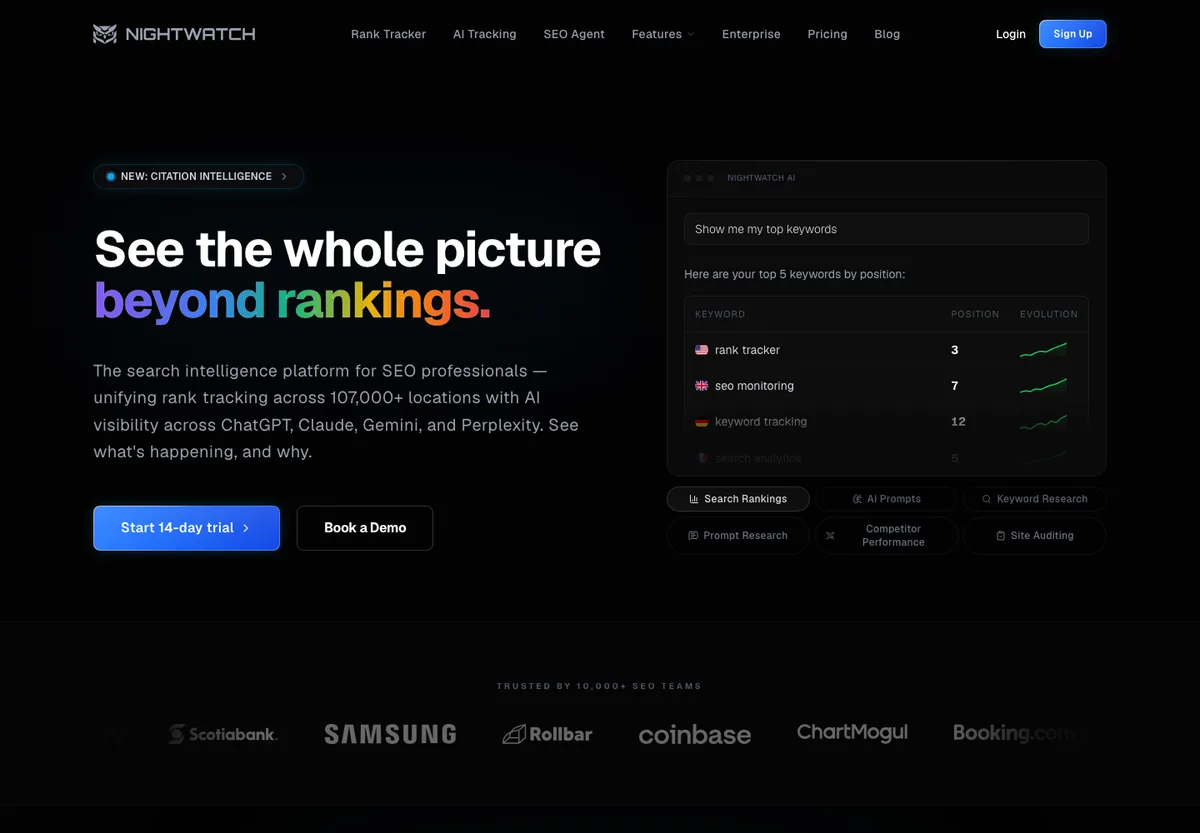
Nightwatch is useful to evaluate when local rank tracking and AI-search visibility need to sit closer together. The official Nightwatch homepage positions the platform around search intelligence, location-level rank tracking, and AI visibility across major assistant and answer systems.
That makes Nightwatch interesting for teams whose reporting is no longer only classic Google rankings. A local service business, marketplace, or multi-location brand may need to know whether visibility changed by area, device, SERP feature, or AI answer surface.
Choose Nightwatch when local granularity and AI visibility context matter. Verify the exact AI surfaces, countries, refresh cadence, and alert workflow before relying on it for executive reporting.
Wincher
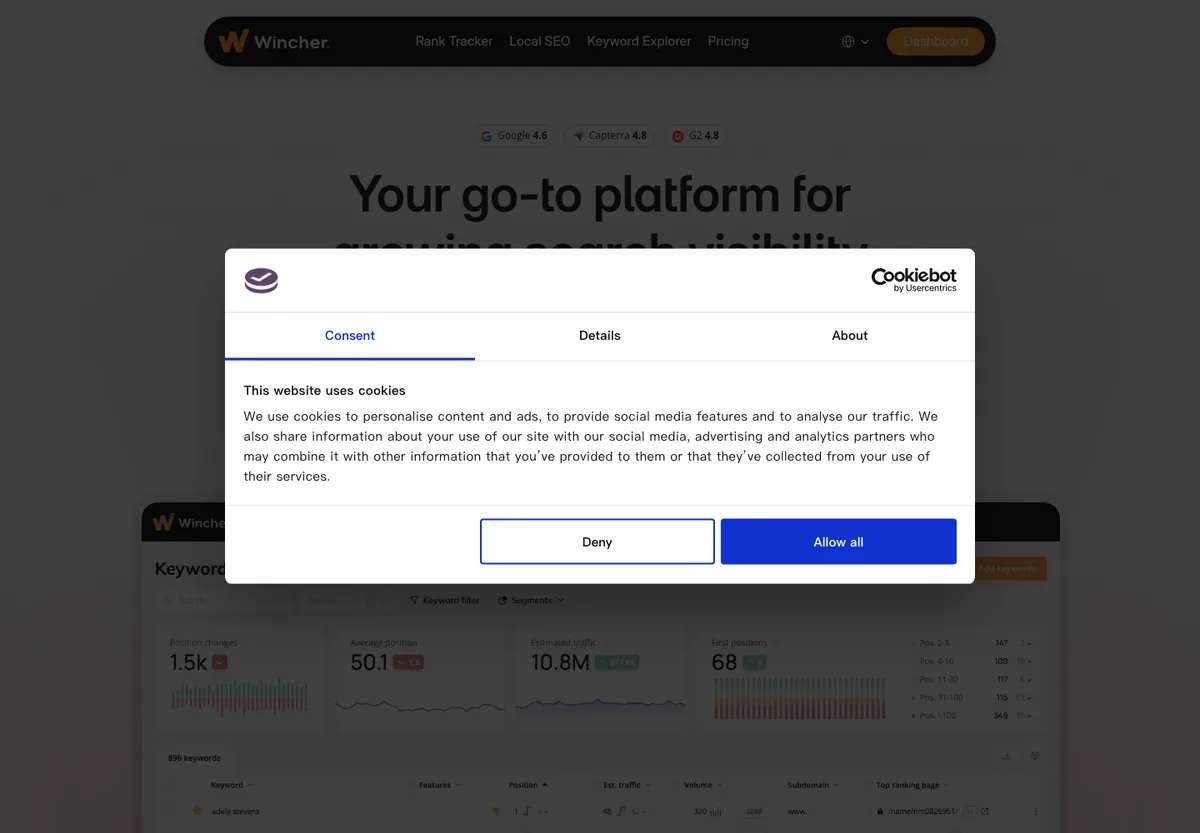
Wincher is an approachable choice for smaller teams that need search visibility tracking without a heavy suite. The official Wincher homepage positions the product around search visibility, keyword monitoring, and SEO tools for finding opportunities and improving rankings.
That makes it useful when the team is still building a tracking habit. A simpler interface can help marketers check movement, discover opportunities, and report progress without turning the weekly review into a technical audit.
Choose Wincher when ease of adoption matters. Verify competitor tracking, alerting, reporting limits, and whether the tool gives enough page-level context once the site grows.
How To Choose Without Overbuying
The safest way to choose a keyword tracking tool is to map it to the team size, evidence need, and action model.
| If your team mainly needs | Start with | Add this guardrail |
|---|---|---|
| Owned-site baseline evidence | Google Search Console | Do not treat average position as a full competitor rank tracker |
| Weekly SEO action queues | Searvora AI SEO Dashboard | Keep alerts tied to page cohorts, owners, and validation checks |
| Suite-based competitor context | Ahrefs or Semrush | Confirm the handoff from movement to page updates and technical checks |
| Budget-conscious rank monitoring | SE Ranking or Wincher | Define which keyword groups actually deserve alerts |
| Agency or enterprise rank reporting | AccuRanker | Connect rank changes to content, crawl, and stakeholder workflows |
| Local plus AI-search visibility | Nightwatch | Separate classic rank movement from AI answer evidence before acting |
For measurement definitions, pair this shortlist with the SEO metrics to track workflow. For AI-answer visibility, use the AI visibility evidence loop before rewriting pages based on one noisy observation.
Where Searvora Fits
Searvora is strongest when the rank review needs to move from monitoring into action. A team can keep Ahrefs, Semrush, AccuRanker, Nightwatch, Wincher, or another tracker for specialized ranking data. The operating gap is deciding which movement matters and what should happen next.
Use the AI SEO Dashboard when you need to:
- Group ranking and Search Console movement by page type, locale, directory, or owner.
- Spot anomalies before they become monthly surprises.
- Connect classic rankings with AI-search visibility and source-page evidence.
- Route tasks into content, technical SEO, or strategy work with expected impact.
- Recheck the same signal after the fix ships.
Run This Buying Checklist
Before choosing a keyword tracking tool, answer these questions:
- Which keywords, pages, locations, devices, and competitors actually need tracking?
- Does the tool show the ranking URL, not only the keyword position?
- Can you tag keywords by page type, funnel stage, product line, market, or owner?
- Does it connect with Search Console, analytics, crawl, or AI-search evidence?
- Can alerts separate real movement from normal volatility?
- Does the output become an assigned task, report note, or validation check?
- Are screenshots, exports, and history strong enough for stakeholders?
- What will make the team stop tracking a keyword that no longer drives decisions?
The best keyword tracking tool is not the one with the longest feature list. It is the one that helps your team notice the right movement, understand the cause, assign the next action, and prove whether the fix worked.