

If the question is how landing pages can increase organic search traffic, the answer is not "add more keywords to the offer page." Landing pages can grow organic search traffic when they are built as search assets, not only campaign destinations. The page needs a clear search job, crawlable content, indexable signals, useful internal links, and a measurement plan that separates organic discovery from paid, email, social, and direct visits.
The mistake is treating every landing page like a conversion-only squeeze page. That can work for ads, but organic search needs enough context for a crawler, a searcher, and an internal link graph to understand why the page deserves to rank.
Start With the Search Job, Not the Campaign Page
Before you optimize a landing page for organic traffic, decide what searcher job the page should own. A campaign page usually starts with an offer. An organic landing page starts with a search task.
Use this routing table before you write or rebuild the page:
| Search job | Better page type | Landing page role |
|---|---|---|
| Learn a concept | Article or hub | Link to the conversion page after the answer |
| Compare options | Comparison page or decision guide | Show criteria, proof, and next step |
| Evaluate one service or product | Product or feature landing page | Answer fit, proof, objections, and action |
| Solve a narrow problem | How-to article or tool | Use the landing page only if it can solve the task |
| Convert after research | Landing page | Make the offer clear and support it with evidence |
If the page cannot answer the query better than an article, tool, or existing product page, it should not be forced into organic search. A landing page that ranks for the wrong intent can bring visits that do not trust the offer.
This is where the broader organic traffic workflow helps. The page job comes first. The keyword, headline, copy, links, and validation window come after that.
Make the Page Crawlable Before You Optimize Copy
Organic search traffic depends on discovery. A landing page hidden behind a form, blocked by robots, noindexed by default, orphaned from the site, or rendered with missing content will not become a reliable organic asset just because the copy is stronger.
Check these signals before spending time on messaging:
| Layer | What to verify | Why it matters |
|---|---|---|
| Status code | The canonical page returns a clean 200 | Redirects and soft errors weaken the target |
| Indexability | Robots, meta robots, and canonical tags are intentional | Search needs permission and a clear owner URL |
| Rendered content | The primary answer appears in the rendered page | Crawlers and users need the same useful content |
| Navigation path | At least one relevant crawlable page links to it | Orphan pages rarely build durable visibility |
| Sitemap | Only indexable canonical versions are submitted | Search should not receive stale campaign variants |
Google's SEO starter guide is a useful baseline here because it keeps the work grounded in discovery, crawlability, helpful content, and descriptive links.
Do the technical pass before writing a perfect headline. If the page cannot be discovered, indexed, or trusted, the best conversion copy will still be invisible to organic search.
Build the Landing Page Organic Workflow
An organic landing page should move through a short operating sequence: intent, page fit, crawl eligibility, links, and validation. Keep the sequence boring on purpose. It prevents teams from adding more content when the real blocker is page type, crawl access, or measurement.
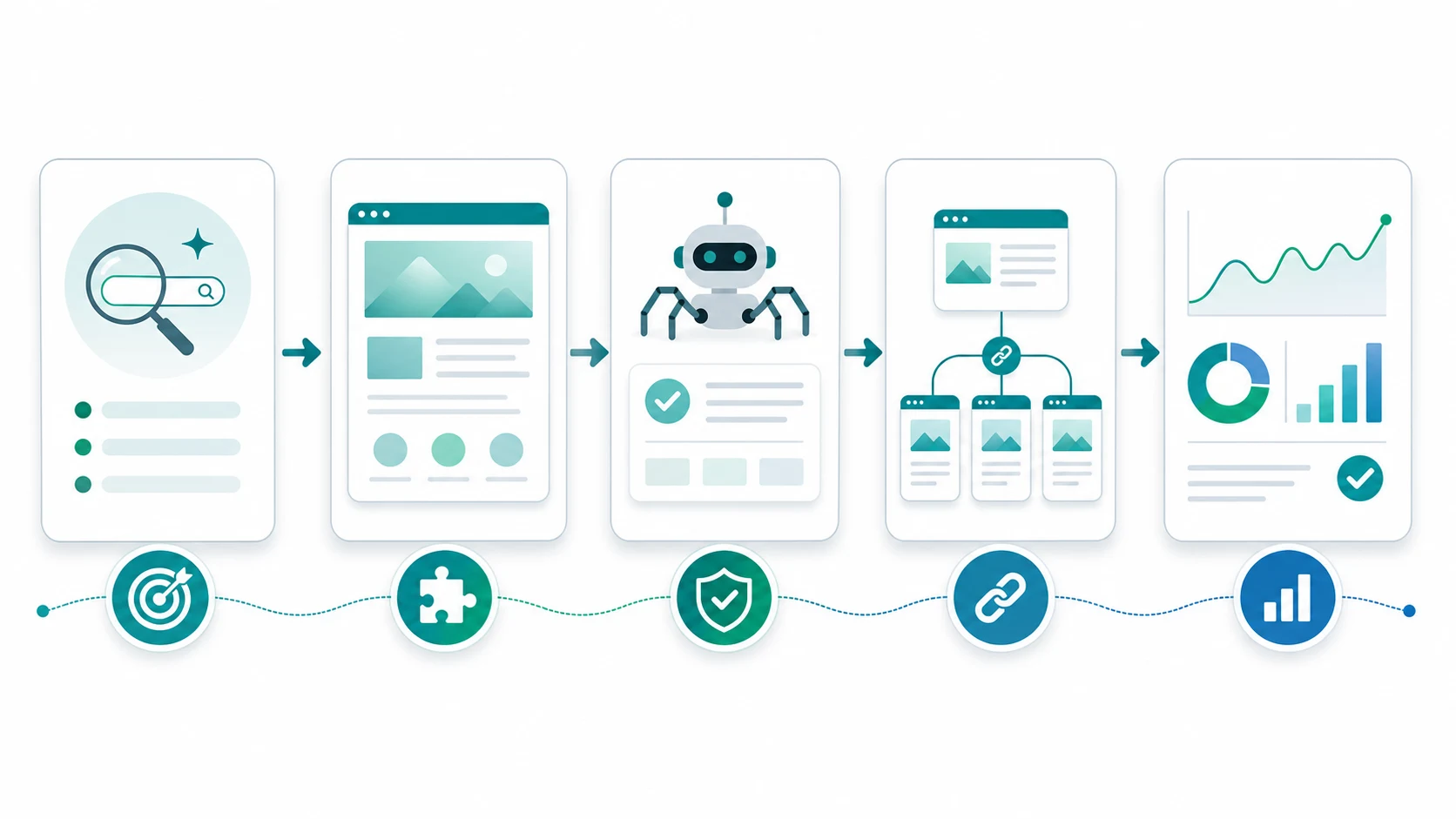
Use this workflow:
- Name the query group and searcher job.
- Decide whether the landing page is the best owner URL.
- Make the primary answer visible without forcing a signup first.
- Confirm canonical, robots, rendering, and sitemap behavior.
- Add supporting internal links from relevant articles, hubs, or product pages.
- Match the CTA to the searcher's readiness.
- Measure organic traffic by landing page, query group, and assisted conversion.
The useful output is not "more landing pages." It is a smaller set of pages that deserve organic visibility and have a clear job after the visit arrives.
Decide When a Landing Page Should Not Be Indexed
Some landing pages should stay out of organic search. Paid campaign pages, seasonal pages, duplicated offer variants, geo experiments, and partner-specific pages often work better as controlled destinations.
Use this decision map when the page sits between SEO, paid, and conversion work:
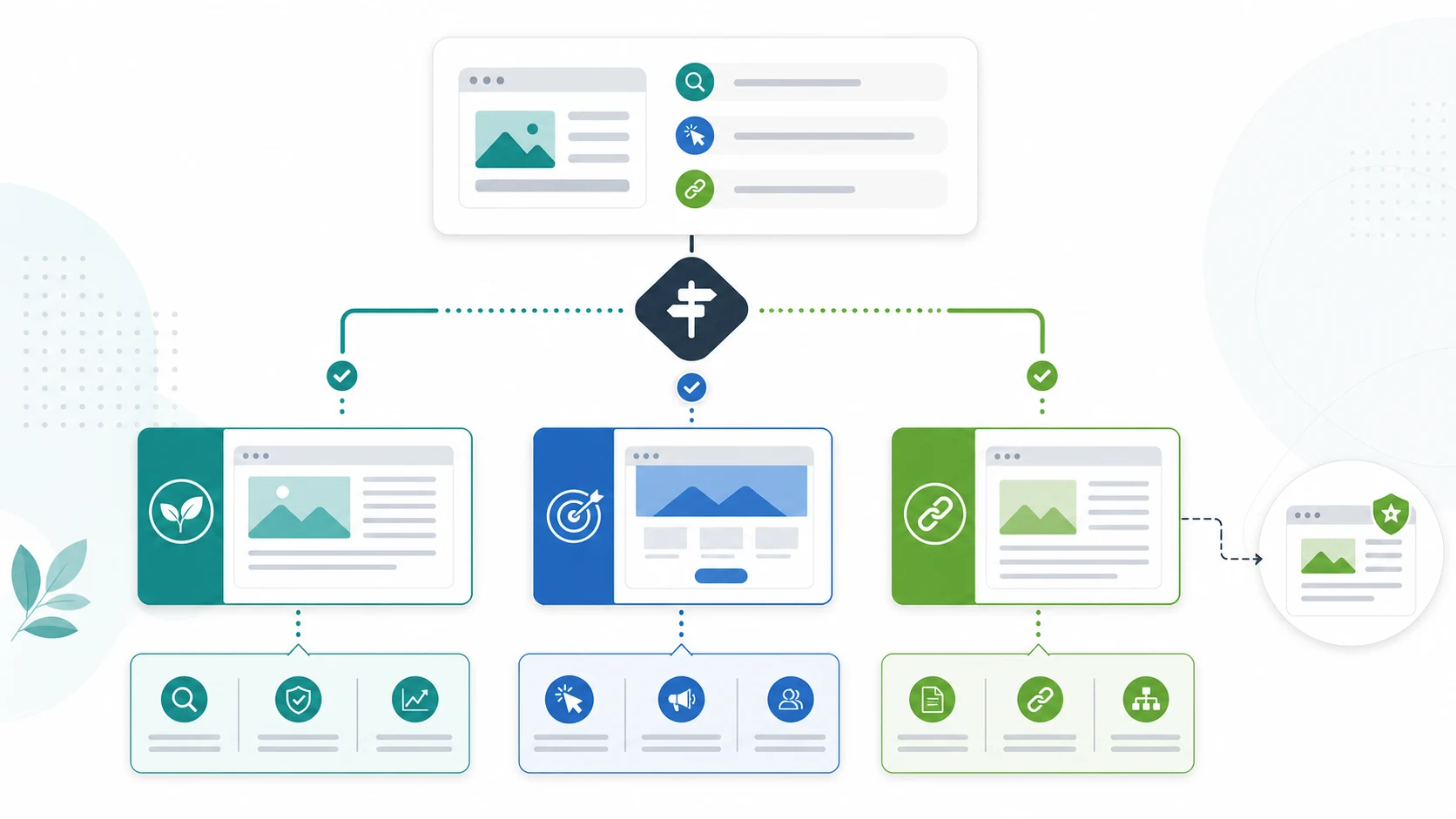
| Situation | Better decision | Reason |
|---|---|---|
| The page repeats a stronger product page | Keep it noindex or consolidate | Avoid splitting signals across duplicates |
| The content is thin and offer-only | Build a stronger organic page elsewhere | Searchers need context before conversion |
| The page targets a real product query | Index it after crawl and copy checks | Landing page intent matches the query |
| The page is a paid test variant | Keep it campaign-only | Test pages should not become canonical search assets |
| The page supports an article or hub | Link from the owner page | Let the stronger informational URL rank first |
This protects the site from keyword cannibalization. A landing page can support an article, and an article can support a landing page, but both should not chase the same query in the same format.
Use Internal Links and Supporting Content
Organic landing pages rarely grow alone. They need supporting pages that explain the problem, answer earlier-stage questions, and route ready readers toward the offer.
Use three internal-link patterns:
| Link pattern | Use it when | Example |
|---|---|---|
| Article to landing page | The article answers the problem and the landing page offers the next step | Organic traffic guide to a dashboard page |
| Landing page to proof page | The visitor needs trust before conversion | Product page to case study, comparison, or methodology page |
| Hub to landing page | The site has a cluster around one job | SEO workflow hub to a specific feature page |
The anchor should describe the next action, not stuff a keyword. Link once where the reader is ready. If every paragraph points to the same offer, the page starts to feel less useful and search systems get a weaker picture of which URL owns which job.
For larger sites, keyword mapping is the clean way to prevent this from turning into a tangle. Assign each query group to one owner URL, then use supporting pages to strengthen that choice.
Measure Organic Traffic Without Mixing Channels
A landing page can look successful while organic search did very little. Paid search, paid social, email, affiliates, and direct visits can all land on the same URL. If the reporting view mixes them, the team may credit SEO for demand that came from somewhere else.
Measure the page in layers:
| Measurement layer | Check | Action |
|---|---|---|
| Search Console | Queries, impressions, clicks, CTR, country, device | Confirm the page is being discovered from search |
| Analytics channel | Organic search landing-page sessions | Separate SEO visits from campaigns and direct traffic |
| Page behavior | Scroll, CTA clicks, assisted conversions | Check whether organic visitors are ready for the offer |
| Crawl state | Recrawl, indexability, canonical, internal links | Confirm the page remains eligible |
| Segment trend | Page type, directory, locale, or topic movement | See whether one page is part of a larger pattern |
Google's Search Console Performance report documentation is the baseline for checking queries, pages, countries, devices, clicks, impressions, CTR, and position. Pair that with analytics source data so the page is judged by the right traffic source.
If traffic changes after launch, use the organic traffic alerts workflow to separate normal volatility from a real visibility shift.
Where Searvora Fits
Searvora AI SEO Dashboard fits the monitoring layer after the landing-page decisions are made. The public product page positions the dashboard around page-type and locale performance, anomaly detection, segment-first monitoring, and prioritized opportunity queues. Those are the signals a team needs when landing pages become part of organic growth work.
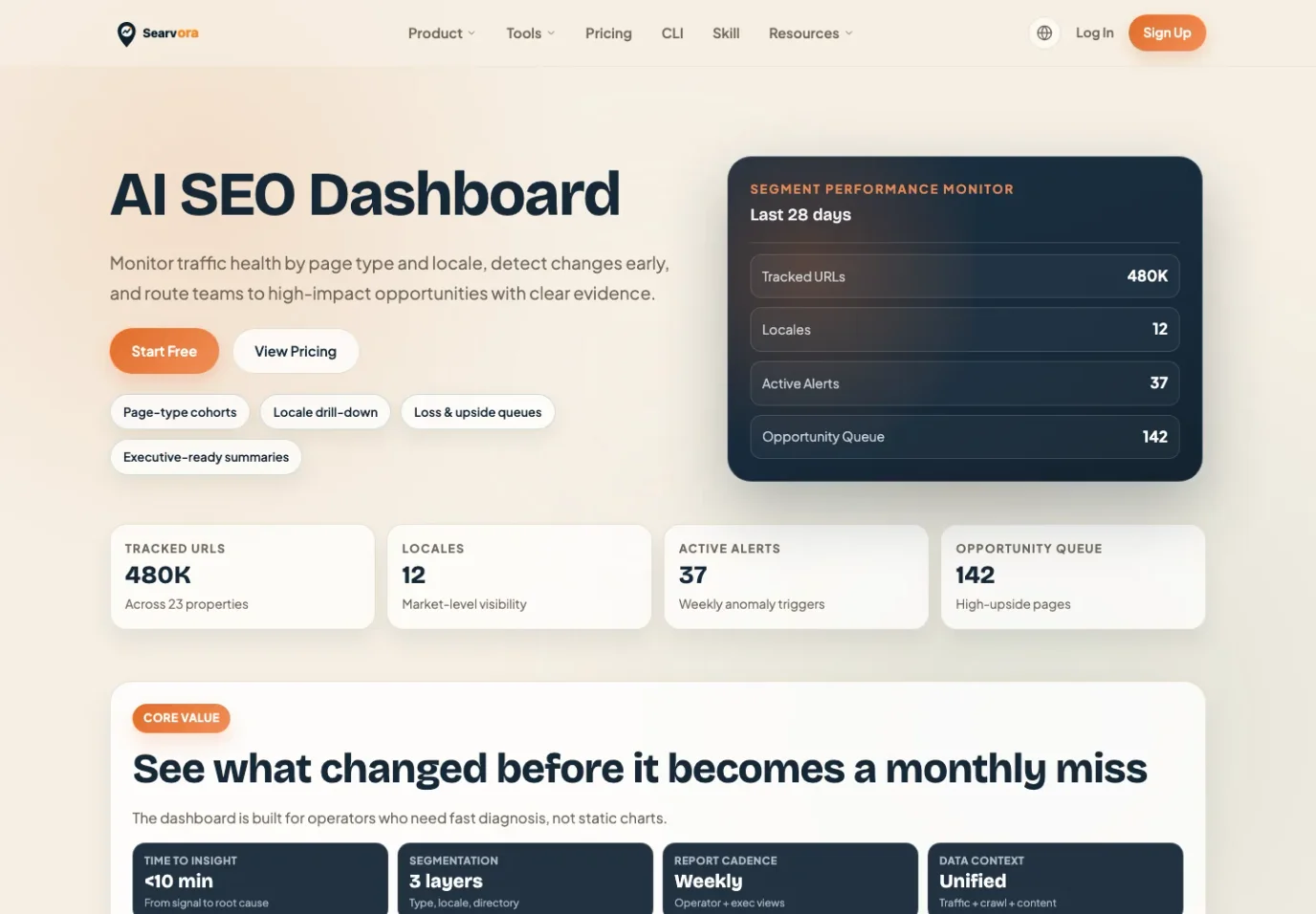
Use it to track landing-page cohorts instead of staring at one raw traffic chart:
| Workflow stage | Dashboard role | Output |
|---|---|---|
| Monitor | Watch page-type, locale, and directory movement | A cleaner view of landing-page changes |
| Diagnose | Separate drops by segment before monthly reporting | Faster cause isolation |
| Prioritize | Compare opportunity queues against page readiness | Better owner handoffs |
| Validate | Recheck the same page group after changes ship | Keep, revise, or stop the work |
Landing Page Organic Traffic Checklist
Use this checklist before treating a landing page as an organic growth asset:
- Name the exact query group and searcher job.
- Confirm the landing page is the right owner URL.
- Keep the primary answer visible without requiring a conversion first.
- Check status code, canonical, robots, rendering, and sitemap inclusion.
- Remove duplicate campaign variants from the index path.
- Add internal links from relevant supporting pages.
- Match the CTA to the searcher's stage of awareness.
- Track Search Console queries and organic landing-page sessions separately.
- Watch page-type or directory movement after changes ship.
- Refresh, consolidate, or noindex the page if the search job changes.
Landing pages can increase organic search traffic, but only when they are built like durable search assets. Give the page a job, make it crawlable, connect it to the right internal links, and validate whether organic visitors actually arrived for the reason the page was built.