

If you are asking how long for new blog to get organic traffic, the practical answer is that search impressions can appear within weeks, but reliable organic clicks usually need a few months of crawlable publishing, internal links, and measurement.
The useful question is not only "when will traffic arrive?" It is "which signal should we expect next?" A new blog should move from crawl discovery to indexing, then impressions, then first clicks, then stable page groups that can justify more production.
Use Milestones Instead Of A Calendar Promise
There is no universal day count because a new blog inherits different domain authority, crawl paths, content quality, internal links, and demand. A site with a trusted domain and clear topical structure can see meaningful signals faster than a brand-new site with isolated articles.
Use this practical timeline:
| Window | Healthy signal | What to check |
|---|---|---|
| First 1-2 weeks | Pages are crawlable and submitted in sitemap paths | HTTP status, canonical, noindex, sitemap, and internal links |
| Weeks 2-6 | Pages start appearing in index or Search Console page data | Indexed URL, query impressions, and title/snippet fit |
| Months 2-4 | Some pages earn impressions and early clicks | Query groups, CTR, internal links, and page updates |
| Months 4-6+ | Winners and weak clusters become visible | Refresh queue, consolidation decisions, and new topic priorities |
That timeline is a diagnostic frame, not a guarantee. If a new blog has no crawl path, weak topics, duplicate articles, or no links from relevant pages, waiting longer will not fix the system.
Check Crawl And Indexing Before Asking About Traffic
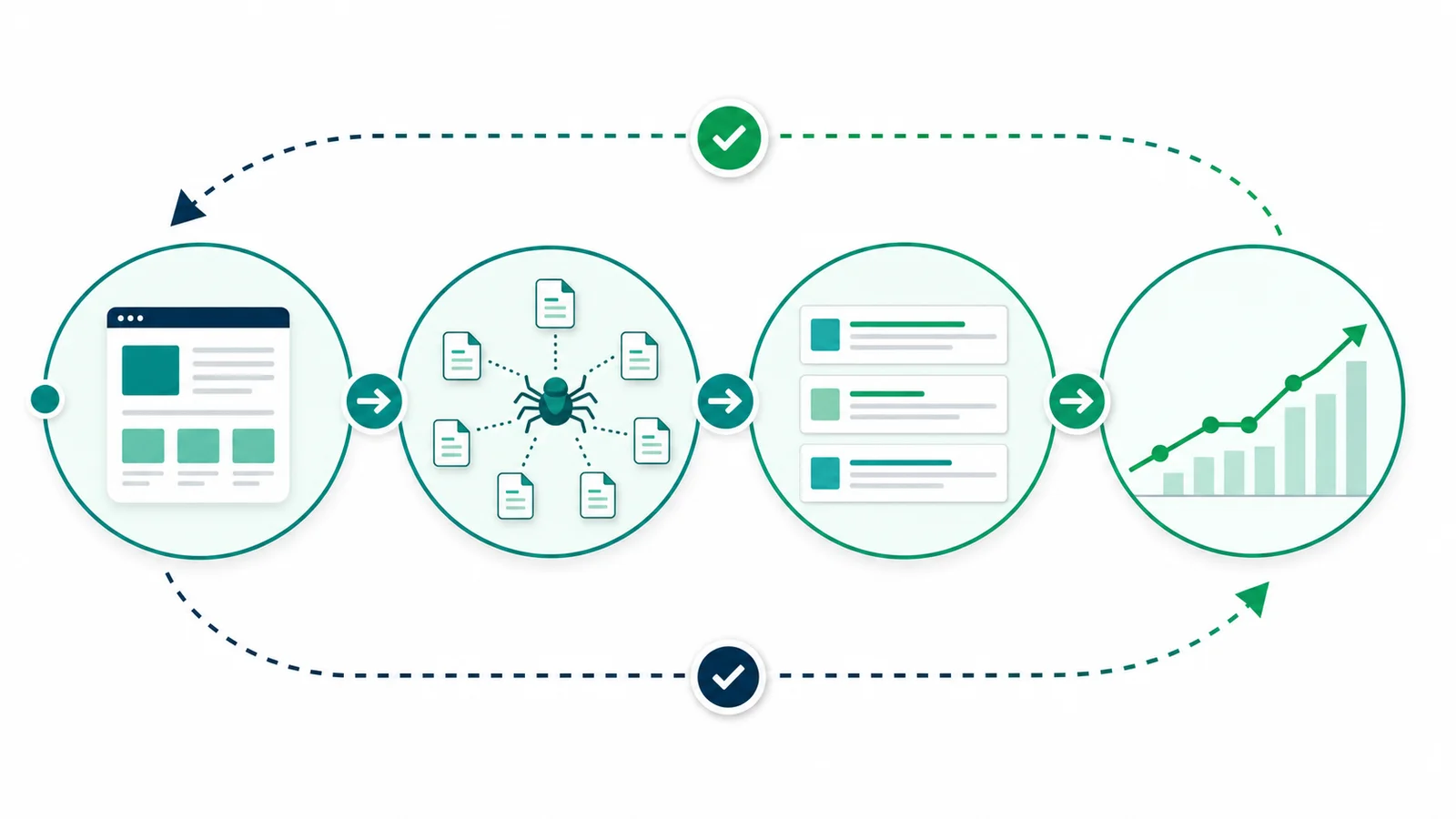
Organic traffic cannot arrive until search systems can discover and choose the pages. Before judging performance, confirm that the blog is technically eligible.
Start with this sequence:
- Confirm the blog list and article pages return a clean 200 status.
- Check that each article has a canonical URL pointing to itself.
- Make sure important posts are linked from the blog index, hub pages, or relevant product pages.
- Submit clean sitemap URLs and remove redirect, noindex, or duplicate noise.
- Inspect a few priority URLs in Search Console after launch.
Google's SEO starter guide frames search visibility around helping search engines discover, crawl, and understand pages. For a new blog, that means crawl eligibility is the first milestone. Content quality matters, but it cannot compensate for pages that search systems cannot reliably reach.
If this layer is uncertain, use a technical workflow before publishing more. The organic traffic growth workflow is the companion article for turning page, crawl, content, and link checks into an action queue.
Separate Impressions From Clicks
New blogs often get impressions before they get meaningful clicks. That is normal. Impressions mean the page is starting to appear for queries. Clicks mean the page is earning enough rank, snippet relevance, and intent match to bring visitors.
Read the signals this way:
| Signal | What it means | Better next action |
|---|---|---|
| No indexation | Search may not be able to select the page | Fix crawl, canonical, noindex, sitemap, or quality issues |
| Indexed but no impressions | Topic demand, page relevance, or internal links may be weak | Improve topic targeting and link from relevant pages |
| Impressions but few clicks | The page is visible but not compelling enough | Review title, meta description, intro, and SERP fit |
| Clicks but weak engagement | The page may answer the wrong task | Adjust content depth, CTA, and next-step routing |
| A few winners emerge | The topic cluster has traction | Build supporting pages and links around the winning job |
Google's Search Console Performance report documentation is useful here because it separates clicks, impressions, CTR, average position, queries, pages, countries, devices, and dates. Analytics tools can show what happened after the visit, but Search Console shows whether the new blog is entering the search results at all.
The organic traffic definition is useful if your team is still mixing source labels, page performance, and SEO impact into one vague traffic number.
Build A New Blog Review Cadence
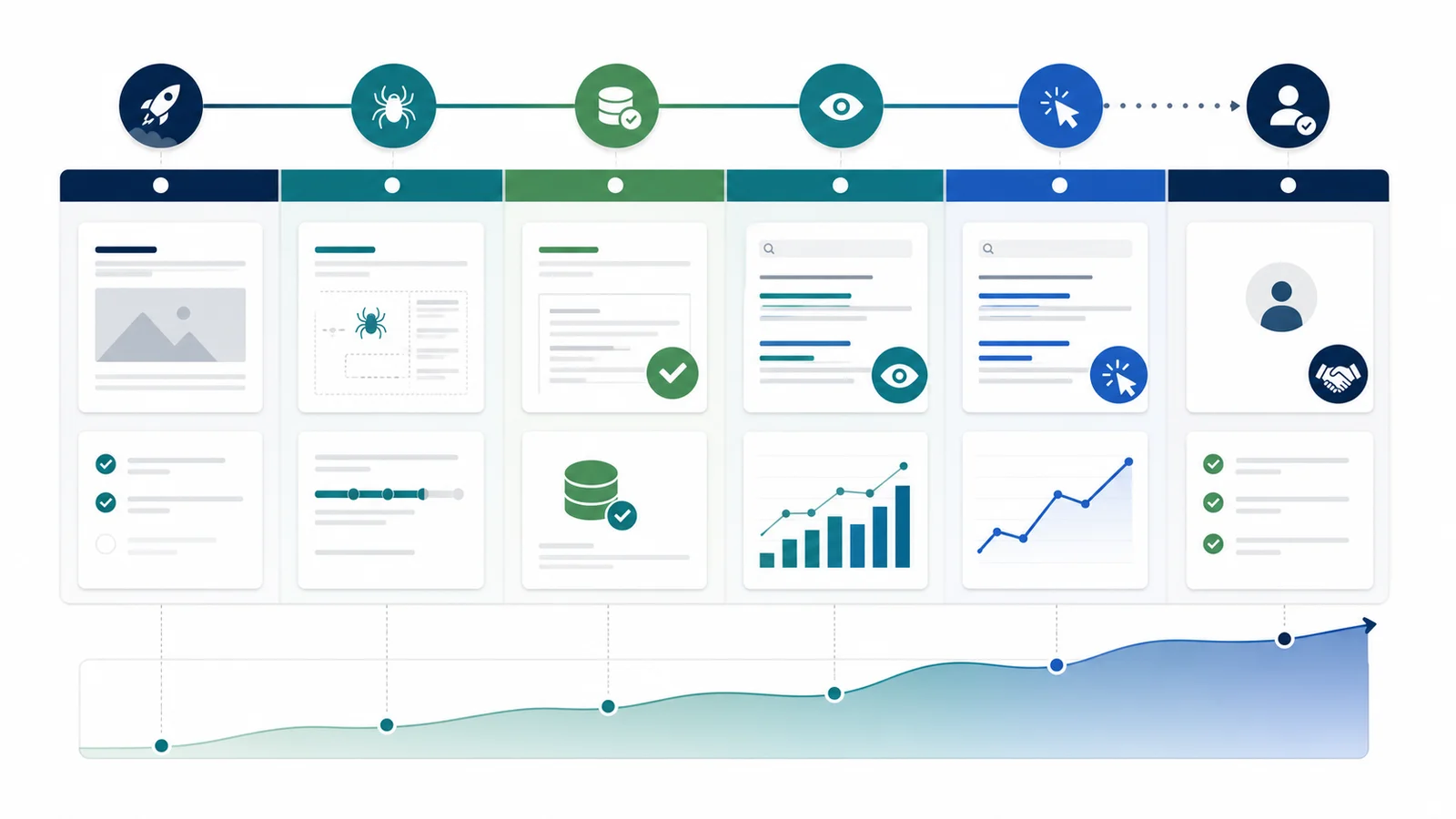
A new blog needs a review cadence that matches how search data matures. Reviewing every day creates noise. Waiting six months can hide obvious blockers.
Use this cadence:
| Cadence | Review question | Output |
|---|---|---|
| Launch week | Can search systems reach the pages? | Technical fix list |
| Week 3-4 | Are priority pages indexed and appearing? | Index and title/snippet review |
| Month 2 | Which query groups show early impressions? | Internal-link and content update queue |
| Month 3-4 | Which pages deserve more support? | Cluster expansion, refresh, or consolidation |
| Month 6 | Is the blog producing useful traffic or just pages? | Continue, narrow, or reset the content plan |
This keeps the team from making the wrong fix at the wrong time. If the pages are not indexed, do not rewrite the intro first. If impressions exist but CTR is weak, do not publish ten more adjacent posts before fixing the search result promise.
Decide Whether To Publish More Or Improve What Exists
The fastest way to waste a new blog is to publish more articles before the first set teaches you anything. More content helps only when the site has a clear topic map, crawlable structure, and early evidence that the cluster can earn search visibility.
Use this decision table:
| Current state | Publish more? | Better move |
|---|---|---|
| Pages are not indexed | No | Fix technical eligibility and internal links |
| Impressions appear on the wrong queries | Not yet | Rewrite angle, title, intro, and examples |
| One cluster gets impressions | Yes, selectively | Add supporting posts and link to the strongest page |
| Many pages have no impressions after several months | No | Recheck topic selection and page quality |
| Clicks appear but no business action follows | Maybe | Improve CTA fit, product routing, and content depth |
For ecommerce or Shopify teams, a content production tool can help with cadence, but it should not replace the review loop. Drafting faster is useful only after the topic, page type, and internal-link plan are clear.
Where Searvora Fits
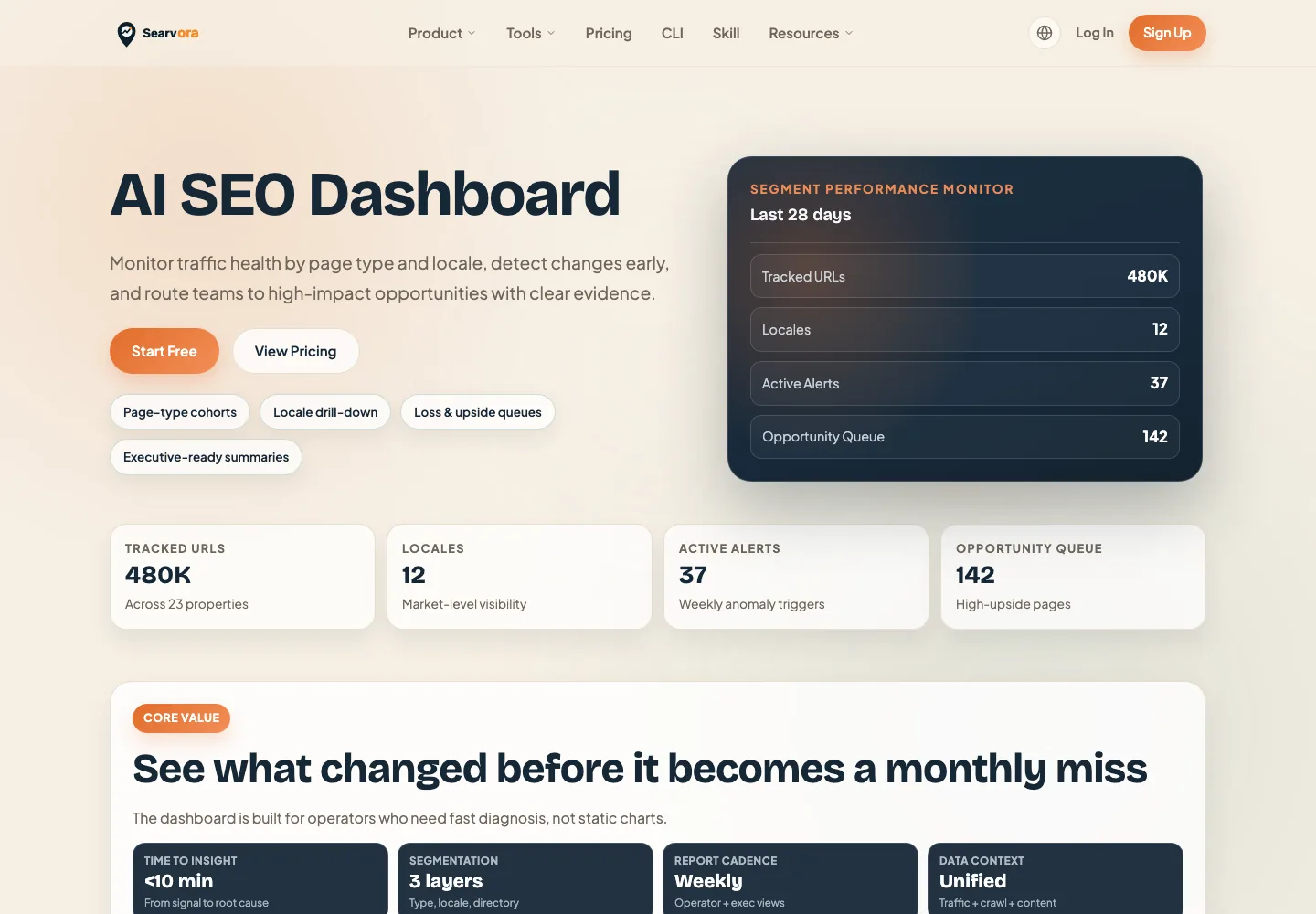
Searvora's AI SEO dashboard fits the review layer after the first articles are live. The product page positions the dashboard around page-type cohorts, locale drill-down, anomaly detection, opportunity queues, and executive-ready summaries. Those are the views a new blog needs when traffic is still too small for broad conclusions.
Use the dashboard this way:
| Layer | Use it for | Output |
|---|---|---|
| Page cohort | Separate new blog posts from product, collection, or landing pages | Cleaner trend reading |
| Query group | See which topics are starting to earn impressions | Better refresh and expansion decisions |
| Anomaly review | Catch sudden drops or crawl/reporting changes | Faster diagnosis |
| Opportunity queue | Prioritize pages by upside, effort, and confidence | Owner-ready work |
New Blog Traffic Checklist
Use this checklist before judging the blog:
- Confirm every priority article is crawlable and indexable.
- Make sure the blog appears in the sitemap and internal navigation.
- Check Search Console for indexing, impressions, queries, and pages.
- Compare impressions before expecting stable clicks.
- Review titles and descriptions when impressions exist but CTR is weak.
- Add internal links from relevant pages to the strongest new posts.
- Refresh early winners before scaling the cluster.
- Consolidate weak duplicate pages instead of publishing around the same task.
- Recheck the same page group on a monthly cadence.
A new blog can start showing search signals quickly, but useful organic traffic usually needs a measured path: crawl, index, impressions, clicks, and then repeated improvement. Treat each stage as evidence, and the timeline becomes a set of decisions instead of a waiting game.