

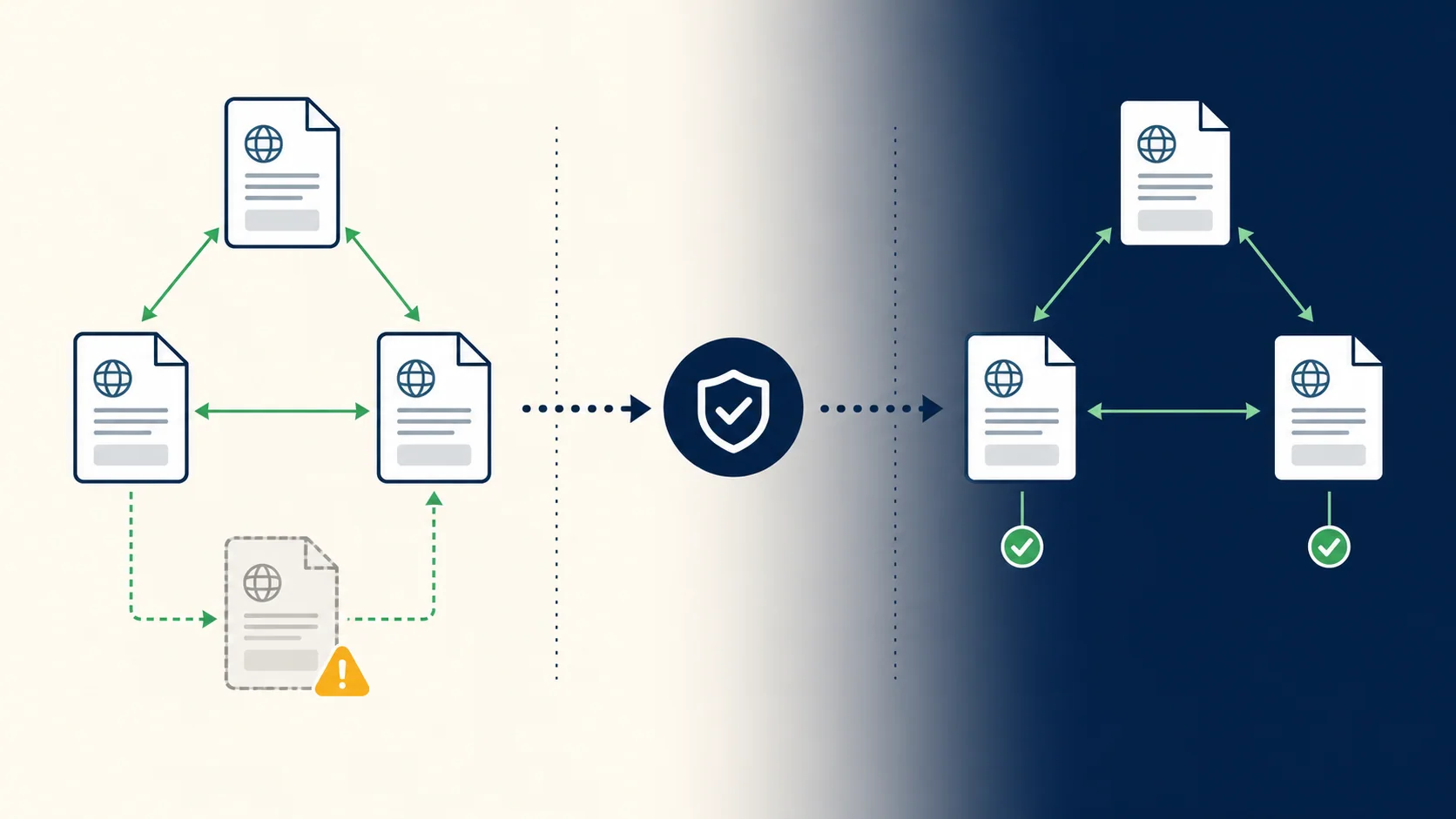
Non-canonical hreflang return links are easy to miss because every URL can still load. The failure happens when one localized page names a URL variant in its reciprocal hreflang set, but that variant canonicalizes somewhere else. The cluster then describes two different versions of the same locale page: the version advertised in hreflang and the version preferred by canonicalization.
This is not the same problem as a broken or redirecting alternate. A return-link target can return a clean 200 response and still be the wrong URL to publish. The reliable fix is to identify the canonical version each locale is allowed to name, repair the rule that emits the wrong variant, and recrawl the whole cluster after deployment.
The original Screaming Frog issue reference describes this specific symptom: a hreflang return link points to a URL that is not the canonical version set by the page. Use it as the issue definition, then use the workflow below to turn it into an executable repair.
What a Non-Canonical Return Link Looks Like
Start with an English page and its French alternate:
| Relationship | URL |
|---|---|
| English canonical page | https://example.com/en/pricing |
| French canonical page | https://example.com/fr/pricing |
| English alternate for French | https://example.com/fr/pricing |
| French return link for English | https://example.com/en/pricing?source=fr |
The last URL might return 200, yet its canonical tag points to https://example.com/en/pricing. The French page has not returned to the English page's canonical URL. It has returned to a tracking, slash, hostname, parameter, pagination, or legacy routing variant.
Google's localized-version documentation says localized alternates need reciprocal links and should use fully qualified URLs. Google's canonicalization guidance also recommends keeping canonicals in the same language or the best available substitute when hreflang is present. Put together, those rules mean the return link needs to name the locale's canonical page, not merely a page that happens to resolve.
For the broader implementation model, start with the hreflang tags workflow. This article stays narrower: diagnosing the return-link variant that slips past a basic status check.
Map Four URLs Before You Change a Tag
Do not begin by editing one annotation. Map the relationship that the crawler found. Four URLs tell you whether the defect is a one-off typo, a canonical conflict, or a shared publishing rule.
| Field to capture | Why it matters |
|---|---|
| Source page canonical | Establishes the canonical URL that should receive the reciprocal link |
| Source page alternate target | Shows which localized page the source names |
| Alternate page return-link target | Reveals the exact URL variant that comes back |
| Return-link target canonical | Proves whether that returned URL is canonical or canonicalized away |
| Publishing source | Identifies the template, CMS field, sitemap generator, or header rule to fix |
Capture the values from the live response, not only a CMS preview. A rendered page can add, normalize, or overwrite head tags after the source template is evaluated. If a sitemap or HTTP Link header also publishes the cluster, record that output too. The goal is one canonical URL per maintained locale and one consistent reciprocal map.
Keep the row focused on the relationship. A long list of every hreflang tag can hide the critical mismatch. For example, the useful finding is not "the French page has 14 alternates." It is "the French page returns to an English campaign URL whose canonical is the clean English pricing page."
Find the Rule That Creates the Wrong Variant
The wrong URL often comes from a legitimate normalization rule applied in the wrong place. Group failures by URL pattern and publishing source before assigning a fix.
| Pattern | Typical cause | Corrective direction |
|---|---|---|
| Query parameters in return links | Attribution, preview, session, or locale-picker parameters leak into a URL helper | Emit the clean canonical path for hreflang, never the current request URL |
| Old hostname, protocol, slash, or casing variant | A migration left one alternate generator behind | Normalize the generator to the final production canonical |
| Cross-locale canonical | A locale page is being canonicalized to the default language | Decide whether the locale deserves an independent canonical page or should leave the cluster |
| CMS permalink mismatch | A translated record changed path while a relation still stores the old path | Rebuild the alternate record from the current canonical field |
| Sitemap and HTML disagree | Two systems own alternate output without a shared source | Choose a single source of truth or compare both outputs in release QA |
The status matters, but it is a separate diagnostic. If a target redirects or fails, use the non-200 hreflang URLs workflow to resolve availability first. A clean 200 response does not remove the canonical check; it only tells you the relationship is not currently blocked by transport or routing.
Look for repetition. If a parameterized English return link appears on every French product page, one template helper is more likely than hundreds of editorial mistakes. If it appears only on one translated resource, inspect the CMS record and its translation relationship before changing global code.
Repair the Publishing Source Instead of One Pair
Once the pattern is clear, write the repair against the system that emitted it. The fix should make the canonical URL the only possible hreflang target for that locale.
For an HTML implementation, this usually means the alternate loop reads a normalized canonical URL stored on each localized record. Do not build the return link from the browser's current URL, a referral parameter, or a redirect destination. For a sitemap implementation, generate the same canonical inventory that the page template uses. For HTTP headers, make the header rule consume that same normalized source.
Use this repair sequence:
- Define the canonical URL for every maintained locale in the affected page type.
- Remove retired, default-language-only, or canonicalized-away URLs from the alternate inventory.
- Update the template, CMS relation, sitemap generator, or header rule that produces the bad variant.
- Verify that every locale page publishes the same alternate set, including its self-reference.
- Compare source HTML, rendered HTML, headers, and sitemap output where more than one method is active.
- Re-crawl a representative cluster before rolling the change across the rest of the template group.
Avoid a superficial fix such as replacing only the reported URL in one page's markup. That may make the individual row disappear while the next CMS publish recreates the same variant. A durable repair names the owner, the publishing source, the exact normalized URL rule, and the recrawl condition.
Validate the Repaired Cluster in Production
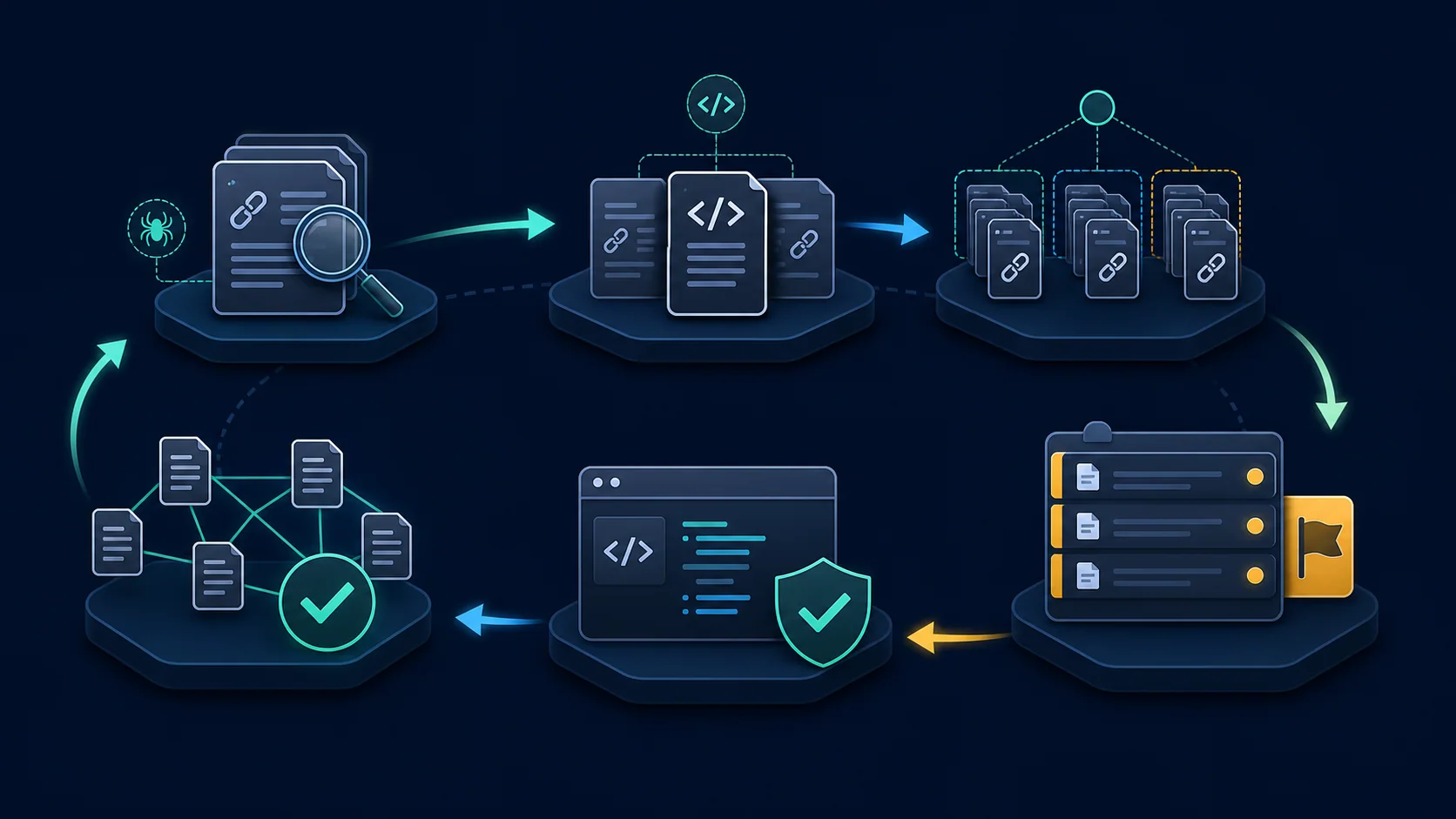
Hreflang work is not complete when a local template test passes. Validate the final URLs and annotations after the deployment path has applied redirects, edge logic, and any client-side metadata changes.
| Validation step | Pass condition |
|---|---|
| Resolve each named alternate | The annotation names the final canonical locale URL directly |
| Inspect the target canonical | Each maintained locale canonicalizes to itself or its deliberate documented substitute |
| Compare reciprocal references | Every locale returns to the canonical URL of every other maintained locale |
| Check indexability | The canonical targets are crawlable, indexable, and not excluded by mistake |
| Compare output methods | HTML, HTTP headers, and sitemap entries agree where they coexist |
| Re-crawl after release | The live cluster is clean across the changed template group, not only one sample page |
Run the checks without a logged-in session or privileged bypass. Locale pages that only look healthy in an operator's browser can fail for a public crawler because of CDN, authentication, geo-routing, or cache differences.
This is a useful place for Searvora SEO Spider Crawler. Crawl evidence can group the affected relationships by template and severity, connect the returned URL to its canonical target, and make the remediation queue specific enough for engineering or content operations to own. The value is not a red flag alone; it is proving whether one shared generator or several page records created it.
Turn the Finding Into an Owner-Ready Fix Queue
Report the issue in a form that someone can act on. "Fix hreflang" is too broad. A useful handoff makes the target, source, root-cause hypothesis, and verification condition explicit.
| Handoff field | Example |
|---|---|
| Scope | French product template, 1,240 affected return links |
| Observed mismatch | French pages return to English URLs with campaign parameters |
| Canonical rule | English return link must use the parameter-free English canonical |
| Probable owner | Localization template owner |
| Change | Replace current-request URL helper with the localized canonical inventory |
| Verification | Re-crawl 20 representative clusters, then the full template group |
Prioritize by the number of affected clusters and the value of the page type, not by the raw count of individual annotations. A single template rule repeated across a high-value product or category set is usually more important than a handful of isolated legacy pages. Conversely, do not turn a minor tracking parameter on one low-value URL into a global rewrite without proving the root cause.
A Release Checklist for Non-Canonical Return Links
Before closing the task, confirm the following:
- Every maintained locale has one final canonical URL.
- Every hreflang annotation names that canonical URL directly.
- Every locale page has a self-reference and the expected reciprocal set.
- No parameter, redirected, preview, duplicate-host, or legacy variant remains in the set.
- Canonical and hreflang output agree in the same language or regional page set.
- HTML, headers, and sitemap alternates do not contradict one another.
- The fix changed the generator or record that created the pattern.
- A production recrawl confirmed the same relationships after deployment.
Non-canonical hreflang return links are a data-integrity problem between localized records and URL normalization. Treat the return link as a canonical contract, fix the source that publishes the wrong variant, and validate the entire locale cluster before calling the issue resolved.