

PPC competitive analysis is the work of studying rival paid search keywords, ad messages, landing pages, and offer paths so the team can decide what to test, protect, or improve. For organic teams, the useful output is not a copied ad. It is a clearer page decision.
Use paid search evidence to spot which commercial promises competitors are funding, which landing pages they trust, and which queries may deserve durable organic coverage. Then validate the same opportunity with search intent, crawl readiness, internal links, and AI-search visibility before creating another article or landing page.
The Ahrefs article that surfaced this competitor opportunity frames PPC competitive analysis around ads, keywords, landing pages, and AI-assisted review. Searvora's information gain is the operating layer after that review: turn paid clues into organic page jobs, fix queues, and measurement rules.
Start With The Organic Decision
PPC competitive analysis becomes useful for SEO when it answers one of these decisions:
| Paid-search clue | Organic question | Best next action |
|---|---|---|
| A competitor keeps bidding on a phrase | Does this query deserve an owned page? | Check SERP intent, existing coverage, and page type |
| The ad promise repeats across campaigns | Is this a stronger title, intro, or comparison angle? | Test the promise against search intent and content depth |
| The landing page is tightly focused | Do we need a product, comparison, article, or hub page? | Map the page job before writing |
| The ad sends traffic to a weak page | Can organic win with better helpful content and crawl readiness? | Validate technical eligibility and information gain |
| The query is costly or seasonal | Should paid lead while SEO matures? | Pair the decision with the SEO vs SEM workflow |
Paid search can reveal demand quickly, but it does not prove that a blog post is the right answer. A phrase may need a product page, a comparison page, a support page, a pricing section, a tool, or no organic page at all.
Collect The Paid Search Clues
Start with the competitor evidence you can observe without private data. The goal is to build a page decision, not to imitate the campaign.
Useful evidence includes:
- The keywords or query themes the competitor appears to target.
- The ad headline promise and description language.
- The landing page type the ad points to.
- The offer, product category, audience, or use case emphasized on that page.
- Whether the same promise appears in organic titles, comparison pages, or support content.
- Which pages your own site already has for the same job.
Google's Search campaign documentation is useful context because it explains the basic paid-search model: campaigns target people searching for products or services, then connect keywords, ads, budget, and final URLs. For an SEO team, the final URL is often the most useful clue.
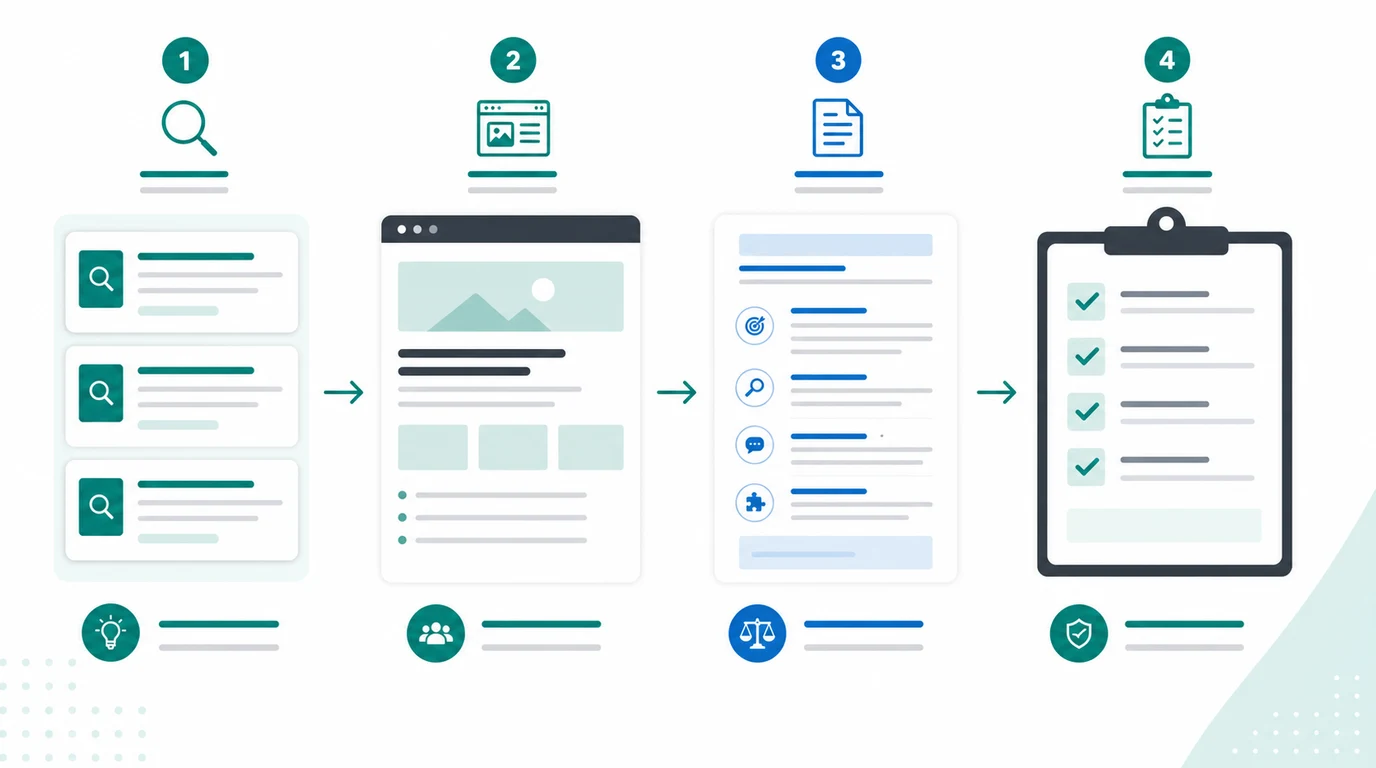
Treat that final URL as a planning object. Is it a product page, collection page, comparison page, calculator, guide, webinar, or template? If the competitor pays to send traffic there, the page job may matter. Your organic response still has to earn its place.
Separate Ad Messages From Page Jobs
Paid ads compress a promise into a small space. Organic pages have to prove the promise with structure, evidence, examples, links, and technical health. That is why ad copy should inspire a hypothesis, not become the article outline.
Use this filter:
| If the ad emphasizes | Ask this before creating organic content |
|---|---|
| Price or discount | Is search intent commercial enough for a pricing or comparison page? |
| Speed or ease | Can the page show the workflow without overpromising? |
| A named competitor | Is the query a fair alternative/comparison page or just a brand intercept? |
| A platform or audience | Does the site need a platform-specific landing page, article, or section? |
| A feature list | Is the missing asset a product page, support page, or article? |
| A problem or symptom | Would a fix guide answer the task better than a sales page? |
For example, a paid landing page may teach you that buyers care about "AI SEO reporting for ecommerce." That does not automatically mean the next organic page should use the same phrase as a title. The page decision may be a reporting dashboard landing page, a Shopify SEO workflow, or a section inside an existing article.
This is where the SEO competitor analysis workflow helps. Competitor evidence is only the first layer. The approval decision still needs keyword, page type, user job, overlap, and information gain.
Check The Landing Page Before The Keyword
The landing page tells you what the competitor believes will convert the searcher. Review it before ranking the keyword by volume or cost.
Look for:
- The H1 and above-the-fold promise.
- The product, service, or article type.
- Proof points, screenshots, examples, FAQs, and comparisons.
- Conversion path and whether it matches the searcher's stage.
- Internal links or navigation that support the page.
- Technical basics such as indexability, canonical, page speed, and mobile layout when you can inspect them.
Google's landing page performance guidance points advertisers back to page relevance and user experience. Organic search needs the same discipline, plus crawlability, internal links, and helpful content depth.
Use this page-type map:
| Competitor landing page shape | Organic response to consider | Do not force |
|---|---|---|
| Product feature page | Product page, comparison page, or feature section | Generic blog post |
| Pricing or plan page | Pricing explainer, comparison, or internal pricing section | Thin keyword article |
| Educational guide | Article, parent hub, or supporting child page | Product page with weak education |
| Calculator or checker | Tool, downloadable template, or resource page | Text-only article if the task needs a tool |
| Category or collection page | Landing page, Shopify collection content, or buying guide | Unfocused content hub |
| Support or FAQ page | Support article, troubleshooting guide, or help section | Competitor-bashing intercept |
If the better organic answer is a landing page or tool, record that. A clean defer is better than a weak article.
Turn PPC Clues Into An SEO Work Queue
Once the page type is clear, translate the paid-search clue into assigned organic work. This is the step many PPC competitive analysis workflows skip.
Use this queue model:
| Queue item | What to decide | Owner |
|---|---|---|
| Create | The competitor proves a distinct page job you do not cover | SEO/content |
| Refresh | Your existing page serves the job but has weaker proof, structure, or CTA | Content |
| Technical check | The target page exists but may not be crawlable, indexable, or internally linked | SEO/engineering |
| Landing page QA | Paid evidence points to a conversion page that organic may also need | Growth/design |
| AI-search review | The topic needs clearer source-page evidence for answer systems | SEO/strategy |
| Ignore | The clue is off-topic, brand-only, unsafe, or impossible to improve on | Planner |
The strongest PPC competitive analysis handoff is specific:
- Competitor URL or ad clue.
- Target keyword or query theme.
- Recommended page type.
- Existing Searvora overlap.
- Information gain angle.
- Internal links and product CTA.
- Validation plan after publishing or refreshing.
That is the difference between "competitor uses this phrase" and "this page should exist."
Validate Before You Publish
Paid clues can be noisy. A competitor may bid on a phrase because it converts for a narrow offer, because the campaign is testing, or because the organic page is not ready yet. Your validation needs to protect the organic roadmap from that noise.
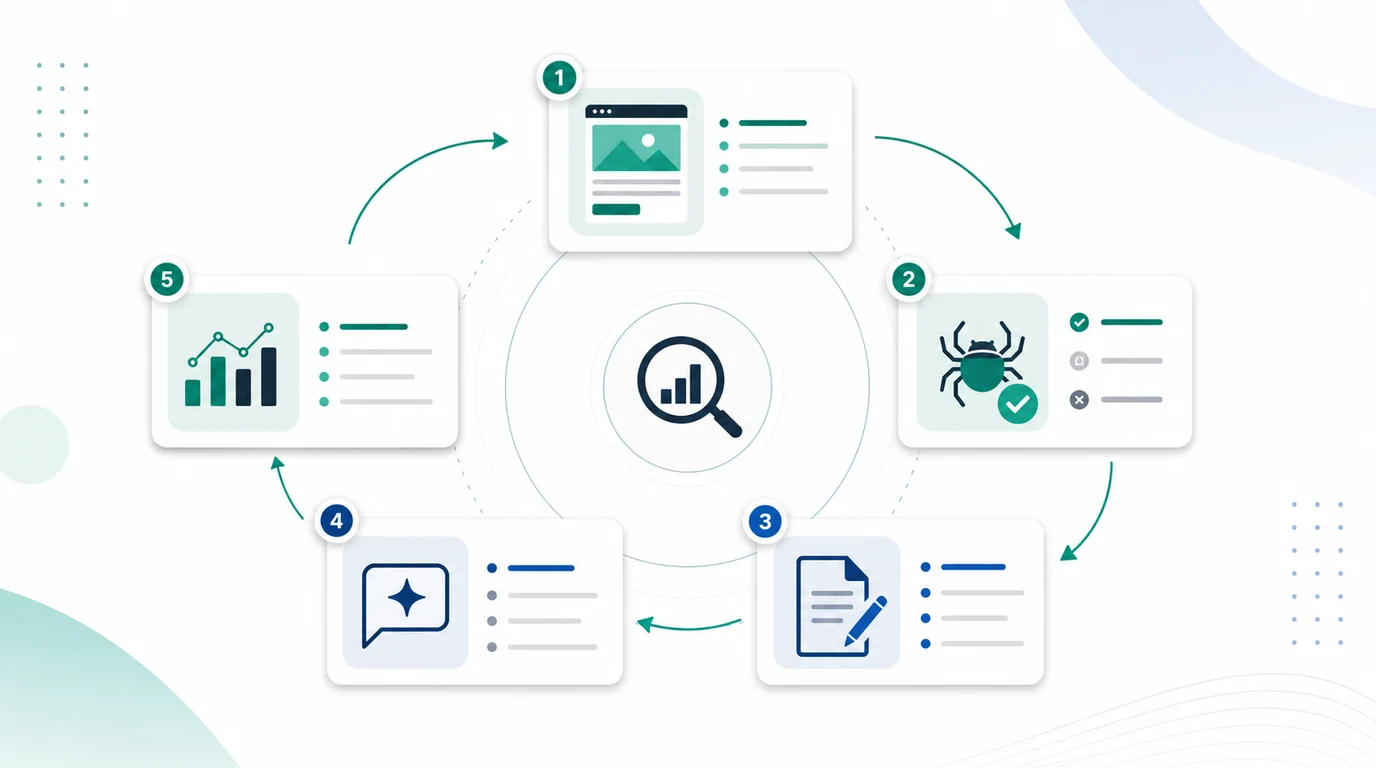
Before approving a new organic URL, check:
- Search intent. Does the public SERP favor articles, tools, landing pages, comparison pages, or local pages?
- Existing coverage. Do you already own the same core keyword, same page type, and same user job?
- Crawl readiness. Can the target page be discovered, indexed, canonicalized correctly, and linked internally?
- Content depth. Can your page add a better workflow, table, source evidence, or example?
- AI-search clarity. Can an answer system understand the entity, task, steps, and evidence?
- Measurement. Which page cohort, query group, and owner will review results?
Google's SEO starter guide is a useful guardrail here because it keeps the work grounded in crawlable, helpful, understandable pages. Paid demand still needs organic eligibility.
For ecommerce and product-led sites, pair this validation with the landing-page organic traffic workflow. A landing page that converts paid traffic may still need better crawl paths, internal links, and explanatory sections before it can earn organic visibility.
Where Searvora Fits
Searvora's AI SEO Consultant fits the planning step after PPC competitive analysis. The product page positions it around pattern-based diagnosis, priority scoring, fix-ready guidance, and execution alignment. That is useful when paid-search clues need to become a ranked organic queue instead of a loose idea list.
Use Searvora to structure the handoff:
| Step | Searvora role | Output |
|---|---|---|
| Read the clue | Bring competitor, page, crawl, and content evidence into one decision | Search-task context |
| Classify the page | Decide whether the opportunity is article, product, comparison, tool, hub, or update | Better canonical target |
| Score the work | Compare impact, effort, confidence, and overlap | Prioritized queue |
| Validate the target | Check crawl, metadata, internal links, and page readiness | Safer launch or refresh |
| Monitor after launch | Watch page cohorts and AI-search visibility alongside normal SEO movement | Next review action |
If the signal is already live on your site, connect the strategy decision to the AI SEO dashboard so the team can watch page-type cohorts, anomalies, and opportunity queues after the organic work ships.
PPC Competitive Analysis Checklist
Use this checklist before turning a paid-search clue into organic work:
- Record the competitor, query theme, ad promise, and final URL.
- Identify the landing page type before choosing the organic asset type.
- Compare the opportunity against existing articles, landing pages, product pages, and keyword rows.
- Reject only when the same core keyword, same page type, and same user task are already covered.
- Defer when the better answer is a tool, landing page, support page, template, or existing-page update.
- Approve an article only when the article shape is clear and the information gain is specific.
- Validate crawl access, canonical, internal links, metadata, and sitemap coverage.
- Add AI-search visibility checks when the topic depends on source-page clarity or brand mentions.
- Assign the owner and review window before publishing.
- Measure the organic page by page cohort, query group, and business outcome, not only rank movement.
PPC competitive analysis is strongest when it turns quick paid-search learning into durable organic decisions. The goal is not to copy a competitor's ad. The goal is to decide which page, fix, or measurement loop your team should ship next.