

Toxic backlinks are links that a tool, audit, or SEO reviewer labels as potentially harmful. The label is useful only when it leads to evidence. It is dangerous when it turns every strange domain into an emergency.
The right response is calm triage: separate normal web spam from manipulative link patterns, check whether internal SEO problems explain the traffic change, document what you can prove, and use disavow only when the risk is serious enough to justify it.
The Ahrefs toxic backlinks article that surfaced this opportunity argues against panic around tool-generated toxicity labels. Searvora's information gain is the execution layer around that idea: a repeatable decision process that turns link-risk anxiety into a documented action queue.
What Toxic Backlinks Actually Means
Most teams use "toxic backlinks" to describe links that look spammy, irrelevant, automated, paid, hacked, or manipulative. That does not mean every toxic-looking backlink is hurting the site.
Use three buckets instead:
| Link bucket | What it means | Better first response |
|---|---|---|
| Background spam noise | Odd links that most visible sites collect over time | Record the pattern, but do not act from fear |
| Investigate pattern | Repeated sources, anchors, placements, or timing that look unnatural | Review examples, ownership history, and traffic context |
| Serious link risk | Manual action, past link scheme, hacked links, paid network, or clear manipulation | Build evidence, attempt cleanup where realistic, and consider disavow |
The word "toxic" should never be the final diagnosis. It should start a review that asks what happened, who controlled it, whether it is material, and whether another SEO problem is more likely.
Start With A Triage Map
Start with the evidence you have, not the scariest backlink export. A link review should move from signal to classification to next action.
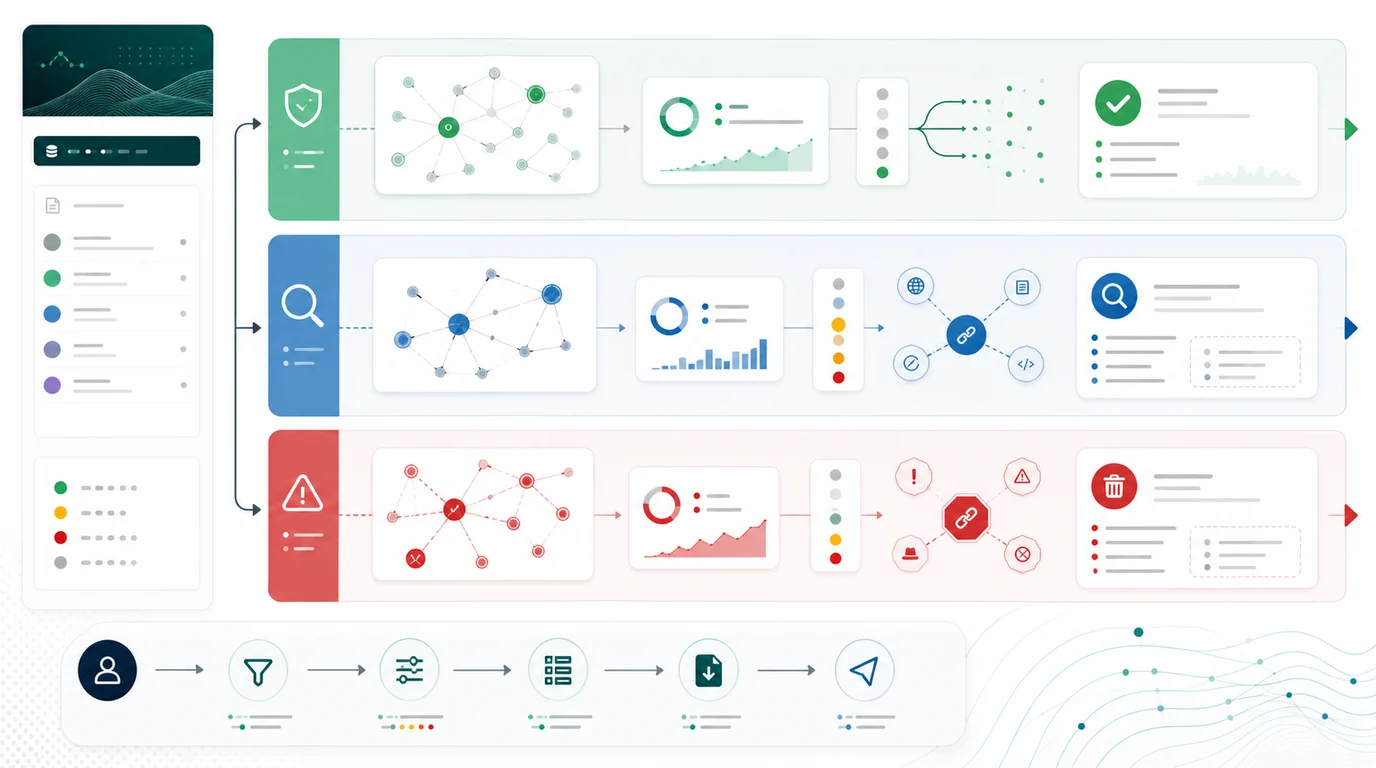
Use this sequence:
- Check whether Search Console shows a manual action or security issue.
- Compare suspicious link discovery dates with traffic, ranking, migration, and release timelines.
- Sample links by pattern, not by the highest toxicity score.
- Separate links you or a previous vendor created from random links you attracted.
- Review whether the affected pages also have technical, content, or intent problems.
- Decide whether the correct next action is ignore, monitor, outreach, technical fix, content fix, or disavow review.
That sequence keeps the team from making a backlink problem larger than it is. It also makes the work assignable: SEO can review the link pattern, content can check page quality, and engineering can validate crawl or indexability issues before anyone touches a disavow file.
Separate Spam Noise From Manipulation
The internet creates ugly backlinks. Scrapers, low-quality directories, old widgets, expired domains, and copied pages can point at a site without the site owner doing anything.
Manipulative links are different. Google's spam policies focus on links intended to manipulate ranking signals, such as paid links that pass ranking credit, excessive exchanges, automated link placement, or unnatural anchors.
Use this table to decide how hard to investigate:
| Signal | Low concern | Higher concern |
|---|---|---|
| Source pattern | Random one-off domains | Repeated domains, networks, templates, or footprints |
| Anchor text | Brand, URL, or messy natural anchors | Repeated exact-match commercial anchors |
| Timing | Links appeared gradually without a campaign | Links appeared in a short burst around a ranking push |
| Control | You did not request or create the links | Your team, vendor, or acquired site created them |
| Search Console | No manual action or message | Manual action or clear unnatural-link warning |
| Target pages | Mixed pages with no obvious push | Money pages or doorway-like pages targeted repeatedly |
Do not try to cleanse the web of every weak source. The practical job is to identify whether there is a pattern that a reviewer, algorithmic system, or future migration team would reasonably treat as a real risk.
Check Internal Causes Before Blaming Links
A traffic drop near a toxic-link report does not prove that links caused the drop. It may coincide with a template release, canonical mistake, noindex rule, redirect change, content decay, SERP shift, or keyword cannibalization problem.
Before escalating link cleanup, check:
- Did important pages become noindexed, canonicalized away, blocked, redirected, or removed from the sitemap?
- Did page titles, H1s, internal links, or content sections change around the same time?
- Did a parent page and child page start competing for the same query?
- Did competitors or SERP features change the visible opportunity?
- Did the affected pages lose valuable links, mentions, or internal routing at the same time?
The Google disavow links workflow is useful when the evidence points to serious link risk. But if crawl and content evidence point somewhere else, fix that first. A disavow file will not repair broken canonicals, weak content, misrouted redirects, or pages that no longer match intent.
If the issue is lost authority from valuable links disappearing, the link reclamation workflow is the better path. If the issue is risky campaign behavior, step back into the broader link building for SEO workflow and fix the campaign rules before chasing cleanup.
When Disavow Becomes A Last Resort
Disavow belongs late in the process. Google's disavow links guidance frames the tool as advanced and risky when used carelessly. That should shape the checklist.
Consider a disavow review only when several of these are true:
| Evidence | Why it matters |
|---|---|
| Manual action or clear unnatural-link warning | The risk is explicit, not guessed from a tool label |
| Known history of paid, hacked, automated, or private-network links | There is a controllable pattern to document |
| Repeated exact-match anchors to commercial pages | The pattern looks built for ranking manipulation |
| Cleanup or removal is not realistic | Disavow may be the only practical separation path |
| Technical and content causes were checked first | The team is not using disavow to explain every decline |
| The file can be versioned and owned | Future reviewers can understand what changed |
If the evidence is weak, the safest action is often to monitor. If the evidence is strong, keep the file small, boring, and auditable. Use domain-level entries for sources that are clearly unsafe as a whole, URL-level entries for isolated cases on otherwise legitimate domains, and comments that explain the batch without exposing private details.
Monitor The Decision Without Panic
Toxic backlink work should end with monitoring, not another round of fear. Record the decision, watch the affected page group, and wait for enough evidence before changing direction again.
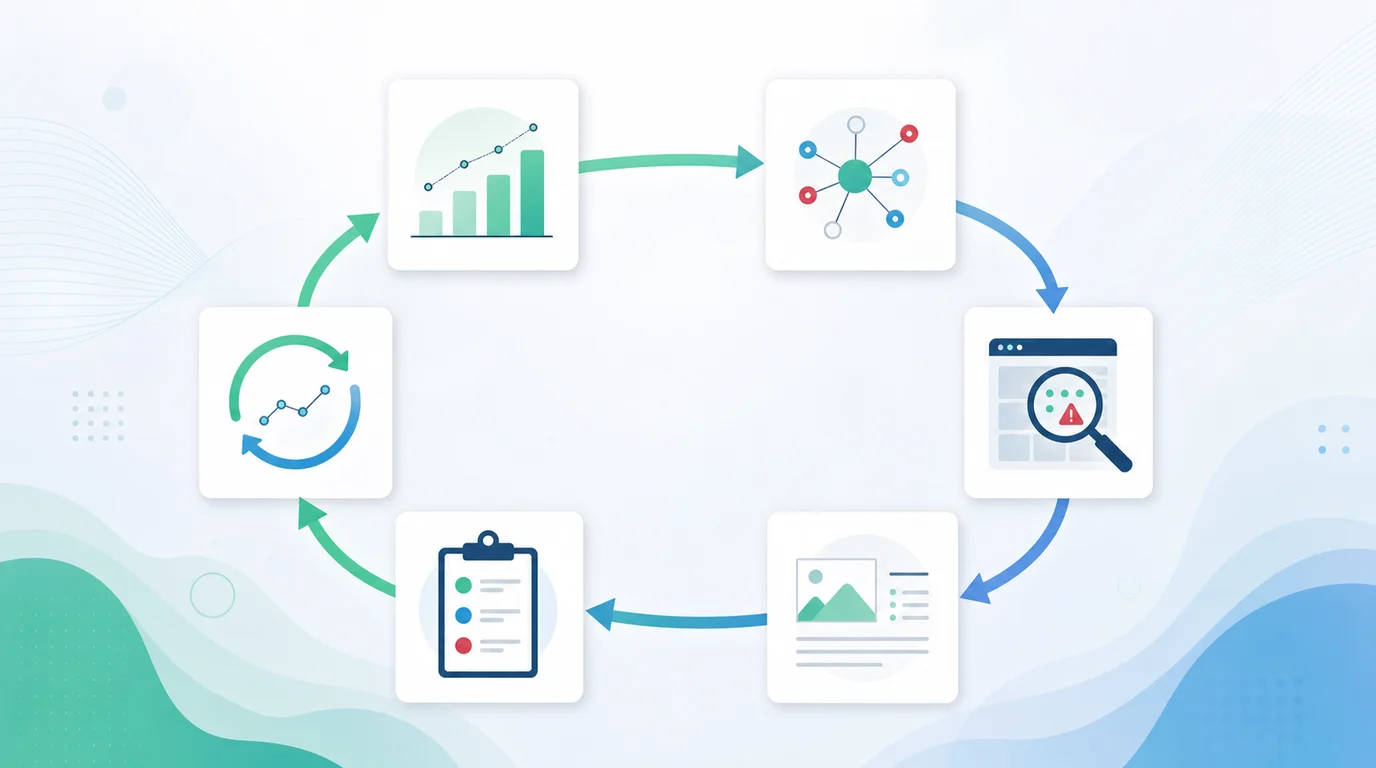
Track these fields in the decision log:
| Field | What to record | Why it helps |
|---|---|---|
| Link pattern | Source domains, anchors, targets, and timing | Keeps the review about evidence, not vibes |
| Risk source | Manual action, vendor history, acquired site, campaign, or random spam | Separates controllable causes from noise |
| Internal checks | Crawl, indexability, content, redirects, and page overlap findings | Prevents false link diagnosis |
| Chosen action | Ignore, monitor, outreach, fix internal issue, or disavow review | Makes ownership clear |
| Owner and date | Who decided and when | Gives future reviewers decision lineage |
| Reassessment trigger | Manual action update, traffic movement, crawl fix, or next audit date | Stops endless rechecking |
The goal is not to prove that every strange link is harmless. The goal is to make the next action proportional to the evidence.
Where Searvora Fits
Searvora does not replace backlink indexes, guarantee link-risk diagnosis, or decide legal responsibility for past campaigns. It fits the prioritization layer after the backlink evidence exists.
Use Searvora AI SEO Consultant when a link-risk review needs to become an action queue:
| Review step | What Searvora helps structure |
|---|---|
| Pattern summary | Turn link samples, anchors, target pages, and timelines into a clear issue model |
| Cross-checks | Keep crawl, content, indexability, and SERP context in the same decision |
| Priority rules | Separate ignore, monitor, outreach, internal fix, and disavow-review paths |
| Team handoff | Assign SEO, content, and engineering actions with rationale and validation criteria |
That is the difference between a toxic-link panic and a controlled SEO decision. One produces a spreadsheet of scary domains. The other produces a short list of evidence-backed actions your team can actually ship.
Toxic Backlinks Checklist
Use this checklist before acting on a toxic backlinks report:
- Confirm whether there is a Search Console manual action or security issue.
- Sample links by pattern instead of sorting only by toxicity score.
- Separate random spam from links your team, vendor, or acquired site created.
- Check anchors, source footprints, target pages, and timing.
- Review crawl, canonical, noindex, redirect, sitemap, and content changes before blaming links.
- Decide whether the right path is ignore, monitor, outreach, internal fix, or disavow review.
- If disavow is justified, version the file and keep the rationale concise.
- Assign an owner and reassessment trigger.
- Measure affected page groups with enough context to avoid false causation.
- Update campaign rules so the same risky pattern does not repeat.
Toxic backlinks are not an automatic emergency. They are a signal that deserves context. Start with evidence, keep the decision small enough to audit, and reserve the most aggressive actions for the situations where the risk is real.