
Unsafe cross-origin links are usually external links that open a new tab or window and need a browser-safety review. The practical task is not to chase a ranking signal. It is to find the source template, understand the browser context, choose the smallest correct rel value, and prove the live markup behaves as intended.
That distinction matters. A broad external-link rule can damage attribution, user experience, or useful editorial linking just as easily as it can remove an old warning. Treat this as a version-aware technical SEO fix: inventory the pattern, hand the rule to the owner, then validate the released pages.
What Unsafe Cross-Origin Links Mean Today
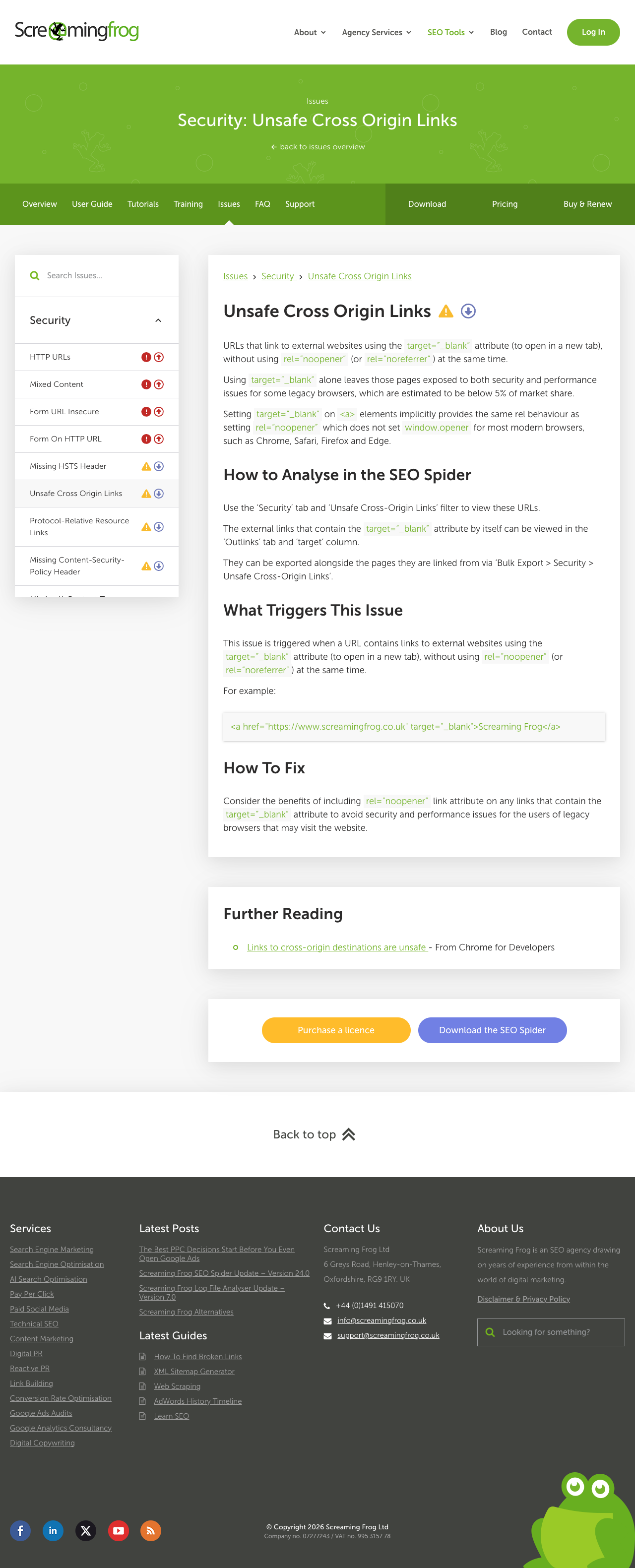
The public Screaming Frog issue reference labels external target="_blank" links without noopener or noreferrer as unsafe, with a specific legacy-browser caveat. That is a useful crawler label, but the current browser baseline changes how a team should prioritize it.
MDN documents that target="_blank" on anchors, areas, and forms now implies the same opener-isolation behavior as rel="noopener". The OWASP reverse-tabnabbing reference makes the same modern-evergreen-browser distinction. That does not make the issue meaningless: older browsers, embedded webviews, inherited markup policies, and compatibility requirements can still justify an explicit rule.
| Situation | What the team should verify | Useful next action |
|---|---|---|
| Standard external link opens in a new tab | Which browser and webview versions the site supports | Document the baseline before changing global markup |
| Legacy or embedded browser support matters | Whether an explicit opener-isolation value is required by policy | Add the smallest safe rel value in the owning template |
| Referral data is important | Whether the team actually needs the Referer header | Prefer noopener when you do not intend to suppress referral data |
| A link is paid, user-generated, or not endorsed | The relationship between the source and destination | Handle sponsored, ugc, or nofollow as a separate link-qualification decision |
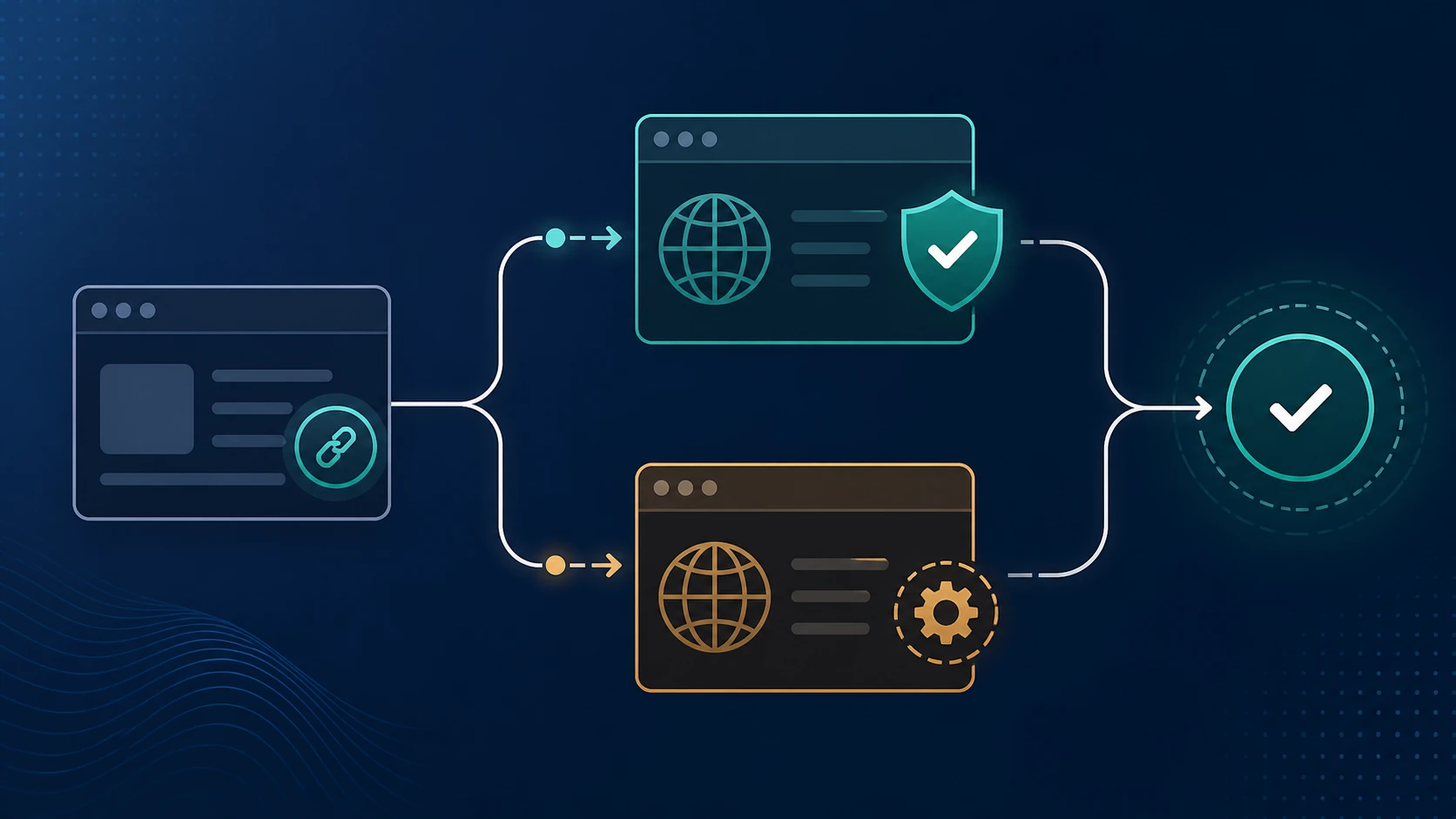
The key separation is simple: noopener controls whether a newly opened context can access its opener; noreferrer also suppresses the Referer header; and nofollow, ugc, or sponsored describe a search relationship. The existing nofollow attribute workflow covers that last decision. It should not be used as a substitute for browser-safety review.
Start With a Template-Level Inventory
Do not fix a list of URLs one by one unless the links were deliberately hand-authored. Most repeated unsafe-link findings come from a CMS field, component, rich-text renderer, affiliate module, navigation block, or shared footer.
Build an inventory that gives the engineering or content owner enough context to make one durable change:
- Crawl the affected URL set and retain the source page, destination host,
targetvalue, currentrelvalue, and link location. - Segment the findings by template, component, directory, locale, and publishing source rather than by raw URL count alone.
- Separate ordinary editorial references from paid, user-generated, utility, and untrusted-destination patterns.
- Record the browser or embedded-webview policy that makes the issue actionable.
- Assign one owner for the template rule and one validation owner for the post-release crawl.
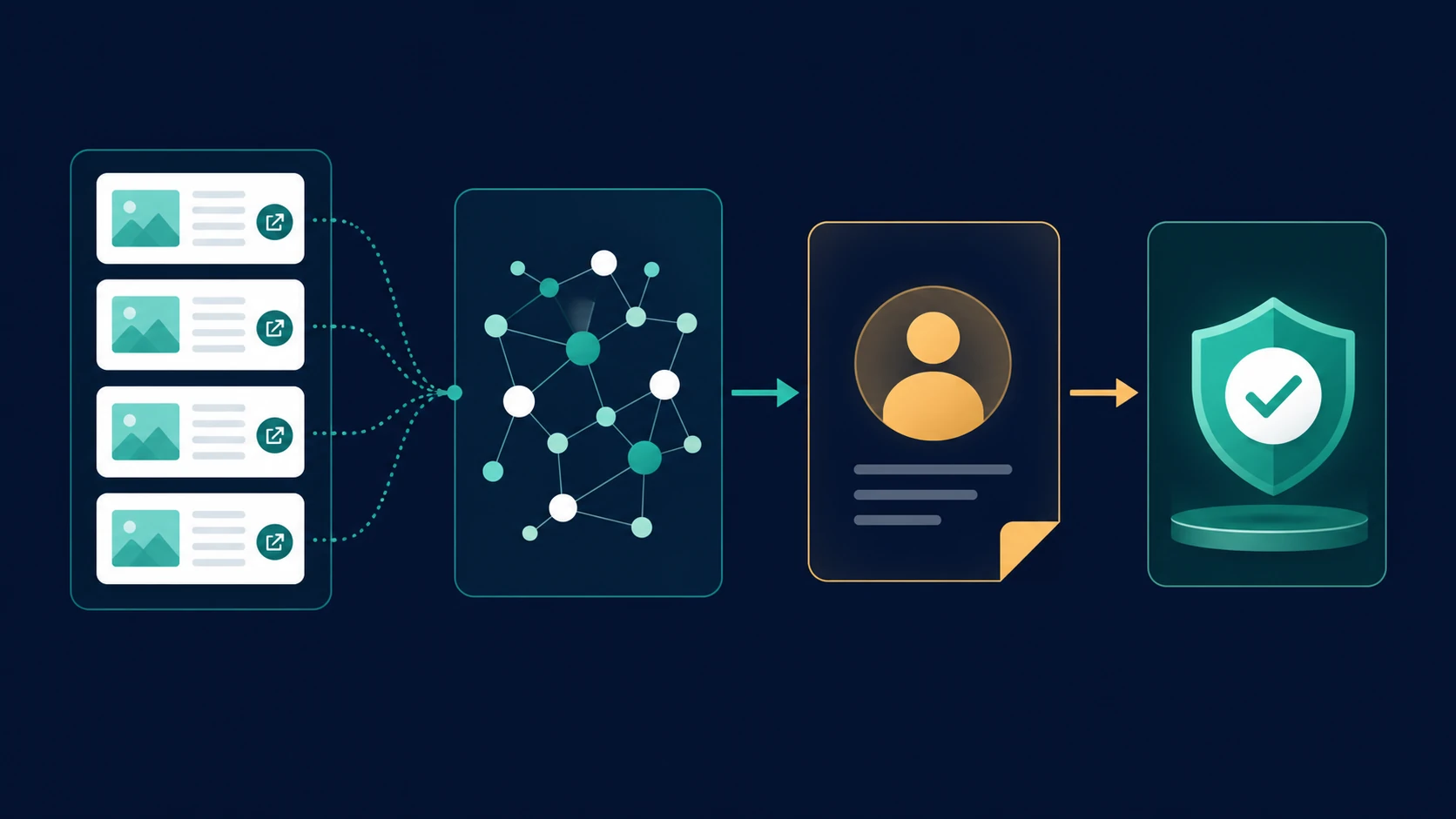
An inventory changes the discussion from “the crawler found a warning” to “this component affects 86 pages in three locales, is owned by one renderer, and needs one tested rule.” That is the information gain a generic issue page usually lacks.
Choose the Smallest Safe Attribute Change
For a link that intentionally opens a new tab and needs an explicit opener-isolation policy, the markup can stay focused:
<a href="https://example.com" target="_blank" rel="noopener">
  Read the external reference
</a>
Do not add values just because they are familiar. Each one changes a different behavior.
| Need | Better choice | What not to assume |
|---|---|---|
| Preserve a new-tab workflow while explicitly isolating the opener | rel="noopener" | That noopener is a ranking instruction |
| Prevent a Referer header from being sent | rel="noreferrer" | That preserving attribution is irrelevant to the business or analytics team |
| Qualify a paid, user-generated, or non-endorsed relationship | sponsored, ugc, or nofollow where appropriate | That those values provide browser opener isolation on their own |
| Keep a normal editorial citation | No extra search-relationship label by default | That every cross-origin link needs a restrictive policy |
If the source link is already compiled through a component, test the rendered HTML rather than only reviewing the JSX, Markdown, Liquid, or CMS configuration. A field can be correct in the editor and still be rewritten by a renderer, plugin, or deployment transform.
Fix the Rule Where It Originates
The safe change belongs with the source that generates the pattern. That might be a rich-text renderer, a link component, an email-to-web conversion rule, or a vendor widget—not the individual article page that exposed it.
Use this ownership test before opening a ticket:
| Finding pattern | Likely owner | Fix scope |
|---|---|---|
| Same missing value across many blog posts | CMS renderer or editorial component | One shared link-rendering rule plus a controlled content review |
| Only affiliate or sponsored modules are affected | Commerce or partnership template | A scoped relationship and new-tab policy for that module |
| A single external link appears in one post | Content owner | Correct the individual link, then confirm it is not copied elsewhere |
| Warning appears in many languages or folders | Shared locale/template layer | Validate all affected locales after the shared fix ships |
This is also why link warnings should be prioritized by template reach, page value, and owner clarity. The technical SEO issues workflow is a useful companion when a crawl has many alerts but only a few are worth a release.
Validate Behavior After Release
The validation step should be as deliberate as the fix. Current evergreen browsers may provide implicit protection, while an explicit policy can be important for compatibility or governance. The release needs evidence for the environment you actually support.
Use this final checklist:
- Inspect raw, deployed HTML on a representative set of affected pages.
- Confirm the desired
targetandrelvalues survive the production renderer. - Test the browsers and embedded contexts named in the support policy, not just an up-to-date desktop browser.
- Check whether referral behavior still matches analytics and privacy expectations.
- Re-crawl the affected templates and compare the number of matching links before and after deployment.
- Verify that useful internal links and editorial citations were not changed by a blanket rule.
- Store the component owner, release date, affected templates, and recrawl evidence with the ticket.
For a crawler-specific view of link evidence, Screaming Frog List Mode is useful when a known URL list needs focused checking. Use the product workflow that best fits the evidence you have; a crawler finding still needs an owner and a release check before it becomes a completed fix.
Turn Link Evidence Into a Shippable Queue
Searvora’s public SEO Spider Crawler surface is designed for the operating layer after the initial finding: it can collect structured attributes and link graphs, group crawl evidence by template or severity, and turn the result into an owner-ready queue. It is not a replacement for a browser-support policy or a security review.
Use the SEO Spider Crawler when the team needs to connect external-link markup, page structure, crawl scope, template reach, and post-fix validation in one technical SEO workflow.
The durable fix for unsafe cross-origin links is not an indiscriminate attribute sweep. It is a version-aware policy, a narrow template change, and a recrawl that shows the live site still behaves as intended.