

If the question is what is site audit, the practical answer is this: a site audit is a structured review of a website's technical access, indexability, content quality, user experience, and performance evidence so the team can decide what to fix next.
The best site audits do not simply list problems. They explain which pages matter, what is blocking them, which owner should act, and how the result will be checked after changes ship.
A Site Audit Is A Health Check With A Decision Attached
A site audit looks across the website as a system. It can include SEO, technical health, content quality, analytics, UX, accessibility, performance, and conversion paths. For search teams, the core question is usually narrower: can important pages be found, understood, indexed, trusted, and improved?
Use this simple definition:
| Part of the audit | What it checks | Decision it should support |
|---|---|---|
| Technical access | Crawl paths, status codes, robots rules, redirects, rendering | Can search systems reach the page? |
| Indexability | Canonicals, noindex rules, sitemap coverage, duplicate signals | Which URL should be eligible to rank? |
| Content quality | Page purpose, freshness, depth, intent fit, internal links | Keep, refresh, merge, expand, or retire? |
| UX and performance | Core Web Vitals, mobile usability, layout stability, media weight | Is the page usable enough to support the search task? |
| Analytics evidence | Traffic shifts, query demand, conversion paths, page groups | Which issues deserve priority? |
| Fix queue | Owner, impact, effort, validation check | What should the team ship first? |
Google's SEO starter guide is a useful public baseline because it connects crawlability, links, page structure, and helpful content. A site audit turns those principles into a page-by-page decision.
The Six Layers A Useful Site Audit Checks
Start with layers instead of a random checklist. Layers prevent the team from treating a low-value duplicate title the same way it treats a blocked revenue page.
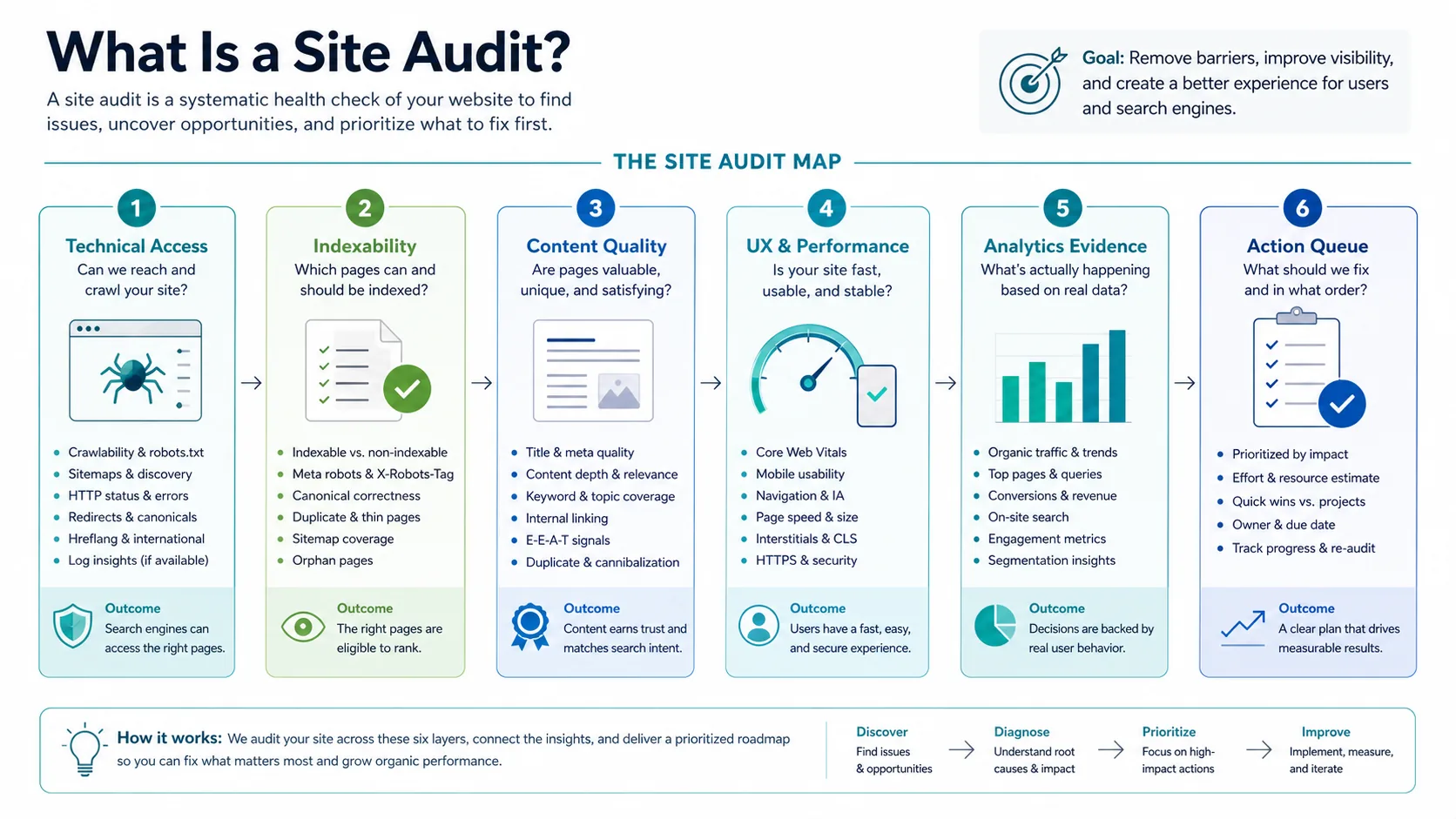
Here is the clean operating model:
- Discovery: list the URLs the site exposes through links, sitemaps, redirects, and navigation.
- Eligibility: decide which URLs can and should be indexed.
- Meaning: check whether titles, headings, content, schema, and internal links explain the page.
- Experience: look for speed, mobile, layout, media, and usability patterns that hurt completion.
- Evidence: connect findings to traffic, query demand, conversions, or strategic value.
- Action: turn the audit into a fix queue with owners and recrawl checks.
For a technical deep dive, use the technical SEO site audit workflow. That article focuses on crawl inventory, indexability checks, prioritization, owner handoff, and validation. This page stays at the definition and decision level.
Choose The Right Audit Type Before You Start
Not every website problem needs the same audit. A broad site audit is useful when the problem is unclear. A narrower audit is better when the team already knows the failure mode.
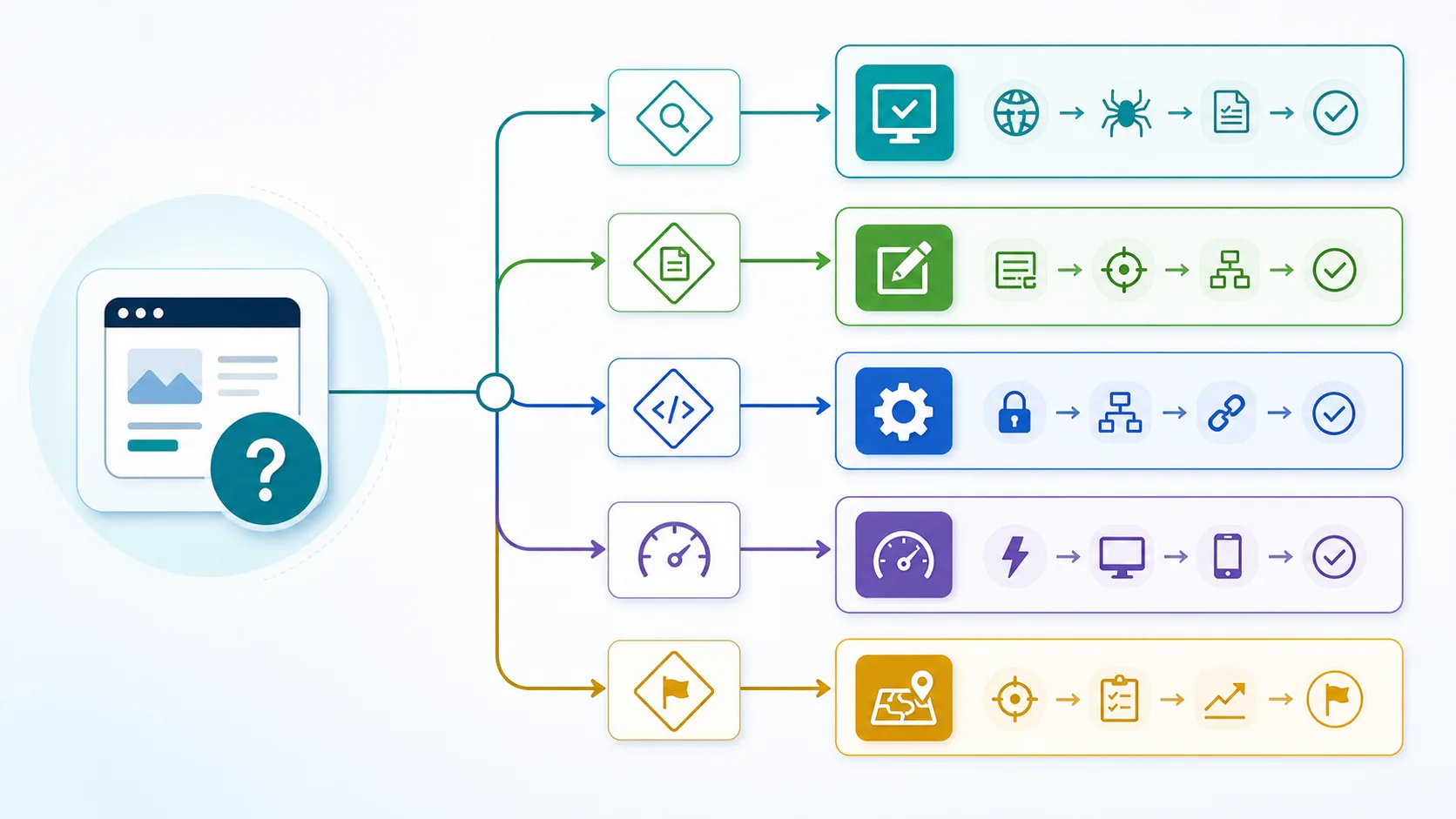
Use this choice table:
| If the main question is | Run this audit first | Why |
|---|---|---|
| Why did search traffic drop across a section? | Technical SEO audit plus analytics review | You need crawl, indexability, and timing evidence |
| Which pages should be refreshed or merged? | Content audit | The decision depends on intent fit, performance, overlap, and value |
| Is the site ready for launch? | Technical site audit | You need redirects, canonicals, robots, sitemaps, rendering, and metadata checks |
| Why are pages slow or unstable? | Performance audit | The bottleneck is user experience and Core Web Vitals |
| What should the SEO team work on next quarter? | SEO roadmap audit | You need priority, sequencing, and business fit |
If content quality is the main concern, the content audit workflow is the better next step. If the question is budget or scope, the site audit cost framework helps compare automated checks, consultant reviews, and implementation-ready audit work.
Turn Findings Into A Fix Queue
The difference between a report and an audit is action. A report can say "these pages have duplicate titles." A useful audit says which title pattern affects important pages, who should rewrite the template, what the new output should look like, and how the team will confirm the fix.
Use this handoff format:
| Field | What to include |
|---|---|
| Page group | Directory, template, locale, article cluster, or product section |
| Finding | The exact issue and the evidence source |
| Search risk | Discovery, indexability, ranking, snippet quality, content fit, or measurement risk |
| Priority | Impact, footprint, demand, risk, and effort |
| Owner | SEO, engineering, content, analytics, product, or localization |
| Fix | The smallest change that solves the issue |
| Validation | Recrawl, inspect, compare sitemap/canonical, monitor Search Console, or measure conversion |
This is where many audits get too broad. If the team cannot assign the finding, lower its priority or rewrite it. "Improve the site" is not a fix. "Repair canonical rules on faceted collection URLs and recrawl the affected template group" is a fix.
Where Searvora Fits In A Site Audit
Searvora's SEO Spider Crawler fits when the audit needs a technical evidence layer: crawl access, status codes, redirects, canonicals, metadata, internal links, sitemap behavior, indexability, and issue grouping.
Use the crawler when the team needs to turn a site audit into work that can be validated. Pair the crawl with analytics or Search Console evidence when the question is not just "what is broken" but "what should we fix first."
So a site audit is not a one-time scan. It is a decision process: inspect the website, separate signals from noise, choose the work that matters, assign it clearly, and validate the live result after the fix ships.