

The best AI search engines are not interchangeable. A team researching a market, checking a claim, or monitoring how its pages appear in answer systems needs a different result from someone who only wants a fast summary.
This roundup compares three public AI search experiences: ChatGPT Search, Perplexity, and Google AI Mode. It uses their official public product information, then adds the SEO question that generic roundups often skip: can your team trace the sources, preserve a repeatable query set, and turn what it finds into a page or monitoring decision?
Start With The Research Job
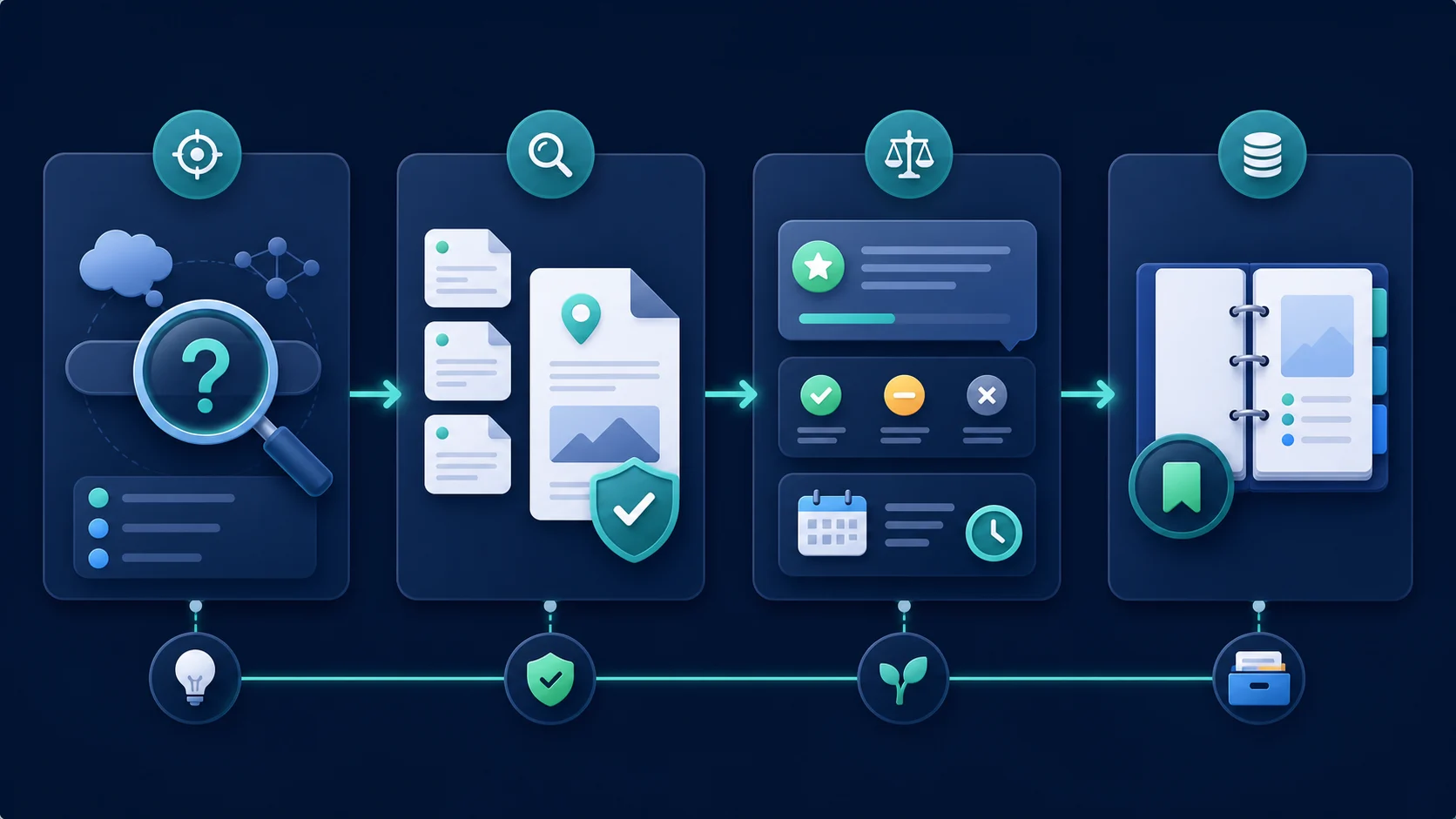
Choose an AI search engine by the work that follows the answer, not by a blanket claim that one product is always best. Three questions are enough to narrow the field:
- Do you need a quick answer, a research trail, or a multi-step exploration?
- Will the reader need to inspect the original sources before acting?
- Does the result need to become an SEO evidence record, rather than a one-off chat?
Compare The Best AI Search Engines
The table below is a decision aid, not a universal ranking. All three can support source-led research, but they create different review habits.
| AI search engine | Best fit | Source-checking habit | SEO team use |
|---|---|---|---|
| ChatGPT Search | Conversational research that benefits from follow-up questions | Open the linked web sources before reusing a claim | Test how a buyer question turns into a sourced answer and identify missing owned evidence |
| Perplexity | Fast research where citations are central to the first pass | Check cited URLs for relevance, freshness, and authority | Sample category and comparison queries for source patterns and competitor mentions |
| Google AI Mode | Complex exploration that stays inside the Google Search journey | Follow supporting links and keep availability context in the evidence log | Watch how Google search and AI answer surfaces may change query behavior and source discovery |
1. ChatGPT Search
ChatGPT Search is the strongest fit when the research task will evolve through follow-up questions. OpenAI describes it as a way to receive timely answers with links to relevant web sources, while retaining the conversational context that helps people refine the question.
Use OpenAI's ChatGPT Search overview as the primary public reference for the product. For an SEO team, the important habit is not to copy the summary into a brief. Open the linked pages, check whether the source actually supports the claim, and record the exact question that produced it.
ChatGPT Search is a good choice when you need to turn a vague research prompt into a clearer set of source questions. It is less useful when the team has no process for keeping a source trail after the conversation ends.
2. Perplexity
Perplexity is a strong fit for a source-led first pass. Its public help documentation describes an AI-powered search experience that searches the web in real time and presents answers with citations to original sources.
The useful operational question is whether those citations answer the job at hand. A page can be cited and still be stale, too broad, commercially biased, or irrelevant to the audience you need to serve. Start with Perplexity's official product explanation, then qualify sources with the same standards used for any SEO brief: first-party evidence where possible, clear ownership, a current date when the claim is time-sensitive, and a direct connection to the reader question.
Perplexity is especially useful when the team wants to compare several public sources quickly. It should not replace editorial verification, technical checks, or a decision about which owned page needs to become the better source.
3. Google AI Mode
Google AI Mode is the best fit when the question belongs in the Google Search workflow and needs more than a single keyword search. Google's public product update describes an AI-forward Search experience that supports more expressive questions, follow-up exploration, and links to relevant web content.
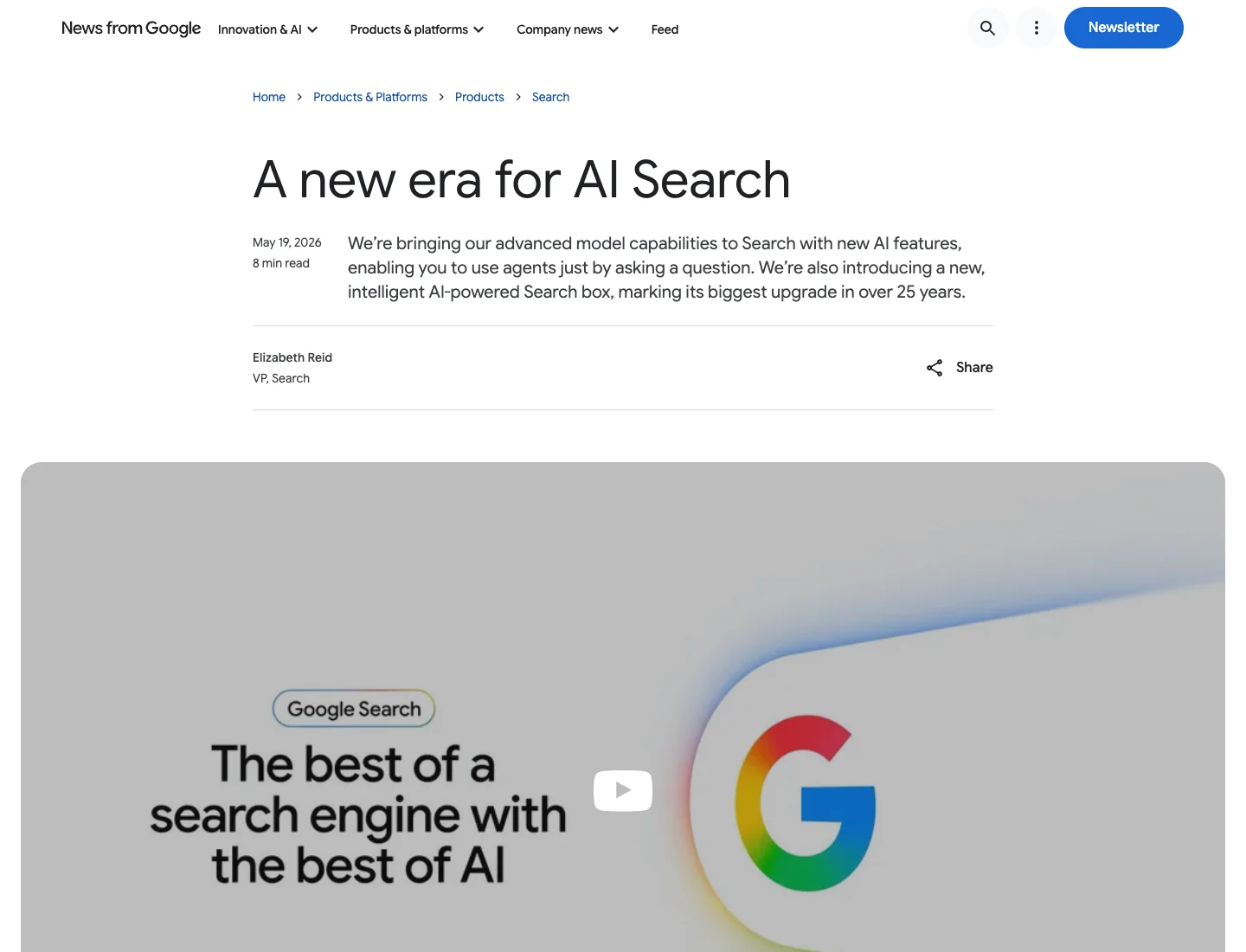
The official Google AI Search update is a useful starting point for feature context. For SEO work, do not turn that context into a promise about traffic or citations. Use it to decide which query groups deserve observation, which owned pages should supply clearer evidence, and what needs a follow-up check in Search.
Google AI Mode is most useful when your research and organic-search workflow are already connected. If the team only records a screen result without the query, source URLs, and next action, it becomes another unrepeatable observation.
Keep The Sources Checkable
An AI search answer can be a great research shortcut and still be a poor final source. Before a claim reaches a page brief, sales deck, or content update, run a short source check:
- Open the cited page and confirm the claim appears there.
- Identify whether the source is first-party, editorial reporting, research, or an unverified opinion.
- Check the date when the claim concerns an evolving product, search feature, policy, or availability.
- Save the query, answer surface, cited URL, and the owned page that should answer the question better.
- Assign a next action: monitor, update an existing source page, create a new one, or leave the finding as context only.
This is where the broader top search engines monitoring model becomes useful. It helps separate core search surfaces from experimental answer experiences. For Google-specific observations, pair the result with a tracking AI Overviews workflow instead of treating a single answer as a trend.
Turn AI Search Findings Into SEO Work
The engine you use for research is only the discovery layer. SEO work starts when you can connect a question to the source page that should support the answer, the evidence that is missing, and the person who can ship the fix.
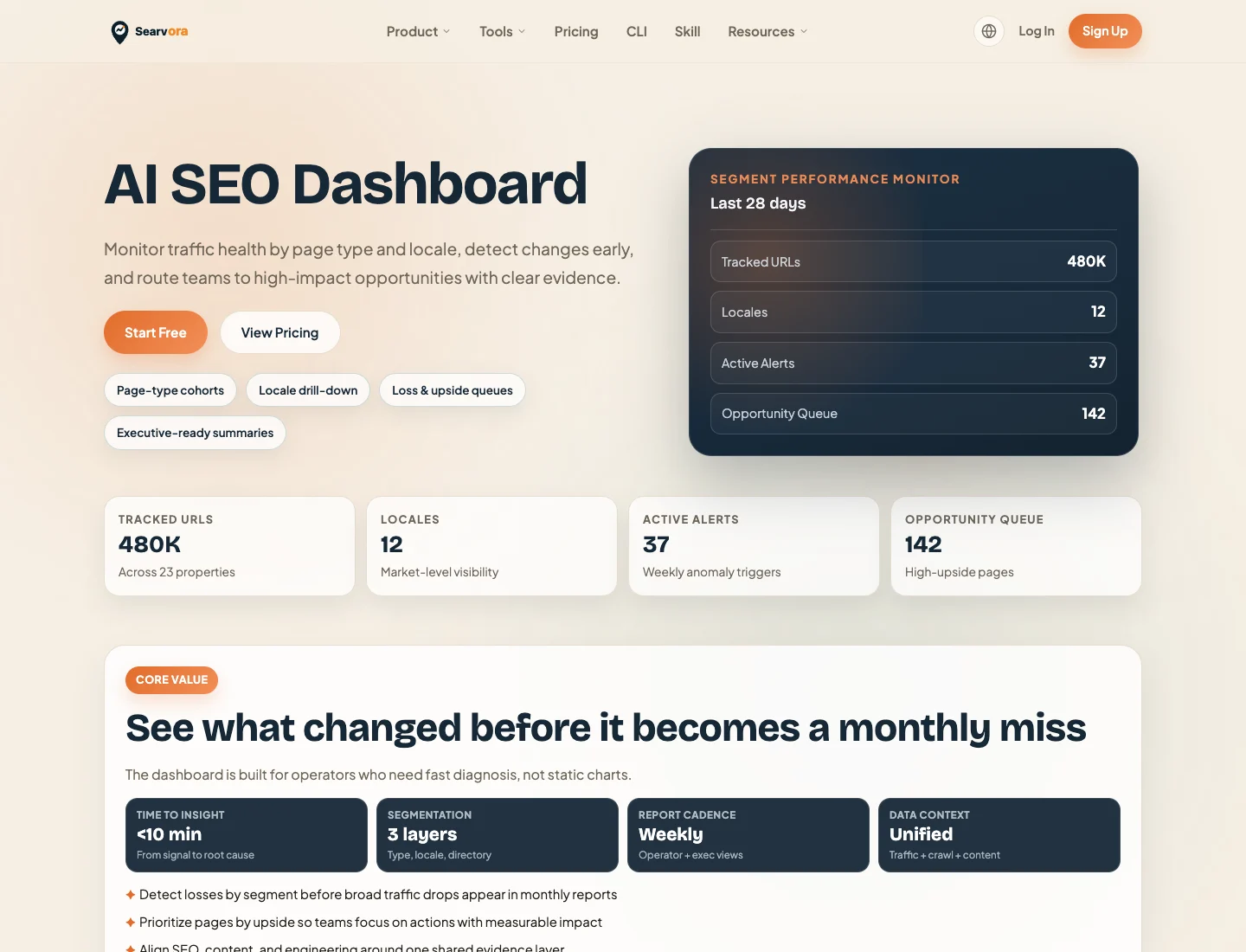
Searvora's AI SEO Dashboard fits the monitoring layer after the research pass. Its public product page describes segment-first monitoring by page type and locale, anomaly detection, opportunity queues, and cross-team handoff. That gives an SEO team a place to keep query evidence beside the pages and owners that can improve it.
Use the AI search citation audit when the research shows that another source is being surfaced where your page should be easier to understand and verify. The goal is not to chase every answer engine. It is to make the important owned pages more useful, more crawlable, and more defensible as sources.
Choose The Engine That Preserves The Evidence
Choose ChatGPT Search when conversational follow-up will sharpen the research question. Choose Perplexity when cited sources need to be visible from the first pass. Choose Google AI Mode when the work belongs in the Google Search journey and needs broader exploration.
Then apply the same discipline to all three: inspect sources, name the query, connect the finding to an owned page, and recheck the evidence after the work ships. That is how an AI search engine becomes a reliable research input rather than another untracked answer surface.