

Long-tail keyword tools help you find narrow search queries, but discovery is only the first job. A useful tool must also help you decide whether a phrase represents a distinct search task, an awkward variation of a broader topic, or an idea that belongs inside an existing page.
This roundup compares five practical discovery methods: Ahrefs Keywords Explorer, Ahrefs Site Explorer, Google Keyword Planner, Google autocomplete, and Reddit. The best choice depends on where the evidence comes from and what you need to decide next.
Compare The Five Long-tail Keyword Tools
The five options are not interchangeable. Some start from a seed topic, some start from competitor evidence, and others expose the language people use before it appears in a structured SEO database.
| Tool or method | Best for | Evidence strength | Main blind spot |
|---|---|---|---|
| Ahrefs Keywords Explorer | Expanding a seed and filtering a large keyword set | Search volume, difficulty, traffic-potential, parent-topic, and SERP context | Paid access and metrics still do not decide page type for you |
| Ahrefs Site Explorer | Finding narrow queries competitors already rank for | Competitor page and organic keyword evidence | A competitor ranking does not prove the query fits your site |
| Google Keyword Planner | Expanding commercial seed terms and rough demand ranges | Google's advertising-oriented keyword ideas and forecasts | Paid-search intent can differ from organic search intent |
| Google autocomplete | Finding specific wording and modifiers quickly | Live prediction patterns from Google Search | Predictions are not a volume ranking or a complete demand dataset |
| Learning how communities describe problems and constraints | Natural language, objections, examples, and follow-up questions | Popular discussions can be noisy, unrepresentative, or hard to size |
1. Ahrefs Keywords Explorer For Filtered Seed Expansion
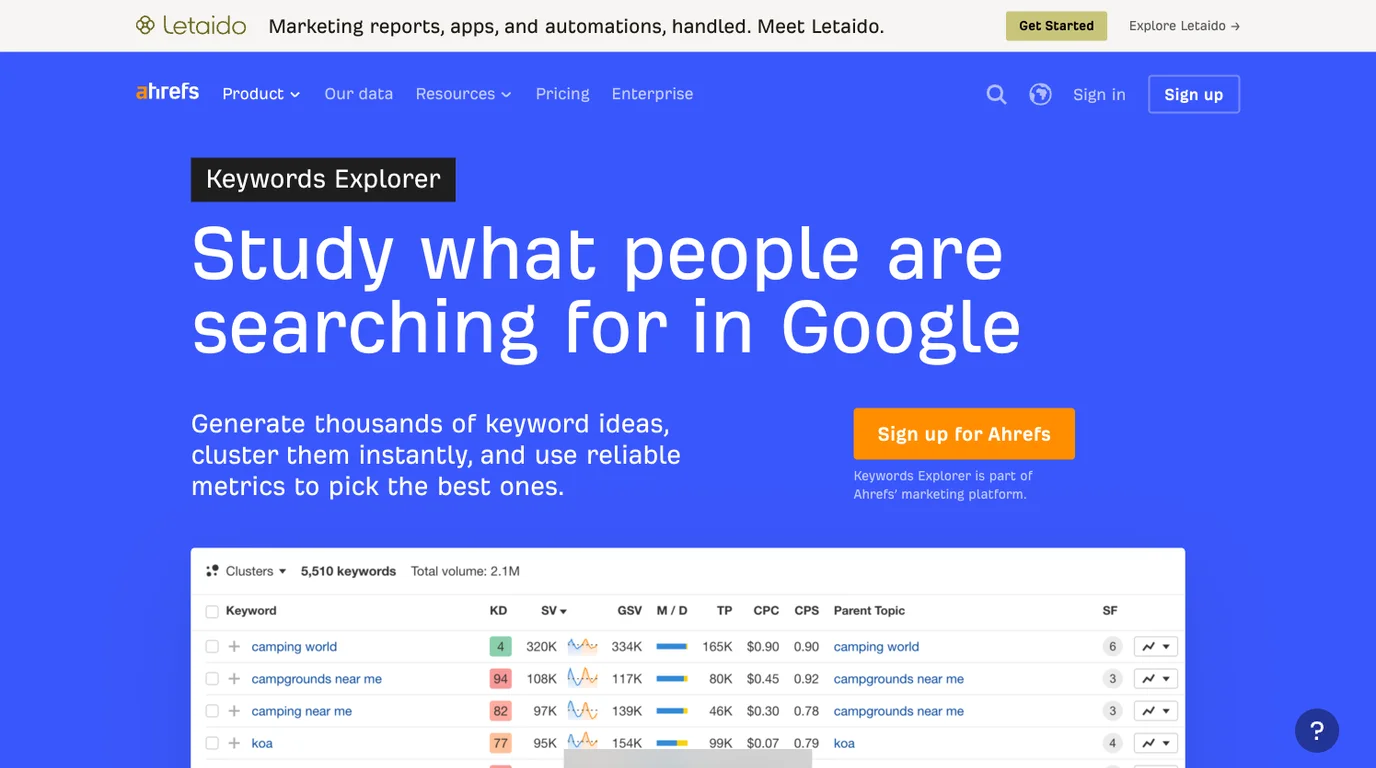
Ahrefs Keywords Explorer is the strongest option here when you already have a seed topic and need a structured list. Its public product page describes keyword generation, clustering, search-volume data, traffic potential, parent-topic analysis, SERP review, and intent support.
For long-tail research, start with a broad product, problem, or audience phrase. Then narrow the set with question modifiers, lower demand, or a specific use case. Do not stop at word count. A seven-word query can still be a difficult variation of a broad topic if the same powerful page ranks for both.
Use the tool to answer:
- Is this query family large enough to justify research?
- Does the top-ranking page earn traffic from a broader parent topic?
- Does the modifier reveal a new user job or merely new wording?
- Would one page satisfy several variations without becoming unfocused?
Best next action: keep a short list of queries whose modifiers change the task, audience, platform, or expected output.
2. Ahrefs Site Explorer For Competitor-Proven Queries
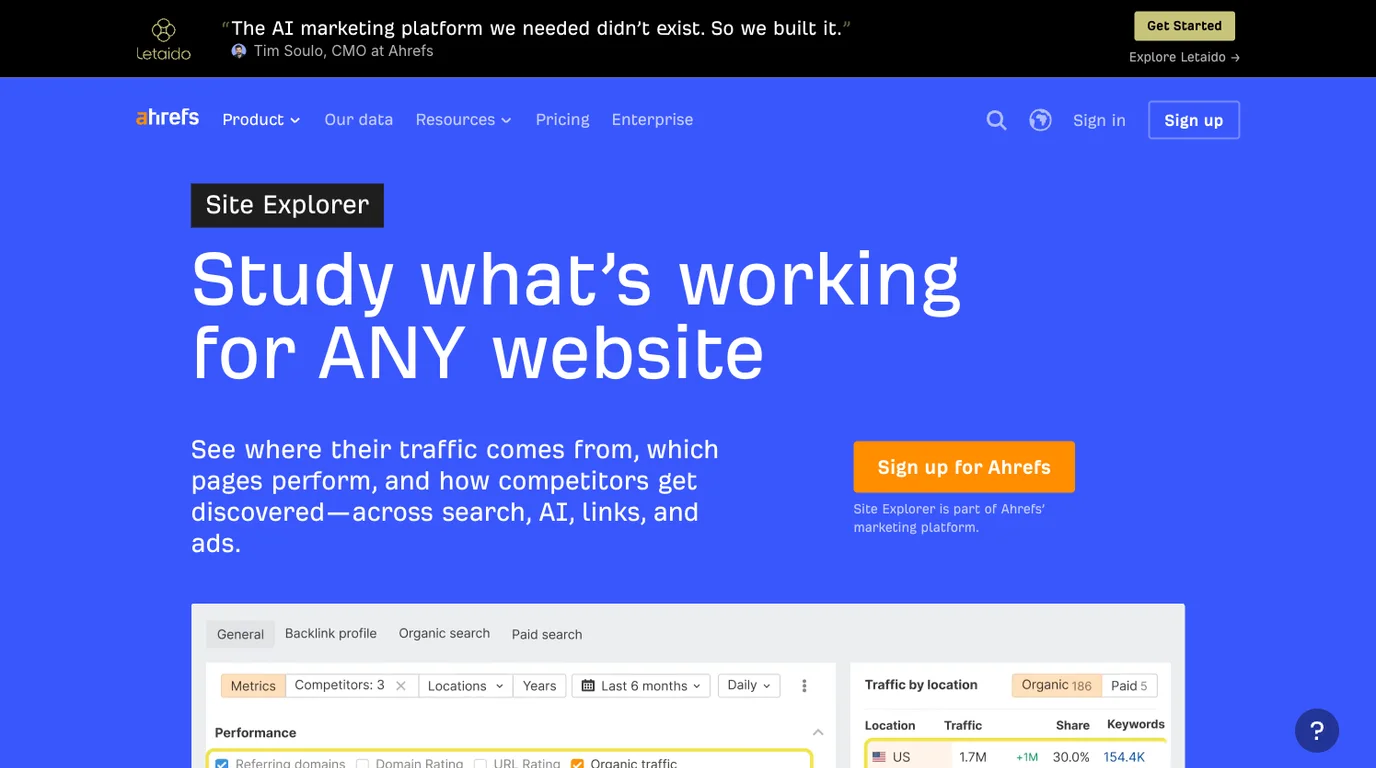
Ahrefs Site Explorer starts from a competitor rather than a seed. Its public page presents organic-search, page, link, AI-discovery, and advertising views for a website. That makes it useful when you want to see which specific queries already send traffic to competing pages.
This method is strongest when the competitor has a similar audience or content model. Filter for lower-demand queries, but review the ranking URL before treating each phrase as a separate opportunity. Ten phrases may all belong to one parent page. One specific modifier may reveal a missing comparison, support article, industry guide, or tool.
Use this evidence to ask:
| Competitor signal | Planning question |
|---|---|
| One page ranks for many narrow variations | Can one strong Searvora page serve the same family? |
| A modifier leads to a different competitor URL | Does that modifier represent a distinct user job? |
| A product page ranks instead of an article | Should Searvora build a landing page or tool rather than a blog post? |
| A weak page still earns traffic | Can Searvora add a better workflow, evidence layer, or decision table? |
Best next action: save the competitor URL with the keyword so the planner reviews the actual page type and content thesis, not only a spreadsheet row.
3. Google Keyword Planner For Commercial Variations
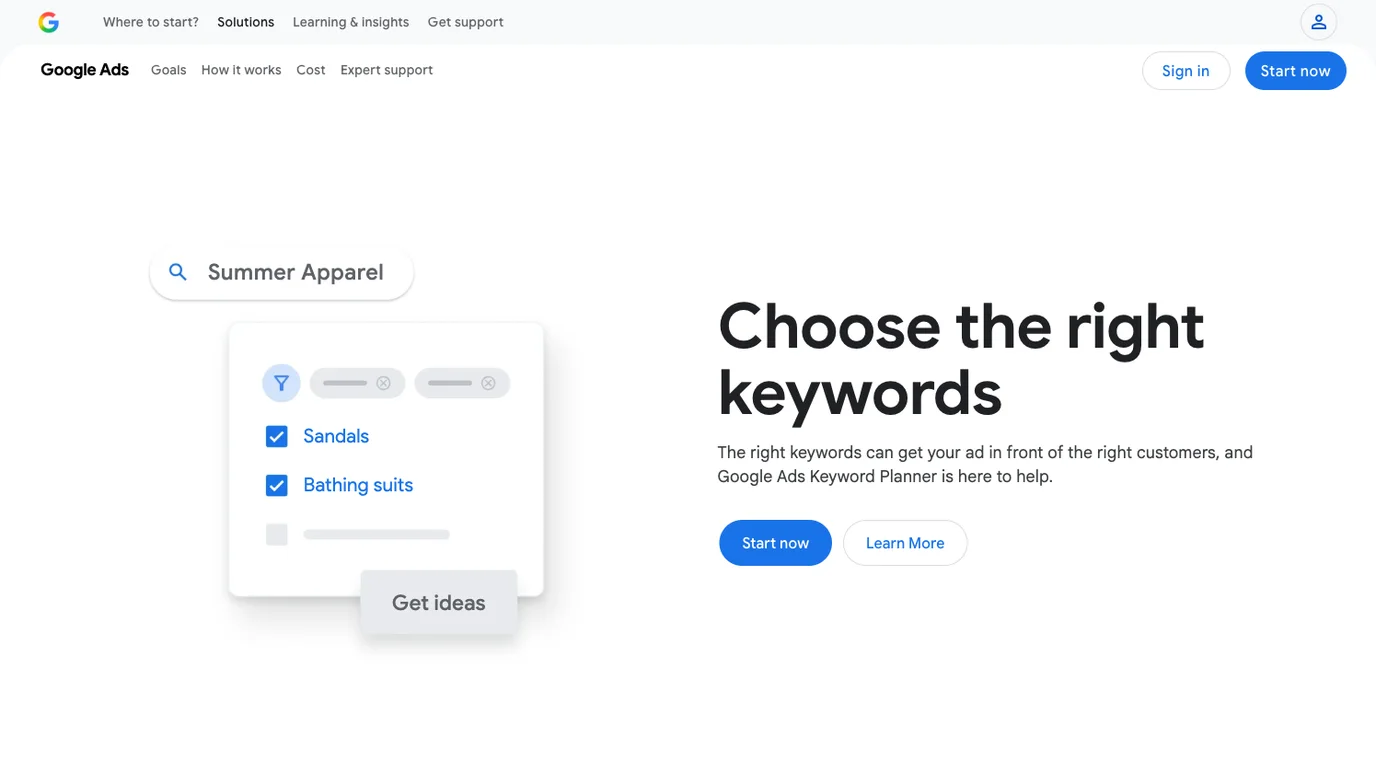
Google Keyword Planner is designed for advertising. Its public page focuses on choosing keywords, discovering new terms, and estimating expected outcomes for Google Ads.
That commercial lens is useful for long-tail SEO when the query includes a product, service, location, price, or action. It can surface variations that a purely editorial seed list misses. The limitation is equally important: advertiser demand does not tell you whether the organic result should be a collection, product page, comparison, local landing page, article, or tool.
Use Keyword Planner to expand the commercial language, then classify each candidate:
- Buy or book: likely a product, service, category, or local landing page.
- Compare or choose: likely a real comparison or roundup.
- Fix or learn: likely a how-to, support, or diagnostic article.
- Generate or calculate: likely a tool, template, or downloadable asset.
Best next action: carry the commercial modifier into the brief, but let the search task decide the organic page type.
4. Google Autocomplete For Specific Wording
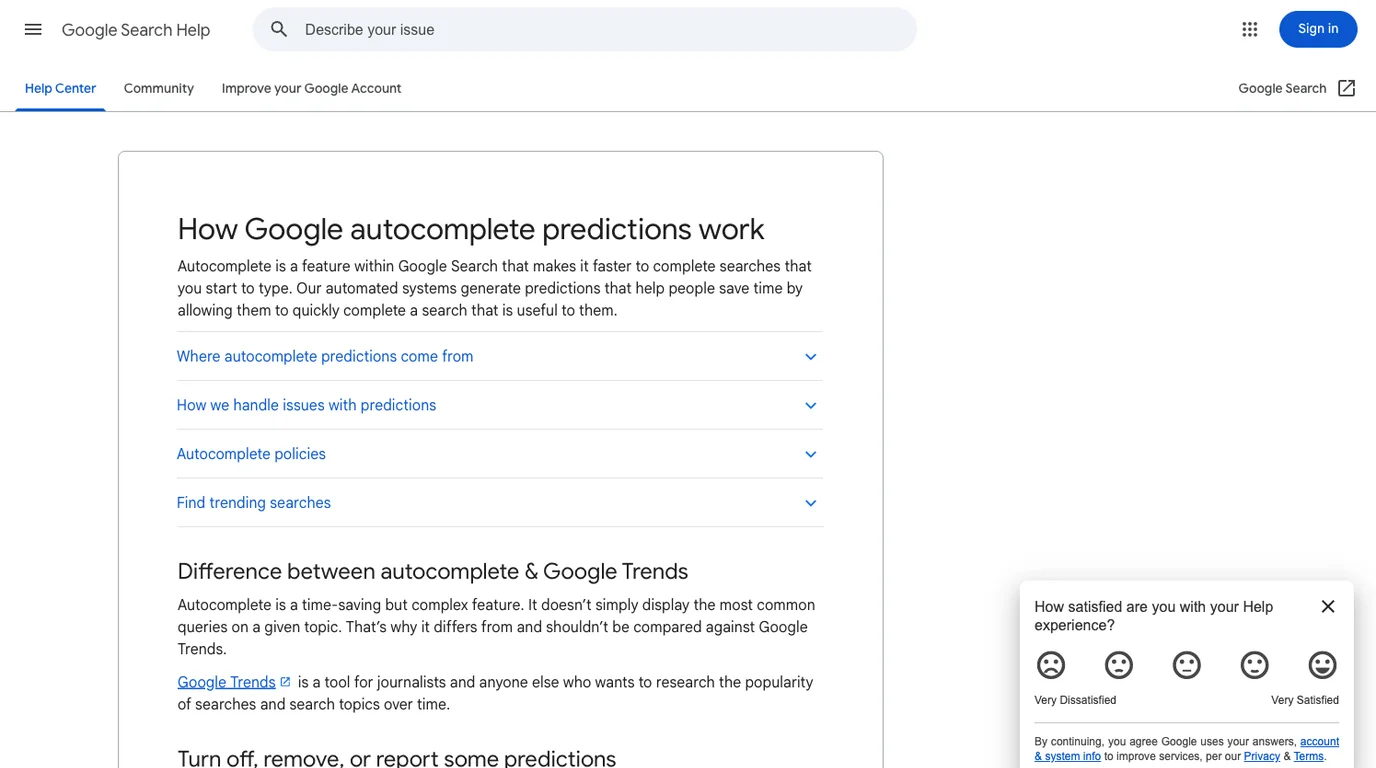
Google autocomplete is fast because it appears inside the normal search box. Google's official autocomplete documentation explains that predictions help people complete searches and come from a complex automated system. It also makes clear that autocomplete is not simply a list of the most common searches.
Use autocomplete to find the language around a seed:
- Add an audience, platform, location, product type, or problem.
- Note predictions that change the expected output.
- Repeat with verbs such as compare, fix, choose, find, audit, or automate.
- Record the wording, but verify demand and page type elsewhere.
Autocomplete is especially useful for discovering phrasing that sounds natural. It is weak as a scoring system. A prediction may be timely, personal, regional, policy-filtered, or simply too small to justify a new URL.
Best next action: treat each prediction as a hypothesis and test whether an existing page already serves the same job.
5. Reddit For Problem Language And Constraints

Reddit is not a conventional keyword database. The official Reddit company page describes a platform built around many communities and ongoing human conversation. For SEO research, that makes public discussions useful for seeing how people describe a problem, what they already tried, and which constraints change the answer.
Look for repeated combinations such as:
- task plus platform;
- problem plus failed method;
- product category plus audience;
- comparison plus budget;
- workflow plus scale;
- question plus a specific edge case.
Do not turn every thread title into a keyword. Community language is qualitative evidence. It needs a demand check, a page-type decision, and a coverage review before it becomes a brief.
Best next action: use Reddit language to improve query variants, H2s, examples, and decision criteria, then validate the opportunity with search and site evidence.
Filter Out False Long-tail Opportunities
The competitor roundup that surfaced this topic correctly separates discovery methods, but the harder decision comes after the list. A narrow phrase is not automatically a good target.
Use this filter before approving any long-tail idea:
| Check | Approve a new page when | Route elsewhere when |
|---|---|---|
| User job | The query asks for a distinct decision or task | It is only a wording variation |
| Page type | The expected asset differs from existing coverage | The current URL already has the right role |
| Parent topic | The query needs focused depth the parent cannot provide | One parent page can answer it cleanly |
| Information gain | You can add evidence, workflow detail, or a sharper framework | You would repeat the same outline |
| Cannibalization | No URL owns the same keyword, type, and job | An existing URL already serves all three |
| Validation | The page can be linked, indexed, measured, and maintained | The team cannot support the asset after launch |
The companion long-tail keyword planning workflow explains how to route a specific query into a page, section, update, or no action. If the tool list itself is the decision, compare it with the broader free keyword research tools roundup before creating another overlapping list.
Turn The Shortlist Into Page Decisions
A research session should end with decisions, not exports. Use this sequence:
- Collect ideas from one or two sources.
- Group phrases by user job rather than shared words.
- Identify the best page type for each group.
- Match each group to the closest existing Searvora URL.
- Apply the same-keyword, same-page-type, same-user-job test.
- Define the information gain for every proposed new page.
- Assign a primary CTA, internal links, evidence, visuals, and validation step.
- Approve only the ideas that still have a distinct role.
When overlap is unclear, use the keyword cannibalization workflow before adding another URL. The goal is not to create the largest long-tail queue. It is to identify the smallest set of pages that can serve the search tasks well.
Where Searvora Fits
Long-tail tools produce signals. Searvora AI SEO Consultant is the decision layer for turning those signals into an action queue.
Use the AI SEO consultant after research to classify each opportunity as create, refresh, merge, expand, defer, or monitor. The product page positions it around turning noisy SEO signals into clear priorities, fix plans, and execution-ready recommendations.
Long-tail Keyword Tool Approval Checklist
Before a discovered phrase enters production, confirm:
- Which tool or source produced it?
- What user job does the phrase represent?
- Is it genuinely narrow, or an unpopular wording of a broad topic?
- Should the response be an article, landing page, tool, hub, comparison, section, or update?
- Which existing URL is closest?
- Is there same-keyword, same-page-type, same-user-job overlap?
- What information gain makes a new page useful?
- Which public sources, screenshots, examples, or product facts are required?
- Where will the page receive internal links?
- How will the team validate crawl access, indexability, query fit, and performance?
The best long-tail keyword tools are the ones that improve the next decision. Use them to find specific language and proven query patterns, then apply a strict approval workflow so only distinct, supportable pages reach the publishing queue.