

To monitor AI bots for SEO, start with server logs, identify the crawler user agents you can verify, compare their requests with robots and indexability signals, then decide whether the right action is to allow, fix, reduce, or simply watch. The point is not to celebrate every AI crawler hit. The point is to know whether answer systems can reach the source pages you actually want them to understand.
The Screaming Frog tutorial that surfaced this opportunity proves the topic is no longer theoretical. Searvora's information gain is the operating workflow: connect log evidence to crawl eligibility, page value, owner handoff, and rechecks instead of stopping at a bot-name report.
Start With A Verified Bot Registry
Do not build the report from a random list of AI crawler names. Start with a small registry that your team can maintain, then confirm the patterns in logs before you make policy changes.
Use official public documentation as the first registry source. OpenAI documents separate crawler identities for search, training, ads validation, and user-triggered actions in its crawler overview. Anthropic documents ClaudeBot, Claude-User, and Claude-SearchBot in its site-owner crawler guidance. Perplexity explains PerplexityBot behavior in its robots.txt help page.
Keep the registry operational:
| Registry field | Why it matters | Review rule |
|---|---|---|
| User-agent pattern | Separates known AI crawlers from generic scrapers and browser-like traffic | Verify against current official docs before changing robots rules |
| Bot purpose | Search, training, user-triggered fetch, preview, or unknown | Do not treat every bot as an AI search visibility signal |
| Robots policy | Allowed, disallowed, throttled, or watched | Make the policy explicit per bot, not only site-wide |
| Important paths | Pages, templates, or directories that should be reachable | Compare bot activity with the source pages you want cited |
| Owner | SEO, platform, security, legal, or content | Route policy decisions to the team that can approve them |
This registry should be boring and versioned. If a crawler changes behavior, the report should show when the rule changed and which page groups were affected.
Separate Requests From Crawl Eligibility
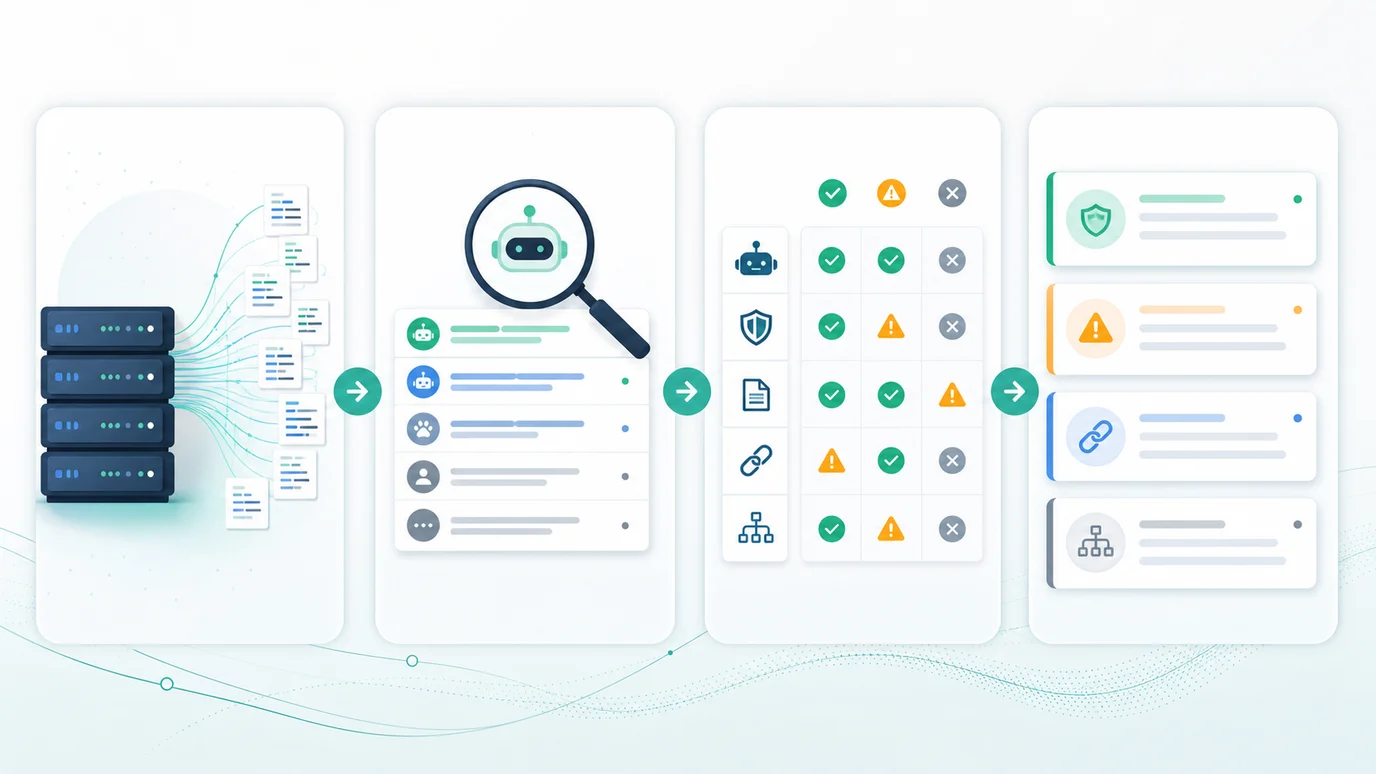
A log request tells you that something reached the server. It does not prove that the page is eligible for search, useful for AI answers, or safe to leave open. Pair every AI bot request with page-level eligibility.
Check these signals before deciding:
| Signal | What to compare | Bad interpretation to avoid |
|---|---|---|
| Status code | Did important pages return 200, redirect cleanly, or fail? | Counting 404 or 5xx hits as useful AI visibility |
| Robots access | Did robots.txt allow the bot to fetch the path? | Assuming a blocked page can still send a full content signal |
| Canonical | Does the requested URL point to itself or the intended canonical? | Improving content on a URL that consolidates elsewhere |
| Sitemap presence | Is the page included in a clean sitemap or sitemap index? | Treating bot hits on orphan URLs as strategic demand |
| Internal links | Can crawlers discover the page through useful paths? | Relying on a one-off bot hit with no internal support |
| Page value | Does the URL serve a source-page, product, article, or support job? | Optimizing low-value parameters because they get requests |
Google's robots.txt specification guidance is useful here because robots behavior is technical, not just editorial. If robots rules, redirects, and server errors conflict, bot monitoring can mislead the team.
Read Logs As A Decision Table
The useful report is not "AI bots visited 2,000 URLs." The useful report is "these bot requests expose a decision we should make."
Use this decision table:
| Log pattern | First diagnosis | Better next action |
|---|---|---|
| AI crawler requests important source pages and receives 200 responses | Access is working | Watch citation and AI visibility evidence before rewriting content |
| AI crawler requests high-value pages but gets blocked, redirected, or served thin content | Technical access issue | Fix robots, status, canonical, rendering, or source-page clarity |
| AI crawler spends time on faceted, search, cart, internal, or duplicate paths | Crawl waste | Tighten internal links, canonicals, robots policy, or parameter handling |
| AI crawler never requests the pages you want cited | Discovery gap | Inspect sitemap, internal links, orphan pages, and page prominence |
| Unknown browser-like traffic hits many URLs aggressively | Trust and security risk | Validate IPs, rate behavior, and edge logs before calling it an AI search bot |
Pair the log view with the AI visibility workflow. Logs tell you what crawlers requested. AI visibility checks tell you whether source pages appear in answers, citations, or brand mentions.
Decide What To Allow, Fix, Reduce, Or Watch
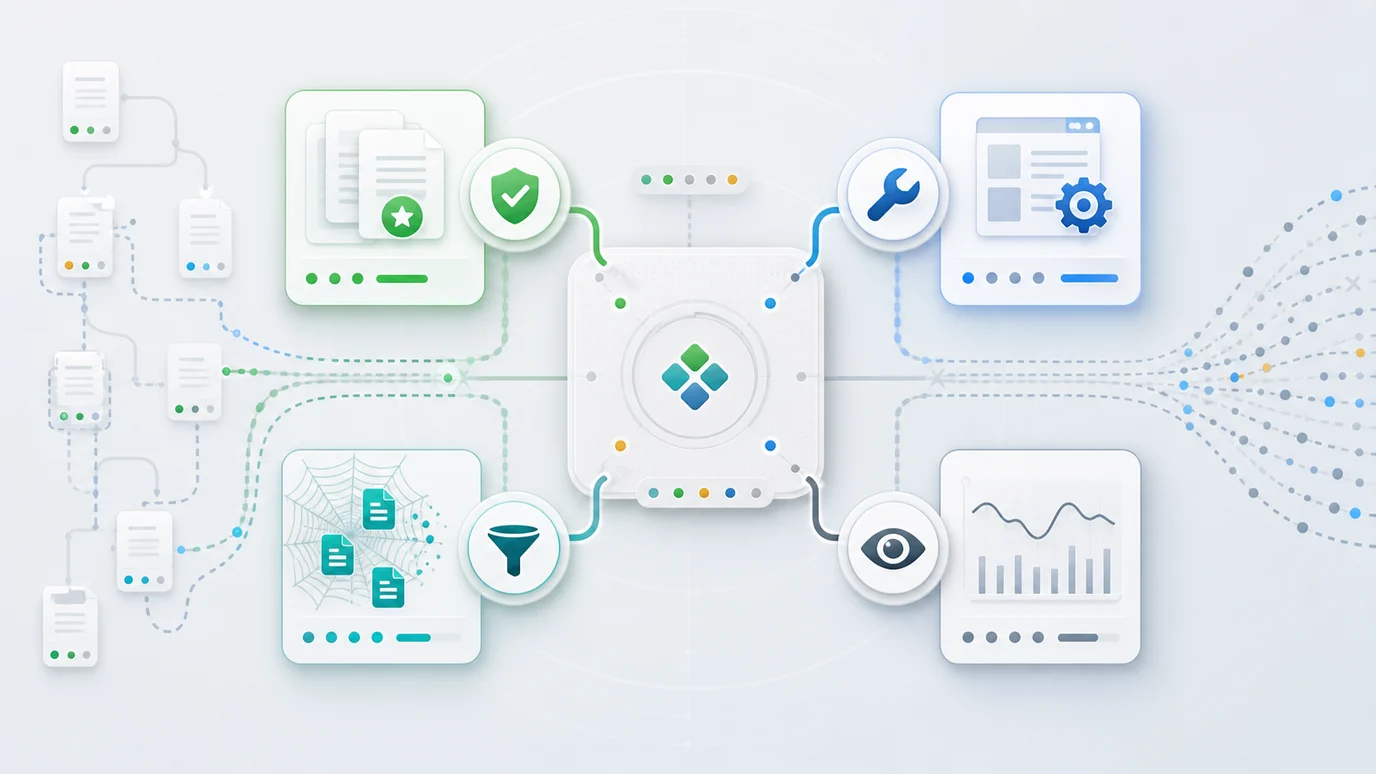
AI bot monitoring becomes useful when each pattern lands in one of four buckets.
| Bucket | Use it when | Example action |
|---|---|---|
| Allow | The bot is documented, the page group is valuable, and access supports search or answer visibility goals | Keep access open and monitor source-page performance |
| Fix | The right bot reaches the wrong technical state | Repair blocked pages, broken redirects, missing canonicals, or stale sitemaps |
| Reduce | Bots consume crawl attention on low-value patterns | Limit low-value paths, remove noisy internal links, or consolidate templates |
| Watch | The signal is too new, too small, or not tied to a valuable page group | Keep it in a weekly review without shipping a change yet |
This is where the decision can touch legal, brand, security, SEO, and engineering at once. Do not let a crawler report become a stealth policy change. If you want some AI systems to access source pages while blocking training or low-value scraping, document the policy and test it on representative URLs.
The robots.txt workflow is the companion for access policy. The AI traffic in GA4 workflow is the companion after visits appear. Logs sit between those two layers: they show access before traffic and citations can be interpreted.
Where Searvora Fits
Searvora's SEO spider crawler is the primary product fit when AI bot monitoring needs to become a technical SEO fix queue. The product page positions the crawler around crawl discovery, indexability, architecture, rendering risk, issue grouping, and owner-ready tasks. Those are the checks a team needs after logs reveal a crawler pattern.
Use Searvora to connect the layers:
| Layer | What it answers | Searvora output |
|---|---|---|
| Server logs | Which bots requested which URLs? | Bot activity segments to review |
| Robots and edge rules | Which bots are allowed or blocked? | Access policy checks by path group |
| Crawl diagnostics | Are requested pages indexable, canonical, linked, and in sitemaps? | Technical fix queue with validation criteria |
| AI visibility checks | Are source pages being cited or mentioned? | Follow-up monitoring for answer-surface impact |
| Owner handoff | Who can ship the fix? | SEO, engineering, content, or platform tasks |
Run This Weekly Monitoring Checklist
Use this checklist for important markets, high-value source pages, and sites with frequent content or platform releases.
- Export or query server logs for known AI crawler user-agent patterns.
- Verify user-agent names against current official documentation before changing policy.
- Group requests by page type, directory, template, locale, and status code.
- Compare important URLs with robots access, canonical state, sitemap inclusion, and internal links.
- Split findings into allow, fix, reduce, and watch.
- Assign only the fixes that change access, crawl efficiency, source-page quality, or measurement confidence.
- Re-crawl affected templates after changes ship.
- Review AI visibility and referral evidence separately before claiming impact.
- Update the bot registry when documentation, logs, or edge rules change.
Monitoring AI bots is not a one-time report. It is a control loop for technical SEO and AI search readiness. Keep the registry current, validate the pages that matter, reduce crawler noise, and turn access evidence into changes your team can prove.