

Multilingual SEO is the work of making the right page useful and discoverable for the language a searcher actually uses. It is not a translation task handed off after the information architecture is finished. A useful multilingual SEO program decides which language demand deserves a page, whether a country changes the offer, which URLs are true equivalents, and how the team will prove that the live cluster still works.
That makes multilingual SEO related to international SEO, but not identical to it. International SEO is the broader market architecture. Multilingual SEO is the language-led operating decision inside that architecture: a Spanish-speaking reader in the United States, Spain, and Mexico may share some language demand while needing different offers, examples, or conversion paths. Start with the language and the user task, then decide where regional variations actually matter.
Separate Language Demand From Market Offer
Teams often turn every new language into a new country site, or assume that one language page can serve every market. Both shortcuts create fragile content clusters. The first creates pages with no clear demand; the second hides country-specific product, legal, inventory, or terminology differences.
Use two inventories before you choose URLs:
| Input | Question to answer | Owner | Result |
|---|---|---|---|
| Language demand | What language does the searcher use for this task? | SEO and content | A language-led query and content brief |
| Market offer | Does the country or region change what the user can buy, receive, or do? | Product, sales, legal, or ecommerce | A regional variation requirement |
| Page job | Is the user trying to learn, compare, buy, troubleshoot, or get support? | SEO and product | A clear page type and conversion path |
| URL ownership | Which current or planned URL should answer that task? | SEO and engineering | One canonical owner per page job |
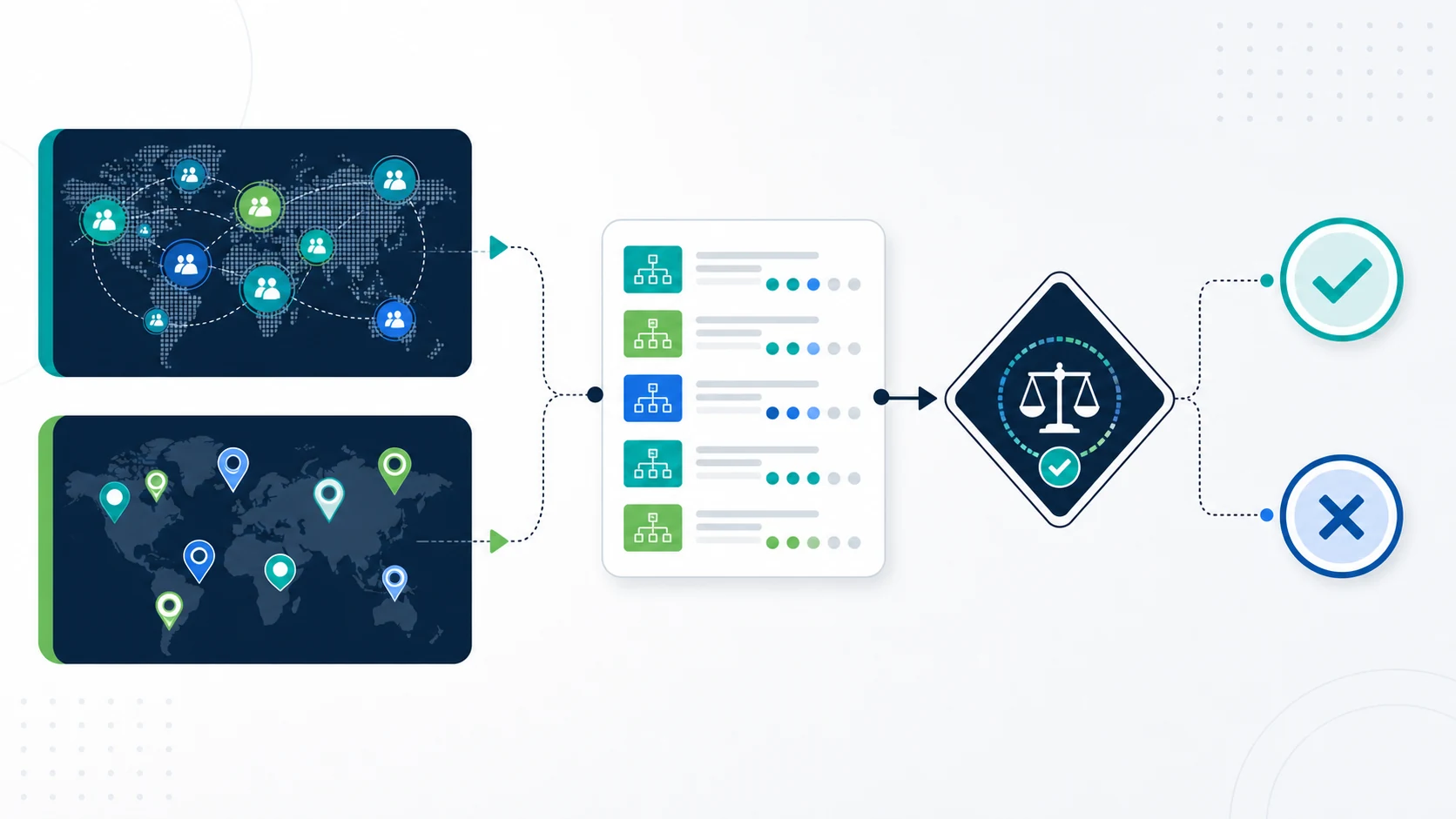
A language can span several markets. A market can also need several languages. Keep those as separate facts in the plan. That lets a team choose a broad Spanish language page when the offer is truly shared, a country-specific Spanish page when it is not, or a different page entirely when the searcher task changes.
The broader International SEO workflow is the right next read when the team still needs to choose country folders, language-region routes, or market-wide URL architecture. This article focuses on the narrower language-market decision that must happen before those routes become a permanent content burden.
Decide Whether Localized Pages Are True Equivalents
Hreflang is a way to describe localized variations; it is not a way to make unrelated pages equivalent. Google's localized versions documentation says that language or region variations should be identified explicitly, with every language version listing itself and the other eligible variants.
Before putting pages into one alternate cluster, test the actual reader job:
| Page pair | Treat as equivalents when | Keep separate when |
|---|---|---|
| English and German product pages | The product, task, eligibility, and next action are materially the same | Pricing, availability, regulation, or product scope changes the decision |
| Spanish help pages for several countries | The troubleshooting task and resolution are the same | Local support policy, product version, or legal requirement changes the answer |
| Localized blog guides | The guide explains the same core task with adapted examples | The market needs a different query, intent, or evidence set |
| Country landing pages | The offer is a localized form of the same solution | The regional page is a different service, audience, or conversion path |
When the job changes, make a separate content or landing-page decision instead of forcing an alternate relationship. When the job stays the same, validate the cluster with the hreflang tags workflow and Google's canonicalization guidance. The point is not to add more tags; it is to make the page relationship unambiguous for searchers, editors, and crawlers.
Build a Language-Market Page Inventory
Once a page is eligible, capture the details that prevent template drift. A spreadsheet can start the work, but the final inventory needs owners and a validation path, not just a list of locales.
| Page group | Language | Market rule | Equivalent to | Release owner | Validation evidence |
|---|---|---|---|---|---|
| Product or service page | Language used in the target query | Split only if the offer differs by market | Same product task in another language | Product and engineering | Final URL, canonical, alternate set, localized CTA |
| Category or collection | Shopper language | Split when assortment, shipping, or category demand differs | Same category task | Ecommerce and SEO | Crawl depth, indexability, internal links, product availability |
| Guide or blog post | Informational query language | Split when local examples change the reader task | Same learning task | Content and localization | Title, H1, examples, internal links, sources |
| Support content | Language of the problem | Split when policy or product behavior differs | Same resolution task | Support and product | Accurate steps, final URLs, locale navigation |
The inventory should answer a practical question for every row: if this language-market page disappears, which searcher task stops being served? If the answer is vague, the page probably needs a stronger reason to exist before the team translates, templates, or links it.
For ecommerce teams, the international ecommerce audit shows how this inventory extends across products, collections, facets, and buying guides. The same language-market logic applies to SaaS pricing, documentation, and comparison pages.
Turn the Inventory Into Launch Decisions
The inventory creates a repeatable decision path. Use it before a localization launch, migration, CMS rewrite, or content refresh.
- Start with the language query and write the reader task in one sentence.
- Check whether the target market changes the offer, proof, eligibility, or next step.
- Compare the proposed page with the closest existing URL. Keep one owner when the core keyword, page type, and user job are the same.
- Mark the page as an alternate only when the job remains equivalent after localization.
- Assign a URL, template, content, and validation owner before release.
- Add the page to the crawl and monitoring scope so the team can verify the live result later.
Here is the simple if/then version:
| If this is true | Then do this |
|---|---|
| The language changes but the product and user task do not | Create a true localized equivalent and plan the alternate cluster |
| The country changes the offer or conversion path | Create a market-specific page decision before adding localization markup |
| The query changes from research to support, comparison, or purchase | Use a different page type instead of a translated copy of the original |
| The current page already owns the same task | Improve, localize, or link to that owner instead of adding a competing URL |
Validate the Release as One System
Multilingual SEO fails when a team validates language, URLs, canonicals, alternates, and sitemaps in separate handoffs. Treat them as one release system. Google's sitemap guidance is useful here because sitemaps only help when the URLs they expose are the intended crawlable, canonical pages.

Run this loop after a launch and after any template or routing change:
| Check | Pass condition | Fix path when it fails |
|---|---|---|
| Crawl access | Important localized URLs return their final status and remain indexable | Resolve redirects, blocked pages, errors, and incorrect noindex rules |
| Canonical ownership | Each page that should rank has the intended canonical target | Repair self-canonicals or intentionally consolidate the duplicate set |
| Alternate relationship | Every eligible variation lists a consistent, reciprocal set | Rebuild the cluster from the inventory and remove non-equivalent pages |
| Sitemap coverage | Final canonical URLs appear where the sitemap strategy expects them | Update the generator or remove URLs that should not be indexed |
| Rendered language and page job | Title, H1, body examples, links, and CTA match the target task | Route the issue to content, localization, product, or engineering |
| Market monitoring | The right language-market pages earn the right visibility signals | Review page fit, crawl health, internal links, and search intent before rewriting |
This is where a crawl-backed handoff becomes more useful than a generic localization checklist. Group the findings by route template, market, severity, and owner; then recrawl the changed URLs rather than assuming the CMS or deploy behaved as intended.
Monitor Visibility by Language and Market
The first crawl tells you whether the release is eligible to perform. Monitoring tells you whether the page is actually serving the intended audience. Keep language and market dimensions separate in reporting so a strong country result does not hide a weak language experience, or vice versa.
| Signal | What it can reveal | Next action |
|---|---|---|
| Impressions and clicks by locale path | Whether the intended language pages are earning demand | Check query wording, indexability, and internal links |
| Indexed URL count by language-market group | Whether the inventory and sitemap still agree | Investigate canonical, redirect, and noindex drift |
| Crawl findings by template | Whether one CMS or routing change broke many locales | Assign the template owner and validate the fix at scale |
| Search query mix by locale | Whether the localized page still answers the local task | Refresh examples, headings, and page type where the intent moved |
| Conversion quality by market | Whether the page routes to a useful local next step | Revisit the offer, CTA, availability, or market-specific page job |
Avoid treating a translated page as a finished asset. Its quality depends on the same things as any other SEO page: a clear task, useful evidence, crawlable output, coherent internal links, and a monitoring loop that gives the team a reason to act.
Turn Multilingual Checks Into a Fix Queue
The public SEO Spider Crawler route is a natural fit when a team needs to turn a multilingual release into inspectable URL evidence. Use the crawl to group status, canonical, indexability, metadata, sitemap, and alternate findings by template and owner. That keeps the multilingual program grounded in final URLs rather than a planning document that cannot prove the live result.
Multilingual SEO Operating Checklist
Before approving the next language-market release, confirm that the team can answer all of these questions:
- Which language query and reader task does this page serve?
- Does the target market change the offer, eligibility, proof, or conversion path?
- Is the proposed page a true equivalent or a different page job?
- Which existing URL, if any, already owns that job?
- Who owns the route, template, localized copy, and final validation?
- Are the page status, canonical, alternate set, and sitemap coverage aligned?
- Do the title, H1, examples, internal links, and CTA fit the target language-market task?
- Which language and market signals will tell the team whether the release worked?
- What is the recrawl and monitoring owner after the change ships?
Multilingual SEO becomes durable when language demand, market differences, page ownership, and technical validation stay in the same workflow. Build the inventory before the translation queue, publish only pages with a distinct job, and use crawl evidence to keep the system honest.