

If the question is does investing in pr help with ai search visibility, the practical answer is yes, but only when PR creates source evidence that answer systems can reuse. Earned media can help a brand become more visible, but it does not replace crawlable product pages, clear entity signals, comparison proof, or a measurement loop.
The useful budget question is not "Should we buy PR or SEO?" It is "Which public sources would make an AI answer more confident, and which owned pages still need to explain the brand better?"
Treat PR As Source Evidence
PR can support AI search visibility because answer systems look for reliable public evidence. A strong article, analyst quote, partner page, expert interview, or category mention can help connect your brand to a problem, market, audience, or product claim.
That is different from assuming PR automatically creates rankings. Search Engine Land has covered why PR is becoming more important for AI-search visibility, and Google's AI features guidance still keeps eligibility tied to useful, accessible pages. Both ideas can be true at the same time: third-party evidence matters, and owned pages still need to be crawlable and clear.
Use this split before approving budget:
| Evidence layer | PR can help when | PR cannot fix when |
|---|---|---|
| Entity clarity | Coverage names the brand, category, audience, and use case consistently | The website itself is vague or contradictory |
| Source diversity | Trusted publications, partners, or industry sites support the same claims | All proof sits on social posts, thin syndication, or paid placements |
| Citation quality | Articles explain why the brand belongs in a recommendation set | Coverage mentions the company without useful context |
| Query fit | The coverage maps to buyer questions, category comparisons, or trust concerns | The target query is really a product, tool, or technical page problem |
| Validation | Visibility can be checked by query group, source URL, and page cohort | The team only has a screenshot and no repeatable measurement |
Run A PR Investment Test
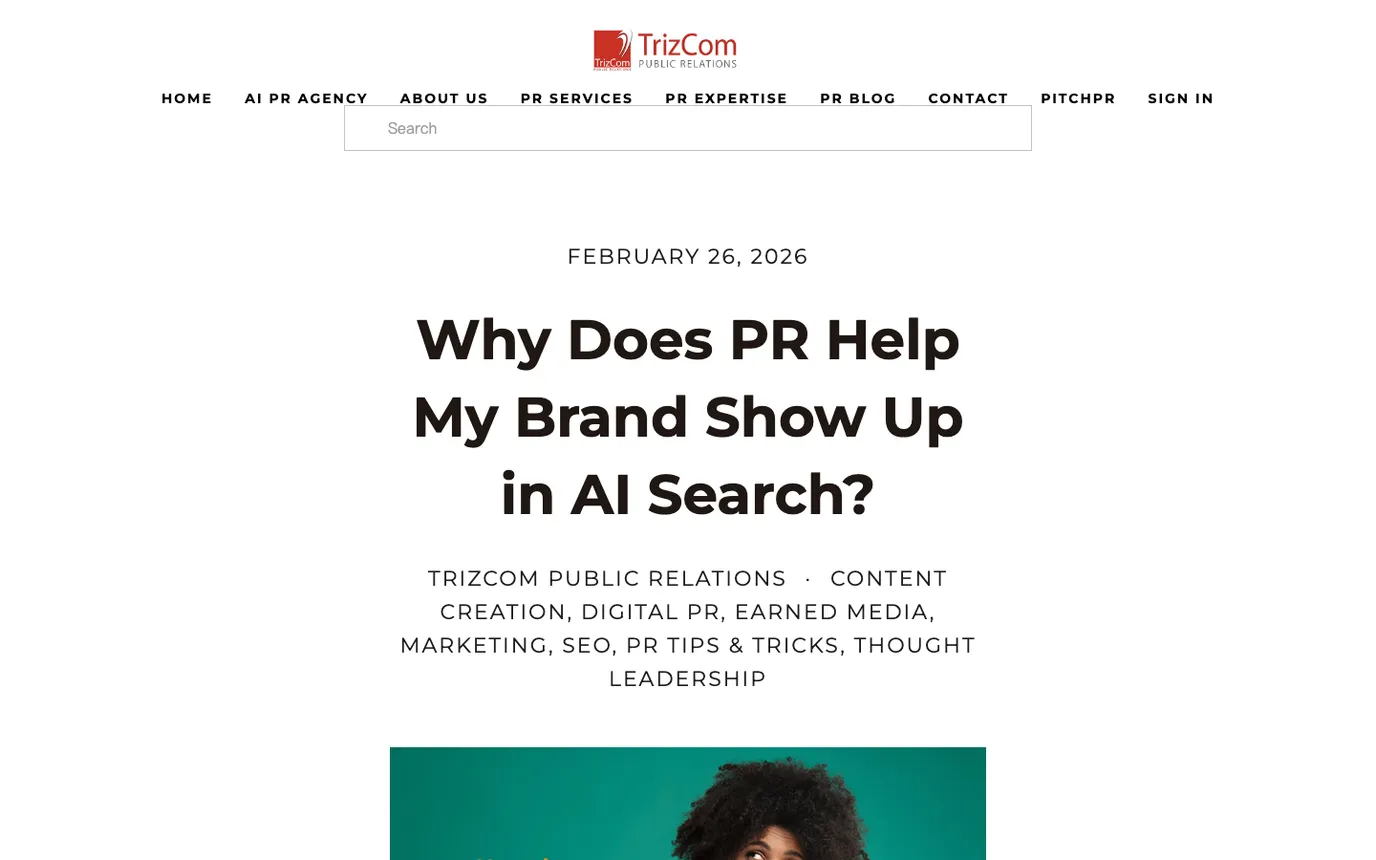
Before buying a campaign, turn the idea into a test. Pick the query group, name the source gap, decide which public evidence would help, then define the owned-page work that must ship beside it. Public PR pages in the current SERP, such as TrizCom's article on why PR helps brands show up in AI search, show that this is a real buyer question rather than a purely internal SEO theory.
Use this table:
| Question | Good evidence | Bad evidence |
|---|---|---|
| Which answer should change? | A category, comparison, branded trust, or buyer problem query group | A generic "more visibility" goal |
| What is missing today? | No credible third-party source, weak category proof, or competitor-only citations | A vague belief that AI prefers PR |
| Which source would help? | Earned article, expert mention, public partner page, research asset, or review evidence | A low-context press release copied across sites |
| Which owned page supports it? | Product, comparison, case, glossary, or category page with matching claims | No page, or a page that hides the claim in thin copy |
| How will we validate? | Repeatable AI-answer checks, cited-source logs, Search Console movement, and conversion review | A one-time prompt screenshot |
This is where the brand mentions in AI answers workflow helps. It keeps entity mentions, citations, and owned-page evidence separate, so PR does not become a vanity metric.
Compare PR Against Owned-Page Fixes
PR is not always the first fix. Sometimes the search result already has enough third-party material, but your owned pages do not make the same claim clearly. In that case, another article from a publisher may not solve the problem.
Use this decision map:
| If the AI answer problem is... | Spend first on... | Why |
|---|---|---|
| The brand is not mentioned anywhere | Entity and source evidence, including PR | Answer systems may need more public proof |
| The brand is mentioned but not cited | Owned source pages and internal links | The answer may know the brand but lack a strong URL |
| Competitors are cited for a comparison | Comparison page, proof assets, and selective PR | You need both owned framing and third-party support |
| A category claim is unsupported | Research, expert commentary, or public case evidence | PR can add evidence if the claim is real |
| The page is blocked, thin, or canonicalized away | Technical SEO and source-page fixes | PR cannot fix crawl eligibility |
| Reviews or reputation are the gap | Review source quality and owned trust pages | PR may help, but review evidence may matter more |
The AI search citation audit is the child workflow when the main problem is source ownership. The AI visibility evidence loop is the parent workflow when the team needs a repeatable visibility ledger.
Know When PR Deserves Budget
PR deserves budget when it can create evidence that no owned-page edit can create alone. That usually happens in four cases.
First, the query needs independent authority. If buyers ask "best tools for regulated ecommerce SEO" or "trusted AI search visibility platforms," an owned product page is useful, but outside validation can matter.
Second, the brand needs entity reinforcement. If answer systems describe competitors but not your brand, credible third-party mentions can help connect the company to the category and audience.
Third, the team has a real story. Research, benchmarks, public data, expert commentary, partner proof, and customer-visible outcomes are stronger than generic announcements.
Fourth, the owned pages are already ready. PR works better when the publication, partner page, or expert quote points back to pages that explain the offer clearly.
Avoid PR as the first move when:
- The target query is tool-led and needs a product or utility page.
- The site has crawl, canonical, noindex, sitemap, or rendering issues.
- The owned page does not explain the category, product, or audience.
- The campaign would create thin syndicated mentions with no useful context.
- The team cannot recheck the same query group after the work ships.
Where Searvora Fits
Searvora AI SEO Dashboard fits the validation layer. Use the AI SEO dashboard to keep query groups, source URLs, cited pages, competitors, and action owners in one review queue. That lets the team see whether PR-created evidence actually changes the pages and answer surfaces that matter.
The dashboard is not a PR replacement. It is the place to decide whether a PR signal became useful SEO evidence, whether the owned page still needs work, and whether the visibility shift is repeatable enough to justify more spend.
Recheck Before Renewing Spend
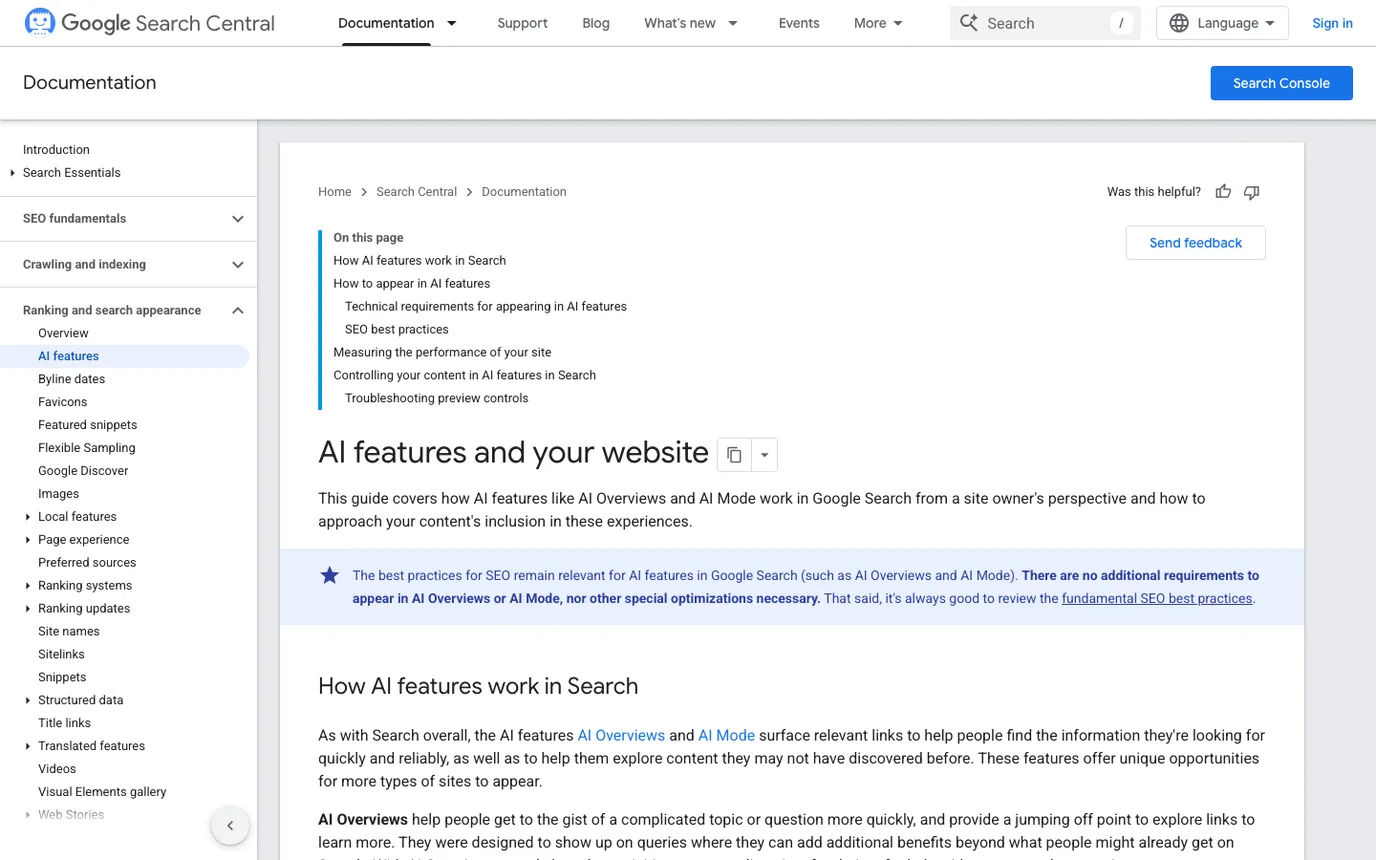
PR for AI search visibility should end with a recheck, not a press clipping. Record the same query group before and after the work, then compare sources, owned-page citations, and business relevance. Google's AI features guidance is a useful reminder that AI search inclusion still depends on useful, accessible pages rather than a separate shortcut.
Use this review sequence:
- Save the target query group, market, and expected source page.
- Record whether AI answers mention the brand, cite the brand, cite competitors, or cite neutral publishers.
- Ship the PR asset and the matching owned-page improvement.
- Recheck the same query group after a meaningful window.
- Compare cited sources, Search Console movement, branded search, and conversion paths.
- Decide whether to renew PR, improve owned pages, add comparison proof, fix crawl access, or stop.
PR can help AI search visibility when it gives answer systems better public evidence. It is a poor investment when it tries to cover for weak owned pages, technical access problems, or a missing measurement loop. Treat PR as one evidence source, validate it against the pages that should win, and spend only when the signal can become shipped work.