

If the question is how do product reviews affect ai search visibility, the practical answer is that reviews can help when they create public evidence answer systems can connect to a brand, product, category, or trust question. They do not work as a standalone ranking switch. Reviews help most when they are fresh, specific, crawlable, and aligned with the owned pages that should answer the query.
The useful question is not "Do reviews help AI search?" The useful question is: which review source would make an AI answer more confident, and which owned page still needs to explain the product better?
Treat Reviews As Evidence, Not A Shortcut
AI search experiences often synthesize information from owned pages, third-party pages, review platforms, publisher content, forums, and product documentation. Reviews can support that evidence layer because they expose buyer language, product problems, service quality, and trust signals.
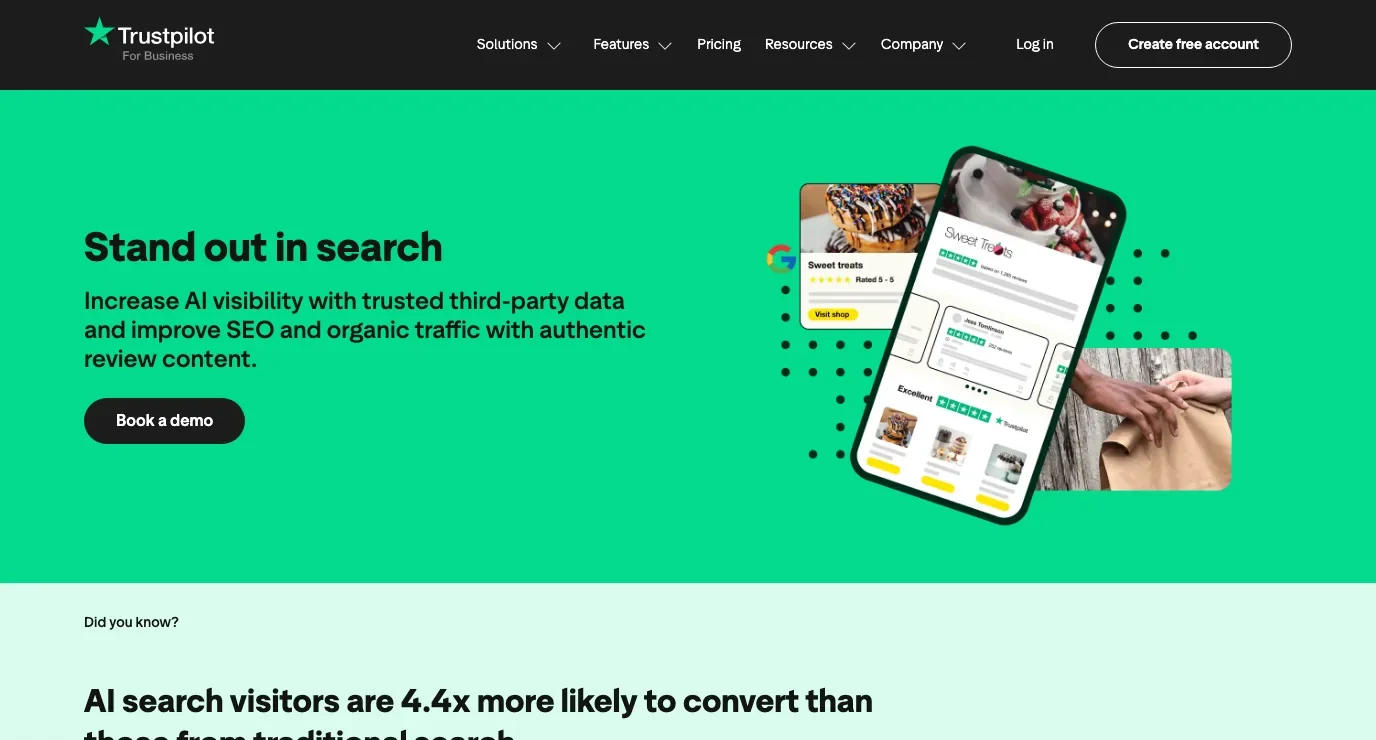
Trustpilot's public Review SEO and AI Discovery page positions review content as a way to support search and AI discovery. That is useful vendor context, but the operating rule is broader than one platform: review evidence only helps when it reinforces a source page that should win.
Use this split:
| Review signal | Helpful for AI search when | Weak when |
|---|---|---|
| Fresh reviews | They describe current products, support, delivery, or outcomes | They are old, generic, or sparse |
| Product specificity | They mention features, use cases, objections, or buyer segments | They only say "great service" with no context |
| Source diversity | Multiple credible sources support the same product story | All proof lives on one profile or copied testimonial block |
| Owned-page match | Product pages explain the same claims reviews mention | Reviews say more than the site does |
| Crawl access | Review and owned pages are publicly accessible | Evidence sits behind logins, scripts, or blocked pages |
Separate Review Sources By Search Job
Different review sources support different search tasks. A team should not treat every rating, testimonial, marketplace review, and forum comment as the same signal.
| Search job | Review source that may help | Page that should still own the answer |
|---|---|---|
| Brand trust | Review profiles, support threads, reputation pages, and customer proof | About, trust, security, and support pages |
| Product evaluation | Product reviews, comparison reviews, category roundups, and customer examples | Product, pricing, comparison, and use-case pages |
| Local or service quality | Local listings, location reviews, service-area pages, and profile pages | Location, service, and support pages |
| Ecommerce discovery | Product detail reviews, marketplace feedback, and collection context | Product and collection pages |
| Objection handling | Negative reviews, support responses, and policy pages | FAQ, support, policy, and product pages |
This is why a broad reviews article can coexist with a narrower Trustpilot article. A Trustpilot profile visibility workflow asks whether one review surface helps. This article asks how review evidence works across product, local, ecommerce, and reputation searches.
Match Reviews To Owned Pages
The most common mistake is collecting reviews while leaving owned pages vague. If reviews explain the product better than the product page does, AI answers may cite the review source or a competitor instead of the page you control.
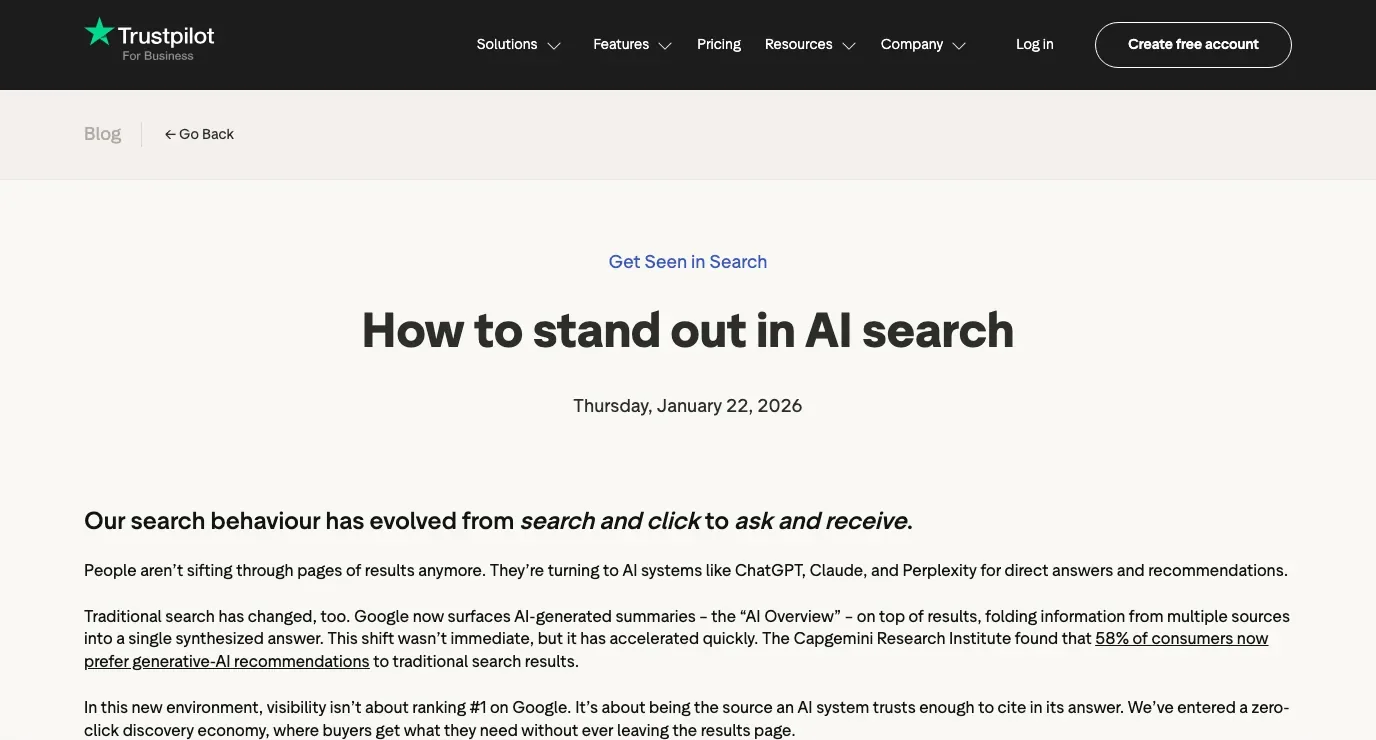
Trustpilot's public AI search article frames review content as a trust and visibility signal, which is useful evidence for this exact decision. The practical next step is still owned-page alignment.
Use this checklist:
| If reviews mention... | Improve this owned source page |
|---|---|
| A product feature buyers value | Product page feature section and FAQ |
| A recurring support problem | Support page, policy page, and product-page caveat |
| A specific customer segment | Use-case page and comparison page |
| A delivery, location, or service issue | Local page, service page, or operations FAQ |
| A competitor comparison | Fair comparison section and internal links |
| A trust concern | Security, refund, warranty, disclosure, or review policy page |
The AI search citation audit is the right child workflow when the team needs to know which URL is being cited. The brand mentions in AI answers workflow is the right parent workflow when the issue is whether the entity appears at all.
Do Not Let Reviews Hide Page Problems
Reviews are useful evidence, but they cannot fix every AI visibility problem. If the canonical page is blocked, thin, contradictory, or disconnected from the rest of the site, more reviews may only make the mismatch more obvious.
Before investing in another review push, ask:
- Is the product page indexable, canonical, and visible in rendered HTML?
- Does the page answer the same product claims that reviews mention?
- Are review snippets, testimonials, or profile links used in a way that helps the reader?
- Do comparison and FAQ sections address recurring review themes?
- Are support and policy pages linked from the buyer journey?
- Can the team recheck the same query group after the fix ships?
If the answer is no, prioritize source-page work before asking customers for more reviews. Review evidence should strengthen a clear page, not compensate for one that cannot support the answer.
Where Searvora Fits
Searvora AI SEO Dashboard fits the validation layer. Use the AI SEO dashboard to group review-sensitive queries, cited sources, page cohorts, competitors, and owner-ready fixes.
The dashboard does not replace review platforms or reputation work. It helps the SEO team decide whether review evidence changed the answer surface, whether the owned page still needs work, and which query group deserves the next validation window.
For technical blockers, pair the dashboard with a crawl review. For broader AI search strategy, use the AI visibility evidence loop to keep mention, citation, and page evidence separate.
Recheck Before Calling Reviews An AI Visibility Win
A review program should end with a recheck, not a screenshot. Record the same query group before and after the review and source-page work, then compare whether AI answers mention the brand, cite the right page, cite a review profile, cite competitors, or cite neutral publishers.
Use this validation sequence:
- Choose one review-sensitive query group, such as product comparison, local trust, ecommerce discovery, or branded reputation.
- Record current AI answer state, cited sources, owned-page citations, competitor citations, and review-source citations.
- Improve the review source and the matching owned page.
- Recheck the same query group after a realistic crawling and answer-refresh window.
- Compare cited sources, Search Console movement, branded search, assisted conversions, and support themes.
- Decide whether to improve reviews, fix owned pages, add comparison proof, consolidate pages, or stop.
Product reviews affect AI search visibility when they become reusable source evidence. They are weak when they are generic, disconnected from owned pages, or used to avoid technical and content fixes. Treat reviews as part of the evidence loop, validate them against the page that should win, and keep the next action small enough to ship.