
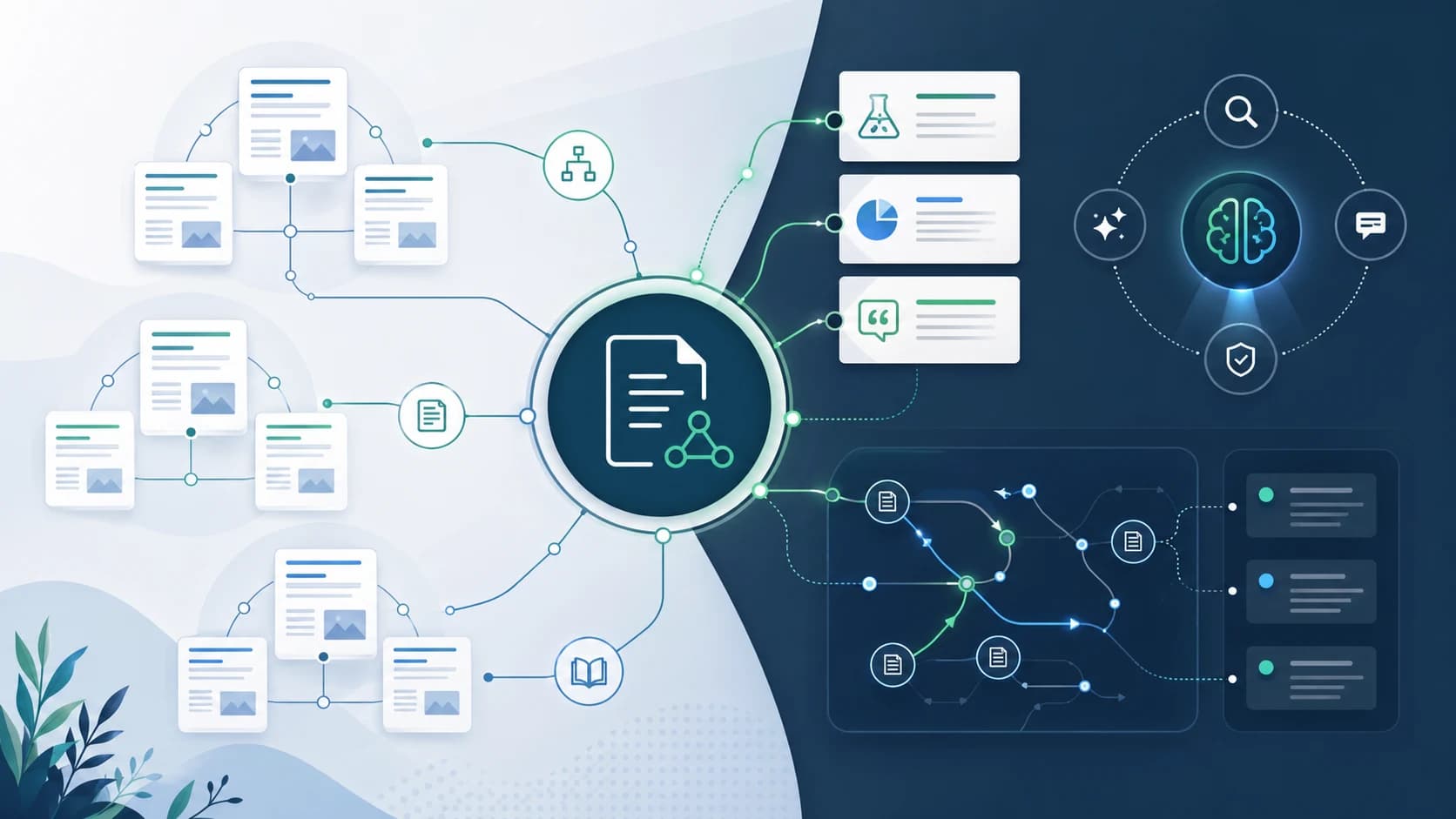
Topical authority is the trust a site earns when it covers a subject with useful depth, clear page roles, strong internal links, and enough evidence for search systems and readers to understand why the site belongs in that topic. It is not a license to publish one page for every keyword variation.
The practical workflow is to define the topic boundary, map search tasks to page jobs, find proof gaps, connect the cluster with internal links, and measure whether the pages are becoming easier to discover, cite, and maintain.
Start With The Topic Boundary
Topical authority gets messy when the topic is too broad. A SaaS team cannot "own SEO" by publishing scattered articles about every popular query. A better boundary names the audience, page set, and business reason for the cluster.
Use this first-pass boundary:
| Boundary question | Good answer | Weak answer |
|---|---|---|
| Who is the cluster for? | Shopify content teams managing organic growth | Anyone interested in marketing |
| What should the site be known for? | SEO workflows that turn signals into shipped work | Tips about SEO |
| Which page types belong? | Explainers, templates, diagnostics, product workflows, comparison pages | Every keyword with search volume |
| What is the conversion path? | From diagnosis to prioritized action queue | Read more posts |
Google's guidance on creating helpful, reliable, people-first content is useful here because it pulls the work back to usefulness, originality, and reader need. A topical authority cluster should make the site more helpful, not merely larger.
Map Keywords To Page Jobs
Keywords are evidence of demand, but page jobs decide what should exist. Two keywords can need one page when the user task is the same. One topic can need several pages when the tasks are different.
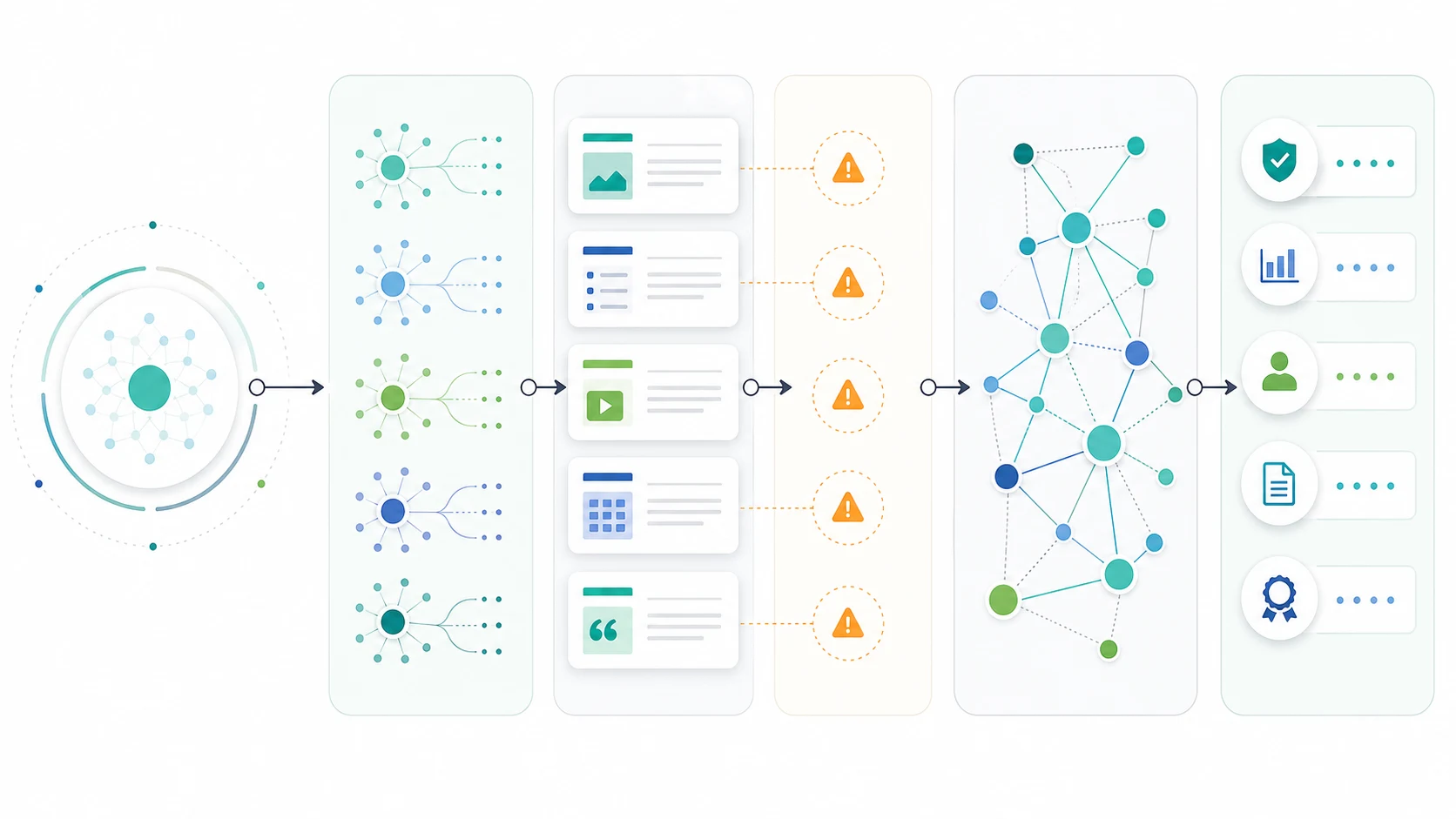
Build the map in this order:
- Group queries by user task, not exact wording.
- Assign each group to a page type.
- Match existing URLs before proposing new ones.
- Mark missing pages only when no current URL serves the job.
- Decide whether the page should be an article, tool, landing page, comparison, template, or hub.
| Search task | Better page job | Watch out for |
|---|---|---|
| Learn the concept | Explainer article | Repeating the same definition across many posts |
| Make a plan | Strategy workflow or template | Publishing a generic checklist without ownership |
| Fix a technical issue | Diagnostic or how-to article | Mixing symptoms, causes, and fixes into one vague guide |
| Compare options | Comparison page or decision guide | Pretending an essay is a roundup |
| Operate the process weekly | Dashboard, report, or product workflow | Hiding the real work in a static article |
This is where keyword research and search-intent review become safeguards. They keep the cluster from splitting authority across pages that answer the same job.
Build Pages Around Proof Gaps
Topical authority depends on proof. A page that defines a concept but gives no examples, decision rules, internal links, or validation path is easy to ignore. A useful page helps the reader finish the next step.
Use proof gaps to decide what each URL needs:
| Proof gap | What to add | Why it helps |
|---|---|---|
| Concept is unclear | Plain definition, example, and boundary | Helps readers and answer systems summarize the page |
| Task is operational | Steps, checklist, owner, and validation check | Turns advice into work |
| Topic is competitive | Original framework, comparison table, or workflow detail | Adds information gain beyond common guides |
| Cluster is hard to navigate | Descriptive internal links and hub paths | Helps users and crawlers understand relationships |
| Claims are broad | Official sources, data notes, or visible evidence | Makes the page more trustworthy |
Do not build authority by padding articles. Build it by making each URL the best answer for one page job and by connecting that URL to the rest of the cluster.
Use Internal Links As Cluster Infrastructure
Internal links are not decoration. They explain which pages are parents, which pages are children, and which pages deserve attention.
Google's link best practices emphasize crawlable links and descriptive anchor text. For topical authority, the same principle becomes a cluster rule: links should make the topic map clearer.
Use this linking pattern:
| Link type | Role in the cluster | Example anchor style |
|---|---|---|
| Hub to child | Shows the topic's main branches | technical SEO validation workflow |
| Child to hub | Reinforces the parent context | broader GEO SEO foundations workflow |
| Sibling to sibling | Connects adjacent tasks | internal linking audit |
| Product to article | Helps users learn before acting | topic cluster planning workflow |
| Article to product | Routes ready readers into execution | AI SEO consultant |
The internal links for SEO workflow is the natural companion when the cluster exists but pages are orphaned, buried, or linked with vague anchors.
Measure Authority As A Maintenance Loop
Topical authority is not finished when the last article publishes. Search demand shifts, SERP layouts change, internal links decay, and AI answer systems may summarize the topic differently over time.

Review the cluster on a cadence:
- Monitor impressions, clicks, query mix, and AI-search visibility by topic segment.
- Identify pages with rising demand but weak CTR, unclear intent fit, or missing proof.
- Refresh pages that have stale examples, thin sections, or outdated internal links.
- Add new pages only when a distinct user task is not already served.
- Re-crawl the cluster to check indexability, canonicals, headings, internal links, and sitemap coverage.
- Record the decision so the team does not rediscover the same gap next month.
The SEO metrics to track workflow helps turn this into a weekly review instead of a one-time content planning exercise.
Where Searvora Fits
Searvora AI SEO Consultant fits the planning layer of topical authority work. The product page positions it around pattern-based diagnosis, impact-based prioritization, fix-ready guidance, and execution alignment. That is the layer teams need when a topic map turns into a backlog of competing pages, updates, links, and technical fixes.
Use the consultant to turn a cluster review into assignable work: which URL should be refreshed, which missing page deserves a brief, which internal links should be added, and which diagnostics should be checked before publishing.
Topical authority grows when the site becomes easier to trust and easier to use. Define the boundary, map the page jobs, close proof gaps, connect the cluster, and keep measuring whether the pages still deserve the topic.