

Semantic SEO is the work of making a page's meaning clear enough for search systems, AI answer systems, and readers to understand what the page is about, which task it serves, and why it should be trusted. It is not sprinkling related words into a draft. It is the discipline of connecting entities, page jobs, internal links, schema, crawl eligibility, and evidence into one source page.
The Ahrefs semantic SEO article that surfaced this competitor opportunity explains the concept in depth. Searvora's information gain is the operating workflow: turn semantic SEO from an abstract writing idea into a page map, validation loop, and prioritized action queue.
What Semantic SEO Means
Semantic SEO starts with meaning. A page should make the main entity, related concepts, audience, use case, and next step visible without forcing search systems to guess.
Use this working definition:
| Semantic SEO layer | Question to answer | Weak pattern |
|---|---|---|
| Entity clarity | Which people, products, concepts, places, or categories does the page explain? | The article repeats a keyword but never names the real subject relationships |
| Page job | Which user task should this URL own? | Several pages chase the same broad phrase with different intros |
| Topic coverage | Which subtopics are required for the task? | Thin sections cover terms without answering decisions |
| Internal context | Which parent, child, and sibling pages support the meaning? | The page is isolated or linked with vague anchors |
| Technical eligibility | Can crawlers access, render, index, and select the page? | Strong copy sits behind blocked, duplicated, or canonicalized URLs |
| Evidence loop | Can the team recheck visibility, citations, and performance after changes? | The page is published once and never validated |
Google's guidance on helpful, reliable content is a useful baseline here. Semantic SEO should make the page more useful and easier to verify, not merely more keyword-dense.
Build The Entity And Page Job Map
Start by deciding what the page should own. A semantic SEO page map keeps the team from creating near-duplicate URLs that sound different but answer the same task.
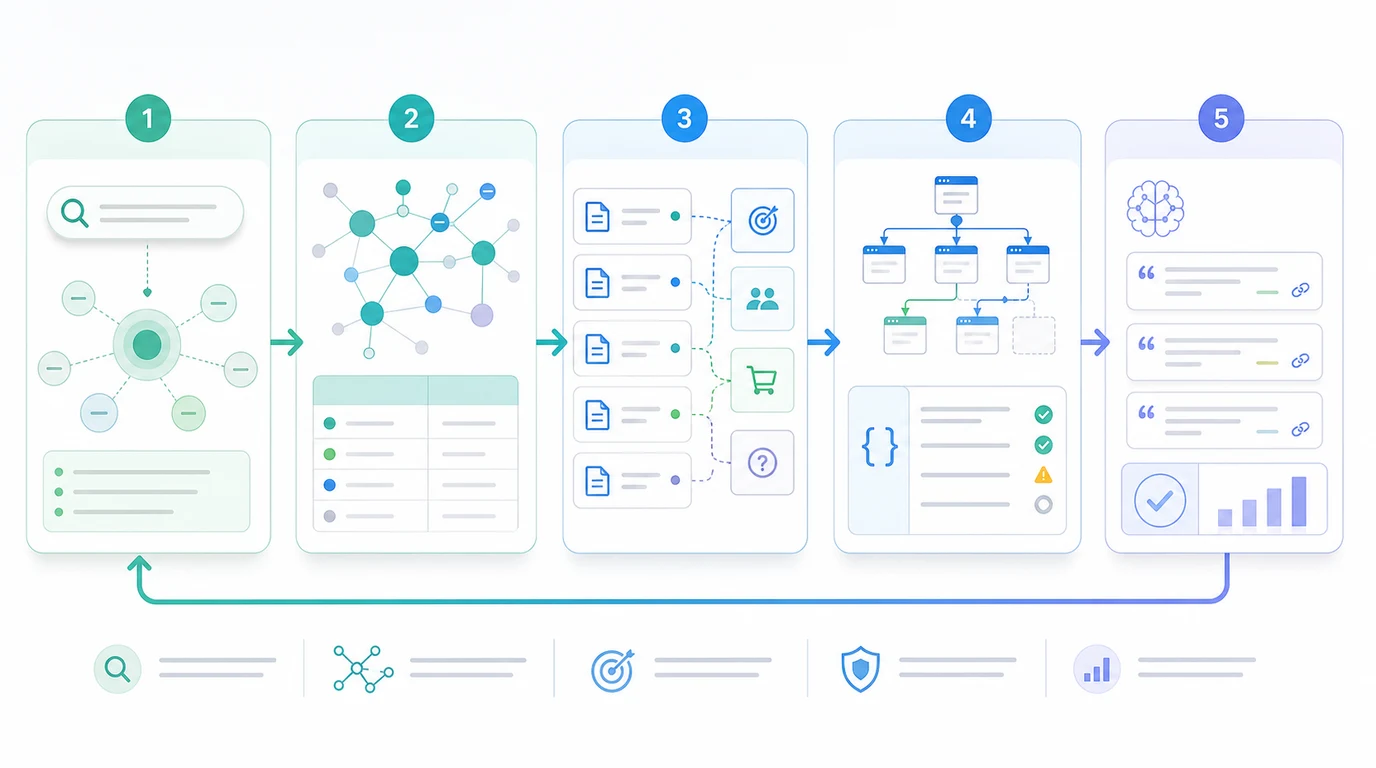
Build the map in this order:
- Name the core entity or concept the page must clarify.
- List the related entities and concepts a useful answer must connect.
- Decide the page job: explainer, how-to, comparison, glossary, tool, landing page, hub, or update.
- Match existing URLs before proposing a new page.
- Assign parent, child, and sibling links that make the topic relationship obvious.
- Mark proof gaps that need examples, definitions, tables, official sources, screenshots, or product evidence.
| Mapping choice | Semantic SEO decision | Example |
|---|---|---|
| Same keyword, same task | Update or consolidate | Two articles both explain "what is semantic SEO" for beginners |
| Same topic, different task | Keep as parent and child pages | One page explains semantic SEO, another explains schema validation |
| Same entity, different audience | Decide whether examples change enough | A general semantic SEO guide versus a Shopify content workflow |
| Tool intent | Use a tool or landing page | A query asking for a schema generator should not become a generic article |
| Broad authority topic | Use a parent article or hub | A semantic SEO guide can link into schema, internal linking, and AI visibility children |
The internal links for SEO workflow is useful after the map exists. Links should explain relationships: parent to child, child to parent, sibling to sibling, and article to product when the reader is ready to act.
Make The Page Easier To Extract
Semantic SEO is partly editorial and partly technical. A page can have the right ideas and still be hard to understand if headings, schema, internal links, and crawl signals conflict.
Use this checklist on the target URL:
| Page element | What good looks like | What to fix |
|---|---|---|
| Title and H1 | They name the same page job in plain language | Title promises a concept while H1 promises a tool or product |
| Intro | It answers the concept or task immediately | The page delays the answer behind generic setup |
| H2 structure | Sections follow the user's decision path | Headings are keyword fragments with no workflow |
| Examples | They show how the concept changes a real SEO decision | Examples are decorative or unrelated to the page job |
| Schema | Markup matches visible content and page type | JSON-LD claims details the page does not show |
| Internal links | Anchors describe the next task | Links use vague anchors or point to competing URLs |
| Crawl signals | Canonical, indexability, sitemap, and status code agree | The page is eligible in one signal and blocked in another |
For structured data, Google's structured data introduction is a good reminder that markup should describe visible page content. The schema markup workflow is the Searvora companion when the semantic issue is not the copy, but the way the page declares its type and relationships.
Validate Semantics With Crawl And Search Evidence
Semantic SEO should end with validation. Otherwise, the team has only edited content and hoped the meaning improved.
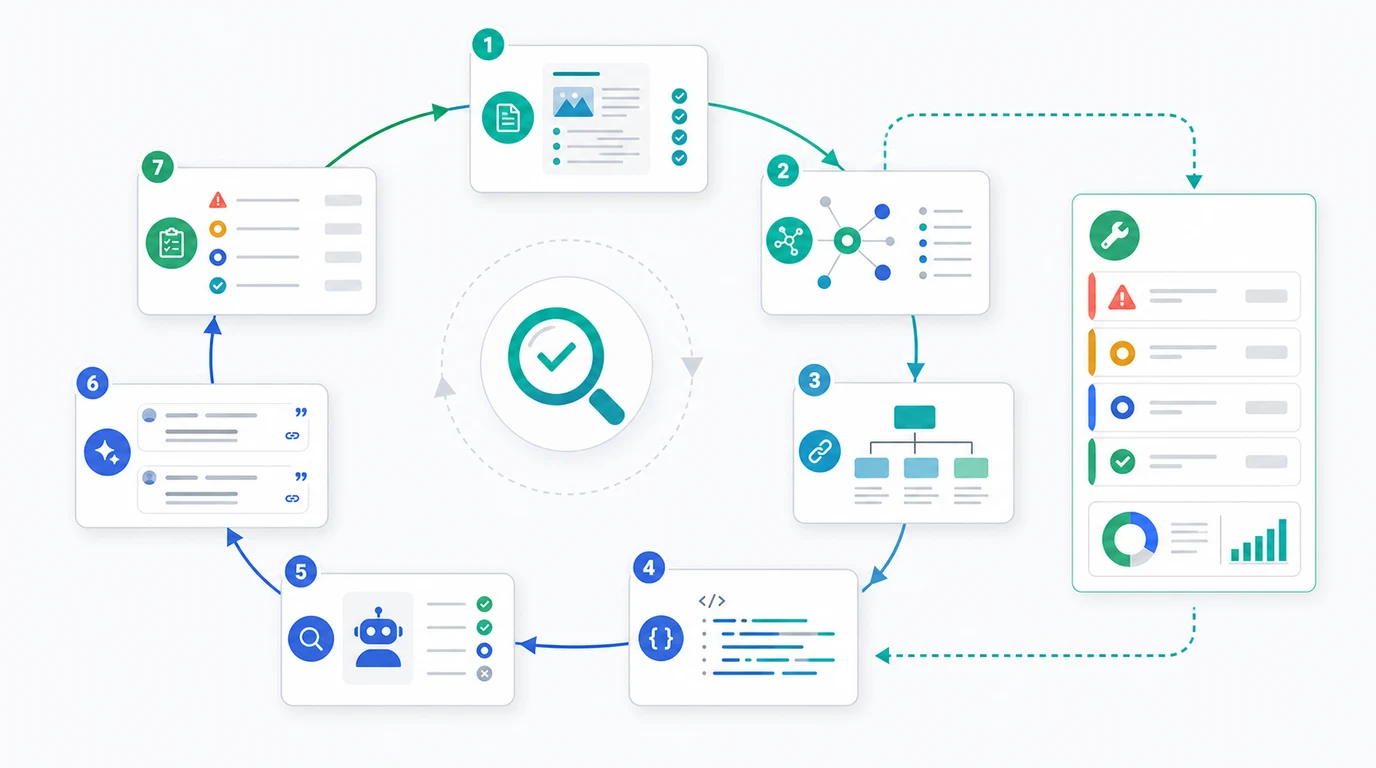
Run a validation loop after every meaningful semantic refresh:
- Crawl the page and its cluster before changes.
- Save the old title, H1, canonical, schema type, inlinks, outlinks, indexability, and sitemap state.
- Update the page job, examples, headings, links, and schema together.
- Re-crawl the page and its most important internal-link paths.
- Check whether the page is still self-canonical, indexable, internally linked, and included where expected.
- Review Search Console queries and landing-page movement after recrawl windows.
- Recheck AI-answer evidence for the query group when AI visibility matters.
- Record whether the fix was content, technical, internal linking, product copy, or page-type routing.
| Validation signal | What it tells you | Better next action |
|---|---|---|
| Query mix improved | Search systems understand the intended task more clearly | Expand proof and examples around the winning intent |
| Impressions rise but CTR stays weak | The page may be eligible but the promise is not compelling | Rework title, meta description, and intro |
| AI answers cite competitors | The topic may need clearer evidence, public proof, or a better source page | Strengthen the source page and recheck citation patterns |
| Crawl shows canonical or indexability conflict | Technical signals undermine semantic clarity | Fix access before rewriting more content |
| Several owned pages receive the same queries | The cluster may be cannibalizing itself | Choose a parent, merge, or clarify child-page roles |
The AI visibility evidence loop is useful when semantic SEO work is tied to AI answer citations. Keep the citation review separate from the content draft so the team can recheck the same prompt group later.
Where Searvora Fits
Searvora AI SEO Consultant is the primary fit for semantic SEO planning because the work is not one writing pass. The current product page positions it around pattern-based diagnosis, priority scoring, fix-ready guidance, and execution alignment. That matches the semantic SEO job: collect mixed signals, decide what the page should mean, rank the fixes, and hand the work to SEO, content, or engineering.
Use Searvora this way:
| Searvora layer | Use it for semantic SEO when | Output |
|---|---|---|
| AI SEO Consultant | The cluster has overlapping pages, unclear priorities, or mixed content and technical fixes | A ranked action plan with rationale |
| SEO Spider Crawler | The page may have crawl, canonical, metadata, schema, or internal-link risk | A technical validation list |
| AI SEO Dashboard | You need to monitor page groups, query movement, or AI-search evidence over time | A weekly evidence queue |
| Blogify | Shopify teams need to turn approved page jobs into structured blog drafts | A repeatable content production workflow |
Semantic SEO Checklist
Use this sequence before approving a new semantic SEO page or refresh:
- Define the core entity, concept, or task in one sentence.
- Decide whether the query needs an article, hub, tool, landing page, comparison, or existing-page update.
- Map parent, child, and sibling pages before writing new copy.
- Add examples, tables, constraints, and proof that make the meaning visible.
- Make headings follow the reader's decision path.
- Use schema only when it matches visible page content.
- Confirm the page is crawlable, indexable, canonical, linked, and present in the sitemap when appropriate.
- Recheck search queries, internal-link paths, and AI-answer evidence after publication.
- Record the next action owner so the page does not become another isolated draft.
Semantic SEO works when meaning becomes operational. The page should answer one task, connect to the right cluster, declare its structure honestly, and survive crawl and search validation. When those layers agree, the page is easier for readers, search engines, and AI answer systems to trust.