

The best SEO newsletters are not the ones that make your inbox feel busy. They are the ones that help your team spot search changes, understand what matters, and decide what should become a crawl check, content update, AI-search monitoring task, or stakeholder note.
The Ahrefs newsletter roundup that surfaced this opportunity proves the search intent is a real list. Searvora's information gain is the operating layer: compare newsletters by the job they help with, then turn the useful reading into assigned SEO work.
Choose SEO Newsletters By The Job They Improve
Do not subscribe to every respected source. Pick a small stack where each newsletter has a role.
| Newsletter job | Best source type | What the update should trigger |
|---|---|---|
| Weekly search awareness | Curated SEO news digest | A watchlist item, not an instant fix |
| Leadership and stakeholder skill | SEO business or career newsletter | Better reporting, framing, and buy-in |
| Daily search news | Publisher newsletter | A short monitoring note or owner alert |
| AI-search and algorithm interpretation | Specialist Search and AI source | A citation, visibility, or content-quality check |
| Tool and tactic discovery | Product or practitioner digest | A brief, experiment, or backlog item |
| Internal execution | Your own crawl, dashboard, and content data | A prioritized action queue |
The SEO Newsletter Shortlist
This is not a universal ranking. It is a practical shortlist for SEO teams that need news, AI-search context, leadership advice, and tactical ideas they can validate against their own pages.
| SEO newsletter | Best fit | Watch the limit |
|---|---|---|
| SEOFOMO | Weekly SEO and AI-search news, resources, jobs, tools, and events | Broad curation still needs your own priority filter |
| The SEO MBA | Leadership, management, communication, and executive-level SEO skills | Less useful when the immediate need is technical tactics |
| Ahrefs' Digest | Weekly Ahrefs content plus SEO industry reads | Product-adjacent source, so separate useful tactics from vendor context |
| Search Engine Land | Daily SEO, PPC, AI, and search marketing developments | News is a signal, not proof that your site is affected |
| SEJ Today | Weekday search and marketing insights for leaders | Registration and event messaging can sit beside the newsletter pitch |
| Marie Haynes Newsletter | Search and AI changes, Google algorithm interpretation, and quality thinking | Some deeper community material is paid |
1. SEOFOMO

SEOFOMO is strongest as a weekly scan of SEO and AI-search updates. Its public page positions the newsletter around search news, updates, guides, tools, events, jobs, and specialists to follow.
Use it when your team needs breadth. The useful follow-up is not "read every link." It is to tag each item as monitor, test, brief, stakeholder note, or ignore.
Best workflow fit: weekly SEO and AI-search awareness.
2. The SEO MBA
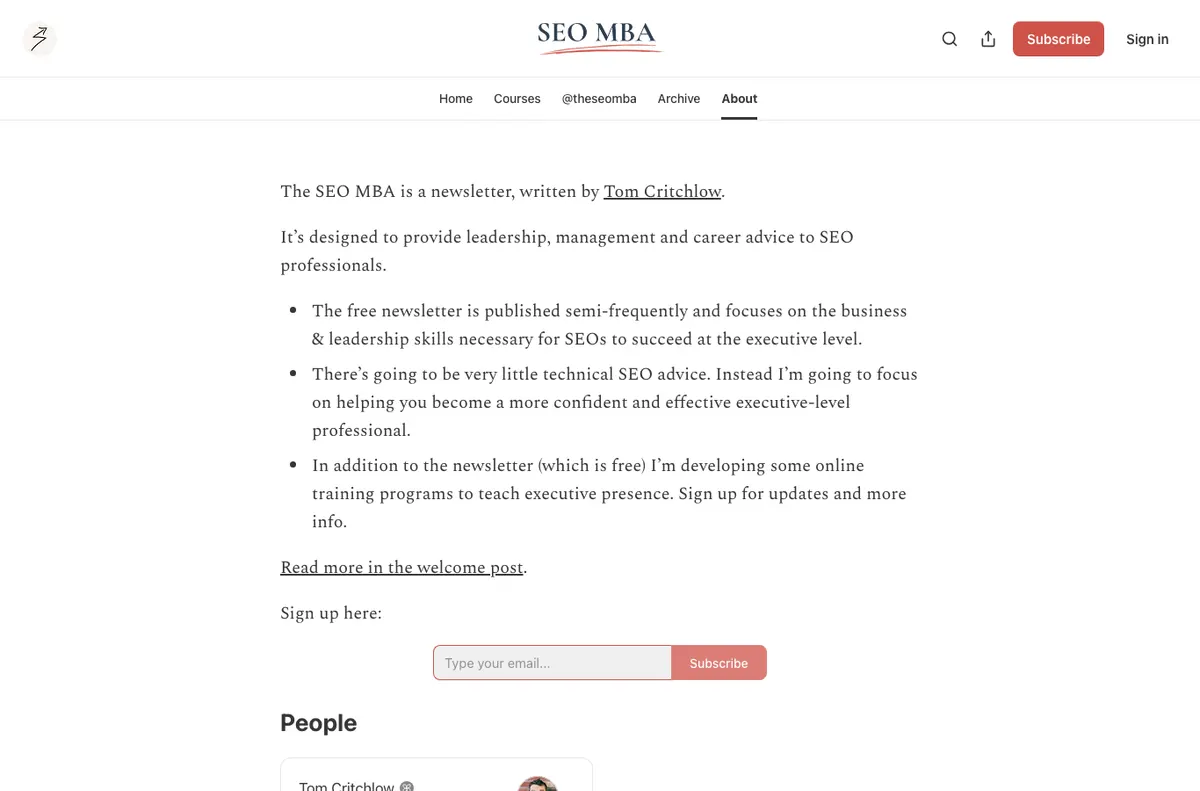
The SEO MBA is not trying to be a technical SEO feed. Its public about page says it is written by Tom Critchlow and focuses on leadership, management, and career advice for SEO professionals.
Use it when the blocker is communication quality, not keyword research. A better business case, clearer project framing, or stronger executive update can move a technical SEO project faster than another tactic.
Best workflow fit: reporting, stakeholder alignment, career growth, and executive-level SEO judgment.
3. Ahrefs' Digest
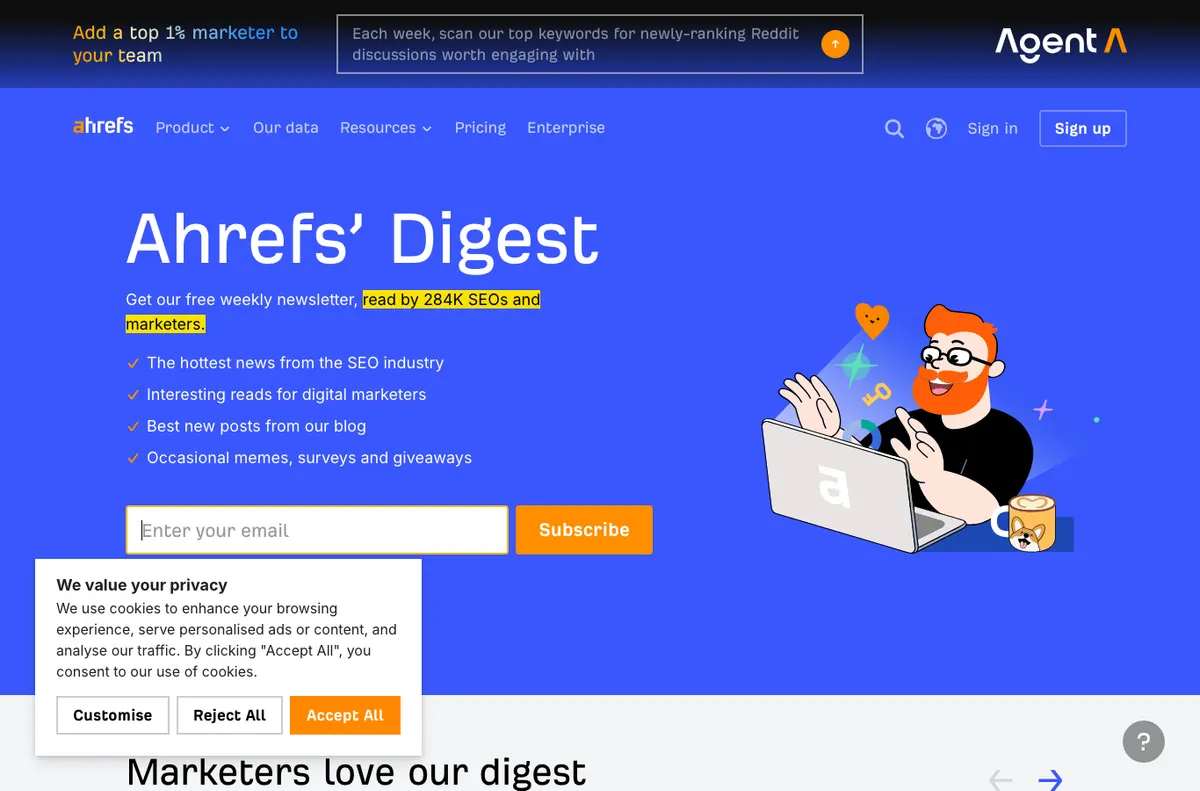
Ahrefs' Digest is a weekly product-company digest that combines Ahrefs content, SEO industry news, marketing reads, and occasional lighter items. The public page describes it as a free weekly newsletter for SEOs and marketers.
Use it for methods, research prompts, and competitor-content ideas. Then check whether the idea should become a new article, an update to an existing page, a product workflow, or no action at all.
Best workflow fit: tactical reading, Ahrefs ecosystem updates, and content-ops idea discovery.
4. Search Engine Land
Search Engine Land newsletters are useful when your team needs daily search-marketing context. The public page frames the newsletter around daily SEO and PPC updates, search and AI analysis, tactics, and industry developments.
Use it for situational awareness. A Search Engine Land update can become a monitoring note, stakeholder brief, or hypothesis. It should not become a site change until your own data supports the impact.
Best workflow fit: daily search news, cross-channel context, and "should we investigate this?" triage.
5. SEJ Today
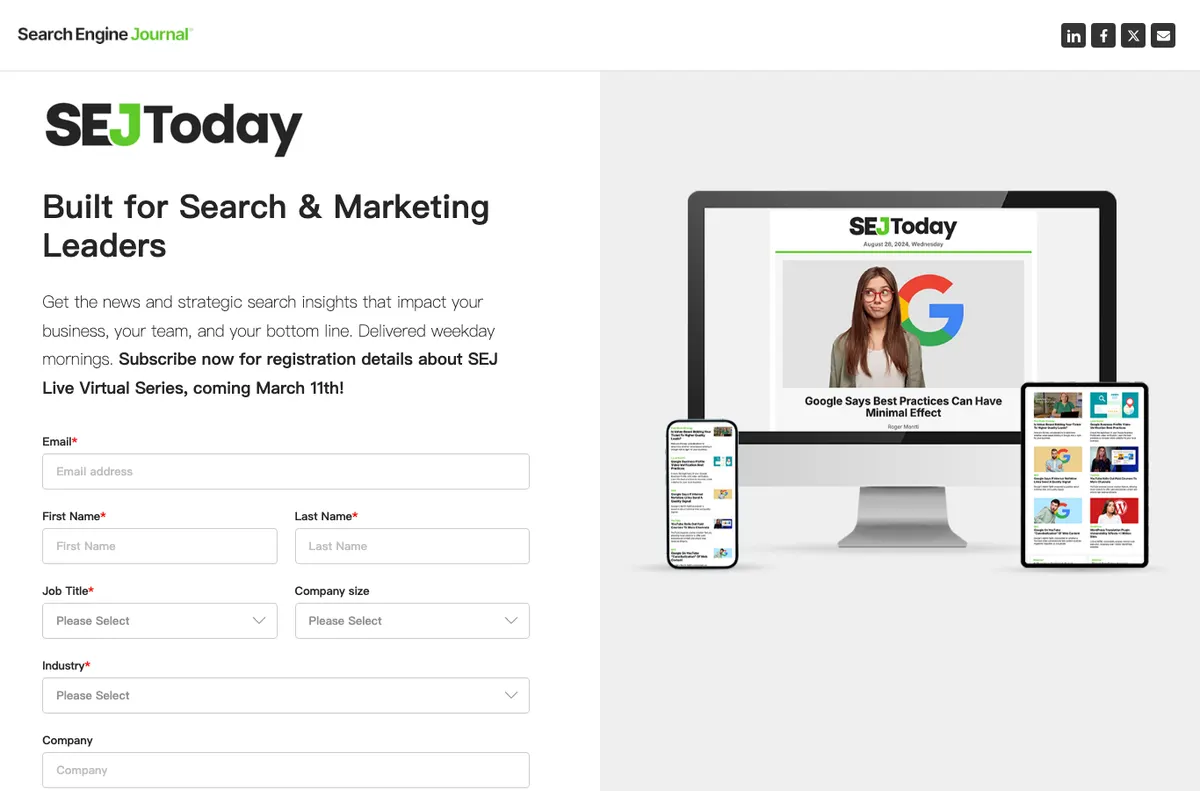
SEJ Today is Search Engine Journal's newsletter surface for search and marketing leaders. Its public signup page emphasizes strategic search insights that affect business, teams, and the bottom line, delivered on weekday mornings.
Use it when you want a leadership-friendly view of search news and tactical commentary. The follow-up should be concise: what changed, what page group might be affected, and what evidence would confirm it.
Best workflow fit: weekday search updates, leadership summaries, and practical news interpretation.
6. Marie Haynes Newsletter
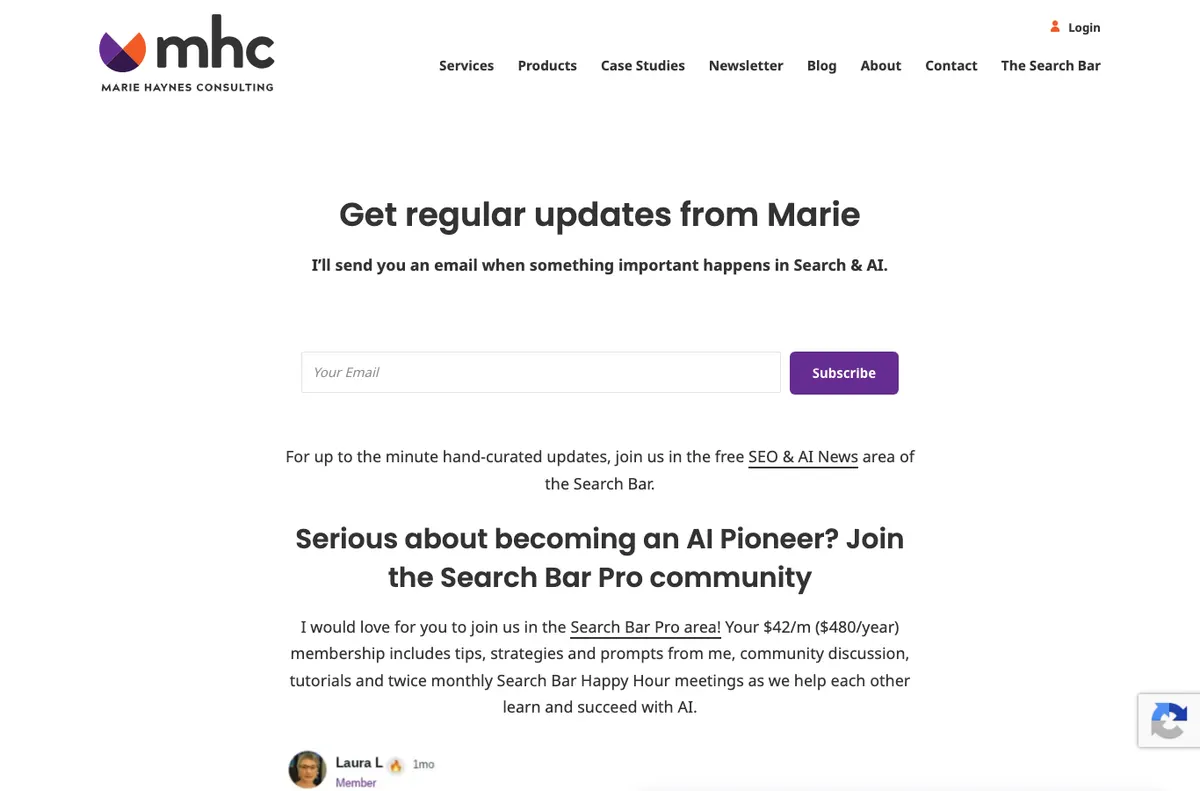
Marie Haynes' newsletter page is useful for teams watching Google quality systems, AI search, and algorithm interpretation. The public page says readers can get regular updates when something important happens in Search and AI, with deeper Search Bar community options available separately.
Use it when the question is whether a search or AI change should alter your quality review, entity clarity, content trust, or recovery plan. Keep the action tied to evidence on your own pages.
Best workflow fit: Search and AI interpretation, quality thinking, and algorithm-change review.
Build A Newsletter Stack Without Inbox Bloat
The stack should be small enough that someone can actually use it.
| Stack role | Recommended source | Review cadence | Output |
|---|---|---|---|
| Weekly scan | SEOFOMO or Ahrefs' Digest | Once per week | Watchlist and idea queue |
| Daily news | Search Engine Land or SEJ Today | During active monitoring windows | Stakeholder note or investigation prompt |
| Leadership skill | The SEO MBA | When planning, reporting, or pitching work | Better framing and project narrative |
| Search and AI interpretation | Marie Haynes Newsletter | When algorithm, quality, or AI-search shifts appear | Quality review or AI visibility check |
| Internal decision layer | Searvora data, crawl evidence, Search Console, and page inventory | Weekly | Prioritized task list |
If every newsletter has the same role, the stack is too large. Keep one broad digest, one news source, one specialist source, and one leadership or workflow source. Add more only when a team member owns the follow-up.
Turn Newsletter Reading Into SEO Work
Use this operating loop after the weekly reading block:
- Save only the updates that could change a decision.
- Classify each item as algorithm, AI-search, technical, content, reporting, competitor, or stakeholder context.
- Map it to a Searvora action type: monitor, crawl, brief, refresh, link, compare, or ignore.
- Check whether an existing Searvora or site URL already owns the same user job.
- Add evidence from crawl data, Search Console, AI-search visibility, or product context.
- Assign one owner and one validation check.
This is where best SEO blogs, search intent in SEO, and SEO competitor analysis keep reading from becoming duplicate content. A useful source can still point to the wrong page type.
Where Searvora Fits
Use the AI SEO consultant when newsletter reading needs to become ranked work. The consultant layer is built around pattern diagnosis, impact-effort scoring, fix-ready guidance, and owner-ready handoff. That is the step between "this update is interesting" and "this task should ship this week."
Run This Newsletter Approval Checklist
Before a newsletter earns a permanent place in the stack, answer these questions:
- Which SEO decision does this source improve?
- Is it news, interpretation, tactics, leadership advice, or product context?
- How often should someone review it?
- What output should reading create?
- Which owner receives that output?
- What evidence proves the update matters to your own site?
The best SEO newsletters do not replace your data. They help you notice the right questions sooner. Keep the sources that improve decisions, then use your own crawl, search, content, and AI-visibility evidence to decide what should actually ship.