

Share of search is the percentage of branded searches in a defined market that belong to your brand instead of competitors. It is useful because it turns brand demand into a metric you can compare, but it becomes much more useful when the number creates a weekly SEO action.
Do not stop at the score. Use share of search to decide which brand, category, comparison, and AI-search source pages need work next.
The Short Answer
To calculate share of search, define the competitor set, collect the search volume or impression proxy for each brand term, add the totals, and divide your brand's demand by the full market demand.
| Step | What to define | Quality check |
|---|---|---|
| Market | Geography, language, audience, and product category | Do not compare global enterprise tools with local niche products unless that is the market |
| Brand set | Your brand plus direct competitors | Keep aliases, product names, and misspellings in a documented group |
| Query source | Search Console, Google Trends, rank tools, or a keyword database | Keep the same source and date range when comparing periods |
| Formula | Your branded demand divided by all tracked branded demand | Record what is excluded so the number can be repeated |
| Action | Source page, comparison page, content refresh, or watchlist | Every movement should end with an owner or a reason to wait |
The Ahrefs article that surfaced this opportunity frames share of search as a brand-demand signal based on searches that include brand names. Searvora's information gain is the operating layer: separate the metric from adjacent AI mention and citation signals, then turn movement into assigned page work.
Build The Competitor Query Set First
The biggest share-of-search mistake is calculating too soon. If the competitor set is vague, the result will look precise while saying very little.
Start with one market and one product category. Then build a query ledger:
| Query group | Include | Exclude |
|---|---|---|
| Core brand | Brand name, common spelling variants, product name plus brand | Generic category terms with no brand name |
| Brand plus product | Brand plus dashboard, crawler, consultant, pricing, review, alternative | Support terms that only matter to existing customers unless retention is the goal |
| Competitor brand | Direct competitor names and product names | Media brands, agencies, or adjacent tools that buyers would not compare |
| Category plus brand | AI SEO dashboard Searvora, Searvora SEO crawler | Broad category searches where the brand is absent |
Use one source consistently. Google's Search Console Performance report guidance describes the core query, page, country, device, clicks, impressions, CTR, and position fields teams use for owned-search analysis. That makes Search Console useful for your own branded demand, but it will not show competitors' private query data.
Google Trends can help with relative interest when the brands have enough search demand. Google's Trends comparison guidance also makes the setup constraint obvious: comparisons depend on the terms, topics, regions, and time range you choose. Keep that setup stable before reading the trend as market movement.
Calculate The Metric Without Mixing Signals
Share of search has a simple formula, but the inputs need guardrails.
| Formula component | Example | Why it matters |
|---|---|---|
| Your brand demand | Searches or impressions for your tracked brand group | Measures active recall for your brand |
| Competitor demand | Searches or impressions for every tracked competitor brand group | Gives the denominator a market context |
| Total brand demand | Your brand group plus competitor brand groups | Prevents one brand spike from being read in isolation |
| Share of search | Your brand demand divided by total brand demand | Shows whether your brand is gaining or losing demand share |
For example, if your brand group has 4,000 tracked branded searches and the full competitor set has 20,000 tracked branded searches, your share of search is 20 percent. The number is only useful if the next review uses the same market, competitor set, date window, and data source.
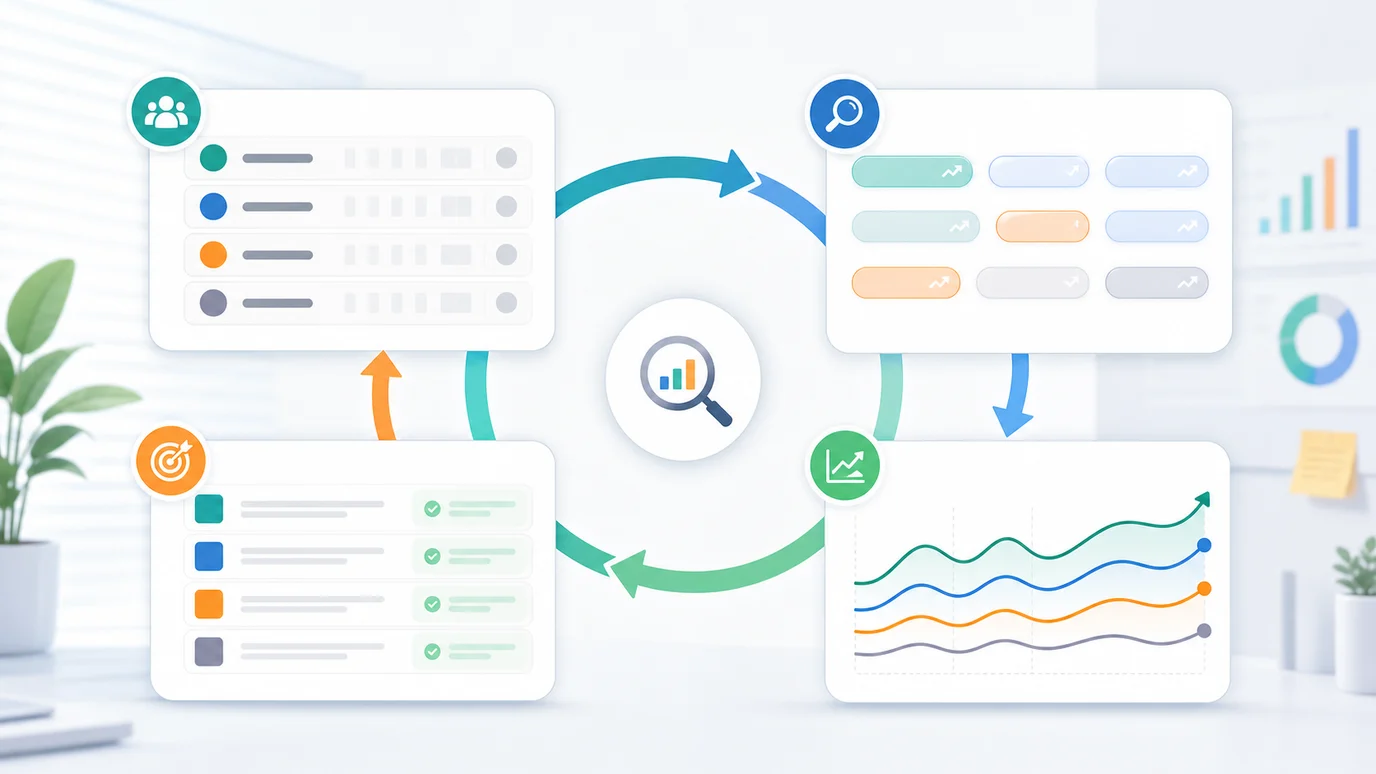
Use this interpretation table before assigning work:
| Pattern | What it may mean | Better action |
|---|---|---|
| Your share rises and branded CTR stays healthy | Demand and owned SERP coverage are moving together | Keep monitoring and look for category pages that can capture non-branded demand |
| Your share rises but branded CTR falls | More people search, but the result set or snippet may be weak | Audit branded titles, sitelinks, comparison pages, and support pages |
| Competitor share rises in one market | A campaign, launch, review cycle, or category shift may be lifting them | Compare their cited source pages and public proof |
| Everyone's branded demand falls | Category demand may be cooling or the source may be noisy | Check broader category queries before overcorrecting |
| Share is flat but AI mentions shift | Search demand and AI answer visibility are telling different stories | Split the AI evidence into its own ledger |
This is where brand SEO becomes the supporting workflow. Brand SEO makes the source layer clearer. Share of search tells you whether demand around that source layer is moving.
Separate AI Mentions And Citations
AI search makes share of search more important, not less. A buyer may see a brand in an AI answer before they search for the brand directly. That can show up later as branded demand, comparison queries, direct traffic, or no click at all.
Do not force those signals into one number.
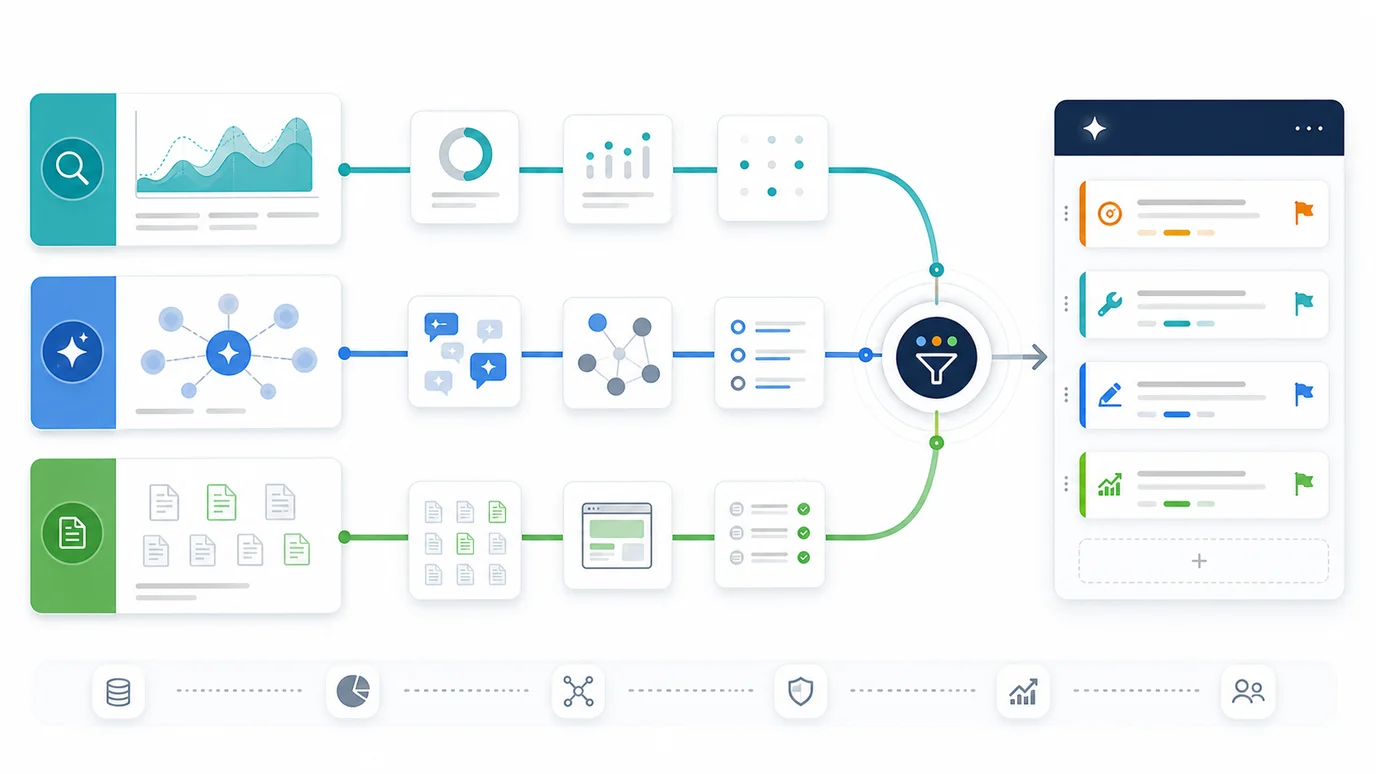
Use three ledgers:
| Ledger | What it records | Do not mix it with |
|---|---|---|
| Share of search | Branded search demand versus competitor branded demand | AI mentions, citations, impressions, or conversion counts |
| AI mention share | Which brands appear in answers for stable prompts or query groups | Search volume unless the same brand query later moves |
| Citation ownership | Which source URLs support the answer | Brand mentions where no source page is cited |
The distinction matters because each ledger creates a different fix. If branded demand is weak, the work may be market awareness and branded SERP coverage. If AI mentions are weak, the work may be entity clarity and source-page proof. If citations are weak, the work may be crawl eligibility, extractable answers, and internal links.
For broader AI monitoring, use the AI visibility evidence loop as the parent workflow. For competitor-specific AI answer gaps, use the brand visibility comparison workflow. Keep this article narrower: share of search is the branded-demand metric inside that larger evidence system.
Turn Movement Into Page Decisions
Share of search should change what the team does next. Otherwise it becomes another chart in a brand deck.
Use this decision table:
| Finding | First diagnosis | Page decision |
|---|---|---|
| Branded demand rises after a campaign | Searchers remember the brand but need a better destination | Improve homepage, product pages, branded snippets, and comparison pages |
| Competitor branded demand rises around a feature category | The market may be noticing their positioning | Review the matching category, product, and use-case pages |
| Your brand is searched with "alternative" or "vs" modifiers | Buyers are comparing you directly | Build or improve fair comparison content only if it helps the user choose |
| Product-name searches rise but product pages underperform | Recognition exists, but routing or page clarity may be weak | Strengthen product-page copy, internal links, and next-step CTAs |
| Brand searches rise while AI citations point elsewhere | Users may know you, but source ownership is weak | Improve the owned page that should answer the AI-search query |
The brand awareness measurement workflow is useful when leadership needs the broader picture across branded search, mentions, referrals, and conversions. Share of search is the more focused weekly metric for competitive demand share.
Where Searvora Fits
Searvora AI SEO Dashboard is the natural product fit for the operating cadence around share of search. The current product page positions the dashboard around segment-first monitoring, anomaly and trend detection, opportunity scoring, and cross-team reporting. Those are the pieces a team needs once share-of-search movement turns into page and owner decisions.
Use the AI SEO dashboard to review movement beside page cohorts, markets, and action queues. Then decide whether the next action belongs to content, product marketing, technical SEO, or a watchlist.
| Dashboard review question | What it helps decide | Output |
|---|---|---|
| Which market or segment moved? | Whether the signal is broad or localized | Market-specific owner handoff |
| Which page type should answer the demand? | Product page, comparison page, article, support page, or no page | Page-type decision |
| Did branded CTR, impressions, or page traffic move too? | Whether demand translated into owned-search behavior | Refresh, snippet QA, or watchlist |
| Is an AI-search source page missing? | Whether the problem is source ownership, not demand | Source-page improvement |
Weekly Share Of Search Checklist
Run this review once a week or after major campaigns:
- Lock the market, language, date window, and competitor set.
- Group brand, product, competitor, and category-plus-brand terms.
- Calculate your brand demand share against the total tracked brand demand.
- Compare the movement with branded CTR, branded landing pages, and product-page traffic.
- Check whether AI mentions and citations moved in the same query cluster.
- Decide whether the fix is a product-page update, comparison page, source-page refresh, internal-link update, technical check, or watchlist.
- Assign one owner and one recheck date.
- Keep the query set stable for the next review.
Share of search is a useful metric when it creates a decision. Treat it as the branded-demand ledger inside your SEO and AI-search operating system, then connect every meaningful movement to a page, owner, and validation window.