

Unlinked mentions are public references to your brand, product, people, research, or owned assets that do not link to your site. They can become useful links, but only when the link would help the source page's reader.
That distinction matters. Unlinked mention work is not a shortcut for asking every writer to add a backlink. It is a qualification workflow: find the mention, understand why it exists, decide whether a citation improves the page, write a specific outreach note, and measure whether the recovered link created durable value.
The Ahrefs article on unlinked brand mentions that surfaced this opportunity explains the basic tactic. Searvora's information gain is the operating layer around it: connect mention discovery with entity monitoring, AI-answer brand visibility, safe outreach, and an action queue that does not duplicate the broader link reclamation workflow.
Start With A Mention Ledger
A mention ledger keeps the campaign from becoming a pile of exports. Each row should prove what was mentioned, where it appeared, why the page might deserve a link, and whether outreach is worth doing.
Use these fields before anyone writes an email:
| Ledger field | What to record | Why it matters |
|---|---|---|
| Mentioned entity | Brand, product, author, report, statistic, template, or guide | Shows which owned page could be the right source |
| Source URL | The exact page where the mention appears | Prevents duplicate outreach and vague reporting |
| Page topic | The source page's main user task | Tests whether a link would help the reader |
| Mention context | Sentence, paragraph, image caption, quote, or list entry | Separates meaningful citations from passing references |
| Best target URL | The owned page that naturally supports the mention | Avoids forcing links to a sales page |
| Qualification status | Pursue, monitor, skip, or needs review | Keeps outreach focused on high-fit mentions |
| Next action | Owner, outreach note, content fix, technical check, or no action | Turns discovery into work the team can ship |
This is also where AI-search visibility belongs. If the mention appears in an AI answer, a third-party comparison, or a source page that answer systems may cite, log it beside the broader brand mentions in AI answers evidence loop. A plain brand mention is useful awareness. A cited source page is evidence you can improve.
Qualify Mentions Before Sending Outreach
The best unlinked mention opportunities usually share three traits: the source page is relevant, the mention is specific, and your target page adds evidence the reader would reasonably expect.
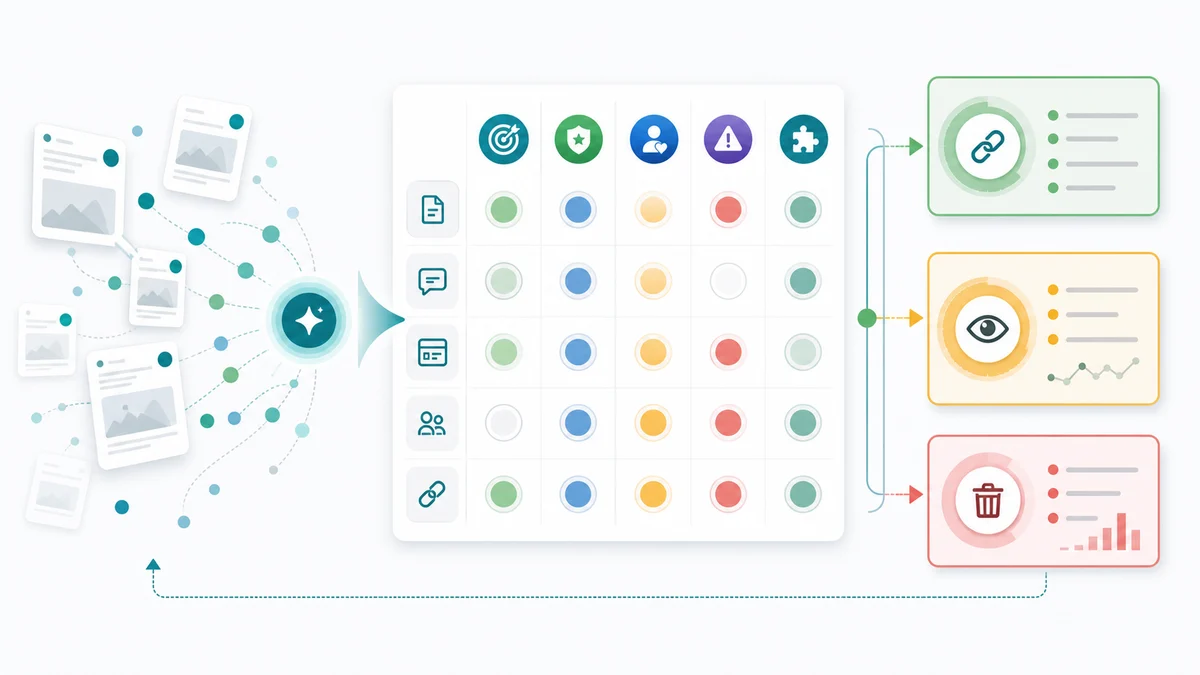
Score each mention before outreach:
| Qualification check | Strong signal | Skip or monitor when |
|---|---|---|
| Topical relevance | The page discusses your category, method, research, product, or use case | The mention is in a broad news roundup or unrelated directory |
| Reader value | A link would help the reader verify, learn, compare, or act | The link would only help your ranking report |
| Source quality | The page is indexed, maintained, editorial, and useful | The page is thin, spammy, paid, expired, or machine-generated |
| Mention specificity | The paragraph names a product, asset, statistic, quote, or method | The mention is generic brand awareness with no citation need |
| Target-page fit | You have a crawlable, useful page that answers the implied task | The best target is a thin landing page or outdated asset |
| Risk profile | The request can be made without anchor pressure, exchange, payment, or volume spam | The placement depends on compensation, exact-match anchors, or link swaps |
Google's spam policies are the guardrail. Unlinked mention outreach should recover useful editorial citations, not pressure publishers into paid links, excessive exchanges, unnatural anchors, or automated placements.
Choose The Right Action For Each Mention
Not every qualified mention needs the same response. Some deserve outreach. Some reveal a weak owned page. Some should feed an AI-search or brand-monitoring queue. Some are best left alone.
| Mention pattern | Better action | Why |
|---|---|---|
| Specific brand or product mention with no source link | Send a short, page-specific outreach note | The editor already named the entity and may appreciate a useful citation |
| Mention points to an outdated owned URL | Fix redirects or update the target page before outreach | Recovery fails if your destination is weak or technically messy |
| Mention appears in a resource list | Suggest the best supporting page only if it improves the list | Resource pages need reader utility, not brand pressure |
| Mention appears in AI-answer source research | Improve the owned source page and monitor the prompt group | A citation gap may be broader than one publisher outreach email |
| Mention is negative, inaccurate, or confusing | Correct the public evidence first | Outreach is less useful when your own source material is inconsistent |
| Mention is casual or unrelated | Monitor or skip | A forced link can create risk and damage relationships |
If the work is actually about a lost link, moved URL, or removed citation, use the parent link reclamation workflow. If the work is about a new source-page relationship, keep it in this unlinked mention queue.
Write Outreach Around Reader Value
Unlinked mention outreach should read like a maintenance note for the source page. It should not read like a demand for authority.
Use this structure:
- Name the exact source page and section.
- Point to the mention without implying the editor made a mistake.
- Explain why the target page helps the reader verify or continue the task.
- Offer the clean URL with no tracking parameters.
- Leave room for the editor to ignore it if it no longer fits.
Here is a safe template:
Subject: Source page for your mention of [brand or asset]

Hi [name],

I was reading your page about [topic] and noticed the mention of [brand, product, report, or guide].

This source may help readers who want the original context: [clean URL].
It includes [specific evidence, workflow, data, or explanation] that supports the section about [reader task].

No pressure if it does not fit your current edit. I only wanted to send the source in case it helps keep the page useful.

Best,
[name]
The link building outreach workflow goes deeper on prospect qualification and follow-up rules. For unlinked mentions, keep the message narrower: one page, one mention, one useful source.
Measure Recovered Links As Evidence
A recovered link is useful only if it supports a better page, a clearer citation, or a measurable organic-growth signal. Do not report raw wins without context.
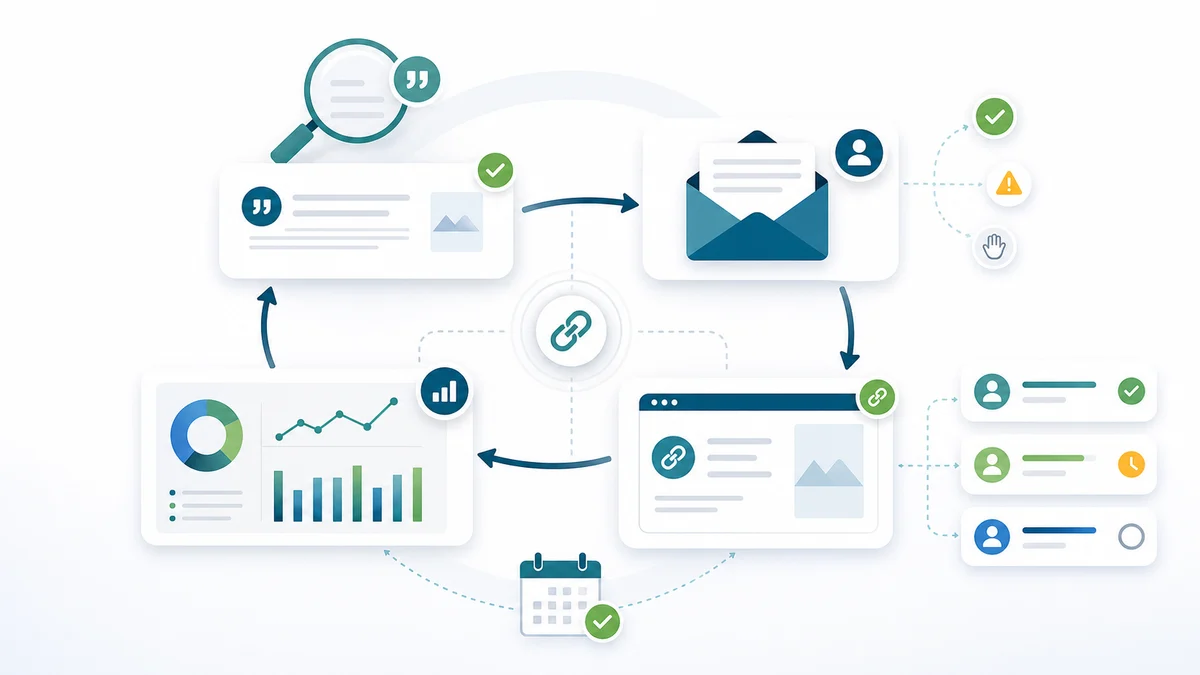
Track the outcome at three levels:
| Measurement layer | What to track | Possible next action |
|---|---|---|
| Outreach quality | Sent date, editor context, response, and placement result | Improve qualification rules or stop weak outreach |
| Link context | Source URL, target URL, anchor, surrounding sentence, and follow status | Update the target page or record a safe recovered citation |
| Page impact | Referral visits, Search Console movement, query mix, assisted conversions, and AI-source observations | Refresh the asset, add internal links, or monitor |
Google's link best practices are useful for the target page too. If the recovered citation points to a URL that is hard to crawl, canonicalized away, or internally isolated, the outreach win is weaker than it looks.
The Search Console performance report can help teams review query, page, country, device, click, impression, CTR, and average-position movement after meaningful recrawl windows. Keep those metrics beside the link context so the campaign does not become a vanity count.
Where Searvora Fits
Searvora does not replace backlink indexes, buy links, or automate publisher pressure. It fits the decision layer around unlinked mention work.
Use AI SEO Consultant when a mention export needs to become an action queue:
| Searvora workflow step | What the team gets |
|---|---|
| Diagnose mention quality | Separate reader-helpful citations from noisy brand references |
| Score priority | Rank opportunities by source relevance, target-page value, risk, and effort |
| Route the fix | Decide outreach, content refresh, technical cleanup, AI-visibility review, or skip |
| Preserve decision history | Keep the reason, owner, and next action visible for future review |
For monitoring-heavy programs, AI SEO Dashboard can sit beside this workflow by tracking page-type and locale performance, then surfacing visibility shifts for review. The consultant layer should make the judgment call: pursue, improve the target page, monitor, or stop.
Unlinked Mentions Checklist
Use this checklist before launching a mention-to-link campaign:
- Define which brands, products, people, reports, templates, and owned assets count as mention targets.
- Build a mention ledger with source URL, context, page topic, best target URL, and owner.
- Remove irrelevant, low-quality, paid, exchange-heavy, and thin-source pages.
- Confirm that the target URL is crawlable, indexable, useful, and internally linked.
- Score each mention by relevance, reader value, source quality, specificity, target fit, and risk.
- Rewrite or refresh weak target pages before asking editors to cite them.
- Send outreach only when the link improves the source page for its reader.
- Avoid exact-match anchor requests, compensation, exchanges, and repeated pressure.
- Record response, placement, anchor, surrounding context, follow status, and next action.
- Measure page impact after recrawl windows instead of reporting raw recovered links.
The useful version of unlinked mention work is calm and selective. Find the references, qualify the reader value, make the owned source worth citing, and turn the outcome into better evidence for the next SEO decision.