

ChatGPT SEO tools are useful when they reduce the time between a question and a verified SEO decision. They are risky when they turn guesses into confident-sounding recommendations without search data, crawl evidence, analytics context, or an owner-ready next step.
The Ahrefs roundup that surfaced this opportunity confirms the intent is a real tools list around Custom GPTs, MCP workflows, and AI-assisted SEO tasks. Searvora's information gain is the operating layer: choose the tool by the evidence it can use, the risk it creates, and the validation step that should follow.
Compare ChatGPT SEO Tools By The Decision
Start with the SEO job before choosing the AI layer. A ChatGPT workflow for brainstorming seed keywords has a different risk profile than a ChatGPT workflow reading analytics data or interpreting crawl output.
| Tool or workflow | Best fit | What to validate before acting |
|---|---|---|
| ChatGPT and Custom GPTs | Briefs, outlines, rewrite ideas, and QA prompts | Search intent, source facts, examples, and whether the page can actually rank |
| Google Analytics MCP server | Asking natural-language questions about owned analytics data | Property access, date range, segment definitions, and attribution context |
| Google Search Console plus ChatGPT | Turning query and page exports into refresh hypotheses | Query sampling, landing page fit, clicks, impressions, and current SERP intent |
| Screaming Frog with ChatGPT prompts | Classifying crawl data, page text, and extracted fields | Crawl scope, rendered content, API cost, and repeatable prompt rules |
| Ahrefs AI Content Helper | Finding content gaps and topic coverage inside Ahrefs | Search intent match, source-page quality, and whether recommendations are current |
| Searvora AI SEO Consultant | Converting AI-assisted findings into prioritized work | Owner, confidence, impact, effort, and recrawl or reporting criteria |
The ChatGPT SEO Tools Shortlist
This shortlist is not a universal ranking. It separates tools by the decision they improve and the control an SEO team needs around the output.
ChatGPT And Custom GPTs
ChatGPT is the flexible layer for prompts, outlines, content QA, rewrite suggestions, and structured analysis. The public ChatGPT page positions it as a general AI assistant, while OpenAI's GPT creation help explains the Custom GPT model for task-specific assistants.
Use ChatGPT when the input is already safe to reason about: a page brief, a public SERP observation, a crawl export, an article draft, a title list, or a content QA checklist. Avoid asking it to invent search volume, ranking difficulty, backlink quality, or competitor facts it cannot verify.
Best next action: keep prompt outputs in a working note until they are checked against Search Console, a crawl, a SERP snapshot, or an official public source.
Google Analytics MCP Server
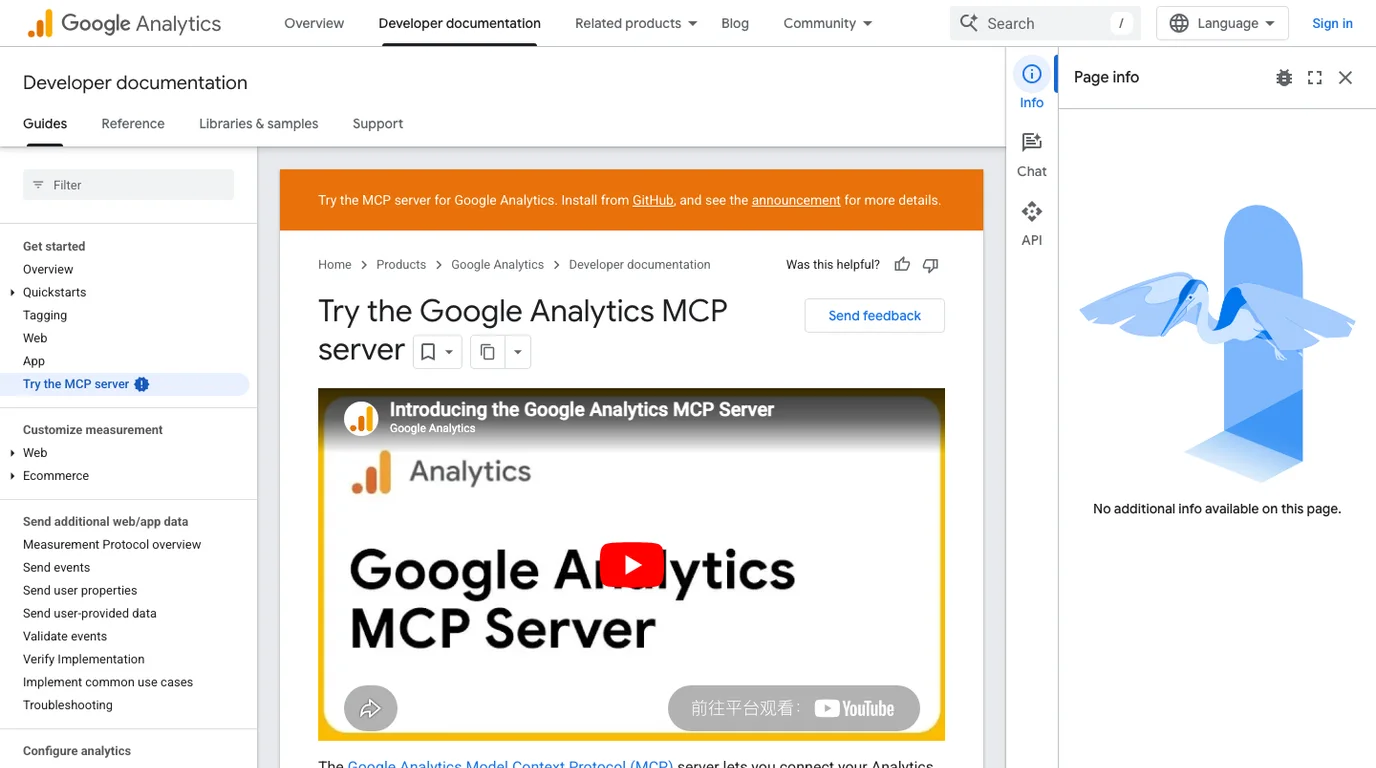
Google's official Google Analytics MCP server documentation describes connecting Analytics data to an LLM so teams can chat with data, build custom agents, and answer questions from authorized analytics access.
That makes the MCP workflow useful when the SEO question needs owned-site behavior data. Instead of asking ChatGPT to guess whether a content refresh worked, ask questions tied to a real property, date range, channel, landing page, and segment.
Use it for questions such as:
- Which blog pages lost organic sessions after a release window?
- Did assisted conversions change for a page group after a refresh?
- Which landing pages have traffic but weak engagement?
- Which market or device segment is behaving differently?
Best next action: write down the exact property, segment, and date range before treating the answer as a decision.
Google Search Console Plus ChatGPT
Google Search Console is not a ChatGPT product, but it is one of the safest evidence sources to pair with ChatGPT. The official Search Console page frames it around measuring search traffic, fixing issues, and improving performance in Google Search.
Exporting query and page data gives ChatGPT something concrete to classify. It can help group queries by intent, spot weak CTR candidates, identify refresh candidates, and turn messy rows into a review queue.
The guardrail is that Search Console data is sampled, delayed, and property-specific. ChatGPT can organize the export, but it should not decide the page type alone. Check the live SERP and the current page before rewriting content.
Best next action: pair a Search Console export with keyword tracking tools when you need competitor movement or tighter rank monitoring beside owned data.
Screaming Frog With ChatGPT Prompts
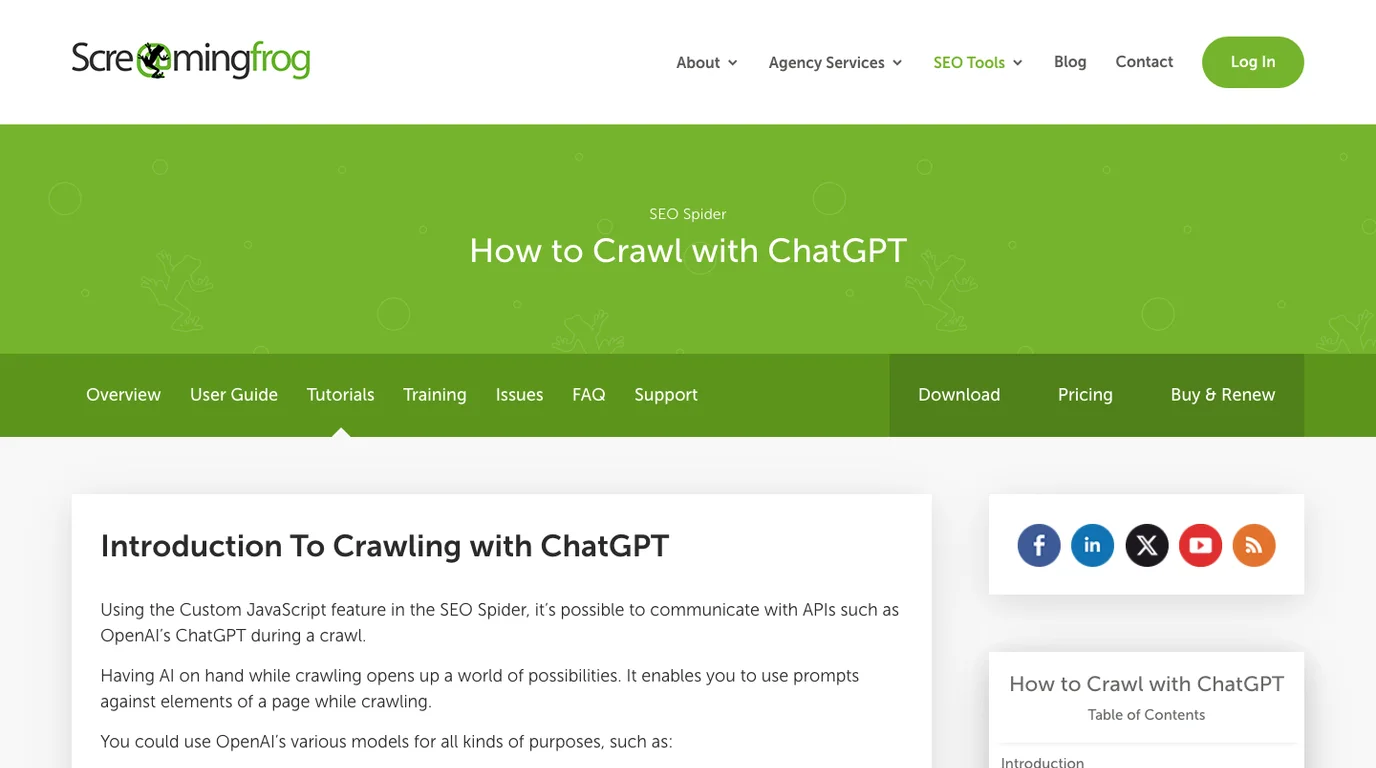
Screaming Frog's official crawl with ChatGPT tutorial shows how its SEO Spider can communicate with AI APIs during a crawl through Custom JavaScript.
This is a strong technical SEO use case because the input is page-level evidence. A crawler can feed titles, headings, page text, links, or extracted fields into a repeatable prompt. ChatGPT can then classify patterns that would be slow to review manually.
Use this workflow for:
- Classifying page intent from title, H1, and visible copy.
- Spotting duplicate or thin template patterns.
- Grouping metadata issues by page type.
- Reviewing content helpfulness at scale.
- Extracting structured notes for a QA queue.
The risk is prompt drift. Keep the prompt deterministic, log the sampled input, and run a manual review set before trusting bulk labels.
Ahrefs AI Content Helper

Ahrefs' public AI Content Helper page positions the product around creating content that gets discovered in search and AI, with topic coverage and AI chat support inside an editor.
That makes it useful for teams already using Ahrefs for keyword and competitive research. The strongest use case is not "write the whole article." It is checking whether the draft covers the topic deeply enough for the intended query and whether the team has missed obvious supporting concepts.
The validation step is still editorial. A tool can suggest missing coverage, but it cannot know whether the examples are true for your product, whether the page should be a blog post, or whether another URL already owns the same job.
Best next action: use the recommendation list as a QA input, then route approved updates through content optimization so refreshes become measurable work.
Searvora AI SEO Consultant
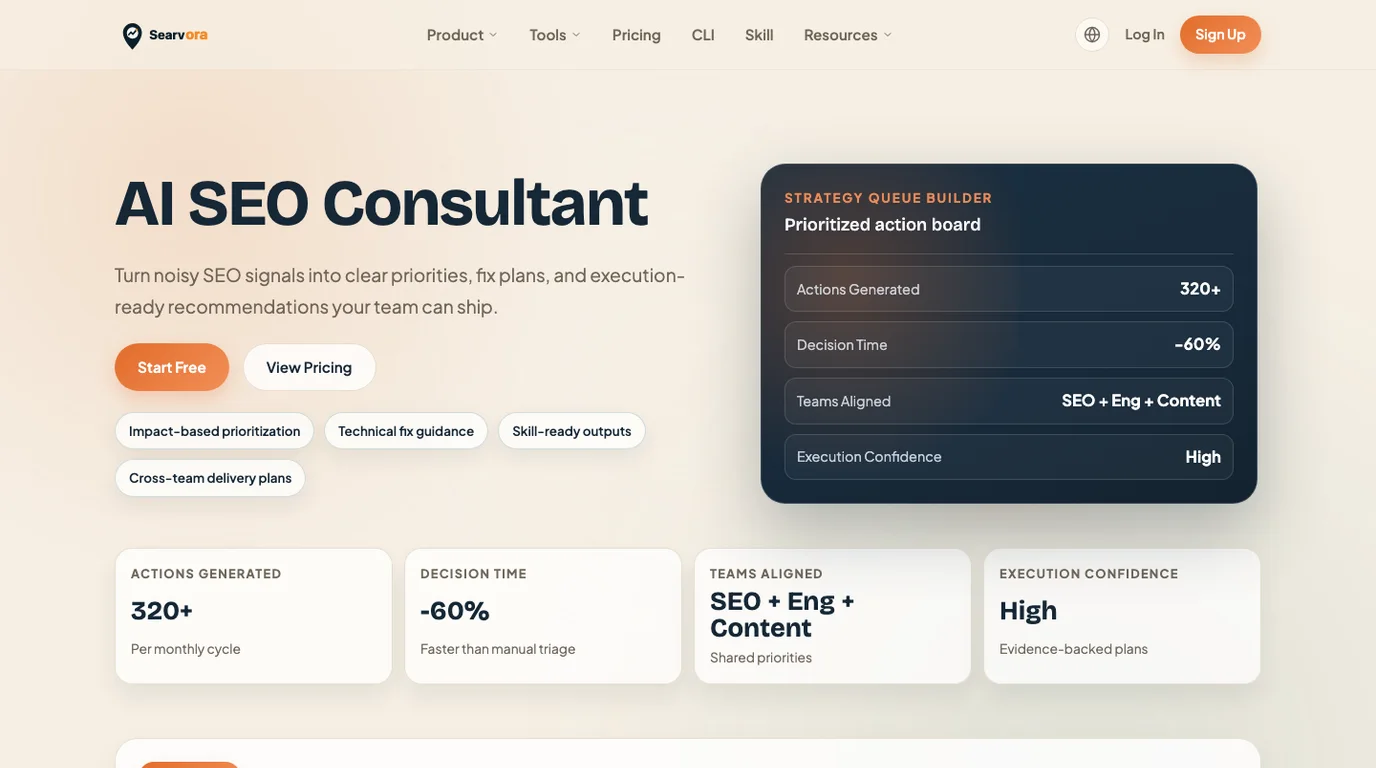
Searvora AI SEO Consultant is the operating layer when ChatGPT-assisted research needs to become a prioritized fix plan. The local product page positions it around turning noisy SEO signals into clear priorities, fix plans, and execution-ready recommendations your team can ship.
Use Searvora after ChatGPT or a connected tool has produced candidate findings:
| Finding from a ChatGPT SEO workflow | What Searvora should help decide |
|---|---|
| "This content is thin" | Which page group, query, and business goal make the refresh worth doing |
| "These pages have duplicated titles" | Whether the issue is a template problem, a small copy fix, or a broader crawl risk |
| "This query group is slipping" | Whether to update content, improve links, fix crawl blockers, or monitor |
| "AI answers cite competitors" | Which source page needs clearer evidence, entity context, or technical eligibility |
Searvora fits best when the team already has data but needs decision quality: impact, effort, confidence, owner, and validation criteria.
How To Choose Without Creating AI Noise
Choose the ChatGPT SEO tool by evidence depth and failure mode.
| If your team needs | Start with | Main guardrail |
|---|---|---|
| Fast ideation or draft QA | ChatGPT or a Custom GPT | Verify facts, examples, and intent before publishing |
| Owned-site behavior analysis | Google Analytics MCP server | Confirm access, segment, attribution, and date range |
| Search query and page evidence | Search Console exports plus ChatGPT | Check the live SERP before changing the page type |
| Crawl-scale classification | Screaming Frog plus ChatGPT prompts | Sample the labels and control API cost before scaling |
| Content coverage QA | Ahrefs AI Content Helper | Keep product claims and examples manually verified |
| Prioritized execution | Searvora AI SEO Consultant | Attach owner, confidence, effort, and validation criteria |
For AI-answer visibility, pair this workflow with best AI visibility tools. For evidence discipline, use the AI visibility loop before rewriting pages based on one prompt result.
A Practical Validation Checklist
Run this checklist before acting on any ChatGPT SEO tool output:
- Name the exact page, query group, or crawl segment being reviewed.
- Attach the source data: Search Console export, Analytics report, crawl sample, SERP note, or official page.
- Mark whether the output is an idea, a diagnosis, a content change, or an engineering task.
- Check whether an existing Searvora or site URL already owns the same user job.
- Decide the page type before drafting: article, landing page, tool, hub, or update.
- Assign one owner and one validation step.
- Recheck the same signal after the change ships.
ChatGPT SEO tools are at their best when they make evidence easier to use. Let them shorten research, classification, and first-draft thinking. Keep the final SEO decision tied to real data, crawlable pages, and work your team can actually validate.